Brigitte Peucker - Böcker
Visar alla böcker från författaren Brigitte Peucker. Handla med fri frakt och snabb leverans.
9 produkter
9 produkter
734 kr
Skickas inom 3-6 vardagar
Film, a latecomer to the realm of artistic media, alludes to, absorbs, and undermines the discourses of the other arts--literature and painting especially--in order to carve out a position for itself among them. Exposing the anxiety in film's relation to its rival arts, Brigitte Peucker analyzes central issues involved in generic boundary crossing as they pertain to film and situates them in a theoretical framework. The figure of the human body takes center stage in Peucker's innovative study, for it is through this figure that the conjunction of literary and painterly discourses persistently articulates itself. It is through the human body, too, that film's consciousness of itself as a hybrid text and as a "machine for simulation" makes itself deeply felt. In films ranging from Weimar cinema through Griffith, Hitchcock, and Greenaway, Peucker probes issues in aesthetics problematized by Diderot and Kleist, among others. She argues that the introduction of movement into visual representation occasioned by film brings with it an underlying tension suggestive of castration and death.Peucker goes on to demonstrate how the encounter between narrative and image is both gendered and sexualized, rendering film a "monstrous" hybrid. In a final section, she explores in specific cinematic texts the permeable boundary between the real and representation, suggesting how effects such as tableau vivant and trompe l'oeil figure sexuality and death. Originally published in 1995. The Princeton Legacy Library uses the latest print-on-demand technology to again make available previously out-of-print books from the distinguished backlist of Princeton University Press. These editions preserve the original texts of these important books while presenting them in durable paperback and hardcover editions. The goal of the Princeton Legacy Library is to vastly increase access to the rich scholarly heritage found in the thousands of books published by Princeton University Press since its founding in 1905.
1 707 kr
Skickas inom 3-6 vardagar
Film, a latecomer to the realm of artistic media, alludes to, absorbs, and undermines the discourses of the other arts--literature and painting especially--in order to carve out a position for itself among them. Exposing the anxiety in film's relation to its rival arts, Brigitte Peucker analyzes central issues involved in generic boundary crossing as they pertain to film and situates them in a theoretical framework. The figure of the human body takes center stage in Peucker's innovative study, for it is through this figure that the conjunction of literary and painterly discourses persistently articulates itself. It is through the human body, too, that film's consciousness of itself as a hybrid text and as a "machine for simulation" makes itself deeply felt. In films ranging from Weimar cinema through Griffith, Hitchcock, and Greenaway, Peucker probes issues in aesthetics problematized by Diderot and Kleist, among others. She argues that the introduction of movement into visual representation occasioned by film brings with it an underlying tension suggestive of castration and death.Peucker goes on to demonstrate how the encounter between narrative and image is both gendered and sexualized, rendering film a "monstrous" hybrid. In a final section, she explores in specific cinematic texts the permeable boundary between the real and representation, suggesting how effects such as tableau vivant and trompe l'oeil figure sexuality and death. Originally published in 1995. The Princeton Legacy Library uses the latest print-on-demand technology to again make available previously out-of-print books from the distinguished backlist of Princeton University Press. These editions preserve the original texts of these important books while presenting them in durable paperback and hardcover editions. The goal of the Princeton Legacy Library is to vastly increase access to the rich scholarly heritage found in the thousands of books published by Princeton University Press since its founding in 1905.
1 376 kr
Skickas inom 10-15 vardagar
Focusing on intermediality, The Material Image situates film within questions of representation familiar from the other arts: What is meant by figuring the real? How is the real suggested by visual metaphors, and what is its relation to illusion? How is the spectator figured as entering the text, and how does the image enter our world? The film's spectator is integral to these concerns. Cognitive and phenomenological approaches to perception alike claim that spectatorial affect is "real" even when it is film that produces it.Central to the staging of intermediality in film, tableaux moments in film also figure prominently in the book. Films by Scorsese, Greenaway, Wenders, and Kubrick are seen to address painterly, photographic, and digital images in relation to effects of the real. Hitchcock's films are examined with regard to modernist and realist effects in painting. Chapters on Fassbinder and Haneke analyze the significance of tableau for the body in pain, while a final chapter on horror film explores the literalism of psychopathic tableau. Here, too, art and the body—images and the real—are juxtaposed and entwined in a set of relations.
331 kr
Skickas inom 7-10 vardagar
Focusing on intermediality, The Material Image situates film within questions of representation familiar from the other arts: What is meant by figuring the real? How is the real suggested by visual metaphors, and what is its relation to illusion? How is the spectator figured as entering the text, and how does the image enter our world? The film's spectator is integral to these concerns. Cognitive and phenomenological approaches to perception alike claim that spectatorial affect is "real" even when it is film that produces it.Central to the staging of intermediality in film, tableaux moments in film also figure prominently in the book. Films by Scorsese, Greenaway, Wenders, and Kubrick are seen to address painterly, photographic, and digital images in relation to effects of the real. Hitchcock's films are examined with regard to modernist and realist effects in painting. Chapters on Fassbinder and Haneke analyze the significance of tableau for the body in pain, while a final chapter on horror film explores the literalism of psychopathic tableau. Here, too, art and the body—images and the real—are juxtaposed and entwined in a set of relations.
403 kr
Skickas inom 7-10 vardagar
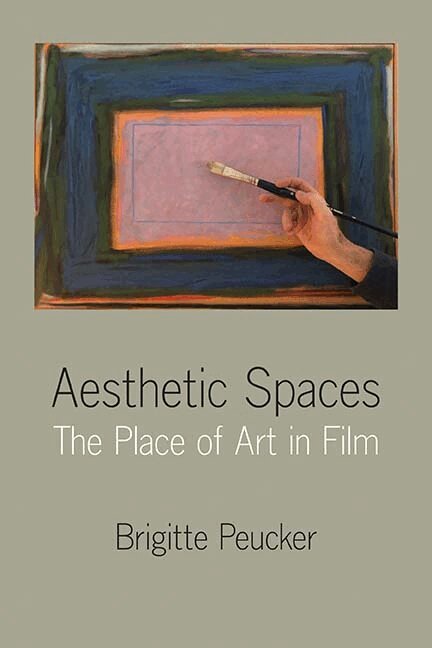
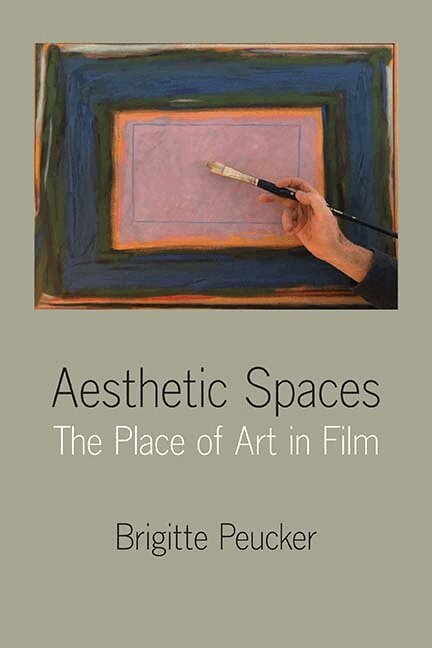
Films provide valuable spaces for aesthetic experimentation and analysis, for cinema's openness to other media has always allowed it to expand its own. In Aesthetic Spaces, Brigitte Peucker shows that when painterly or theatrical conventions are appropriated by the medium of film, the dissonant effects produced open it up to intermedial reflection and tell us a great deal about cinema itself. The films studied in these chapters include those by Abbas Kiarostami, Alfred Hitchcock, Michelangelo Antonioni, Jean-Luc Godard, Carl Th. Dreyer, Peter Greenaway, Rainer Werner Fassbinder, Ingmar Bergman, Jacques Rivette, Fritz Lang, F. W. Murnau, Lars von Trier, Spike Jonze, Éric Rohmer, Lech Majewski, and others. Where two media are in evidence in these films, there is usually a third, and often theater mediates between film and painting. Aesthetic Spaces interrogates issues of cinematic space and mise-en-scène from different but interconnected theoretical perspectives, organizing its chapters around some of the formal principles—space, spectator, frame, color and lighting, props, décor, and actor—that shape films.Drawing on the older arts to renew cinema, the films examined deploy paintings as material: Poussin and Bruegel, Rembrandt, Hals and Klimt, and medieval illustrations and modernist abstractions are used to expand our notions of cinematic space. Peucker shows that when different media come together in film, they create effects of dissonance out of which new modes of looking may arise.
1 335 kr
Skickas inom 10-15 vardagar
Films provide valuable spaces for aesthetic experimentation and analysis, for cinema's openness to other media has always allowed it to expand its own. In Aesthetic Spaces, Brigitte Peucker shows that when painterly or theatrical conventions are appropriated by the medium of film, the dissonant effects produced open it up to intermedial reflection and tell us a great deal about cinema itself. The films studied in these chapters include those by Abbas Kiarostami, Alfred Hitchcock, Michelangelo Antonioni, Jean-Luc Godard, Carl Th. Dreyer, Peter Greenaway, Rainer Werner Fassbinder, Ingmar Bergman, Jacques Rivette, Fritz Lang, F. W. Murnau, Lars von Trier, Spike Jonze, Éric Rohmer, Lech Majewski, and others. Where two media are in evidence in these films, there is usually a third, and often theater mediates between film and painting. Aesthetic Spaces interrogates issues of cinematic space and mise-en-scène from different but interconnected theoretical perspectives, organizing its chapters around some of the formal principles—space, spectator, frame, color and lighting, props, décor, and actor—that shape films.Drawing on the older arts to renew cinema, the films examined deploy paintings as material: Poussin and Bruegel, Rembrandt, Hals and Klimt, and medieval illustrations and modernist abstractions are used to expand our notions of cinematic space. Peucker shows that when different media come together in film, they create effects of dissonance out of which new modes of looking may arise.
635 kr
Skickas inom 10-15 vardagar
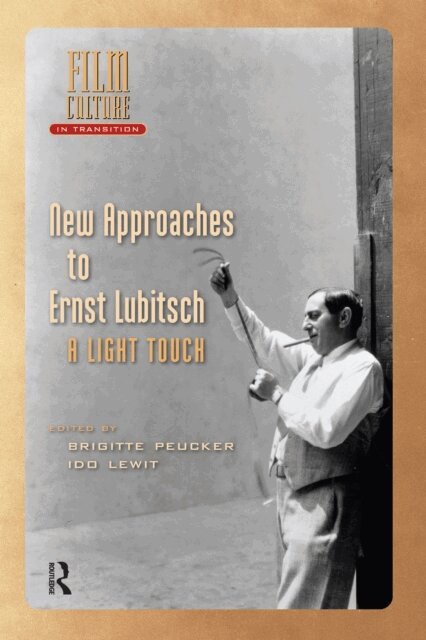
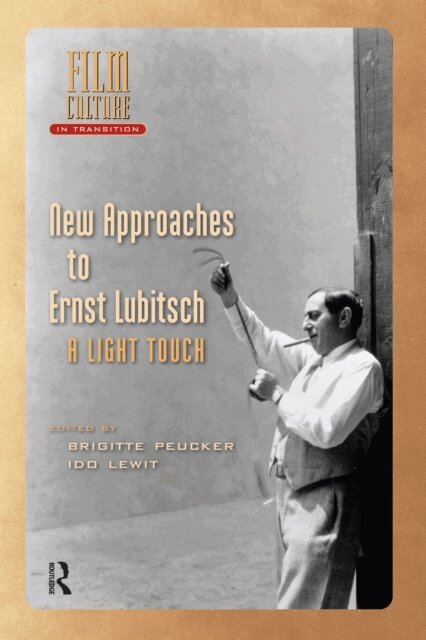
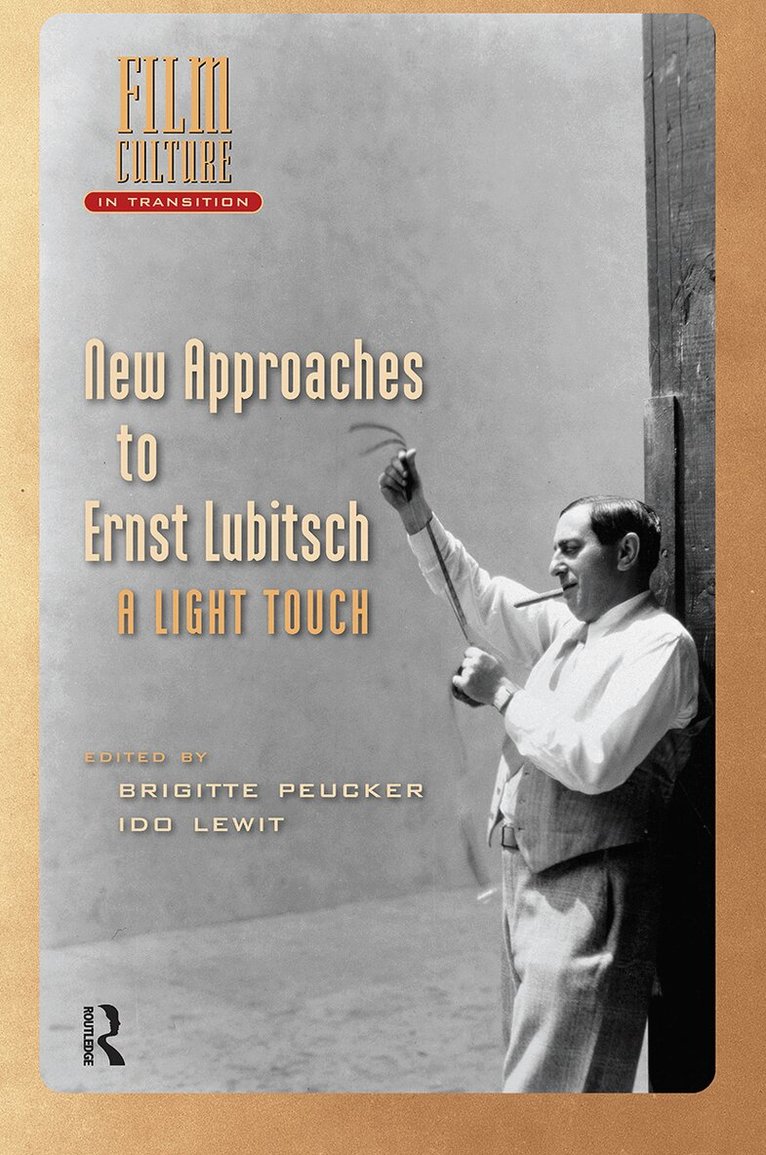
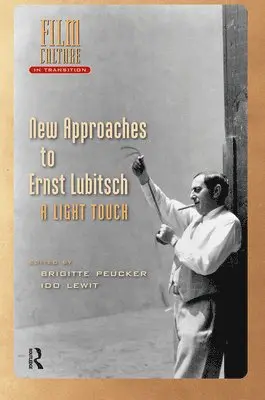
This exciting collection of unpublished essays on Ernst Lubitsch addresses multiple gaps in scholarly and critical engagement with the director. His understudied early German films shed light on Jewish culture, on the relation of comedy to gender and the influence of theatre on his filmmaking. The popular historical epics brought Lubitsch an invitation to Hollywood in 1922. There, Lubitsch helped develop the film musical and notably contributed to the genre of Hollywood romantic comedy. The well-known scholars—film historians, archivists, and theorists—whose essays appear in this volume expand our knowledge of the set designers, actors, directors and members of the emigré community who contributed to Lubitsch’s vibrant films. An emphasis on the role of material objects opens up a new dimension of critical engagement with the director. Light is shed on neglected films, and the antifascist dimension of his oeuvre brings his political stance clearly to light. As these essays make clear, Lubtisch’s cinema is elusive and deserving of our close attention.
Del 7 - Wiley Blackwell Companions to Film Directors
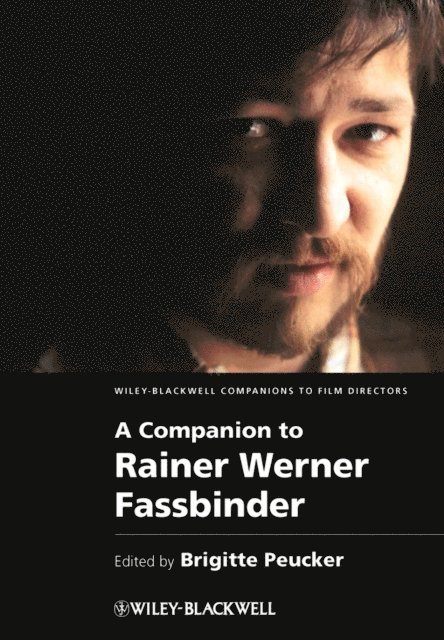
Companion to Rainer Werner Fassbinder
Inbunden, Engelska, 2012
2 006 kr
Skickas inom 7-10 vardagar
A Companion to Rainer Werner Fassbinder is the first of its kind to engage with this important figure. Twenty-eight essays by an international group of scholars consider this controversial director's contribution to German cinema, German history, gender studies, and auteurship. A fresh collection of original research providing diverse perspectives on Fassbinder’s work in films, television, poetry, and underground theatre.Rainer Werner Fassbinder remains the preeminent filmmaker of the New German Cinema whose brief but prolific body of work spans from the latter half of the 1960s to the artist’s death in 1982.Interrogates Fassbinder’s influence on the seminal ideas of his time: auteurship, identity, race, queer studies, and the cataclysmic events of German twentieth century historyContributions from internationally diverse scholars specializing in film, culture, and German studies.Includes coverage of his key films including: Gods of the Plague (1970), Beware of a Holy Whore (1971), The Bitter Tears of Petra von Kant (1972), Martha (1973) (TV), World on a Wire (1973), Effi Briest (1974), Ali: Fear Eats the Soul (1974), Fox and His Friends (1975), Fear of Fear (1975), Chinese Roulette (1976), In a Year With 13 Moons (1978), Despair (1978), The Third Generation (1979), Berlin Alexanderplatz (1980) (TV), and Querelle (1982).
1 900 kr
Skickas inom 10-15 vardagar
This exciting collection of unpublished essays on Ernst Lubitsch addresses multiple gaps in scholarly and critical engagement with the director. His understudied early German films shed light on Jewish culture, on the relation of comedy to gender and the influence of theatre on his filmmaking.