Bruce W. Carpenter – författare
Visar alla böcker från författaren Bruce W. Carpenter. Handla med fri frakt och snabb leverans.
2 produkter
2 produkter
4 144 kr
Skickas inom 7-10 vardagar
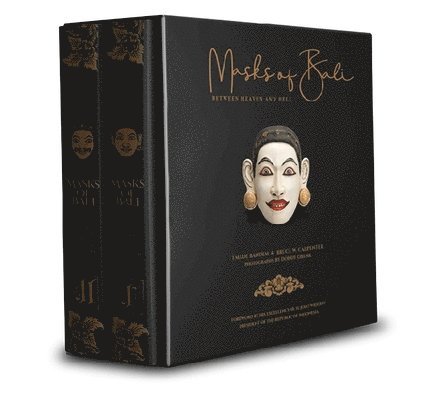
The magisterial two volume set of books with a foreword by Joko Widodo, the President of Indonesia, is the standard work on an ancient Balinese artform that has fascinated the outside world since the early 20th century. Richly illustrated with more than onethousand images, it represents the fruit of more than four years of dedicated work by a team of experts including photographer Doddy Obenk and designer Ni Luh Ketut Sukarniasih who have diligently researched archives and collections around the world. The main texts consist of an essay by I Made Bandem, a renowned Balinese dancer and scholar, on still living dancing traditions. This is supplemented by a detailed history, written by Bruce W. Carpenter, tracing back the origins of this remarkable performance art to the pre-Hindu era. Other texts concern sacred never before photographed masks and biographies of famous mask makers and dancers. The gallery, a separate volume is 360 pages in length. It is an illustrated compendium of Balinese masks from the 16th to 20th century sourced from great museum, institutional, private and temple collections with extensive captions and supplementary information. This book is not only for scholars or those specialized in Balinese studies but also a general audience including those interested in international performing arts, sculpture, Asian art and history.
709 kr
Skickas inom 7-10 vardagar
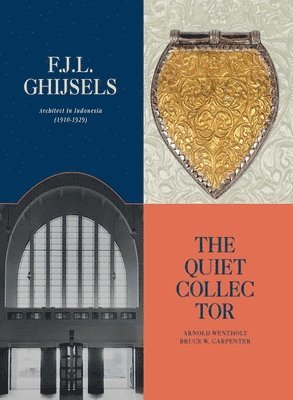
F.J.L. Ghijsels; A Quiet Collector is the fascinating story of the evolution of an important collection of Indonesian art between 1910-1929. One of the most renowned colonial architects in the first half of the 20th century, the discovery that Ghijsels was also an avid collector comes as a surprise. Born in Java in the 19th century and educated in Holland, Ghijsels was a member of a new generation that in contrast to his predecessors greatly prized the artistic heritage of the land of his birth. A dedicated modernist, he was a member of a small but highly influential group of architects and city planners including Wolff Schoemakker, Henri Maclaine Pont and the fiery Thomas Kersten all of whom were graduates or affiliated with Delft University of Technology. Together with the architects P.A.J. Moojen and Cosmos Citroen, they would build many of the most iconic buildings, now heritage sites, in Indonesia that still influence young Indonesian architects. In addition they would, together prominent scholars, government leaders and art lovers, many who were also collectors, support cultural conferences, institutions and museums. Mostly held in Yogyakarta, these forums offered a unique opportunity for Indonesian intellectuals including many Javanese aristocrats to interact and work together despite this being frowned upon in official circles. After a long and successful career, Ghijsels would return to Europe to reunite with his family. Unfortunately the outbreak of World War Two would bring dramatic change and an early death. Until recently, like all the Dutch colonial architects, his legacy was largely ignored or forgotten in Holland. Richly illustrated with his architectural work and eclectic collection of often rare objects and art pieces, this book is a testament to a long lost era and the enduring beauty of Indonesian arts and crafts.