Bruno De Nicola - Böcker
Visar alla böcker från författaren Bruno De Nicola. Handla med fri frakt och snabb leverans.
10 produkter
10 produkter
630 kr
Skickas inom 10-15 vardagar
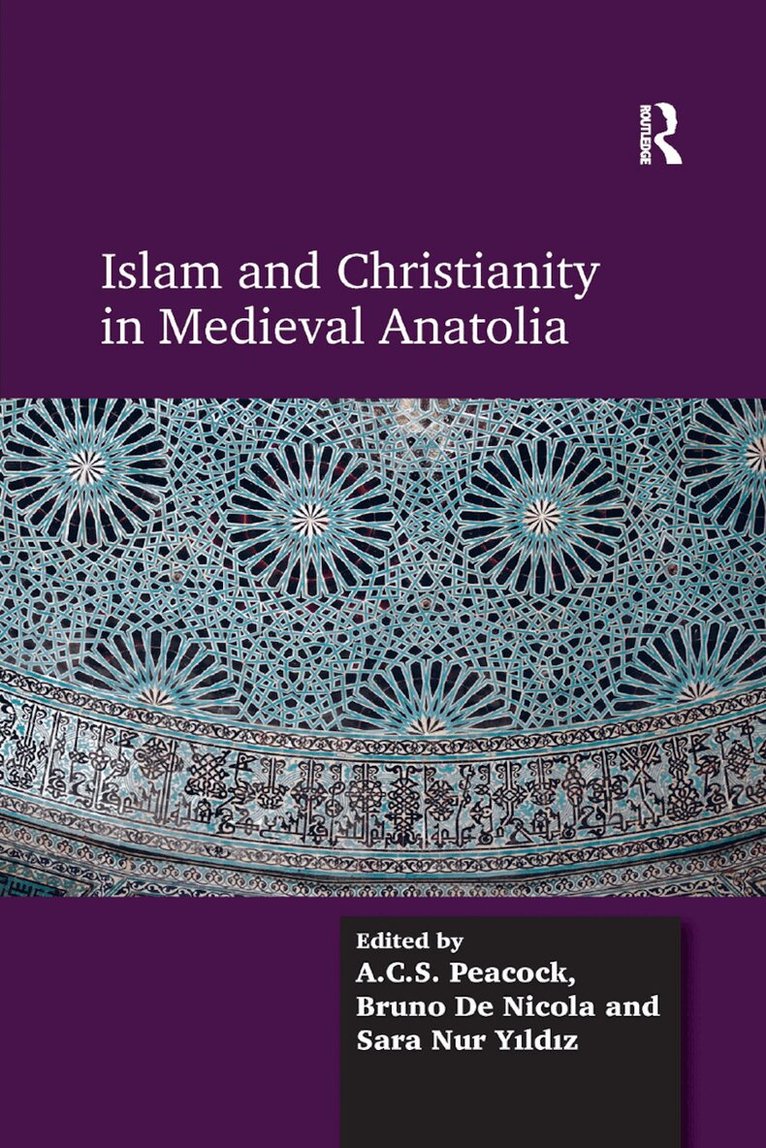
Islam and Christianity in Medieval Anatolia offers a comparative approach to understanding the spread of Islam and Muslim culture in medieval Anatolia. It aims to reassess work in the field since the 1971 classic by Speros Vryonis, The Decline of Hellenism in Asia Minor and the Process of Islamization which treats the process of transformation from a Byzantinist perspective. Since then, research has offered insights into individual aspects of Christian-Muslim relations, but no overview has appeared. Moreover, very few scholars of Islamic studies have examined the problem, meaning evidence in Arabic, Persian and Turkish has been somewhat neglected at the expense of Christian sources, and too little attention has been given to material culture. The essays in this volume examine the interaction between Christianity and Islam in medieval Anatolia through three distinct angles, opening with a substantial introduction by the editors to explain both the research background and the historical problem, making the work accessible to scholars from other fields. The first group of essays examines the Christian experience of living under Muslim rule, comparing their experiences in several of the major Islamic states of Anatolia between the eleventh and fifteenth centuries, especially the Seljuks and the Ottomans. The second set of essays examines encounters between Christianity and Islam in art and intellectual life. They highlight the ways in which some traditions were shared across confessional divides, suggesting the existence of a common artistic and hence cultural vocabulary. The final section focusses on the process of Islamisation, above all as seen from the Arabic, Persian and Turkish textual evidence with special attention to the role of Sufism.
Chobanids of Kastamonu
Politics, Patronage and Religion in Thirteenth-Century Anatolia
Häftad, Engelska, 2025
630 kr
Skickas inom 10-15 vardagar
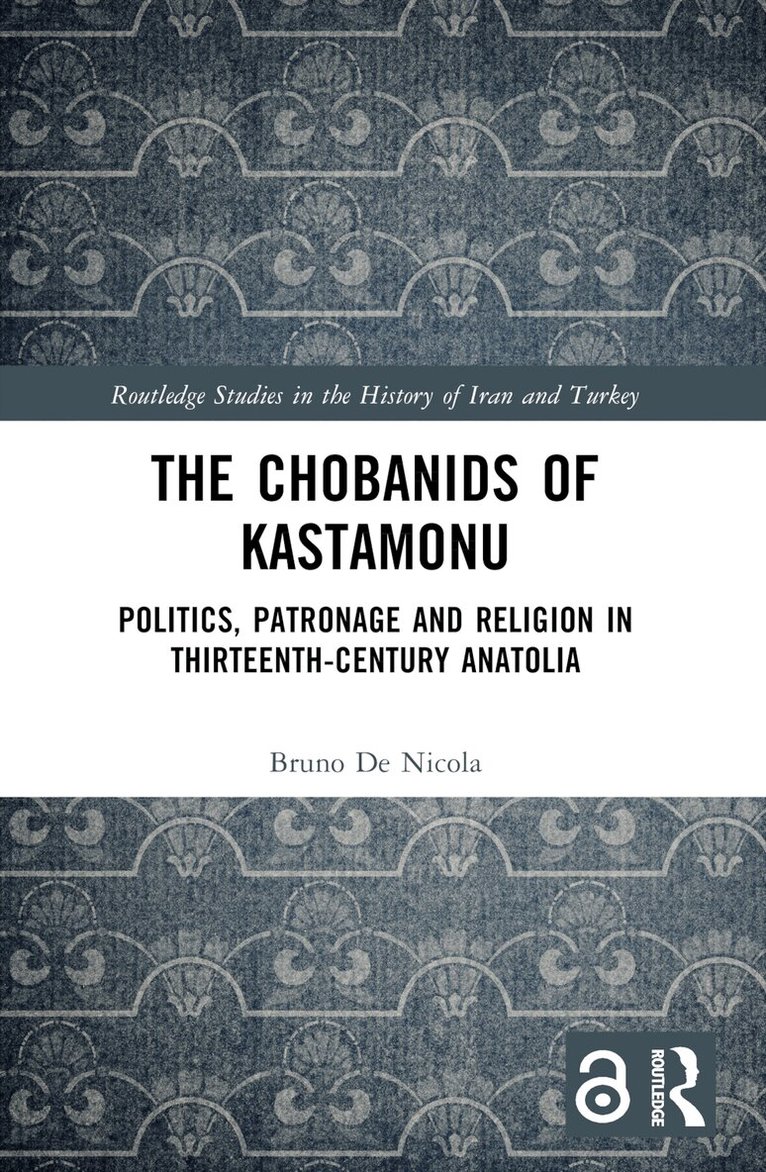
This book provides a novel approach to the history of medieval Anatolia by analysing political, religious and cultural developments in the region of Kastamonu during the reign of the Chobanid dynasty (c. 1211–1309).During the 13th century, the Chobanids consolidated a local dynasty in western Anatolia – a borderland between Islam and Christianity – becoming cultural actors patronising the production of religious, scientific and administrative works in the Persian language. These works, though surviving today in manuscript form, have received little attention in modern historiography. The book therefore attends to this gap in the research, incorporating a detailed study of texts by little-known authors from the time. The book explores the relationship between Islam and the Chobanid dynasty in the context of the wider process of Islamisation in medieval Anatolia, hypothesising that Turkmen dynasties played a fundamental role in this process of Islamisation and acculturation. The Chobanids of Kastamonu, then, offers an in-depth study of a Turkmen local dynasty that achieved political autonomy, financial independence and cultural patronage in medieval Anatolia vis-à-vis the main political powers of the time.Attentive to religious diversity, state formation and processes of transculturation in medieval Anatolia, the book is key reading for scholars of Middle Eastern history and Islamic studies.The Open Access version of this book, available at http://www.taylorfrancis.com, has been made available under a Creative Commons CC-BY 4.0 license.
Chobanids of Kastamonu
Politics, Patronage and Religion in Thirteenth-Century Anatolia
Inbunden, Engelska, 2024
2 401 kr
Skickas inom 10-15 vardagar
This book provides a novel approach to the history of medieval Anatolia by analysing political, religious and cultural developments in the region of Kastamonu during the reign of the Chobanid dynasty (c. 1211–1309).During the 13th century, the Chobanids consolidated a local dynasty in western Anatolia – a borderland between Islam and Christianity – becoming cultural actors patronising the production of religious, scientific and administrative works in the Persian language. These works, though surviving today in manuscript form, have received little attention in modern historiography. The book therefore attends to this gap in the research, incorporating a detailed study of texts by little-known authors from the time. The book explores the relationship between Islam and the Chobanid dynasty in the context of the wider process of Islamisation in medieval Anatolia, hypothesising that Turkmen dynasties played a fundamental role in this process of Islamisation and acculturation. The Chobanids of Kastamonu, then, offers an in-depth study of a Turkmen local dynasty that achieved political autonomy, financial independence and cultural patronage in medieval Anatolia vis-à-vis the main political powers of the time.Attentive to religious diversity, state formation and processes of transculturation in medieval Anatolia, the book is key reading for scholars of Middle Eastern history and Islamic studies.The Open Access version of this book, available at http://www.taylorfrancis.com, has been made available under a Creative Commons CC-BY 4.0 license.
2 289 kr
Skickas inom 10-15 vardagar
Islam and Christianity in Medieval Anatolia offers a comparative approach to understanding the spread of Islam and Muslim culture in medieval Anatolia. It aims to reassess work in the field since the 1971 classic by Speros Vryonis, The Decline of Hellenism in Asia Minor and the Process of Islamization which treats the process of transformation from a Byzantinist perspective. Since then, research has offered insights into individual aspects of Christian-Muslim relations, but no overview has appeared. Moreover, very few scholars of Islamic studies have examined the problem, meaning evidence in Arabic, Persian and Turkish has been somewhat neglected at the expense of Christian sources, and too little attention has been given to material culture. The essays in this volume examine the interaction between Christianity and Islam in medieval Anatolia through three distinct angles, opening with a substantial introduction by the editors to explain both the research background and the historical problem, making the work accessible to scholars from other fields. The first group of essays examines the Christian experience of living under Muslim rule, comparing their experiences in several of the major Islamic states of Anatolia between the eleventh and fifteenth centuries, especially the Seljuks and the Ottomans. The second set of essays examines encounters between Christianity and Islam in art and intellectual life. They highlight the ways in which some traditions were shared across confessional divides, suggesting the existence of a common artistic and hence cultural vocabulary. The final section focusses on the process of Islamisation, above all as seen from the Arabic, Persian and Turkish textual evidence with special attention to the role of Sufism.
1 817 kr
Skickas inom 3-6 vardagar
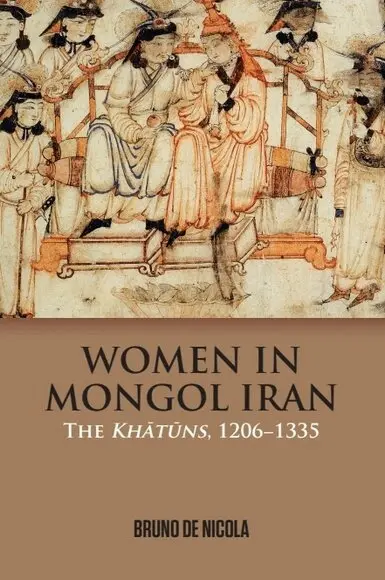
This book shows the development of women’s status in the Mongol Empire from its original homeland in Mongolia up to the end of the Ilkhanate of Iran in 1335. Taking a thematic approach, the chapters show a coherent progression of this development and contextualise the evolution of the role of women in medieval Mongol society. The arrangement serves as a starting point from where to draw comparison with the status of Mongol women in the later period. Exploring patterns of continuity and transformation in the status of these women in different periods of the Mongol Empire as it expanded westwards into the Islamic world, the book offers a view on the transformation of a nomadic-shamanist society from its original homeland in Mongolia to its settlement in the mostly sedentary-Muslim Iran in the mid-13th century.
402 kr
Skickas
This book shows the development of women’s status in the Mongol Empire from its original homeland in Mongolia up to the end of the Ilkhanate of Iran in 1335. Taking a thematic approach, the chapters show a coherent progression of this development and contextualise the evolution of the role of women in medieval Mongol society. The arrangement serves as a starting point from where to draw comparison with the status of Mongol women in the later period. Exploring patterns of continuity and transformation in the status of these women in different periods of the Mongol Empire as it expanded westwards into the Islamic world, the book offers a view on the transformation of a nomadic-shamanist society from its original homeland in Mongolia to its settlement in the mostly sedentary-Muslim Iran in the mid-13th century.
Del 127 - Islamic History and Civilization
Mongols' Middle East
Continuity and Transformation in Ilkhanid Iran
Inbunden, Engelska, 2016
2 427 kr
Skickas inom 5-8 vardagar
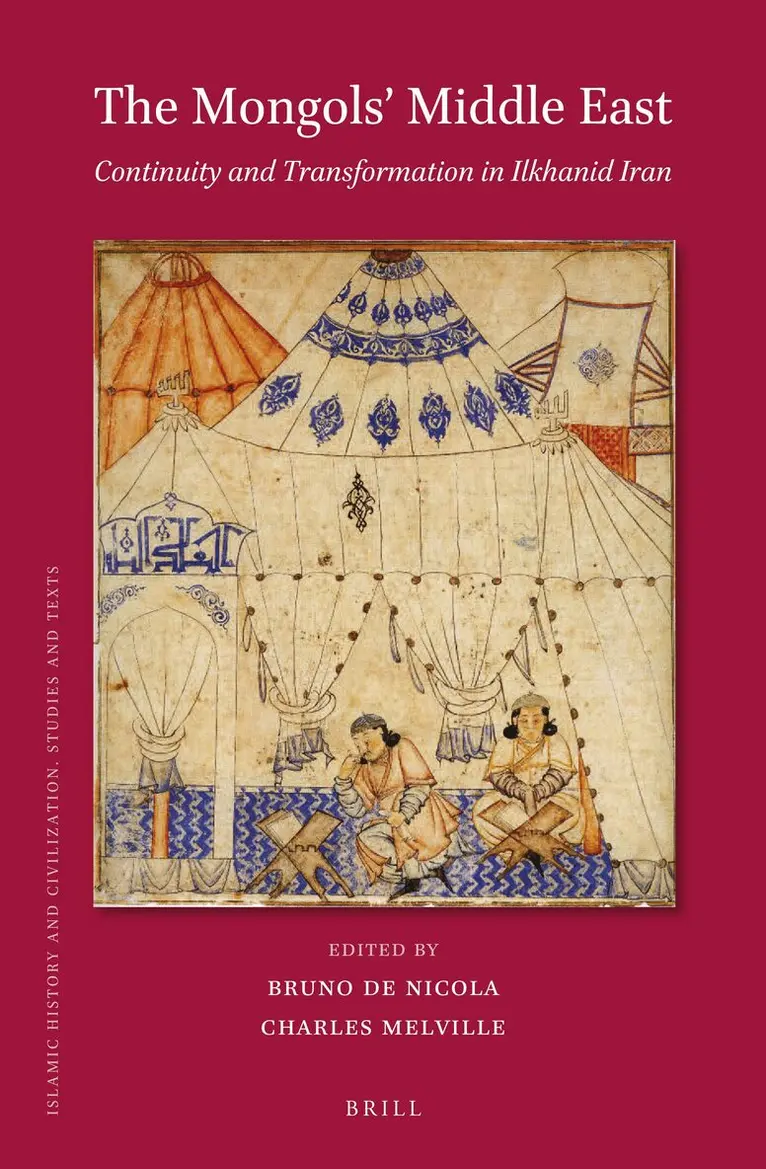
The Mongols’ Middle East: Continuity and Transformation in Ilkhanid Iran offers a collection of academic articles that investigate different aspects of Mongol rule in 13th- and 14th-century Iran. Sometimes treated only as part of the larger Mongol Empire, the volume focuses on the Ilkhanate (1258-1335) with particular reference to its relations with its immediate neighbours. It is divided into four parts, looking at the establishment, the internal and external dynamics of the realm, and its end. The different chapters, covering several topics that have received little attention before, aim to contribute to a better understanding of Mongol rule in the Middle East and its role in the broader medieval Eurasian world and its links with China.With contributions by: Reuven Amitai, Michal Biran, Bayarsaikhan Dashdondog, Bruno De Nicola, Florence Hodous, Boris James, Aptin Khanbaghi, Judith Kolbas, George Lane, Timothy May, Charles Melville, Esther Ravalde, Karin Rührdanz
806 kr
Skickas inom 5-8 vardagar
The Mongols’ Middle East: Continuity and Transformation in Ilkhanid Iran offers a collection of academic articles that investigate different aspects of Mongol rule in 13th- and 14th-century Iran. Sometimes treated only as part of the larger Mongol Empire, the volume focuses on the Ilkhanate (1258-1335) with particular reference to its relations with its immediate neighbours. It is divided into four parts, looking at the establishment, the internal and external dynamics of the realm, and its end. The different chapters, covering several topics that have received little attention before, aim to contribute to a better understanding of Mongol rule in the Middle East and its role in the broader medieval Eurasian world and its links with China.With contributions by: Reuven Amitai, Michal Biran, Bayarsaikhan Dashdondog, Bruno De Nicola, Florence Hodous, Boris James, Aptin Khanbaghi, Judith Kolbas, George Lane, Timothy May, Charles Melville, Esther Ravalde, Karin Rührdanz
478 kr
Skickas inom 5-8 vardagar
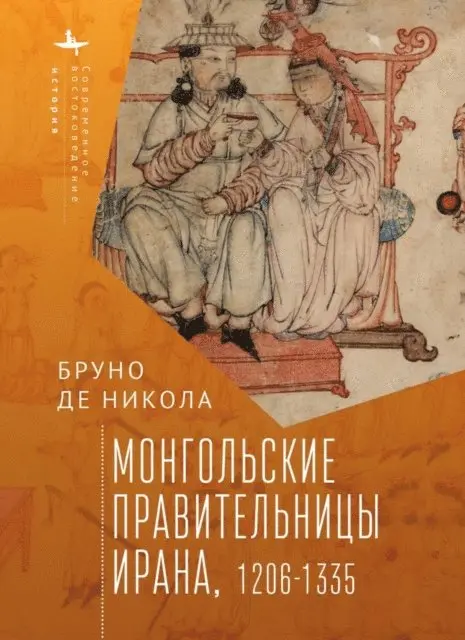
Bruno De Nicola investigates the development of women’s status in the Mongol Empire from its original homeland in Mongolia up to the end of the Ilkhanate of Iran in 1335. Taking a thematic approach, the chapters show a coherent progression of this development and contextualise the evolution of the role of women in medieval Mongol society. The arrangement serves as a starting point from where to draw comparison with the status of Mongol women in the later period. Exploring patterns of continuity and transformation in the status of these women in different periods of the Mongol Empire as it expanded westwards into the Islamic world, the book offers a view on the transformation of a nomadic-shamanist society from its original homeland in Mongolia to its settlement in the mostly sedentary-Muslim Iran in the mid-13th century.
336 kr
Skickas inom 3-6 vardagar
Bruno De Nicola investigates the development of women’s status in the Mongol Empire from its original homeland in Mongolia up to the end of the Ilkhanate of Iran in 1335. Taking a thematic approach, the chapters show a coherent progression of this development and contextualise the evolution of the role of women in medieval Mongol society. The arrangement serves as a starting point from where to draw comparison with the status of Mongol women in the later period. Exploring patterns of continuity and transformation in the status of these women in different periods of the Mongol Empire as it expanded westwards into the Islamic world, the book offers a view on the transformation of a nomadic-shamanist society from its original homeland in Mongolia to its settlement in the mostly sedentary-Muslim Iran in the mid-13th century.