Charles Melville - Böcker
Visar alla böcker från författaren Charles Melville. Handla med fri frakt och snabb leverans.
17 produkter
17 produkter
1 245 kr
Skickas inom 10-15 vardagar
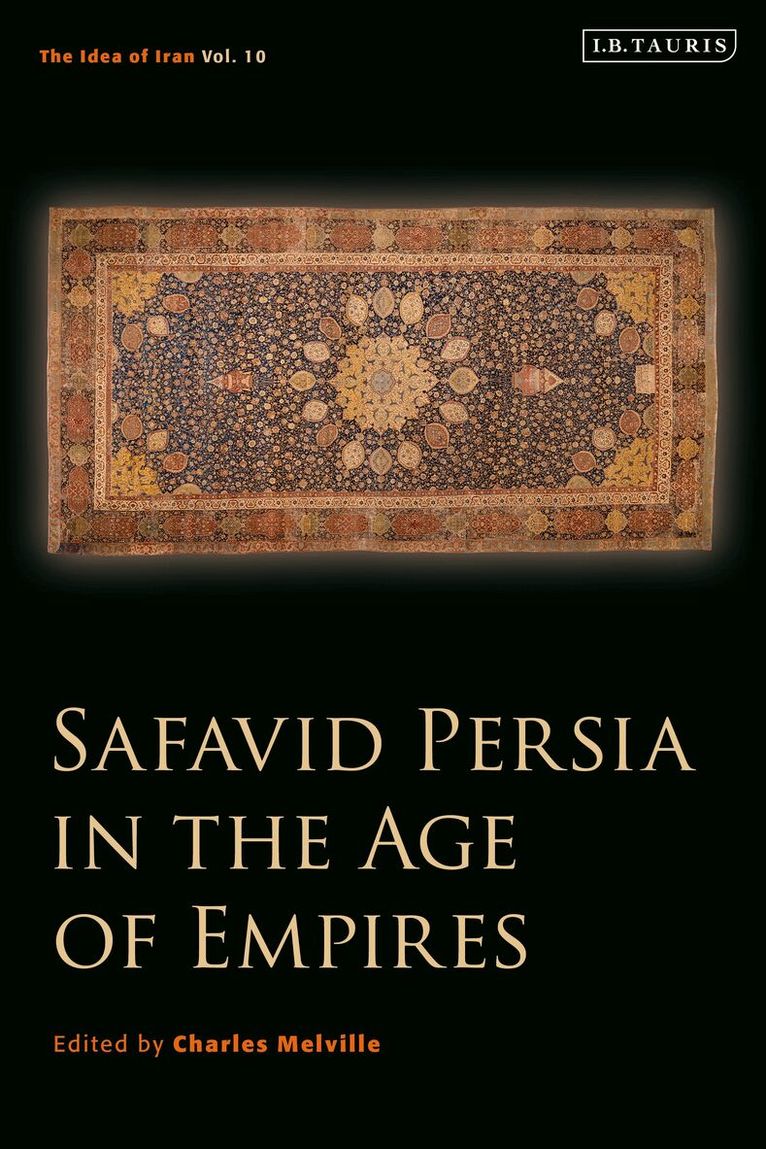
The sixteenth and seventeenth centuries saw the establishment of the new Safavid regime in Iran. Along with reuniting the Persian lands under one rule, the Safavids initiated the radical transformation of the religious landscape by introducing Imami Shi‘ism as the official state faith and in this as in other ways, laying the foundations of Iran’s modern identity. In this book, leading scholars of Iranian history, culture and politics examine the meaning of the idea of Iran in the Safavid period by examining contemporary experiences of both insiders and outsiders, asking how modern scholarship defines the distinctive features of the age.While sometimes viewed as a period of decline from the high points of classical Persian literature and the visual arts of preceding centuries, the chapters of this book demonstrate that the Safavid era was nevertheless a period of great literary and artistic activity in the realms of both secular and theological endeavour. With the establishment of comparable polities across western, southern and central Asia at broadly the same time, the book explores some of the literary and political interactions with Iran’s Ottoman, Mughal and Uzbek neighbours. As the volume and frequency of European merchants and diplomats visiting Safavid Persia increased, especially in the seventeenth century, and as more Iranians recorded their own travel experiences to surrounding Muslim lands, the Safavid period is the first in which we can document and explore the contours of Iran’s place in an expanding world, and gain insights into how Iranians saw themselves and others saw them.
392 kr
Skickas inom 10-15 vardagar
The sixteenth and seventeenth centuries saw the establishment of the new Safavid regime in Iran. Along with reuniting the Persian lands under one rule, the Safavids initiated the radical transformation of the religious landscape by introducing Imami Shi‘ism as the official state faith and in this as in other ways, laying the foundations of Iran’s modern identity. In this book, leading scholars of Iranian history, culture and politics examine the meaning of the idea of Iran in the Safavid period by examining contemporary experiences of both insiders and outsiders, asking how modern scholarship defines the distinctive features of the age.While sometimes viewed as a period of decline from the high points of classical Persian literature and the visual arts of preceding centuries, the chapters of this book demonstrate that the Safavid era was nevertheless a period of great literary and artistic activity in the realms of both secular and theological endeavour. With the establishment of comparable polities across western, southern and central Asia at broadly the same time, the book explores some of the literary and political interactions with Iran’s Ottoman, Mughal and Uzbek neighbours. As the volume and frequency of European merchants and diplomats visiting Safavid Persia increased, especially in the seventeenth century, and as more Iranians recorded their own travel experiences to surrounding Muslim lands, the Safavid period is the first in which we can document and explore the contours of Iran’s place in an expanding world, and gain insights into how Iranians saw themselves and others saw them.
373 kr
Skickas inom 7-10 vardagar
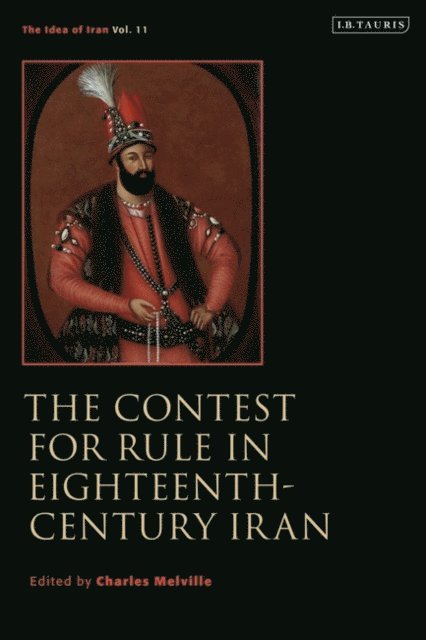
This volume explores the troubled eighteenth century in Iran, between the collapse of the Safavids and the establishment of the new Qajar dynasty in the early decades of the nineteenth century. Despite the striking military successes of Nader Shah, to defeat the Afghan invaders, drive back the Ottomans in the west, and launch campaigns into India and Central Asia, Iran steadily lost territory in the Caucasus and the east, where Persian arms failed to recover lands lost to the Afghans and the Ozbeks. The chapters of this book cover the continuity and change over this transitional period from a range of perspectives including political history, historiography, art and material culture. They illuminate the changes in Iran’s internal conditions, including the legitimising legacy of the Safavid period in court chronicles, the rise of Nader Shah and his influence on the idea of Iran, as well as the art of successive dynasties competing for power and prestige. The volume also addresses Iran’s changed international situation by examining relations with Russia, Britain and India, the result of which would contribute to its re-emergence with a curtailed presence in the new world order of European dominance.
1 177 kr
Skickas inom 10-15 vardagar
This volume explores the troubled eighteenth century in Iran, between the collapse of the Safavids and the establishment of the new Qajar dynasty in the early decades of the nineteenth century. Despite the striking military successes of Nader Shah, to defeat the Afghan invaders, drive back the Ottomans in the west, and launch campaigns into India and Central Asia, Iran steadily lost territory in the Caucasus and the east, where Persian arms failed to recover lands lost to the Afghans and the Ozbeks. The chapters of this book cover the continuity and change over this transitional period from a range of perspectives including political history, historiography, art and material culture. They illuminate the changes in Iran’s internal conditions, including the legitimising legacy of the Safavid period in court chronicles, the rise of Nader Shah and his influence on the idea of Iran, as well as the art of successive dynasties competing for power and prestige. The volume also addresses Iran’s changed international situation by examining relations with Russia, Britain and India, the result of which would contribute to its re-emergence with a curtailed presence in the new world order of European dominance.
447 kr
Skickas inom 7-10 vardagar
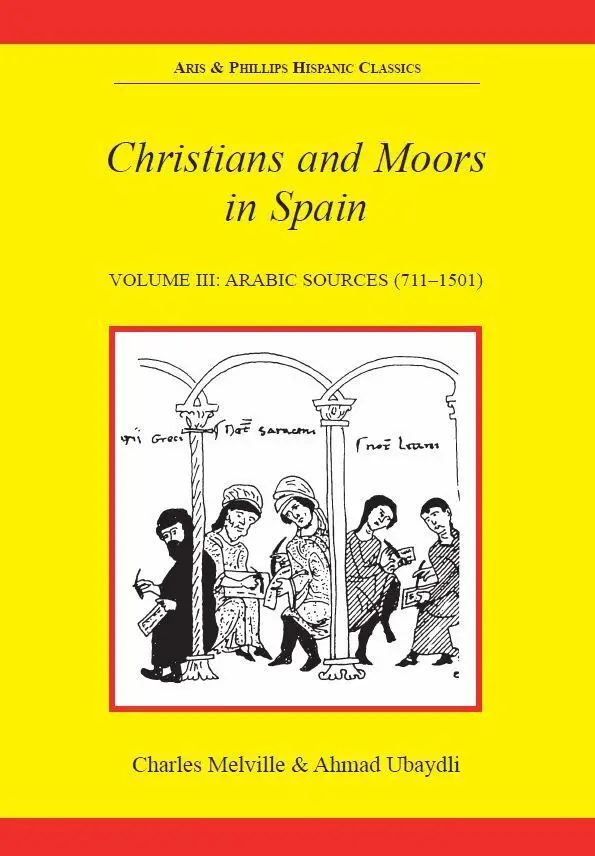
The last two volumes in this series have looked at the confrontation between Christian and Moor in Medieval Spain exclusively from the Christian side.This book attempts to redress the balance by looking at many of the same incidents from the Moslem point of view. Apart from military encounters, some attention is paid to diplomacy, and also to lawsuits, legal judgements and regulations governing the co-existance of the rival communities. The 112 texts, many available in English for the first time, are also given in Arabic.
1 599 kr
Tillfälligt slut
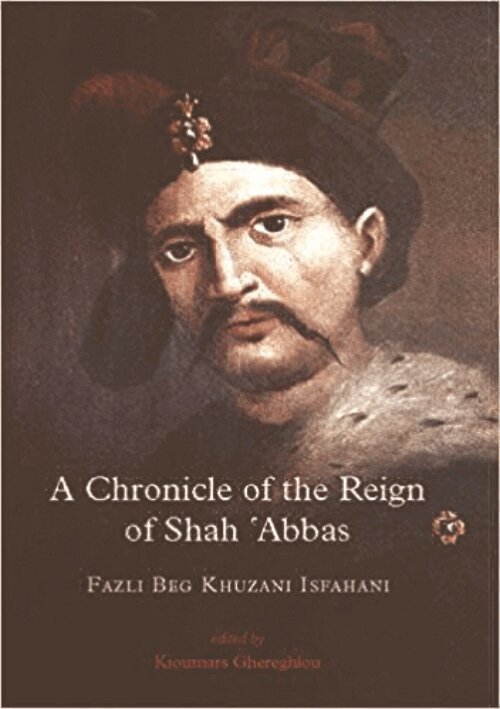
This substantial and largely unknown Persian chronicle of the reign of Shah ‘Abbas I (1587-1629) exists in a unique manuscript, recently discovered in the Library of Christ’s College, Cambridge. Its author, Fazl-Allah Khuzani Isfahani, member of an important bureaucratic family, provides an insider’s account of this crucial period in Persian history, with a wealth of detail about the central and provincial administration and much information not found in other sources. Shortly after the succession of Shah Safi I, Fazl-Allah left for India, where he continued to work on his chronicle. So far, three volumes of the Afzal al-tawarikh have come to light, covering the reigns of Shah Isma‘il, Shah Tahmasp and Shah ‘Abbas; none of them is complete and each exists only in a sole copy.Volume 3 on Shah ‘Abbas is a composite work, containing many of the author’s handwritten corrections and marginalia, making it a fascinating example of the composition of a work in progress. The complete text of 579 folios has been edited by Kioumars Ghereghlou (Columbia University); the publication is accompanied by detailed indexes and a substantial introduction by Kioumars Ghereghlou and Charles Melville (University of Cambridge) on the life and career of Fazl-Allah, the significance of his work and the manuscripts on which it is based. Two-volume set.
Short History of the Gibb Memorial Trust and its Trustees
A Century of Oriental Scholarship
Inbunden, Engelska, 2023
785 kr
Skickas inom 7-10 vardagar
Provides an unusual history of an important institution promoting Islamic scholarship in BritainPresents authoritative biographies of leading scholars by those working in the same fieldBrings together leading scholars of Middle Eastern history, literature, Islamic mysticism and religious studies to discuss their influential predecessors in these fieldsDraws on the unpublished archives of the Gibb Memorial Trust and first-hand memoirsReveals how the Gibb Memorial Trust was able to promote and support the publication and study of key Middle Eastern sources for over a centuryThe Gibb Memorial Trust, founded at the start of the 20th century, comprised among its trustees some of the most celebrated and prominent orientalists of their day. Together, they sponsored and supported research on editing and translating Arabic, Persian and Turkish manuscripts on a range of subjects, from history, literature, geography and poetry to Sufism and the Islamic sciences.This volume covers the development of Middle Eastern and Islamic Studies over the last 120 years or so, as seen through the biographies of the leading scholars of the period. It opens with a short history of the Trust, before presenting a series of short biographical and often personal appreciations of these eminent Middle Eastern scholars of the past, written by existing trustees. In providing a history of this important institution, the book shines a light on the history and development of Middle Eastern and Islamic Studies in Britain more broadly.
A Short History of the Gibb Memorial Trust and Its Trustees: A Century of Oriental Scholarship
Häftad, Engelska
440 kr
Kommande
1 314 kr
Skickas inom 10-15 vardagar
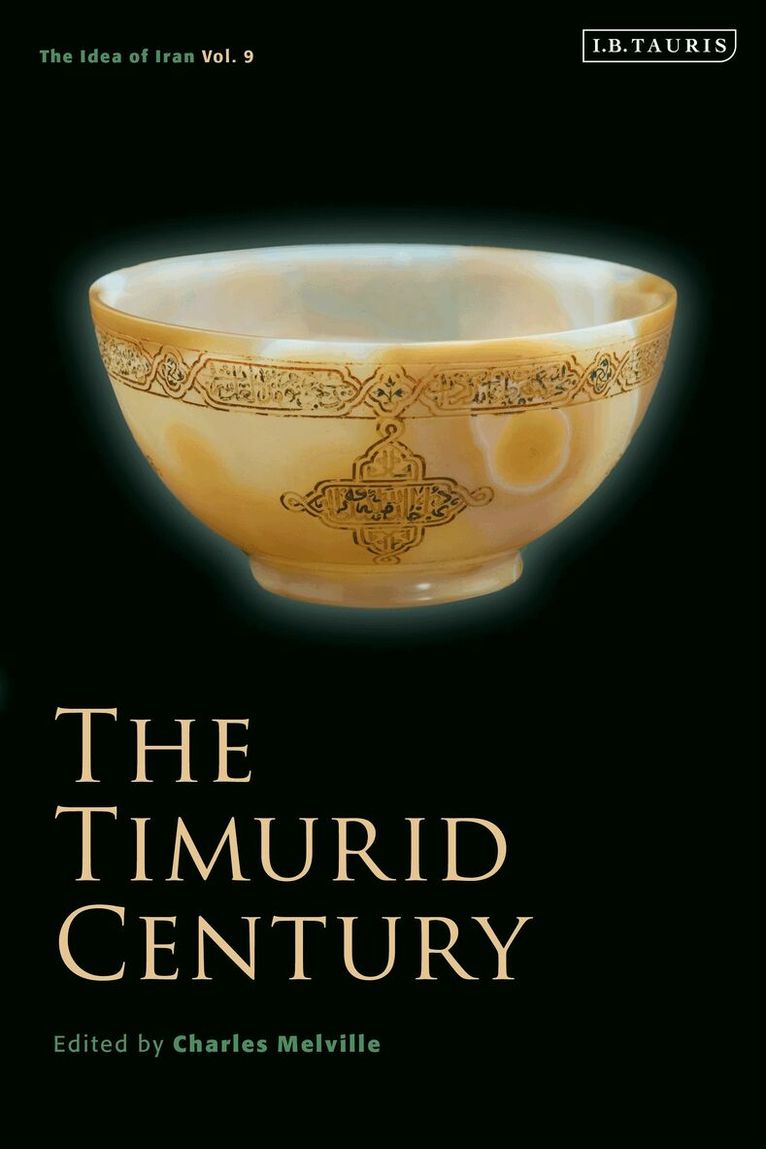
The century after the conquests of Timur witnessed the division of eastern and western Iran between his Turko-Mongol successors, and a flowering of Persian culture in the great cities of Herat, Samarqand and Tabriz, among others. In this, the ninth volume in The Idea of Iran series, leading scholars analyse the ways that Timurid contemporaries viewed their traditions and their environment, asking questions such as: what was the view of outsiders, and how does modern scholarship define the distinctive aspects of the period? Essential reading for scholars, students, and all those interested in the history of Iran, the book considers the political, religious and cultural history of this rich and highly productive interval that was the springboard for the formation of new imperial Ottoman, Safavid, Mughal and Ozbek orders of succeeding centuries.
406 kr
Skickas inom 10-15 vardagar
The century after the conquests of Timur witnessed the division of eastern and western Iran between his Turko-Mongol successors, and a flowering of Persian culture in the great cities of Herat, Samarqand and Tabriz, among others. In this, the ninth volume in The Idea of Iran series, leading scholars analyse the ways that Timurid contemporaries viewed their traditions and their environment, asking questions such as: what was the view of outsiders, and how does modern scholarship define the distinctive aspects of the period? Essential reading for scholars, students, and all those interested in the history of Iran, the book considers the political, religious and cultural history of this rich and highly productive interval that was the springboard for the formation of new imperial Ottoman, Safavid, Mughal and Ozbek orders of succeeding centuries.
2 108 kr
Skickas inom 10-15 vardagar
Persian literature is the jewel in the crown of Persian culture. It has profoundly influenced the literatures of Ottoman Turkey, Muslim India and Turkic Central Asia and been a source of inspiration for Goethe, Emerson, Matthew Arnold and Jorge Luis Borges among others. Yet Persian literature has never received the attention it truly deserves. "A History of Persian Literature" answers this need and offers a new, comprehensive and detailed history of its subject. This 18-volume, authoritative survey reflects the stature and significance of Persian literature as the single most important accomplishment of the Iranian experience. It includes extensive, revealing examples with contributions by prominent scholars who bring a fresh critical approach to bear on this important topic. In this volume the Editors offer an indispensable overview of Persian literature's long and rich historiography. Highlighting the central themes and ideas which inform historical writing, "Persian Historiography" will be an indispensable source for the historiographical traditions of Iran and the essential guide to the subject.
349 kr
Skickas inom 7-10 vardagar
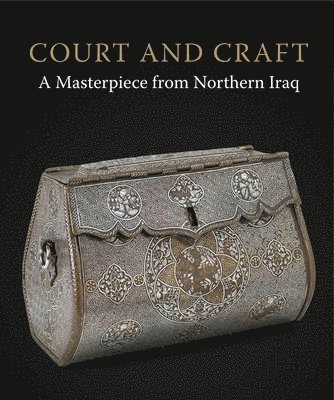
Accompanying a major scholarly exhibition at The Courtauld Gallery, this book explores one of the most beautiful and enigmatic objects in The Courtauld's collection: the so-called 'Courtauld wallet', a brass container richly inlaid with gold and silver, imitating a lady's textile or leather bag, and probably made in Mosul in northern Iraq around 1300. No other object of this kind is known. Decorated all round with courtly figures and on the top with an elaborate banqueting scene featuring an enthroned couple, it has long been recognized as a masterpiece of Arab metalwork. Yet, despite the superb quality of its design and craftsmanship and its status as a unique object, this exceptional metalwork bag has never been properly published. Thus it remains little known outside a small circle of specialists, and little understood even within that circle. Encompassing a variety of multidisciplinary essays by distinguished historians and art historians - on subjects ranging from music at the Mongol court, Mosul under Mongol governorship and Mongol marriage customers to the role of women under the Ilkhanids - this publication aims to explore the origins, function and iconography of this splendid luxury object as well as the cultural context in which it was made and used. It will bring together other images of enthroned Mongols with female consorts, as well as scenes of hunters, revelers an musicians in a variety of media, including illustrated manuscripts, ceramics, textile, and metalwork. By presenting the bag alongside carefully selected contemporary material, it will provide an insight into courtly life under the Mongols in the newly conquered areas of their empire, and will also provide an unrivaled opportunity to investigate the inlaid brass tradition in Mosul after the Mongol Conquest. Objects made before and after this seismic event will be reproduced side by side to demonstrate how the Mosul metalworkers adapted their work for their new patrons.
697 kr
Skickas inom 3-6 vardagar
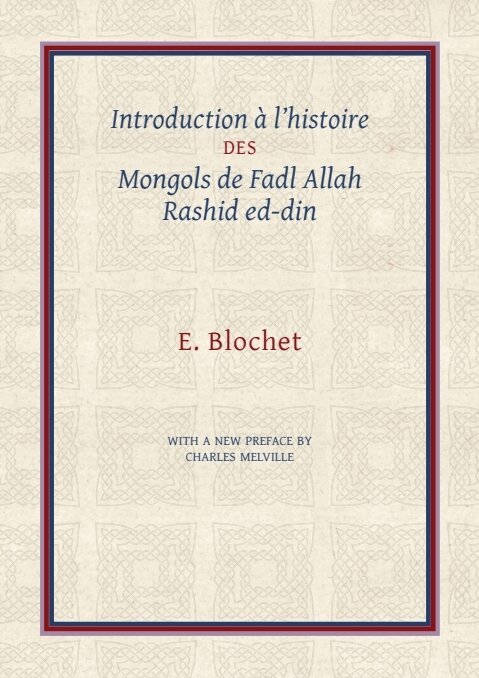
Edgard Blochet (1870-1937), the French orientalist, left his mark in several areas of Middle Eastern and Asian studies. In 1910 his introduction to Rashīd al-Dīn’s Jāmi‘ al-tawārīkh was published as volume XII in the E.J.W. Gibb Memorial Series. The Jāmi‘ al-tawārīkh has been described as the first ‘world history’; written at the start of the fourteenth century, in the Mongol Ilkhanate in Persia, it describes cultures and major events in world history from China to Europe and in addition, it covers Mongol history.Introduction à l’Histoire des Mongols is a rich and complex work, and one that has been unduly lost sight of in more recent scholarship. Blochet is concerned chiefly with the transformation of the Mongol Empire from the death of its founder into a Chinese dynasty with complex relations with its former constituent territories in Transoxania, Russia and Iran in the period covered by the portion of the Jāmi‘ al-tawārīkh that he was editing. This introductory volume does not offer conclusions, but it provides a valuable survey of the place of Rashīd al-Dīn’s chronicle in the historical literature of the time and its impact on later historiography. Despite the very considerable body of work dedicated to Rashīd al-Dīn, his chronicle, the history of Ilkhanid Iran and Yuan China and the linguistic analysis of the primary sources since Blochet’s time, this reprint of a work that has long been unavailable aims to encourage a re-evaluation of his pioneering contributions to the field. The original French text is re-published here, accompanied by a new preface by Charles Melville.
858 kr
Skickas inom 3-6 vardagar
Guy Le Strange (1854-1933) pioneered the study of the historical geography of the Middle East, and especially Persia, notably in his Lands of the Eastern Caliphate (Cambridge, 1905) and the present work which contains an English translation of Mustaufī’s Nuzhat al-qulūbḤamd-Allāh Mustaufī was a fourteenth-century historian and geographer. His Nuzhat al-qulūb (Hearts’ delight) sets out to give a description of Iran in the form of a gazetteer. Despite some repetition of previous accounts, there are many snippets of up to date information embedded in his descriptions of the various provinces and cities and villages of Iran, including altered circumstances and productivity, and changes in their names and prosperity, and his work gives a graphic account of the area in the latter days of the Īl-Khāns.Mustaufī’s Nuzhat al-qulūb captures a moment in time caught between an old world and a new – the familiar but moribund universal Islamic Caliphate, fatally destroyed by the Mongol invasions, and the new dispensation of the Mongol Empire, within which Iran once more found independence and cultural self-determination. But this world too was in transition, as the Ilkhanate was in the process of collapsing and new insecurities threatened. This accessible new edition will make this important work, extensively used but little studied and long out of print available to a new generation of scholars.
321 kr
Skickas inom 11-20 vardagar
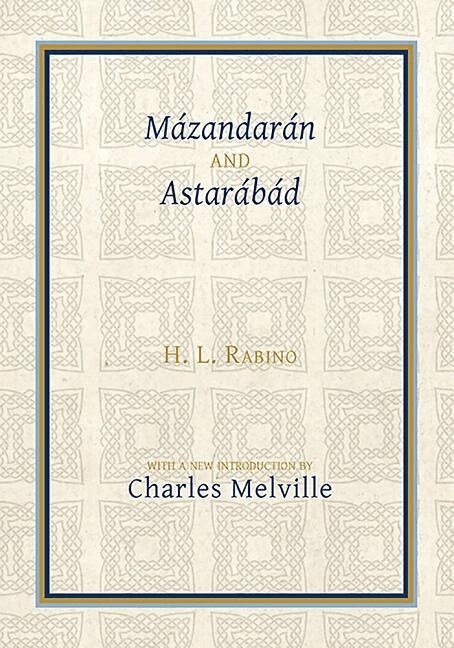
Mázandarán and Astarábád was first published as volume VII of the new series of the E.J.W. Gibb Memorial Series (1928). Much of the data was retrieved in the course of two expeditions by the author, one in spring of 1908 and the other between November 1909 and January 1910, the latter providing the chronological framework for Rabino’s observations along his itinerary. It is a remarkable work, the product of many years of the careful accumulation of information about a region cut off from the Iranian Plateau by the formidable barrier of the Alburz Mountains and enjoying a complex history commensurate with its peculiar physical geography and inaccessible valleys. The book is a mixture of gazetteer and travelogue, informed by detailed research not only in the historical sources available, but also in the works of previous European and local writers. Notable among its valuable qualities is the substantial selection of Persian inscriptions provided in addition to Rabino’s descriptive text. Here we have a scholarly and sensitive account of two Iranian provinces full of character and variety.This is a classic work that has long been out of print and an essential resource for subsequent work on the Caspian provinces, which all draw on the efforts of H. L. Rabino. Included with this new edition is a large-scale facsimile reproduction of the original accompanying map.
Del 127 - Islamic History and Civilization
Mongols' Middle East
Continuity and Transformation in Ilkhanid Iran
Inbunden, Engelska, 2016
2 427 kr
Skickas inom 5-8 vardagar
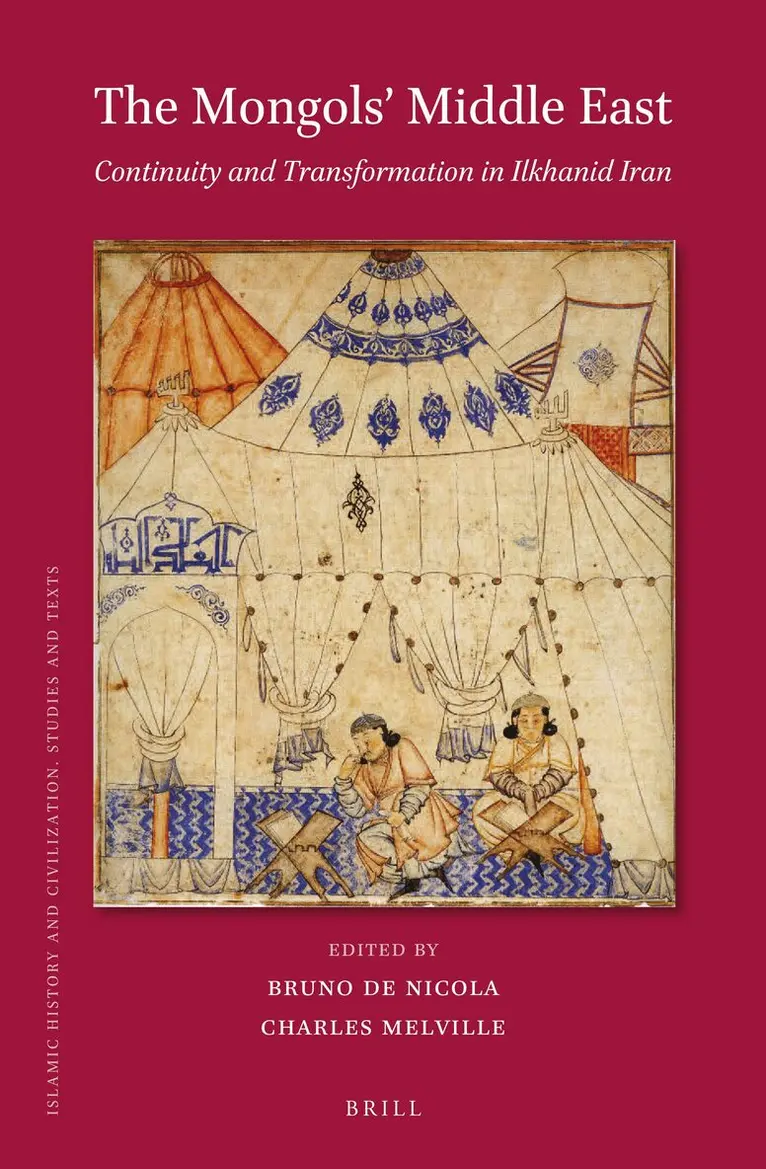
The Mongols’ Middle East: Continuity and Transformation in Ilkhanid Iran offers a collection of academic articles that investigate different aspects of Mongol rule in 13th- and 14th-century Iran. Sometimes treated only as part of the larger Mongol Empire, the volume focuses on the Ilkhanate (1258-1335) with particular reference to its relations with its immediate neighbours. It is divided into four parts, looking at the establishment, the internal and external dynamics of the realm, and its end. The different chapters, covering several topics that have received little attention before, aim to contribute to a better understanding of Mongol rule in the Middle East and its role in the broader medieval Eurasian world and its links with China.With contributions by: Reuven Amitai, Michal Biran, Bayarsaikhan Dashdondog, Bruno De Nicola, Florence Hodous, Boris James, Aptin Khanbaghi, Judith Kolbas, George Lane, Timothy May, Charles Melville, Esther Ravalde, Karin Rührdanz
806 kr
Skickas inom 5-8 vardagar
The Mongols’ Middle East: Continuity and Transformation in Ilkhanid Iran offers a collection of academic articles that investigate different aspects of Mongol rule in 13th- and 14th-century Iran. Sometimes treated only as part of the larger Mongol Empire, the volume focuses on the Ilkhanate (1258-1335) with particular reference to its relations with its immediate neighbours. It is divided into four parts, looking at the establishment, the internal and external dynamics of the realm, and its end. The different chapters, covering several topics that have received little attention before, aim to contribute to a better understanding of Mongol rule in the Middle East and its role in the broader medieval Eurasian world and its links with China.With contributions by: Reuven Amitai, Michal Biran, Bayarsaikhan Dashdondog, Bruno De Nicola, Florence Hodous, Boris James, Aptin Khanbaghi, Judith Kolbas, George Lane, Timothy May, Charles Melville, Esther Ravalde, Karin Rührdanz