Budd Hall - Böcker
Visar alla böcker från författaren Budd Hall. Handla med fri frakt och snabb leverans.
4 produkter
4 produkter
1 009 kr
Skickas inom 10-15 vardagar
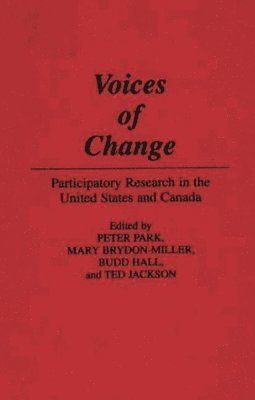
This volume describes a grass-roots approach to empowering people for democratic social change. It explains participatory research using exemplary case studies on community organizing, feminist theory, and ecological movements from a wide range of locations in North America. The first collection of essays on participatory research in Canada and the United States, the book is an eloquent demonstration that the same approach to social change is needed in industrialized countries as it is in underdeveloped countries. Challenging the relevance and validity of academic social science research, participatory research is an important tool for social activists, community workers, and adult educators working with oppressed peoples.
474 kr
Skickas inom 10-15 vardagar
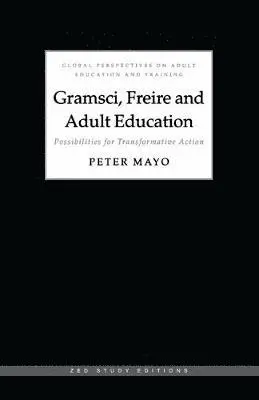
This book focuses on two of the most cited figures in the debate on radical education - Antonio Gramsci and Paulo Freire. Both regarded forms of adult education as having an important role to play in the struggle for liberation from oppression. In this book Peter Mayo examines the extent to which their combined insights can provide the foundation for a theory for our own times of transformative adult education. He focuses on three aspects of the pedagogical process in particular -- social relations, sites of practice and the content of adult education. He analyses their ideas and identifies some of the limitations in their work, notably the critical issues of gender and race which they do not address. The book concludes with a seminal attempt at synthesising their ideas in the context of other adult educators' more recent contributions in order to develop a theory of transformative adult education, including an assessment of its feasibility in the era of globalization and neoliberalism.
448 kr
Skickas inom 10-15 vardagar
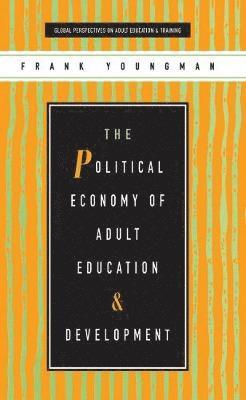
In the formerly colonial world, the discourse of development has established an almost unquestioned intellectual and political dominance. Adult educators, their purposes and their programmes, are inevitably deeply shaped by this fact. Frank Youngman believes that adult educators need to have an understanding of the various different theories of development, and how different development strategies and biases impact on their own work. The purpose of his book is to provide a theory of applied political economy to explain the interface between society and adult education in developing countries.The author's own approach is broadly influenced by the Marxist tradition, but one that seeks to transcend many of the limitations and rigidities often prevalent in the past. He introduces adult educators to the main competing theories of development - the modernisation, dependency, neo-liberal and various alternative approaches. He then demonstrates the power of his analytical tools by examining a variety of specific issues affecting adult education. These include the impact of foreign aid, social inequalities (notably class, gender and ethnic inequalities), and the relationship between state and civil society in peripheral capitalist societies.The book draws on a wealth of empirical information and case studies from various parts of the world, but with particular attention to the country which the author knows best, Botswana. Its signal contribution is its elaboration of a theory of the political economy of adult education in the context of development and its demonstration of the applicability of this theoretical framework, including its usefulness in generating appropriate research agendas.
474 kr
Skickas inom 10-15 vardagar
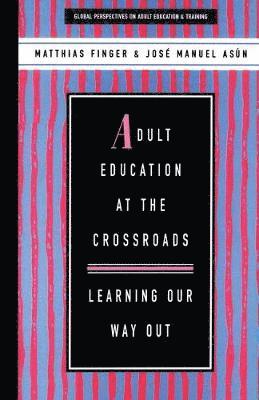
This is a pithy assessment of where adult education now stands - the traditions out of which it came, its current problems, and possible futures. The authors are particularly concerned with how its longstanding commitment to deliver social change ran into difficulties in the less favourable circumstances of the 1980s and 1990s. They argue that its purposes now need to be reconceptualized in order for it to become, once again, a relevant and effective agent of change.The authors remind adult educationists of their traditional commitment to social action by surveying the ideas of seminal adult education thinkers as they developed historically in Europe, North America and later the Third World. They show how today‘s very different context has eroded that original vision and purpose.The book concludes by identifying four possible future scenarios; the challenges confronting an adult education still committed to social change; and the key features which they believe can contribute to ‘learning our way out of‘ the current impasse.