C. D. N. Costa - Böcker
Visar alla böcker från författaren C. D. N. Costa. Handla med fri frakt och snabb leverans.
8 produkter
8 produkter
538 kr
Skickas inom 5-8 vardagar
A scholarly edition of a work by Lucretius. The edition presents an authoritative text, together with an introduction, commentary notes, and scholarly apparatus.
1 549 kr
Skickas inom 7-10 vardagar
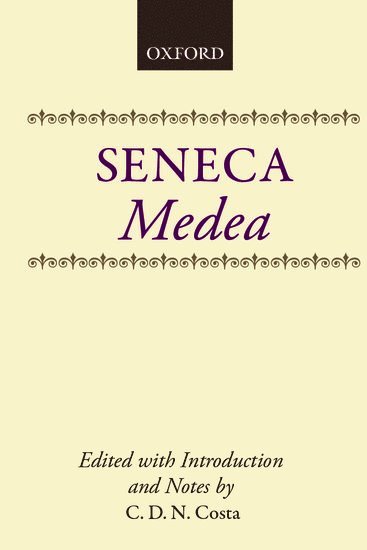
This paperback edition of the Medea is the first full-scale edition with introduction, text, apparatus criticus, and commentary, of any play by Seneca. Its purpose is primarily to elucidate the play itself, but at the same time it is easily accessible to students of English and French literature since Costa clarifies several of the links between the ancient play and the work of later European playwrights. That Seneca's work influenced European literature is well attested, but his Medea is particularly interesting as it was preceded by Euripides' version and followed by many plays on the subject in English, French, and German, derived more or less closely from Seneca's.
2 271 kr
Skickas inom 5-8 vardagar
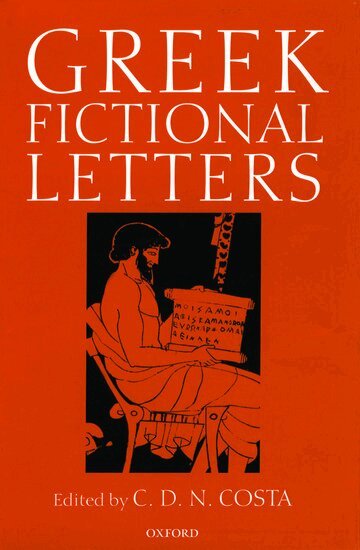
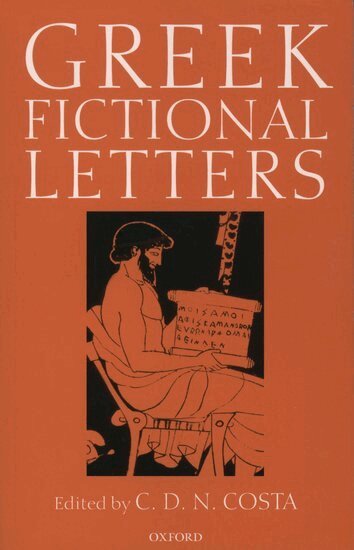
The book explores a relatively unfamiliar and under-appreciated area of Greek literature, imaginary letters written between about 100 BC and 500 AD. They are imaginary or fictional either because both writer and recipient are invented, or because they are attributed to real historical characters. In the latter group, the real authors are unknown, whereas we know at least the names of those in the first group. Letter writing, real and fictional, was an important activity in this period, which was also the time that the sophists or professional rhetoricians were very influential in the political and educational life particularly of the Greek east. Many of our authors clearly were sophists practising their skills, especially in character portrayal. This selection opens a window on an attractive, lively, and often amusing area in the history of Greek prose. All the letters are translated, and the commentaries provide both grammatical help and background information.
699 kr
Skickas inom 3-6 vardagar
The book explores a relatively unfamiliar and under-appreciated area of Greek literature, imaginary letters written between about 100 BC and 500 AD. They are imaginary or fictional either because both writer and recipient are invented, or because they are attributed to real historical characters. In the latter group, the real authors are unknown, whereas we know at least the names of those in the first group. Letter writing, real and fictional, was an important activity in this period, which was also the time that the sophists or professional rhetoricians were very influential in the political and educational life particularly of the Greek east. Many of our authors clearly were sophists practising their skills, especially in character portrayal. This selection opens a window on an attractive, lively, and often amusing area in the history of Greek prose. All the letters are translated, and the commentaries provide both grammatical help and background information.
1 850 kr
Skickas inom 3-6 vardagar
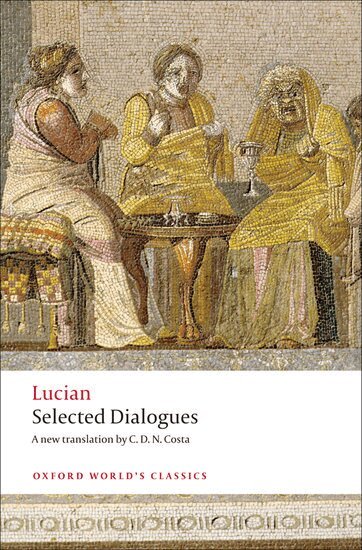
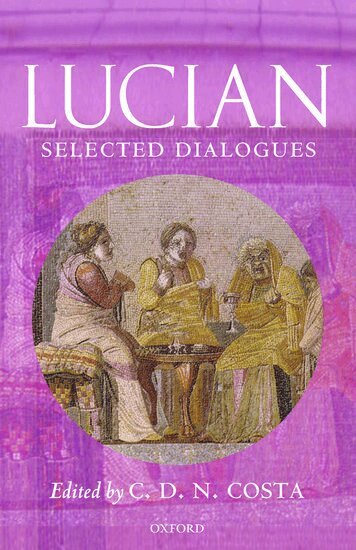
A translation of fourteen of Lucian's dialogues, offering a cross-section of his styles and satirical targets, from serious polemic (Alexander, Peregrinus) to lighter squibs and character-portrayals (Dialogues of the Courtesans). Also included are How to Write History and his most famous piece, A True History, a parody of the popular vogue for fabulous traveller's tales. Each piece has a summary introduction, and notes to clarify obscure allusions in the text. The Introduction examines in some detail Lucian's importance as a dominant Atticizer in the period of the Second Sophistic, as well as his extraordinarily widespread influence on later European literature.
124 kr
Skickas inom 5-8 vardagar
'you'll find another man to harvest, Glycerion: let this one go'The Greek satirist Lucian was a brilliantly entertaining writer who invented the comic dialogue as a vehicle for satiric comment. His influence was immense, not only in the Greek world, but on later European writers such as Rabelais and Swift. His dialogues puncture the pretensions of pompous philosophers and describe the daily lives of Greek courtesans; they are peopled by politicians, historians and ordinary citizens, as well as by gods and mythic figures. This selection provides a cross-section of Lucian's styles and satirical targets, from serious polemic to lighter squibs and character portrayals. It includes How to Write History and his most famous piece, A True History, a fabulous tale of space travel and a monstrous whale which prefigures the fantasies of Jules Verne.This lively new translation is both accurate and idiomatic, and the introduction highlights Lucian's importance in his own and later times. ABOUT THE SERIES: For over 100 years Oxford World's Classics has made available the widest range of literature from around the globe. Each affordable volume reflects Oxford's commitment to scholarship, providing the most accurate text plus a wealth of other valuable features, including expert introductions by leading authorities, helpful notes to clarify the text, up-to-date bibliographies for further study, and much more.
501 kr
Skickas inom 7-10 vardagar
This edition provides a text, translation and commentary on seventeen of Seneca's letters to Lucilius, which have always been amongst Seneca's most popular works. This volume contains letters 7, 12, 24, 47, 54, 56, 57, 78, 79, 83, 88, 90, 92, 104, 110, 114 and 122. The selection aims to cover a representative range of his letters, both in length and subject matter, and offers complete unabridged letters. The commentary focuses primarily on subject matter, rather than linguistic and lexical matters, though these are dealt with where they affect interpretation. Latin text with facing translation, commentary and notes. (Aris and Phillips 1988) Latin text with facing translation, commentary and notes.
501 kr
Skickas inom 7-10 vardagar
The Dialogues were an important medium for the spreading of Greek philosophical theories to the Roman world and to subsequent ages. This selection is of complete, not excerpted, dialogues. The commentary concentrates on subject matter and the philosophical ideas informing the treatises, though help is also given where needed on grammatical and lexical points. The four chosen dialogues give a fair idea of the range of Seneca's philosophical interests and of his didactic techniques. This is the first serious commentary in English on any of Seneca's Dialogues since Duff (1915). Latin text with facing translation, commentary and notes.