Camille Sandorfy – författare
Visar alla böcker från författaren Camille Sandorfy. Handla med fri frakt och snabb leverans.
5 produkter
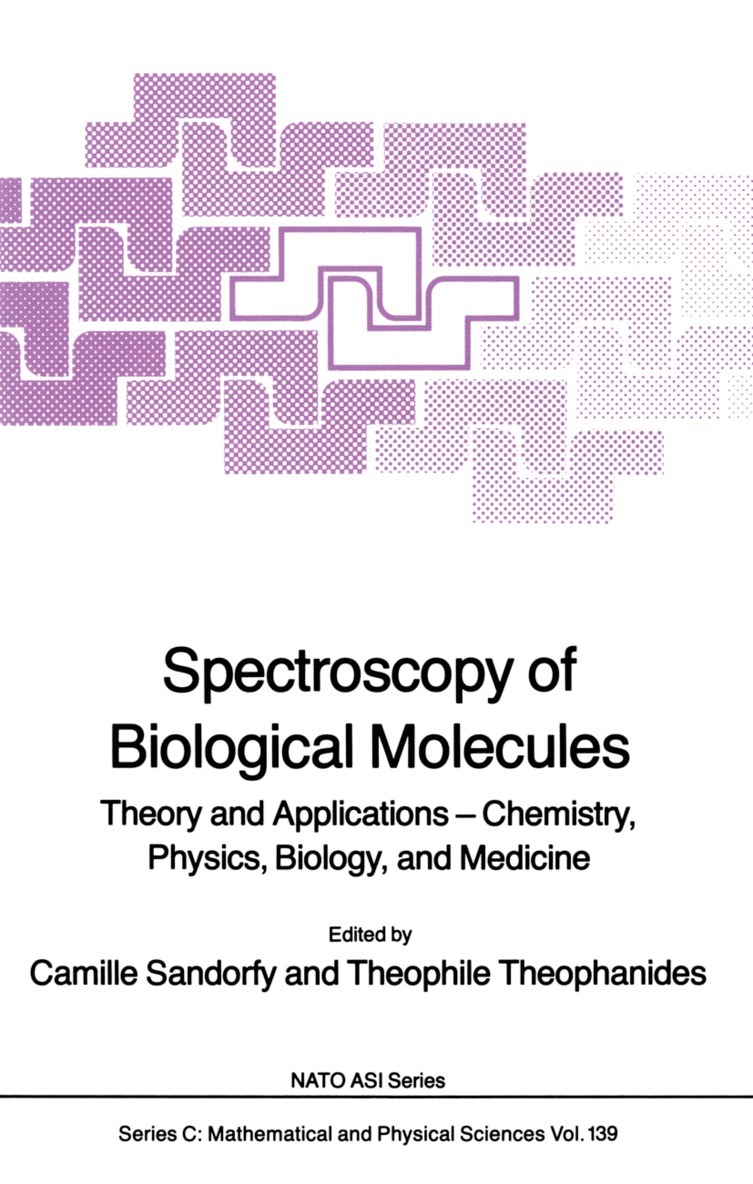
Spectroscopy of Biological Molecules
Theory and Applications — Chemistry, Physics, Biology, and Medicine
Av Camille Sandorfy, T. Theophanides
Inbunden, 1984
3272 kr
Lägg i varukorg
This volume contains the proceedings of the NATO-Advanced Study Institute on the "Spectroscopy of Biological Molecules", which took place on July 4-15, 1983 in Acquafredda di Maratea, Italy. The institute concentrated on three main subiects: the structure and dymanics of DNA, proteins, and visual …
Spectroscopy of Biological Molecules
Theory and Applications — Chemistry, Physics, Biology, and Medicine
Av T. Theophanides, Camille Sandorfy
E-bok, 2012
3937 kr
Lägg i varukorg
This volume contains the proceedings of the NATO-Advanced Study Institute on the "Spectroscopy of Biological Molecules", which took place on July 4-15, 1983 in Acquafredda di Maratea, Italy. The institute concentrated on three main subiects: the structure and dymanics of DNA, proteins, and visual …
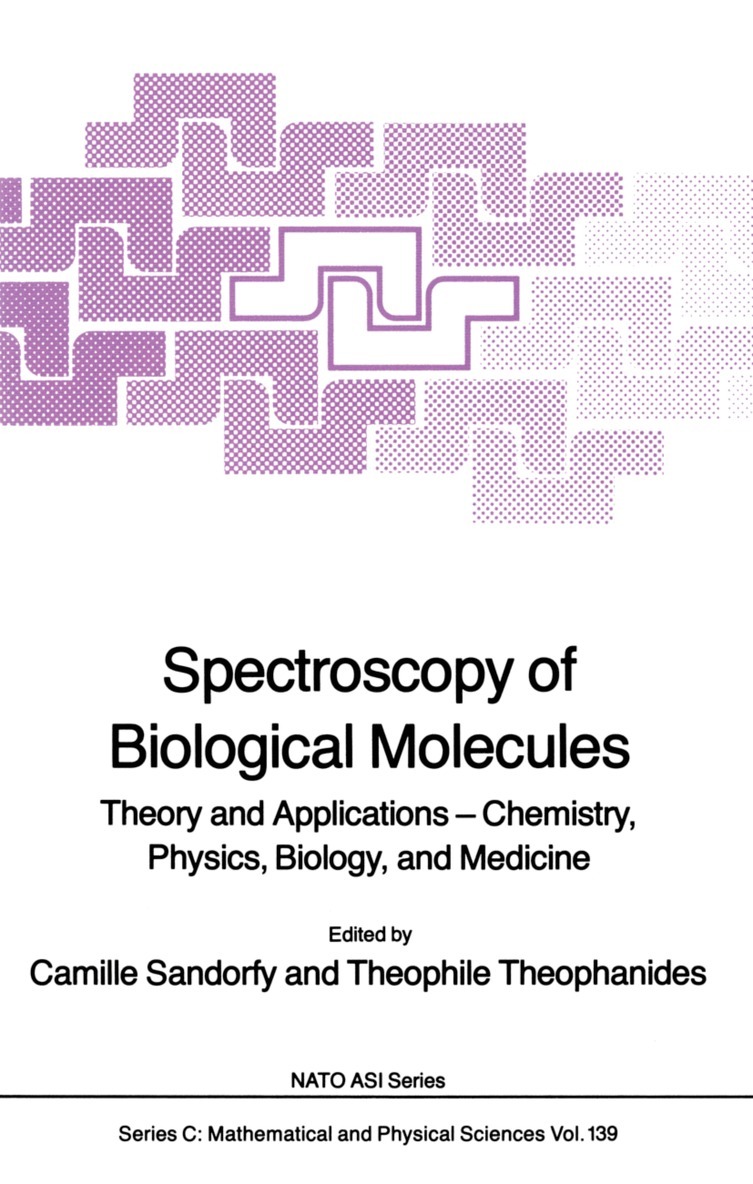
Spectroscopy of Biological Molecules
Theory and Applications — Chemistry, Physics, Biology, and Medicine
Av Camille Sandorfy, T. Theophanides
Häftad, 2011
3272 kr
Lägg i varukorg
This volume contains the proceedings of the NATO-Advanced Study Institute on the "Spectroscopy of Biological Molecules", which took place on July 4-15, 1983 in Acquafredda di Maratea, Italy. The institute concentrated on three main subiects: the structure and dymanics of DNA, proteins, and visual …
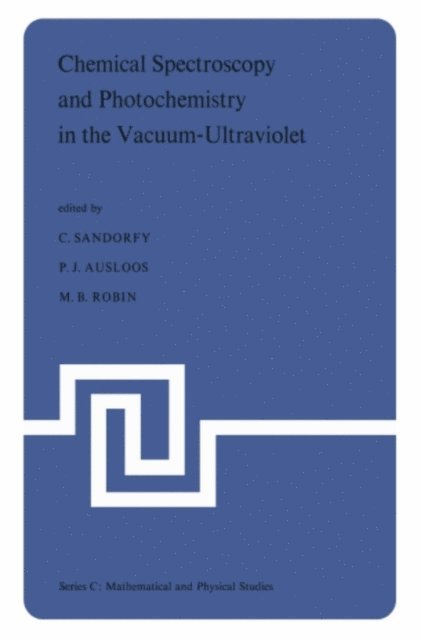
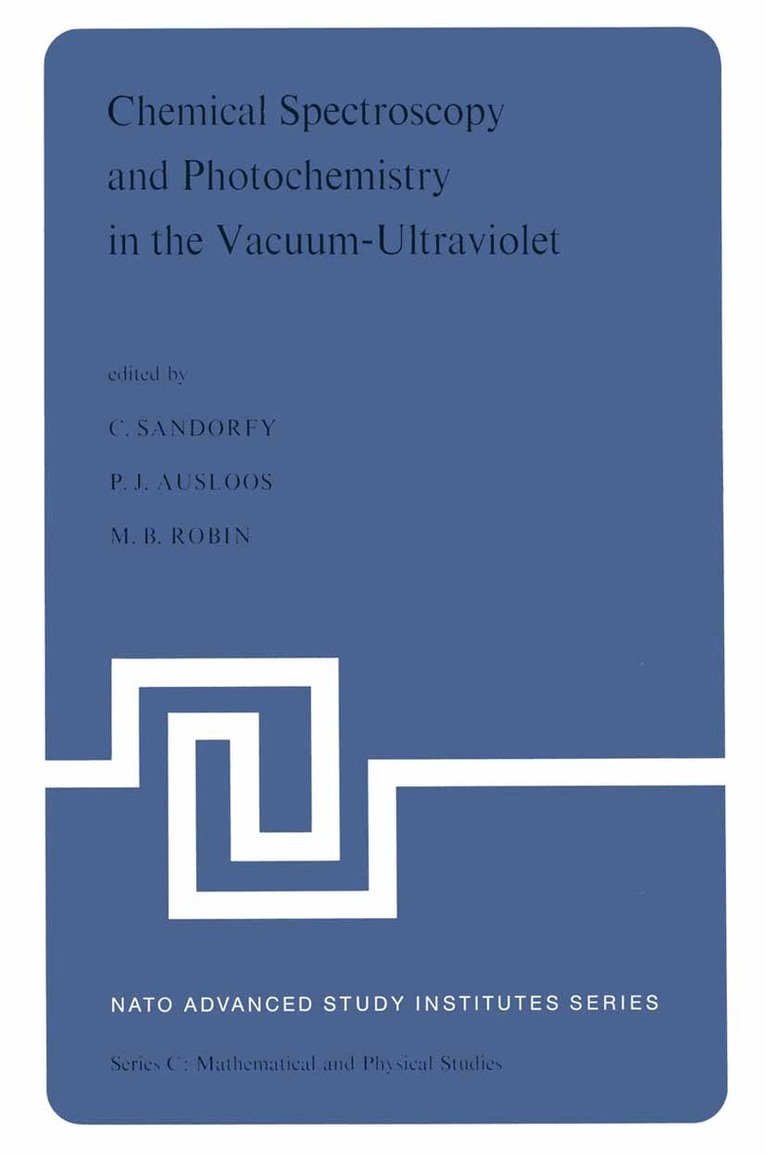
Chemical Spectroscopy and Photochemistry in the Vacuum-Ultraviolet
Proceedings of the Advanced Study Institute, held under the Auspices of NATO and the Royal Society of Canada, August 5–17, 1973, Valmorin, Quebec, Canada
Av M.B. Robin, Pierre Ausloos m. fl.
E-bok, 2012
734 kr
Lägg i varukorg
It is probably safe to predict that the future of chemistry is linked to the excited states of molecules and to other short lived species, ions and free radicals. Molecules have only one ground state but many excited states. However large the scope of normal, ground state chemistry might be, above …
Chemical Spectroscopy and Photochemistry in the Vacuum-Ultraviolet
Proceedings of the Advanced Study Institute, held under the Auspices of NATO and the Royal Society of Canada, August 5–17, 1973, Valmorin, Quebec, Canada
Av Camille Sandorfy, Pierre Ausloos m. fl.
Häftad, 2012
551 kr
Lägg i varukorg
It is probably safe to predict that the future of chemistry is linked to the excited states of molecules and to other short lived species, ions and free radicals. Molecules have only one ground state but many excited states. However large the scope of normal, ground state chemistry might be, above …