Campbell McCutcheon - Böcker
Visar alla böcker från författaren Campbell McCutcheon. Handla med fri frakt och snabb leverans.
20 produkter
20 produkter
157 kr
Tillfälligt slut
125 kr
Tillfälligt slut
The end of the Second World War heralded the start of a new war. It was the war in name only, fought out by the superpowers through propaganda, and using smaller nations as pawns in the military build-up that became known as the Cold War. New and chilling phrases entered the vocabulary - mutually assured destruction, nuclear proliferation, hydrogen bomb, airburst and fallout. The UK Government, like that of many other nations, considered the effects on the population at large. Plans were drawn up, secret nuclear bunkers built and a new civil defence network created to counter the threat of all-out nuclear war. Manuals were issued to those in the know and the civilian populace became used to the sounds of nuclear air-raid warning sirens being tested, of adverts informing them how to convert their house into a shelter, what to do with dead bodies, how to counteract radiation sickness, etc. The government also issued a whole series of pamphlets and educational films for the masses. Out of these has come Protect and Survive - The Civil Defence Manual, which brings together, for the first time, the Government's own pamphlets for Civil Defence volunteers and the populace at large.
111 kr
Tillfälligt slut
Two weeks before Dunkirk, Anthony Eden, Minister of War, announced to the nation on BBC radio his concept of a Local Defence Volunteer force. It was a grim time! The Germans were routing the French and British in Belgium and France, Norway was lost, and within two weeks, the cream of Britain's fighting forces would be weaponless and kit-less, seeking rescue from the beaches of Dunkirk. Eden's words echoed around every living room in the country: 'In order to volunteer, what you have to do is give in your name at your local police station; and then, as and when we want you, we will let you know.' The motley assortment of men, most either too old or too young to join the army, became the nucleus of the Home Guard. Untried and without weapons, they would be called upon to halt the invasion that Hitler planned as he stood on the cliffs near Calais, eyeing Britain and its populace as his next conquest. Over a period of a few months, this rag-tag group was armed, uniformed and trained, using the Home Guard Manual. Learning how to construct booby traps, destroy tanks, ambush the enemy, survive in the open, use basic camouflage, read maps and send signals, the fledgling volunteer was turned into a veritable fighting machine, leaving the army to retrain, re-equip and fight elsewhere.
63 kr
Tillfälligt slut
In May 1945, as the Home Guard stood down, an enterprising small publisher in Birmingham produced Home Guard Humour - a light-hearted look at the five year history of the Home Guard. Within the pages of the booklet are contained all of the standard 'Dad's Army'-style jokes and one wonders if it was this booklet that encouraged the writing of one of Britain's most loved sitcoms. With a short introduction by Campbell McCutcheon, whose Home Guard Manual was a surprise bestseller of 2006, with over 35,000 copies sold to date (and now republished by Amberley Publishing), Home Guard Humour gives an insight into the largest civilian army of modern times. Illustrated with over thirty cartoons, drawn especially for the book in 1945.
63 kr
Tillfälligt slut
On the night of 14/15 April 1912, the Titanic, on her maiden voyage, sailed into history. Ramming an iceberg at speed, many of those aboard drowned or froze to death when she sank, with only a mere 700 passengers and crew rescued by the Cunard liner Carpathia. Fifteen hundred died in one of the worst peacetime maritime accidents in a collision that was totally avoidable. Too few lifeboats had been provided, the ship was steaming hard into an area of icebergs and few of the passengers and crew believed that she could sink. From the moment she hit the iceberg, Titanic was doomed and many of her crew knew it. Within three hours she was gone, all that remained was the detritus of disaster and the tortured souls of those who survived. However, the legacy of the world's largest ship sinking on her maiden voyage has endured and numerous films and hundreds of books have kept the memory of this fateful ship alive. Titanic was the second of a trio of vessels and the writer of a White Star brochure introducing the ships stated that 'As far as it is possible to do so, these two wonderful vessels [Olympic and Titanic] are designed to be unsinkable.' How those words would haunt him. From her building to her death, the story of the Titanic is a fascinating one. Read on and find out about the 'unsinkable' ship and how she met her end four days into her maiden voyage.
173 kr
Skickas inom 11-20 vardagar
1943 saw the Allies on the offensive, with victories in North Africa followed by the invasion of Sicily and landings in Italy establishing a foothold on mainland Europe, while on the Eastern Front the Red Army was making gains, and in the Pacific the Japanese-held islands were falling.The change in the Allies’ fortunes had begun the previous year and now they were building on those successes, paving the way for the major return to Europe with D-Day planned for 1944. The 8th Army’s successes in the Tunisian campaign pushed the German Afrika Korps out of North Africa. This was followed by the invasion of Sicily in May and landings on the toe of Italy in September, resulting in the ousting of Benito Mussolini. Other Allied successes came in the Pacific with the taking of Papua New Guinea and the Solomon Islands, together with British and Chinese advances in Burma, putting the Japanese onto the defensive. The conflict in Russia saw the key tank battle at Kursk and the subsequent retaking of some German-held territory. Other events included the Dambuster raids, an attack on the Ploesti oil refineries and the uprising in the Warsaw Ghetto.John Christopher and Campbell McCutcheon tell the story of 1943 at war using many rare and often unpublished images, showing the rapidly changing nature of the conflict.
194 kr
Tillfälligt slut
In August 1914, after almost a decade of sabre-rattling, arms races and localised wars, Europe erupted into the greatest conflict man had ever seen. The assassination of Archduke Franz Ferdinand saw the beginning of the war to end all wars, a war that it was reckoned would be over by Christmas but which, in reality, lasted over five years. Britain’s small peacetime army was no match for the millions of soldiers that Germany and Austro-Hungary could muster, and Lord Kitchener was almost a lone voice demanding that Britain mobilise as he could see the war would not be over by Christmas, or indeed even the next Christmas.His recruiting drive, etched into our memories by Alfred Leete’s ‘Your Country Needs You’ recruiting poster, saw the formation of over fifty ‘Pals’ regiments, as well as regiments based on occupation and even schooling. By 1915, these men were ready to go to war, a war that saw tens of thousands of them killed and injured, including some 584 out of 720 Accrington Pals in twenty minutes on the first day of the Battle of the Somme in 1916. 60,000 British soldiers died or were seriously injured that day, and due to the unique way the men were enlisted, the pain was focused on those towns and cities that had provided Kitchener’s New Army.Edgar Wallace tells us how this volunteer army was trained, and the book is profusely illustrated with views. It also has a new introduction looking back at what happened to this volunteer army, and how it changed the face of Britain for ever.
173 kr
Skickas
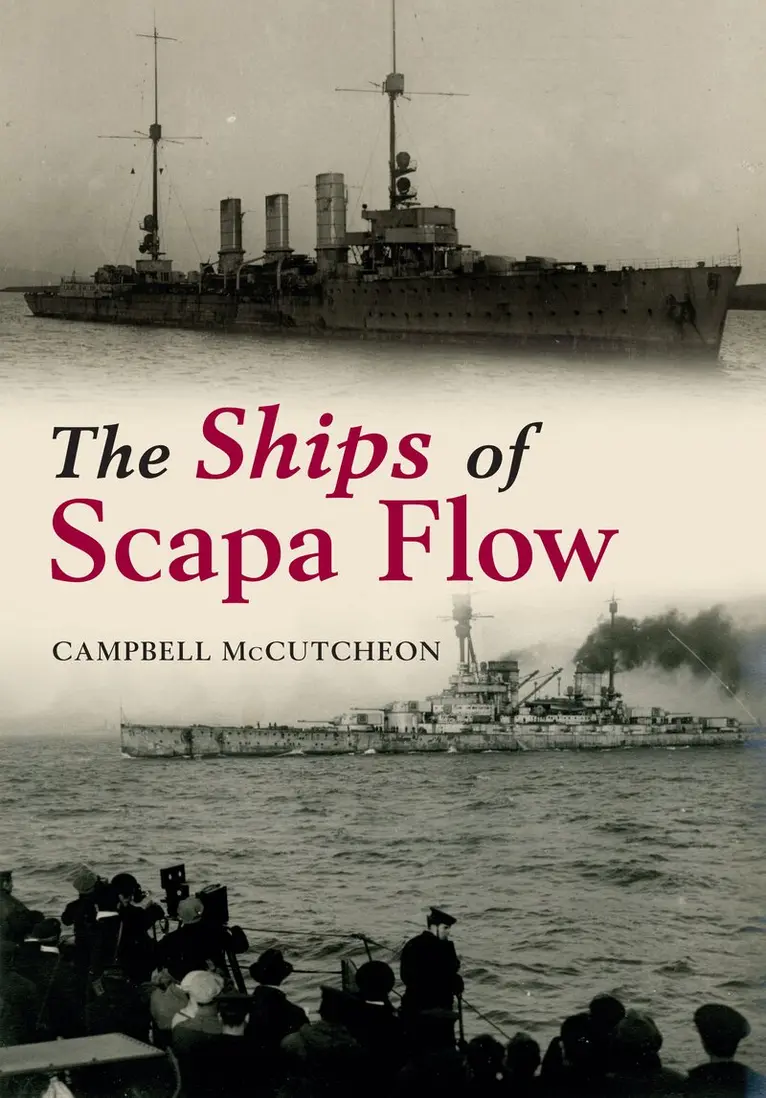
The islands surrounding Scapa Flow made one of Britain's best natural harbours, while the location at the north of Scotland protected the approaches to the North Sea and Atlantic. The naval base was important during both wars but what makes Scapa Flow famous is its wrecks, the remains of a German fleet, which once numbered some 74 vessels, most of which were scuttled in 1919, as well as the war graves of HMS Royal Oak and HMS Vanguard. The wrecks of the navy ships still survive, along with eight German warships for which a second war came and prevented salvage. Now a divers' paradise, the wrecks of Scapa Flow bring divers from all over the world and employ many in Orkney itself. This is the story of the ships of Scapa Flow, their sinking and their salvage, using many previously unseen images of the recovery and subsequent removal of many of the German battleships and cruisers to Rosyth dockyard in Fife for breaking up.
138 kr
Skickas
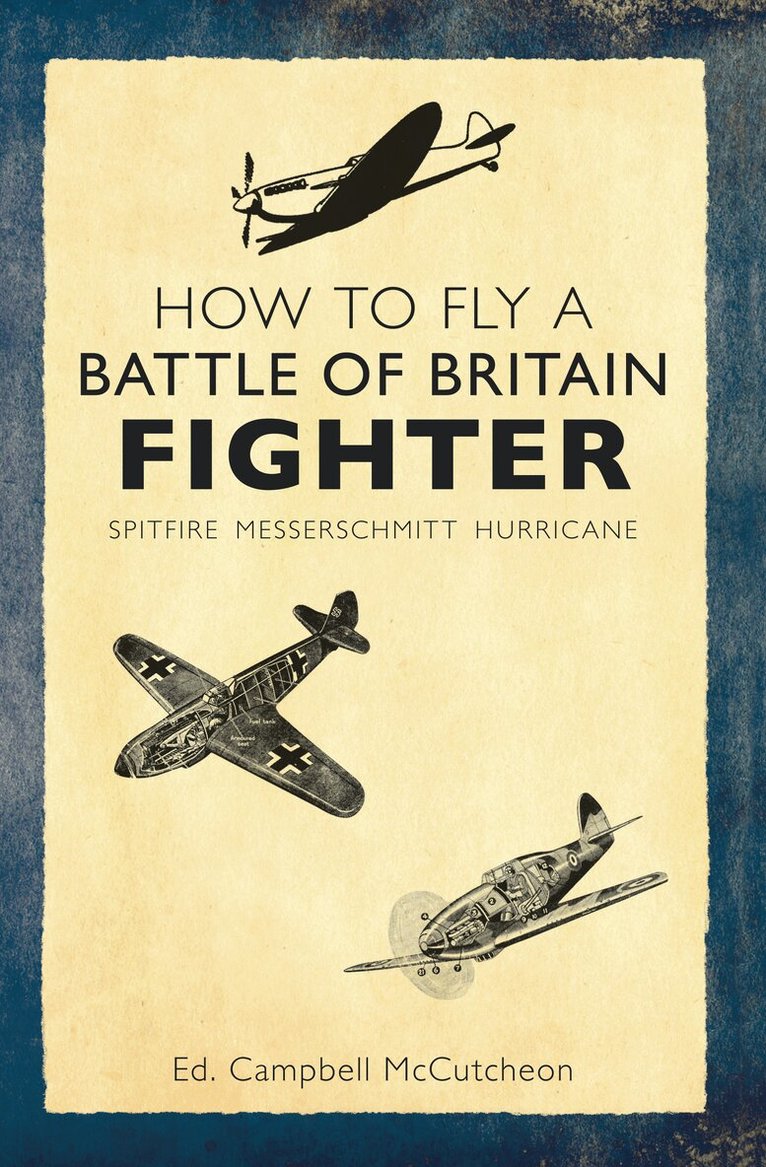
Find out how a pilot was instructed in flying a Battle of Britain fighter, using the original Pilot's Notes for the Supermarine Spitfire and Hawker Hurricane, as well as Air Ministry flying notes on captured Messerschmitt Bf 109s. See how each compares, view their cockpits and learn how they fly. All three aircraft handled superbly, and the Pilot's Notes help give an idea of what it was like to fl y in a real Second World War fighter aircraft. The aircraft were designed and first flew within months of each other, and all served throughout the war. More than 300 pilots on the Eastern Front shot down over 100 Soviet aircraft, each using Messerschmitt Bf 109s, while British aces in the Spitfire and Hurricane included Douglas Bader, Roland Beaumont, Neville Duke and Richard Hillary.
178 kr
Skickas inom 11-20 vardagar
Bradshaw’s Guide of 1863 was the staple book to what’s what and where’s where for the mid-Victorians and it gives the modern reader a unique insight into the world of the nineteenth-century railway travellers. Built primarily to serve industry and the mail packets to Ireland, the railways of Wales would go on to open up the Principality to tourism for the first time. They also brought communities closer together and many journeys that once took days to complete could now be undertaken in hours. This illustrated guide records the sights to be seen in the towns and cities encountered along the various routes.John Christopher and Campbell McCutcheon take us on Brunel’s broad gauge lines in South Wales, before joining the central and northern railways, using contemporary Victorian and Edwardian photographs and postcards to illustrate the scenes that the readers of Bradshaw’s Guide to the Railways would have experienced. This volume covers the South Wales Railway, the Great Western Railway, the Cambrian lines and the Chester & Holyhead Railway as well as the many branch lines.
189 kr
Skickas inom 11-20 vardagar
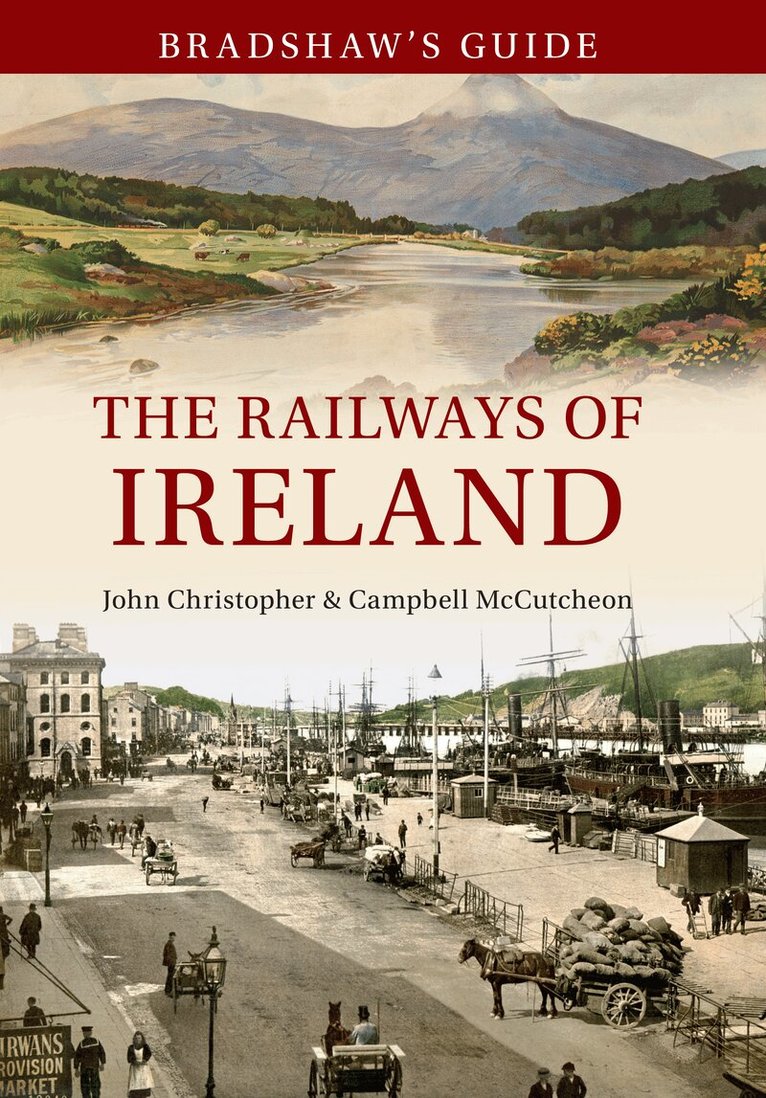
Bradshaw’s Guide of 1863 was the staple book on what’s what and where’s where for the mid-Victorians and it gives the modern reader a unique insight into the world of the nineteenth-century railway travellers. Built primarily to provide a passenger service, the railways of Ireland would go on to open up the country to tourism in new ways. They also brought communities closer together and many journeys that once took days to complete could now be undertaken in hours. This illustrated guide records the sights to be seen in the towns and cities encountered along the various routes.John Christopher and Campbell McCutcheon take us on the railways of Ireland, using contemporary Victorian and Edwardian photographs and postcards to illustrate the scenes that the readers of Bradshaw’s Guide to the Railways would have experienced. This volume covers several of Ireland’s railways at the time, including the Great Southern Railway, the Dublin & Kingstown Railway, the Great Southern & Western Railway, the Midland Great Western Railway, and including those of Northern Ireland.
214 kr
Tillfälligt slut
The biggest shipping loss of both world wars was the hospital ship Britannic, at almost 50,000 tons. Supposedly safe to travel the seas, many hospital ships were lost in both wars. From the smallest of motor launches through steam yachts and converted ocean liners, Campbell McCutcheon tells the story of the First World War hospital ships. Many succumbed to accidents, mines or German submarines but many also faithfully provided a vital service without loss of life or accident.Troopships were also vital right from the very first days of the war, when ships carried the BEF across the English Channel in August 1914. Meanwhile, convoys that included many great pre-war ocean liners pressed into service were bringing Canadian and Australasian troops to the UK and France, and later American troops as well. Many would continue in service until long after the war had ended, repatriating soldiers well into 1919, and their story is also told in this beautifully illustrated book.
214 kr
Tillfälligt slut
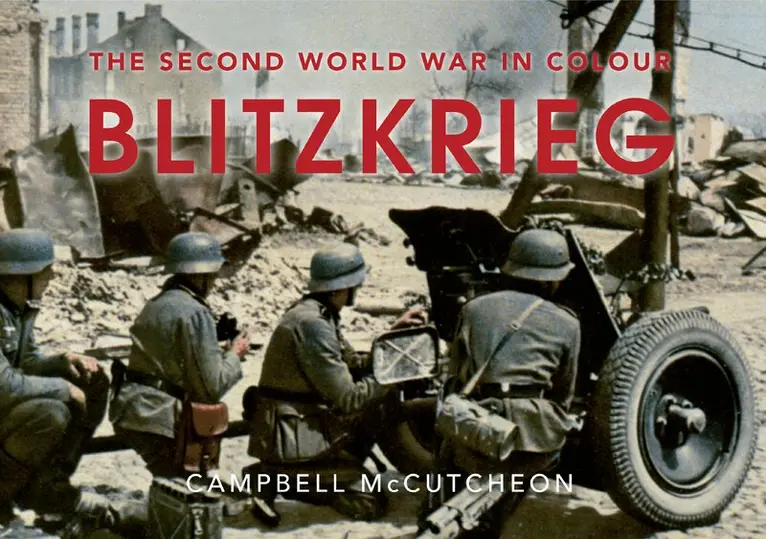
Colour photography was a rare thing in the 1930s. Various systems of colour photography had been tried, including Dufaycolour and Kodachrome but the processes were time consuming and difficult to process. The Germans had developed Agfacolor, which was state of the art for the time and easily processed with basic chemicals and equipment in rudimentary darkrooms close to the front. Sending propaganda units with the troops, and war correspondents armed with colour film and Leica cameras, the photographs captured the horror of war in colour for the first time. Here, over 70 colour and 70 black and white images tell the story of the Blitzkrieg as it happened, with immediacy that only action shots can portray.
Del 13 - Bradshaw's Guide
Bradshaw's Guide East Coast Main Line York to Edinburgh
Volume 13
Häftad, Engelska, 2014
310 kr
Tillfälligt slut
The East Coast Main Line – going from London to Edinburgh – remains one of the most important routes in this country. It was built by a number of separate companies and by 1863, when Bradshaw published his guide, the section from York to Berwick was operated by the North Eastern Railway, and onwards into Scotland by the North British Railway. This guide covers that final section of the ECML, including the important locations and branches encountered along the way. In the 1930s the LNER captured briefly the world record for a steam locomotive on this line, with Gresley’s streamlined A4 Pacific Mallard, as represented by David Mach’s brick sculpture at Darlington.‘Seldom has the gigantic intellect of man been employed upon a work of greater utility.’ Punch, in praise of Bradshaw’s publications. Bradshaw’s guide was published in 1863, not that long after most of Britain’s railway network had been completed. It gives the reader a unique insight into the world of the Victorian railways and goes beyond the engineering aspects to record the sights to be seen in the towns and cities encountered along the way. Campbell McCutcheon and John Christopher present Bradshaw’s original text accompanied by contemporary images to bring the ECML journey to life for the modern reader.
178 kr
Skickas inom 11-20 vardagar
Bradshaw’s Guide of 1863 was the staple book on what’s what and where’s where for the mid-Victorians and it gives the modern reader a unique insight into the world of the nineteenth-century railway travellers. The guide introduced the notion of seaside holidays to the general public and thanks to the railways it became possible for a town or city dweller to catch a train for a day-trip to the coast and still be home in time for supper.‘Oh! I do like to be beside the seaside, I do like to be beside the sea!I do like to stroll upon the Prom, Prom, Prom!Where the brass bands play:Tiddely-om-pom-pom!’Using Bradshaw’s Guide illustrated with contemporary images and seaside postcards, John Christopher and Campbell McCutcheon take us on a tour of Britain’s Victorian resorts.
214 kr
Tillfälligt slut
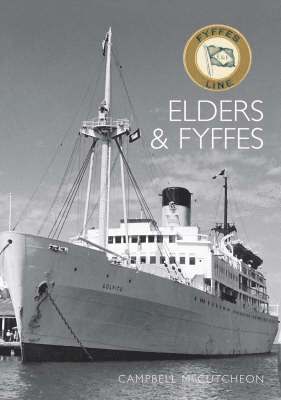
Ubiquitous in ever supermarket and corner shop, it is hard to imagine a world without bananas. But it was once so! Britain’s love affair with the humble banana is as much the story of Elders & Fyffes, a company set up to import the golden fruit into the United Kingdom. Originally, British imports were of the small Cavendish banana from the Canaries but the British Government was keen to see some trade from the West Indies and in 1901 Elders & Fyffes was formed to import and distribute bananas. The first ships arrived in 1902 and the company grew and expanded. During both world wars, the fleet of Elders & Fyffes served their country as armed merchant cruisers. The ships themselves were a common sight in the ports of Avonmouth, Bristol, Southampton, Portsmouth, Garston, Manchester, Liverpool, Glasgow and Cardiff.Campbell McCutcheon uses his fabulous collection of images of Elders & Fyffes to tell the story of this famous shipping line from its inception to the present day.
176 kr
Skickas inom 7-10 vardagar
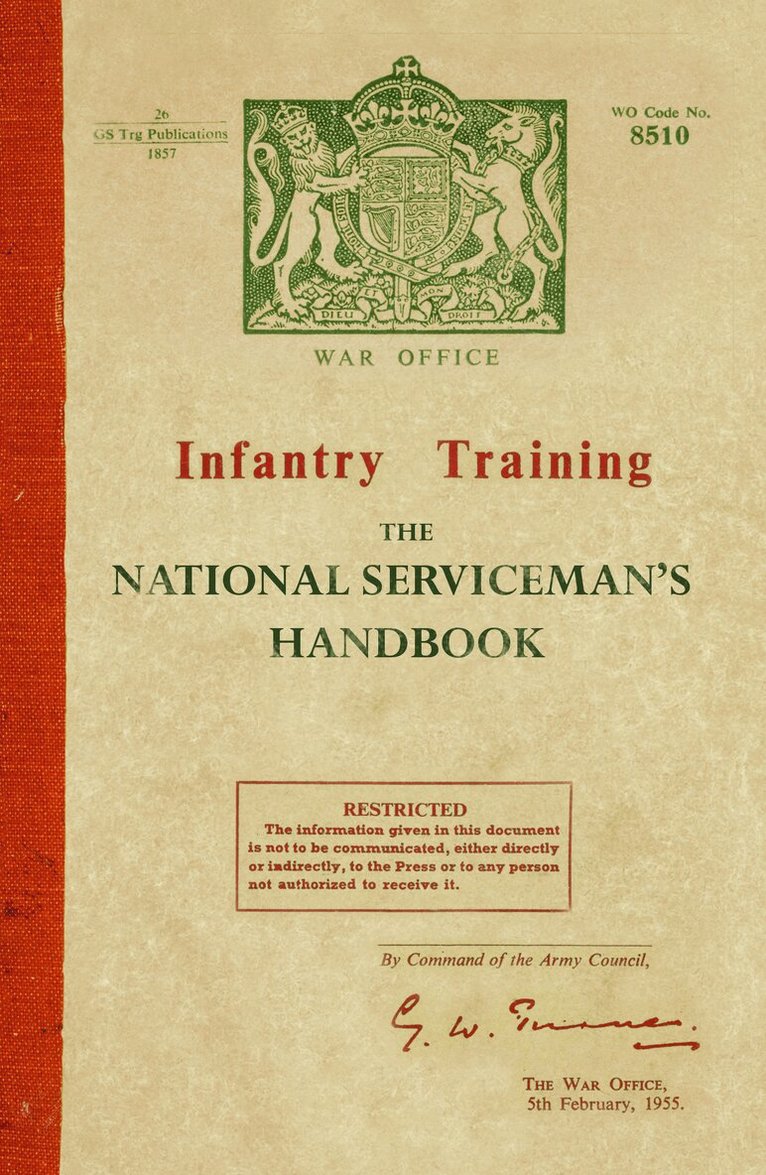
Conscription, a feature of the British Army in wartime, did not cease with the end of the Second World War. For almost another two decades, men were conscripted for National Service and two years in the armed forces.For many it brought some discipline to their lives, for others, they got to see the world. Some fought in action in Cyprus, Malaya, Kenya, Korea and in many other far-flung parts of the dwindling empire. During the Cold War, it also ensured Britain could call on a professionally trained group of men in times of war.It was all to end by the early 1960s, but hundreds of thousands of men were trained using the information enclosed within the pages of The National Serviceman’s Handbook, a compilation of the various army training manuals issued throughout National Service.
157 kr
Skickas
163 kr
Tillfälligt slut
This indispensible guide to 'Slang, University Wit and Pickpocket Eloquence' contains fascinating insights into the humour and mentality of its compilers. Enrich your vocabulary with the vulgar witticisms fashionable 200 years ago; wince at jests considered well beyond the pale today. 1811 Dictionary of the Vulgar Tongue is reproduced here unabridged, in its politically incorrect glory.
221 kr
Tillfälligt slut
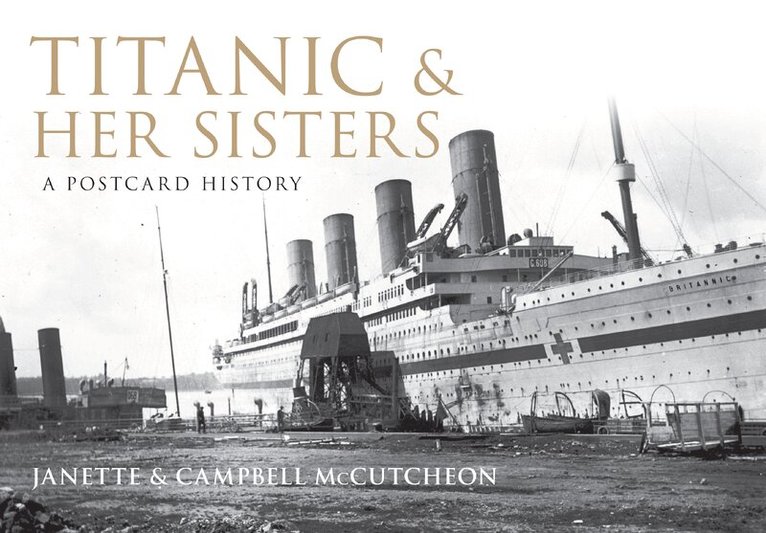
In 1908, the White Star Line announced it was constructing a pair of sister ships at the Harland & Wolff yard in Belfast. The new behemoths would dwarf even the largest ships of the time, being fully one-third larger than any ship afloat. They would also be the most sumptuous vessels built to date, carrying their millionaire passengers in unsurpassed luxury. The two ships, Olympic and Titanic, were to be followed by a third sister, originally to be called Gigantic, but renamed as Britannic after the sinking of Titanic in April 1912. Janette and Campbell McCutcheon tell the story of the White Star trio using a fabulous collection of original postcards and photos of the three sisters, only one of which was ever to make a return voyage from New York. With the loss of Titanic in 1912, work was suspended on Britannic, but she was to sink on her sixth voyage as a hospital ship, during the First World War. Despite sinking a U-boat by ramming it, Olympic survived the war and was scrapped in Jarrow in 1935 after twenty-four years of service for White Star.