Janette McCutcheon - Böcker
Visar alla böcker från författaren Janette McCutcheon. Handla med fri frakt och snabb leverans.
8 produkter
8 produkter
207 kr
Tillfälligt slut
201 kr
Tillfälligt slut
214 kr
Tillfälligt slut
In 1871, a bright new star appeared on the Liverpool shipping scene. Like a phoenix, the White Star Line grew out of the ashes of a bankrupt sailing ship line to become the fastest-growing and most famous of all shipping companies. Their first transatlantic steamships set a new standard for travel, a standard that was to remain as long as the company existed. Operating between Europe, the USA and Canada, the White Star Line also sailed to New Zealand, South Africa and Australia. The White Star Line never had the fastest ships, but theirs were the most luxurious. From Oceanic of 1871 to Georgic of 1932, there were many ground-breaking White Star Line ships. The company's most famous are undoubtedly the Olympic, Titanic and Britannic, but the other seventy or so ships of the line also helped White Star become the most famous shipping line of all time. White Star merged with Cunard in 1934 and the last liner, Britannic, was scrapped in 1960. Today, only the passenger tender Nomadic survives of this once great fleet. Using photographs and ephemera, Janette McCutcheon tells the story of the White Star Line and its ships, transporting us back to a time of luxury travel that has gone forever.
221 kr
Tillfälligt slut
In 1839, Samuel Cunard, a wealthy Haligonian, sailed from Nova Scotia to England with the idea of setting up a transatlantic steamship company. His talks with the British government were successful and he set up the British & North American Royal Mail Steam Packet Company, which rapidly became known as the Cunard Line. Its first ship left Liverpool in 1840 for Halifax and Boston. Celebrating its 175th anniversary in 2015, Cunard has had its ups and downs, from the sinking of the Lusitania to the debuts of three of the most famous liners in the world: Queen Mary, Queen Elizabeth 2 and Queen Mary 2 as well as the Queen Victoria in 2007 and Queen Elizabeth in 2009. Now owned by Carnival, Cunard has seen the loss of QE2 in 2008, sold to become a floating hotel and museum in Dubai, but has built another new Queen to follow in the footsteps of her illustrious sisters. Using over 200 illustrations, many previously unpublished, Janette McCutcheon tells the story of Cunard from its early beginnings to the present day.
214 kr
Tillfälligt slut
Built at the end of the Depression and launched on the weekend of the Munich Crisis, the Queen Elizabeth's maiden voyage was a wartime dash to New York to escape the Luftwaffe's bombs. After a wartime career that saw her bring an American division to Gourock every few weeks, she finally entered company service for Cunard in 1946. She sailed with her sister Queen Mary through Cunard's golden years and was sold out of service in 1968, becoming a tourist attraction in Port Everglades. Sold again, she became C. Y. Tung's Seawise University and was burned out in 1972 while being converted, before being scrapped where she lay in Hong Kong harbour.
214 kr
Tillfälligt slut
Queen Elizabeth 2: The Last Great Liner tells the story of the Cunard liner. It is a story of superlatives - QE2 has travelled further than any other ocean liner ever built, she can travel backwards faster than any other cruise ship afloat can travel forwards. Designed for a combination of the North Atlantic run and cruising, she has made an annual world cruise since the early 1970s. Sold to the Dubai Investment Corporation, she bowed out after 40 years afloat in November and sailed for Dubai to become a floating hotel and museum.
214 kr
Tillfälligt slut
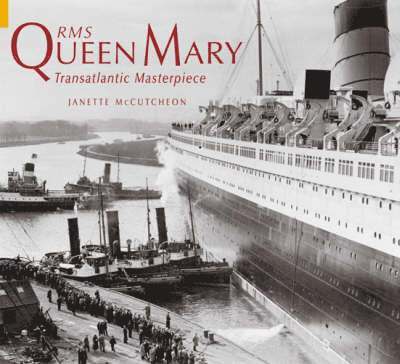
No other moving object has carried as many people in one voyage (over 16,000). After the war, she became the most profitable vessel in the Cunard fleet and the 1950s were a golden era for ocean liner travel. By the 1960s, jets had taken much of the traffic and after 1,001 voyages, the mighty Queen was sold for preservation at Long Beach, where she resides today, the last remaining great ocean liner.
221 kr
Tillfälligt slut
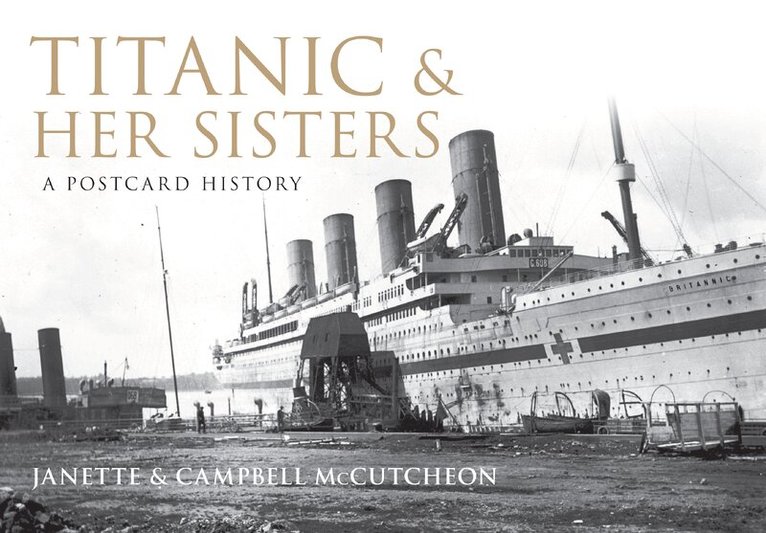
In 1908, the White Star Line announced it was constructing a pair of sister ships at the Harland & Wolff yard in Belfast. The new behemoths would dwarf even the largest ships of the time, being fully one-third larger than any ship afloat. They would also be the most sumptuous vessels built to date, carrying their millionaire passengers in unsurpassed luxury. The two ships, Olympic and Titanic, were to be followed by a third sister, originally to be called Gigantic, but renamed as Britannic after the sinking of Titanic in April 1912. Janette and Campbell McCutcheon tell the story of the White Star trio using a fabulous collection of original postcards and photos of the three sisters, only one of which was ever to make a return voyage from New York. With the loss of Titanic in 1912, work was suspended on Britannic, but she was to sink on her sixth voyage as a hospital ship, during the First World War. Despite sinking a U-boat by ramming it, Olympic survived the war and was scrapped in Jarrow in 1935 after twenty-four years of service for White Star.