Cara Cliburn Allen - Böcker
Visar alla böcker från författaren Cara Cliburn Allen. Handla med fri frakt och snabb leverans.
3 produkter
3 produkter
467 kr
Skickas inom 7-10 vardagar
How exceptional low-income students navigate and pursue opportunity in prestige-oriented universities at the personal cost of hunger.Beneath the veneer of prestige and promise, a hidden issue pervades the campuses of America's selective universities. In Starving the Dream, Nathan F. Alleman, Cara Cliburn Allen, and Sarah E. Madsen reveal the startling contradiction between the celebrated opportunities of these prestige-oriented institutions and the food insecurity that exceptional low-income students must navigate within environments of plenty. Through meticulous case-study research, the authors leverage student and administrative interviews, observations, and official and "alternative" campus tours to uncover how normatively affluent universities are rife with expectations of extensive campus involvement and material displays of wealth. However, visions of the ideal student experience are only attainable for low-income students at the cost of either involvement or consistent food access. Critiquing the social and symbolic meaning that food takes on in affluent universities where students are socialized into coveting upper-middle-class lifestyle markers such as gourmet coffee and branded campus clothing, the book argues that administrators must better align services and support with the demands of a rigorous academic experience. It also encourages universities to recognize students' innovative solution-making and incorporate their voices and agency in campus strategies. This expansive study challenges readers to reconsider the broader impacts of higher education's structures and priorities and urges a reevaluation of what full participation should look like in these resource- and opportunity-rich environments. Starving the Dream is an appeal to university leaders, campus administrators, and students themselves concerned with educational equity beyond mere access. It provides a blueprint for meaningful change that centers the knowledge of those experiencing and administrating food insecurity, such that the dreams of selective university attendance need not be deferred by student hunger.
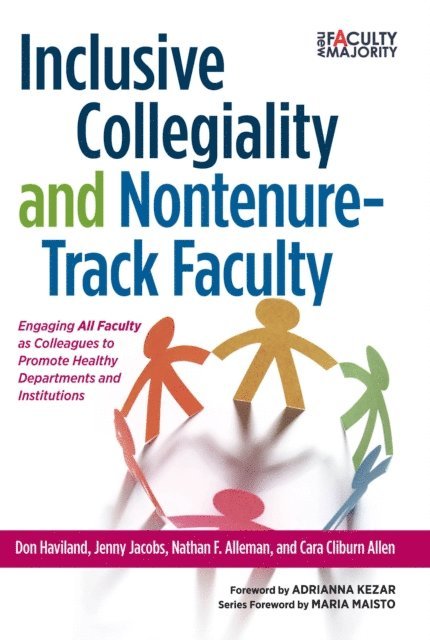
Inclusive Collegiality and Nontenure-Track Faculty
Engaging All Faculty as Colleagues to Promote Healthy Departments and Institutions
Inbunden, Engelska, 2020
2 053 kr
Skickas inom 10-15 vardagar
This book focuses on the status and work of full-time non-tenure-track faculty (NTTF) whose ranks are increasing as tenure track faculty (TTF) make up a smaller percentage of the professoriate. NTTF experience highly uneven and conditional access to collegiality, are often excluded from decision-making spaces, and receive limited respect from their TTF colleagues because of outdated notions that link perceived expertise almost exclusively to scholarship. The result is often a sub-class of faculty marginalized in their departments, which reduces the inclusion of diverse voices in academic governance, professional relationships, and student learning. Given these implications, the authors ask, how can departments, institutions, and the profession do more to engage NTTF as full and active colleagues? The limited access of NTTF to the rights and responsibilities of collegiality harms institutional success in several ways. Given the full-time nature of their work and the heavy (but not exclusive) focus on instruction, NTTF are likely to be on campus as much or more than TTF, and thus be engaged with students, colleagues, and administrators in ways that more closely resemble TTF than part-time faculty. Their limited access to collegial spaces makes it harder for them to do their jobs by restricting access to information and input into decision-making. Moreover, since the greatest growth among women faculty and faculty of color is in NTTF roles, their exclusion from collegiality and decision-making negates the very diversity the profession claims to seek. Finally, colleges and universities face financial, curricular, and organizational challenges which require broad input, although the burden of governance is falling on fewer shoulders as the percentage of TTF declines and NTTF are excluded from these spaces.Ultimately, NTTF must be engaged as partners and colleagues in supporting institutional health. This book – the fruit of extensive data collection at two institutions over a five-year period – describes lessons learned from and benefits experienced by departments that have successfully supported and engaged NTTF as colleagues. Drawing on their research data and analysis of “healthy” departments that integrate NTTF, the authors identify the practices, policies, and approaches that support NTTF inclusion, shape a more positive workplace environment, improve morale, satisfaction, and commitment, and fully leverage the expertise of NTTF and the valuable human capital they represent. The authors argue that this more inclusive collegiality improves governance, supports institutional success, and serves diverse institutional missions. Though primarily addressed to institutional leaders, department chairs, tenure-line faculty, and leaders in the academic profession, it is hoped that the findings will be useful to NTTF who are engaged as advocates for and partners in the change process required to address the evolving structure of the university faculty.
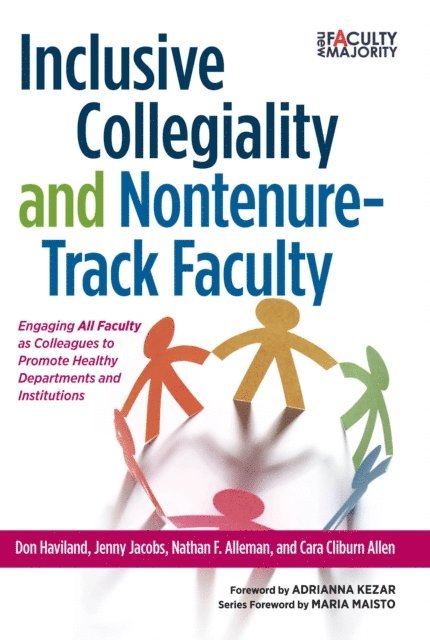
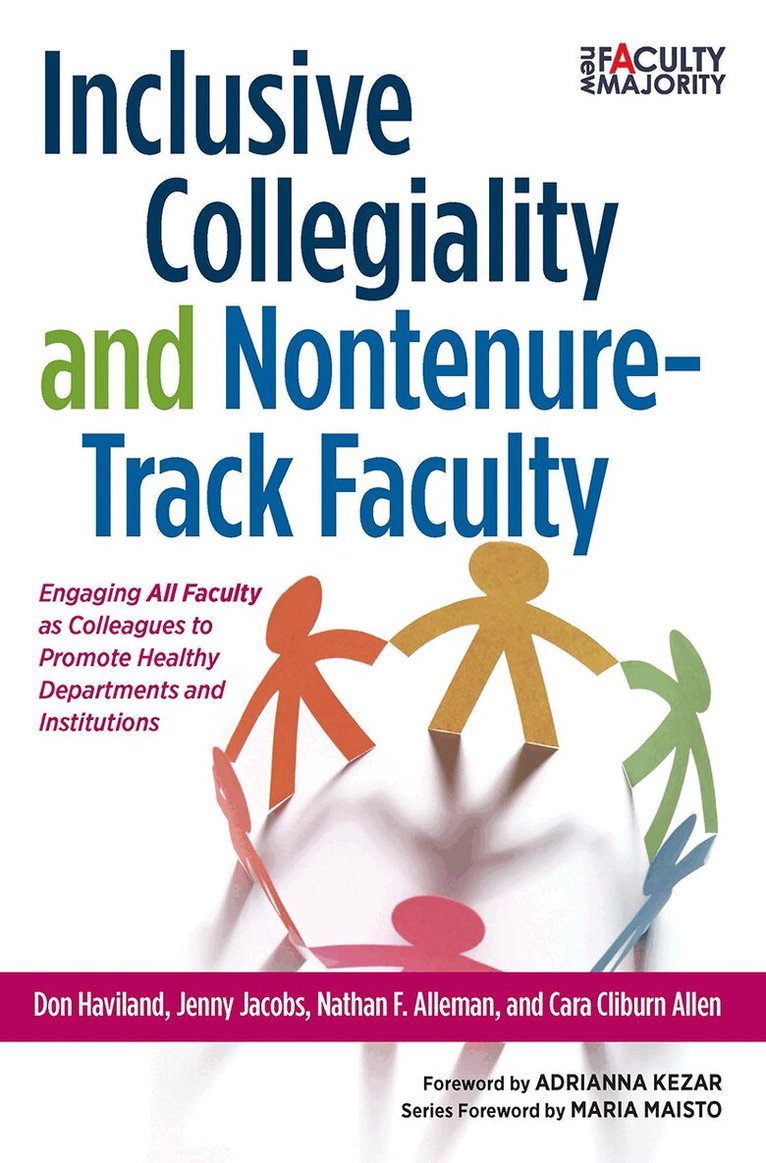
Inclusive Collegiality and Nontenure-Track Faculty
Engaging All Faculty as Colleagues to Promote Healthy Departments and Institutions
Häftad, Engelska, 2020
416 kr
Skickas inom 10-15 vardagar
This book focuses on the status and work of full-time non-tenure-track faculty (NTTF) whose ranks are increasing as tenure track faculty (TTF) make up a smaller percentage of the professoriate. NTTF experience highly uneven and conditional access to collegiality, are often excluded from decision-making spaces, and receive limited respect from their TTF colleagues because of outdated notions that link perceived expertise almost exclusively to scholarship. The result is often a sub-class of faculty marginalized in their departments, which reduces the inclusion of diverse voices in academic governance, professional relationships, and student learning. Given these implications, the authors ask, how can departments, institutions, and the profession do more to engage NTTF as full and active colleagues? The limited access of NTTF to the rights and responsibilities of collegiality harms institutional success in several ways. Given the full-time nature of their work and the heavy (but not exclusive) focus on instruction, NTTF are likely to be on campus as much or more than TTF, and thus be engaged with students, colleagues, and administrators in ways that more closely resemble TTF than part-time faculty. Their limited access to collegial spaces makes it harder for them to do their jobs by restricting access to information and input into decision-making. Moreover, since the greatest growth among women faculty and faculty of color is in NTTF roles, their exclusion from collegiality and decision-making negates the very diversity the profession claims to seek. Finally, colleges and universities face financial, curricular, and organizational challenges which require broad input, although the burden of governance is falling on fewer shoulders as the percentage of TTF declines and NTTF are excluded from these spaces.Ultimately, NTTF must be engaged as partners and colleagues in supporting institutional health. This book – the fruit of extensive data collection at two institutions over a five-year period – describes lessons learned from and benefits experienced by departments that have successfully supported and engaged NTTF as colleagues. Drawing on their research data and analysis of “healthy” departments that integrate NTTF, the authors identify the practices, policies, and approaches that support NTTF inclusion, shape a more positive workplace environment, improve morale, satisfaction, and commitment, and fully leverage the expertise of NTTF and the valuable human capital they represent. The authors argue that this more inclusive collegiality improves governance, supports institutional success, and serves diverse institutional missions. Though primarily addressed to institutional leaders, department chairs, tenure-line faculty, and leaders in the academic profession, it is hoped that the findings will be useful to NTTF who are engaged as advocates for and partners in the change process required to address the evolving structure of the university faculty.