Carl A. Brasseaux - Böcker
Visar alla böcker från författaren Carl A. Brasseaux. Handla med fri frakt och snabb leverans.
8 produkter
8 produkter
281 kr
Skickas inom 10-15 vardagar
In this penetrating study, Carl Brasseaux looks beyond long-standing mythology to provide a critical account of early Acadian culture in Louisiana and the reasons for its survival. He convincingly dispels many received notions about the routes Acadians traveled from Nova Scotia to Louisiana, their original settlement sites, and the patterns of their subsequent migrations within the state, and closely examines the relations of Louisiana's Acadians with their black, Spanish, Indian, and Creole neighbors. In adapting to subtropical Louisiana, with its turmoil of alternating French and Spanish regimes, the Acadians exhibited industry, pragmatism, individualism, and the ability to close ranks in the face of a general threat. As Brasseaux reveals, Acadians' cohesiveness and insularity preserved the core elements of their culture and helped them adjust to new physical and social demands.
475 kr
Skickas inom 3-6 vardagar
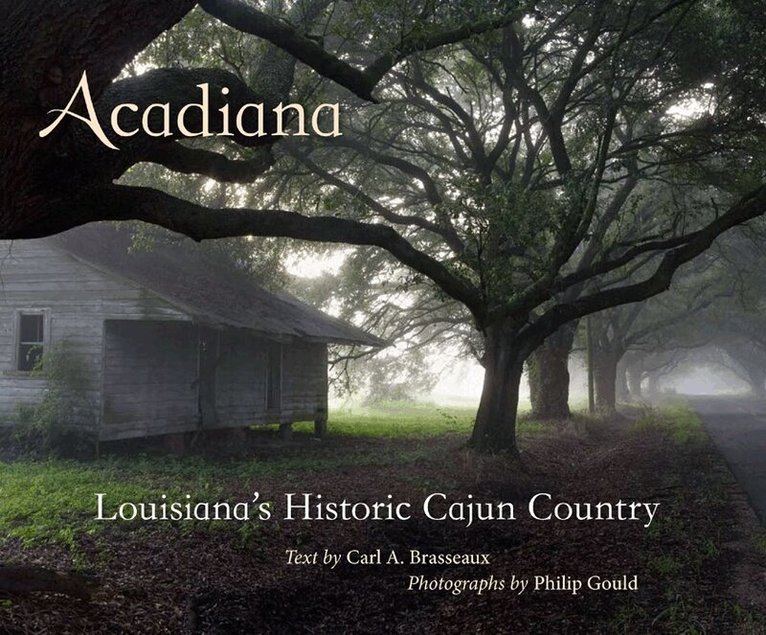
Acadiana"" summons up visions of a legendary and exotic world of moss-draped cypress, cocoa-colored bayous, subtropical wildlife, and spicy indigenous cuisine. The ancestral home of Cajuns and Creoles, this twenty-two-parish area of south Louisiana encompasses a broad range of people, places, and events. In their historical and pictorial tour of the region, author Carl A. Brasseaux and photographer Philip Gould explore in depth this fascinating and complex world.As passionate documentarians of all things Cajun and Creole, Brasseaux and Gould delve into the topography, culture, and economy of Acadiana.In two hundred color photographs of architecture, landscapes, wildlife, and artifacts, Gould portrays the rich history still visible in the area, while Brasseaux's engagingly written narrative covers the eighteenth- and nineteenth-century story of settlement and development in the region. Brasseaux brings the story up to date, recounting devastating hurricanes and coastal degradation.From living-history attractions such as Vermilionville, the Acadian Village, and Longfellow-Evangeline State Park to music venues, festivals, and crawfish boils, Acadiana depicts a resilient and vibrant way of life and presents a vivid portrait of a culture that continues to captivate, charm, and endure.For all those who want to explore these people and this place, Brasseaux and Gould have provided an insightful written and visual history.
322 kr
Skickas inom 10-15 vardagar
In recent years, ethnographers have recognized south Louisiana as home to perhaps the most complex rural society in North America. More than a dozen French-speaking immigrant groups have been identified there, Cajuns and white Creoles being the most famous. In this guide to the amazing social, cultural, and linguistic variation within Louisiana's French-speaking region, Carl A. Brasseaux presents an overview of the origins and evolution of all the Francophone communities.Brasseaux examines the impact of French immigration on Louisiana over the past three centuries. He shows how this once-undesirable outpost of the French empire became colonized by individuals ranging from criminals to entrepreneurs who went on to form a multifaceted society—one that, unlike other American melting pots, rests upon a French cultural foundation.A prolific author and expert on the region, Brasseaux offers readers an entertaining history of how these diverse peoples created south Louisiana's famous vibrant culture, interacting with African Americans, Spaniards, and Protestant Anglos and encountering influences from southern plantation life and the Caribbean. He explores in detail three still cohesive components in the Francophone melting pot, each one famous for having retained a distinct identity: the Creole communities, both black and white; the Cajun people; and the state's largest concentration of French speakers—the Houma tribe.A product of thirty years' research, French, Cajun, Creole, Houma provides a reliable and understandable guide to the ethnic roots of a region long popular as an international tourist attraction.
267 kr
Skickas inom 10-15 vardagar
This book is the first to examine comprehensively the demographic growth, cultural evolution, and political involvement of Louisiana's large Acadian community between the time of the Louisiana Purchase (1803), when the transplanted culture began to take on a decidedly Louisiana character, and 1877, the end of Reconstruction in Louisiana, when traditional distinctions between Acadians and neighboring groups had ceased to be valid.Serving as a model for ethnohistories of other nonliterate peoples, Acadian to Cajun reveals how authentic cultural history can be derived from alternative historical resources when primary materials such as newspapers, correspondence, and diaries are not available. Here, Carl A. Brasseaux assembles a composite picture of this large Cajun community. From civil records, federal census reports, ecclesiastical registers, legislative acts, and electoral returns, he reveals the astonishing cultural transformation of the Acadians of Nova Scotia into the Cajuns of Louisiana.
376 kr
Skickas inom 10-15 vardagar
Creoles of Color are rightfully among the first families of southwestern Louisiana. Yet in both antebellum and postbellum periods they remained a people considered apart from the rest of the population. Historians, demographers, sociologists, and anthropologists have given them only scant attention.This probing book, focused on the mid-eighteenth to the early twentieth centuries, is the first to scrutinize this multiracial group through a close study of primary resource materials.During the antebellum period they were excluded from the state's three-tiered society--white, free people of color, and slaves. Yet Creoles of Color were a dynamic component in the region's economy, for they were self-compelled in efforts to become an integral part of the community. Though not accepted by white society, they were unwilling to be classified as black. Imitating their white neighbors, many were Catholic, spoke the French language, and owned slaves. After the Civil War some Creoles of Color, being light-skinned, passed for white. Others relocated to safe agricultural enclaves, becoming even more clannish and isolated from general society.
345 kr
Skickas inom 3-6 vardagar
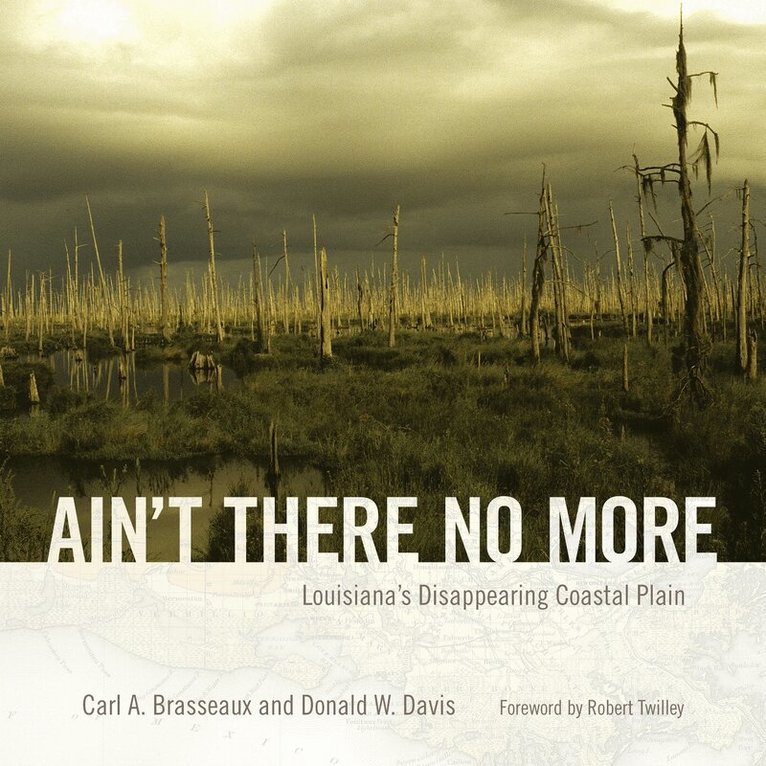
For centuries, outlanders have openly denigrated Louisiana's coastal wetlands residents and their stubborn refusal to abandon the region's fragile prairies tremblants despite repeated natural and, more recently, man-made disasters. Yet, the cumulative environmental knowledge these wetlands survivors have gained through painful experiences over the course of two centuries holds invaluable keys to the successful adaptation of modern coastal communities throughout the globe. As Hurricane Sandy recently demonstrated, coastal peoples everywhere face rising sea levels, disastrous coastal erosion, and, inevitably, difficult lifestyle choices.Along the Bayou State's coast the most insidious challenges are man-made. Since channelization of the Mississippi River in the wake of the 1927 flood, which diverted sediments and nutrients from the wetlands, coastal Louisiana has lost to erosion, subsidence, and rising sea levels a land mass roughly twice the size of Connecticut. State and national policymakers were unable to reverse this environmental catastrophe until Hurricane Katrina focused a harsh spotlight on the human consequences of eight decades of neglect. Yet, even today, the welfare of Louisiana's coastal plain residents remains, at best, an afterthought in state and national policy discussions.For coastal families, the Gulf water lapping at the doorstep makes this morass by no means a scholarly debate over abstract problems. Ain't There No More renders an easily read history filled with new insights and possibilities. Rare, previously unpublished images documenting a disappearing way of life accompany the narrative. The authors bring nearly a century of combined experience to distilling research and telling this story in a way invaluable to Louisianans, to policymakers, and to all those concerned with rising sea levels and seeking a long-term solution.
384 kr
Skickas inom 7-10 vardagar
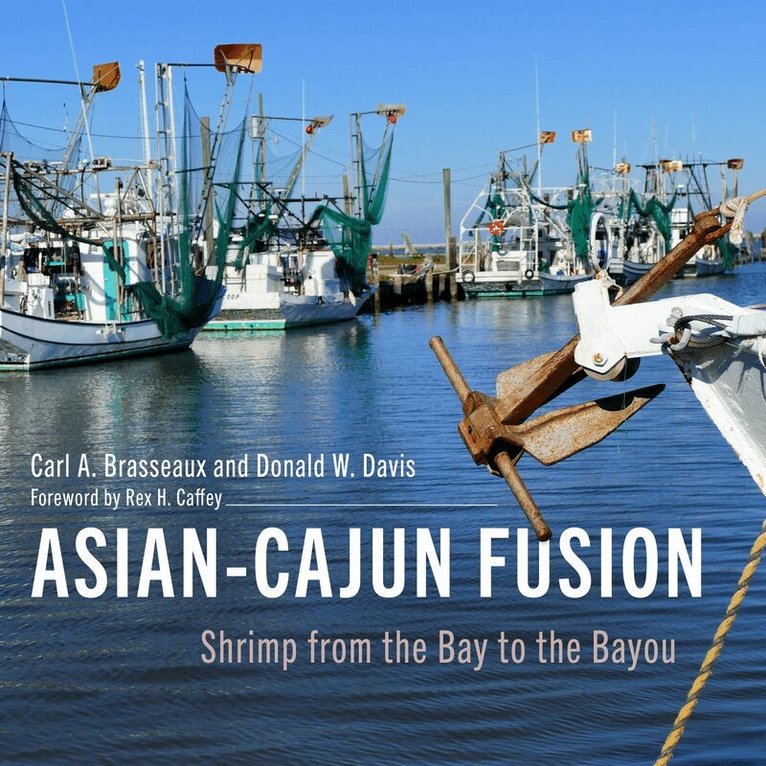
Shrimp is easily America’s favorite seafood, but its very popularity is the wellspring of problems that threaten the shrimp industry’s existence. Asian-Cajun Fusion: Shrimp from the Bay to the Bayou provides insightful analysis of this paradox and a detailed, thorough history of the industry in Louisiana.Dried shrimp technology was part of the cultural heritage Pearl River Chinese immigrants introduced into the Americas in the mid-nineteenth century. As early as 1870, Chinese natives built shrimp-drying operations in Louisiana’s wetlands and exported the product to Asia through the port of San Francisco. This trade internationalized the shrimp industry. About three years before Louisiana’s Chinese community began their export endeavors, manufactured ice became available in New Orleans, and the Dunbar family introduced patented canning technology. The convergence of these ancient and modern technologies shaped the evolution of the northern Gulf Coast’s shrimp industry to the present.Coastal Louisiana’s historic connection to the Pacific Rim endures. Not only does the region continue to export dried shrimp to Asian markets domestically and internationally, but since 2000 the region’s large Vietnamese immigrant population has increasingly dominated Louisiana’s fresh shrimp harvest. Louisiana shrimp constitute the American gold standard of raw seafood excellence. Yet, in the second decade of the twenty-first century, cheap imports are forcing the nation’s domestic shrimp industry to rediscover its economic roots. "Fresh off the boat" signs and real-time internet connections with active trawlers are reestablishing the industry’s ties to local consumers. Direct marketing has opened the industry to middle-class customers who meet the boats at the docks. This "right off the boat" paradigm appears to be leading the way to reestablishment of sustainable aquatic resources. All-one-can-eat shrimp buffets are not going to disappear, but the Louisiana shrimp industry’s fate will ultimately be determined by discerning consumers’ palates.
190 kr
Skickas inom 5-8 vardagar