Carl A. Wade – författare
Visar alla böcker från författaren Carl A. Wade. Handla med fri frakt och snabb leverans.
3 produkter
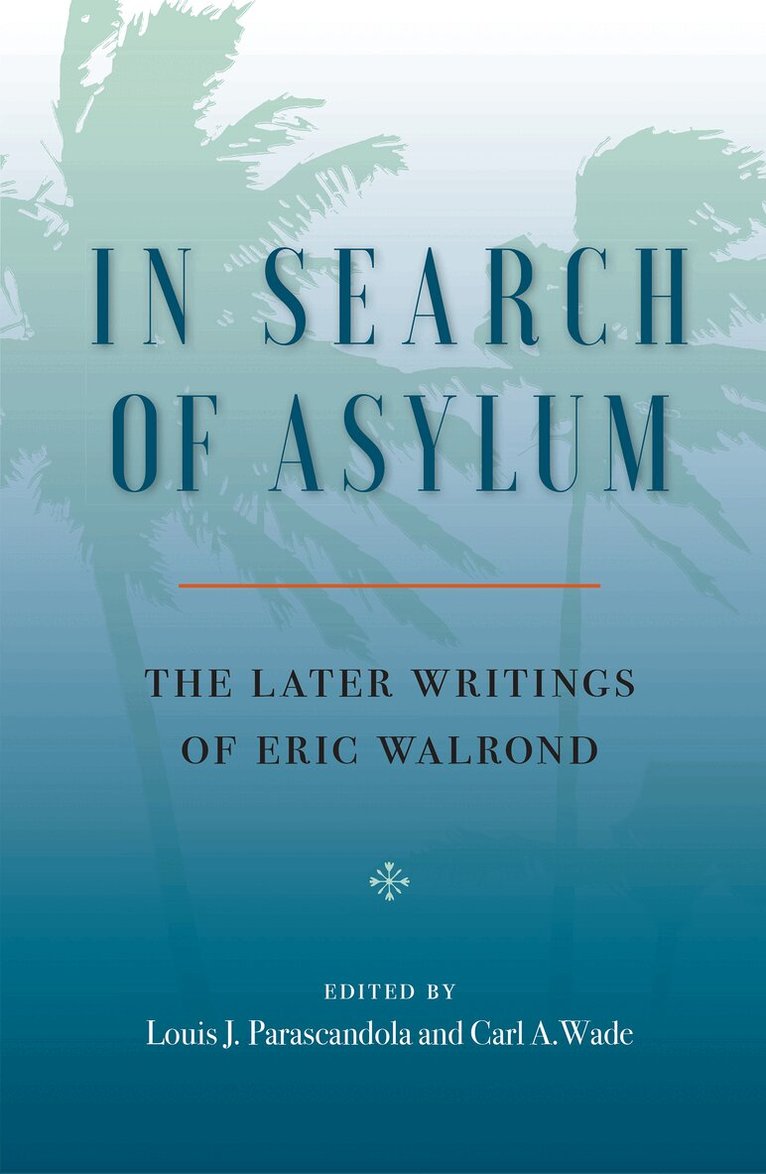
In Search of Asylum
The Later Writings of Eric Walrond
Av Eric Walrond, Louis J. Parascandola m. fl.
Häftad, 2017
317 kr
Lägg i varukorg
Eric Walrond is one of the great underexamined figures of the Harlem Renaissance and the Caribbean diaspora. Very little of his later work has been subsequently published or made readily available to American scholars. His writings, set in the Caribbean, the United States, and Europe, discuss …
In Search of Asylum
The Later Writings of Eric Walrond
Av Eric Walrond, Carl A. Wade m. fl.
E-bok, 2017
276 kr
Lägg i varukorg
"Set in the Caribbean, Panama, the U.S., and England, [Walrond’s] fiction captures the experiences of working-class peoples, often migrants, as they confront the depredations of colonialism, racial prejudice, and economic exploitation. . . . A significant and fascinating collection."--African …
Eric Walrond
The Critical Heritage
Av Louis J. Parascandola, Carl A. Wade m. fl.
Häftad, 2012
380 kr
Lägg i varukorg
Eric Walrond (1898–1966), author of Tropic Death (1926), remains a seminal but elusive figure in Harlem Renaissance and Caribbean diasporic literature. Although this collection remains his only major text, Walrond was in fact quite prolific, penning several more fictions and journalistic writings. …