Carl Bruch - Böcker
Visar alla böcker från författaren Carl Bruch. Handla med fri frakt och snabb leverans.
9 produkter
9 produkter
2 098 kr
Skickas inom 10-15 vardagar
This book provides an empirically formulated foundation for conflict-sensitive conservation, a field in which the existing literature relies primarily on anecdotal evidence.Seeking to better understand the impact of conflict on the implementation and outcomes of environmental projects, the Global Environment Facility (GEF) Independent Evaluation Office and the Environmental Law Institute undertook an evaluation of GEF support to fragile and conflict-affected contexts. Following a qualitative and quantitative analysis of documents from more than 4,000 projects, the research team discovered a statistically significant negative correlation between a country’s Fragile States Index score and the implementation quality of environmental projects in that country. In this book, the evaluation and research team explain these groundbreaking findings in detail, highlighting seven key case studies: Afghanistan, Albertine Rift, Balkans, Cambodia, Colombia, Lebanon, and Mali. Drawing upon additional research and interviews with GEF project implementation staff, the volume illustrates the pathways through which conflict and fragility frequently impact environmental projects. It also examines how practitioners and sponsoring institutions can plan and implement their projects to avoid or mitigate these issues and find opportunities to promote peacebuilding through their environmental interventions.Examining data from 164 countries and territories, this innovative book will be of great interest to students and scholars of environmental management, conservation, international development, and the fast-growing field of environmental peacebuilding. It will also be a great resource for practitioners working in these important fields.The Open Access version of this book, available at www.taylorfrancis.com, has been made available under a Creative Commons Attribution-Non Commercial-No Derivatives 4.0 license.
579 kr
Skickas inom 10-15 vardagar
This book provides an empirically formulated foundation for conflict-sensitive conservation, a field in which the existing literature relies primarily on anecdotal evidence.Seeking to better understand the impact of conflict on the implementation and outcomes of environmental projects, the Global Environment Facility (GEF) Independent Evaluation Office and the Environmental Law Institute undertook an evaluation of GEF support to fragile and conflict-affected contexts. Following a qualitative and quantitative analysis of documents from more than 4,000 projects, the research team discovered a statistically significant negative correlation between a country’s Fragile States Index score and the implementation quality of environmental projects in that country. In this book, the evaluation and research team explain these groundbreaking findings in detail, highlighting seven key case studies: Afghanistan, Albertine Rift, Balkans, Cambodia, Colombia, Lebanon, and Mali. Drawing upon additional research and interviews with GEF project implementation staff, the volume illustrates the pathways through which conflict and fragility frequently impact environmental projects. It also examines how practitioners and sponsoring institutions can plan and implement their projects to avoid or mitigate these issues and find opportunities to promote peacebuilding through their environmental interventions.Examining data from 164 countries and territories, this innovative book will be of great interest to students and scholars of environmental management, conservation, international development, and the fast-growing field of environmental peacebuilding. It will also be a great resource for practitioners working in these important fields.The Open Access version of this book, available at www.taylorfrancis.com, has been made available under a Creative Commons Attribution-Non Commercial-No Derivatives 4.0 license.
568 kr
Kommande
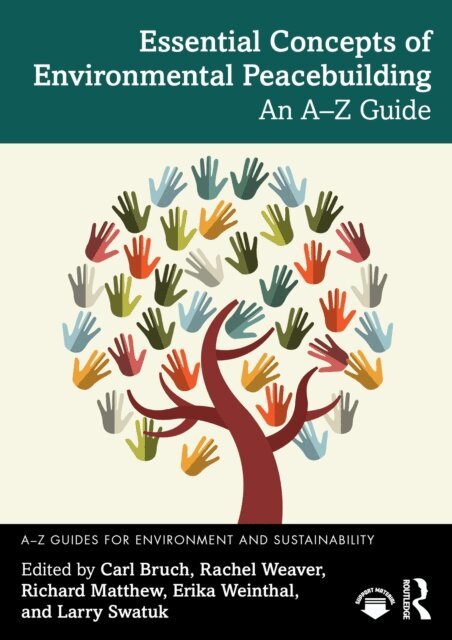
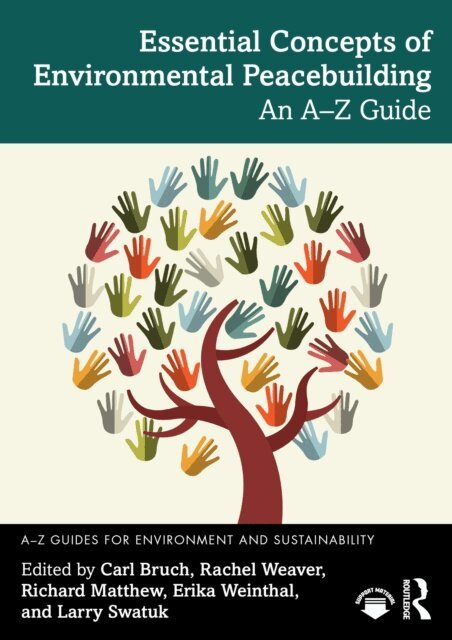
This book provides a comprehensive introduction to the essential concepts of environmental conflict and peacebuilding by compiling and explaining key terms in an easy-to-navigate A–Z format.Over the past 80 years, scholarly interest in war and peace has flourished, resulting in the institutionalization of disciplines such as international relations, security studies, and peace and conflict studies. Since at least the 1970s, research has also investigated the planetary effects of global environmental change. Environmental peacebuilding emerged at the intersection of environment, conflict, and peace, weaving together several related threads that address both environmental risks of conflict and environmental opportunities for peace. The language used to describe, explain, predict, teach, negotiate, and form policy in the arena of environmental peacebuilding is often nuanced, evolving, and contested. This book fills a gap in the literature by providing a consistent understanding and approach to key aspects of environmental peacebuilding. The book begins with a thematic introduction to contextualize the topic, written by a team of world-leading scholars. The book then follows an A–Z format, with over 150 entries from experts in the field describing and explaining key concepts and providing examples of how different terms are applied within this growing discipline.This comprehensive A–Z guide will be useful for students, academics, professionals, and policymakers seeking a wider understanding of environmental peacebuilding. The book will also be useful for those studying security studies, peace and conflict studies, environmental studies, and environmental law.
2 113 kr
Kommande
This book provides a comprehensive introduction to the essential concepts of environmental conflict and peacebuilding by compiling and explaining key terms in an easy-to-navigate A–Z format.Over the past 80 years, scholarly interest in war and peace has flourished, resulting in the institutionalization of disciplines such as international relations, security studies, and peace and conflict studies. Since at least the 1970s, research has also investigated the planetary effects of global environmental change. Environmental peacebuilding emerged at the intersection of environment, conflict, and peace, weaving together several related threads that address both environmental risks of conflict and environmental opportunities for peace. The language used to describe, explain, predict, teach, negotiate, and form policy in the arena of environmental peacebuilding is often nuanced, evolving, and contested. This book fills a gap in the literature by providing a consistent understanding and approach to key aspects of environmental peacebuilding. The book begins with a thematic introduction to contextualize the topic, written by a team of world-leading scholars. The book then follows an A–Z format, with over 150 entries from experts in the field describing and explaining key concepts and providing examples of how different terms are applied within this growing discipline.This comprehensive A–Z guide will be useful for students, academics, professionals, and policymakers seeking a wider understanding of environmental peacebuilding. The book will also be useful for those studying security studies, peace and conflict studies, environmental studies, and environmental law.
3 018 kr
Skickas inom 10-15 vardagar
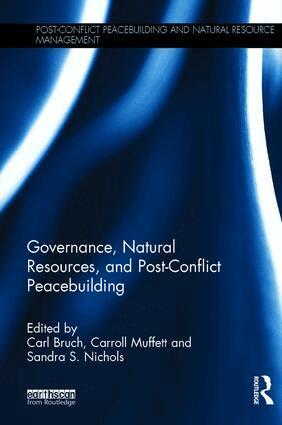
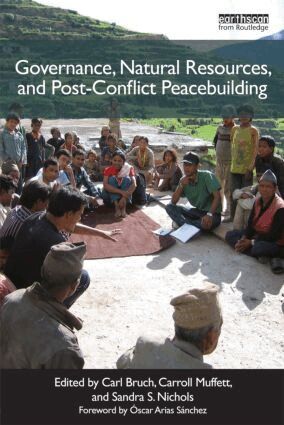
When the guns are silenced, those who have survived armed conflict need food, water, shelter, the means to earn a living, and the promise of safety and a return to civil order. Meeting these needs while sustaining peace requires more than simply having governmental structures in place; it requires good governance.Natural resources are essential to sustaining people and peace in post-conflict countries, but governance failures often jeopardize such efforts. This book examines the theory, practice, and often surprising realities of post-conflict governance, natural resource management, and peacebuilding in fifty conflict-affected countries and territories. It includes thirty-nine chapters written by more than seventy researchers, diplomats, military personnel, and practitioners from governmental, intergovernmental, and nongovernmental organizations. The book highlights the mutually reinforcing relationship between natural resource management and good governance. Natural resource management is crucial to rebuilding governance and the rule of law, combating corruption, improving transparency and accountability, engaging disenfranchised populations, and building confidence after conflict. At the same time, good governance is essential for ensuring that natural resource management can meet immediate needs for post-conflict stability and development, while simultaneously laying the foundation for a sustainable peace. Drawing on analyses of the close relationship between governance and natural resource management, the book explores lessons from past conflicts and ongoing reconstruction efforts; illustrates how those lessons may be applied to the formulation and implementation of more effective governance initiatives; and presents an emerging theoretical and practical framework for policy makers, researchers, practitioners, and students.Governance, Natural Resources, and Post-Conflict Peacebuilding is part of a global initiative to identify and analyze lessons in post-conflict peacebuilding and natural resource management. The project has generated six books of case studies and analyses, with contributions from practitioners, policy makers, and researchers. Other books in this series address high-value resources, land, water, livelihoods, and assessing and restoring natural resources.
1 109 kr
Skickas inom 10-15 vardagar
When the guns are silenced, those who have survived armed conflict need food, water, shelter, the means to earn a living, and the promise of safety and a return to civil order. Meeting these needs while sustaining peace requires more than simply having governmental structures in place; it requires good governance.Natural resources are essential to sustaining people and peace in post-conflict countries, but governance failures often jeopardize such efforts. This book examines the theory, practice, and often surprising realities of post-conflict governance, natural resource management, and peacebuilding in fifty conflict-affected countries and territories. It includes thirty-nine chapters written by more than seventy researchers, diplomats, military personnel, and practitioners from governmental, intergovernmental, and nongovernmental organizations. The book highlights the mutually reinforcing relationship between natural resource management and good governance. Natural resource management is crucial to rebuilding governance and the rule of law, combating corruption, improving transparency and accountability, engaging disenfranchised populations, and building confidence after conflict. At the same time, good governance is essential for ensuring that natural resource management can meet immediate needs for post-conflict stability and development, while simultaneously laying the foundation for a sustainable peace. Drawing on analyses of the close relationship between governance and natural resource management, the book explores lessons from past conflicts and ongoing reconstruction efforts; illustrates how those lessons may be applied to the formulation and implementation of more effective governance initiatives; and presents an emerging theoretical and practical framework for policy makers, researchers, practitioners, and students.Governance, Natural Resources, and Post-Conflict Peacebuilding is part of a global initiative to identify and analyze lessons in post-conflict peacebuilding and natural resource management. The project has generated six books of case studies and analyses, with contributions from practitioners, policy makers, and researchers. Other books in this series address high-value resources, land, water, livelihoods, and assessing and restoring natural resources.
7 601 kr
Skickas inom 10-15 vardagar
Post-conflict peacebuilding efforts can fail if they do not pay sufficient attention to natural resources. Natural resources – diamonds, oil, and minerals – are frequently at the heart of historic grievances, and have caused or funded at least eighteen conflicts since 1990. The same resources can play a central role in post-conflict peacebuilding, providing revenue for cash-starved governments, basic services for collapsed economies, and means for restoring livelihoods. To date, there is a striking gap in knowledge of what works, what does not, and how to improve peacebuilding through more effective and systematic management of natural resources. Post-Conflict Peacebuilding and Natural Resource Management addresses this gap by examining the growing literature on the topic and surveying experiences across more than forty post-conflict countries. The six-volume series includes more than 130 chapters from over 200 researchers, practitioners, and policymakers.
460 kr
Skickas inom 5-8 vardagar
472 kr
Skickas inom 5-8 vardagar