Carmel Raz – författare
Visar alla böcker från författaren . Handla med fri frakt och snabb leverans.
7 produkter
7 produkter
Inbunden, Engelska, 2028
917 kr
Skickas inom 5-8 vardagar
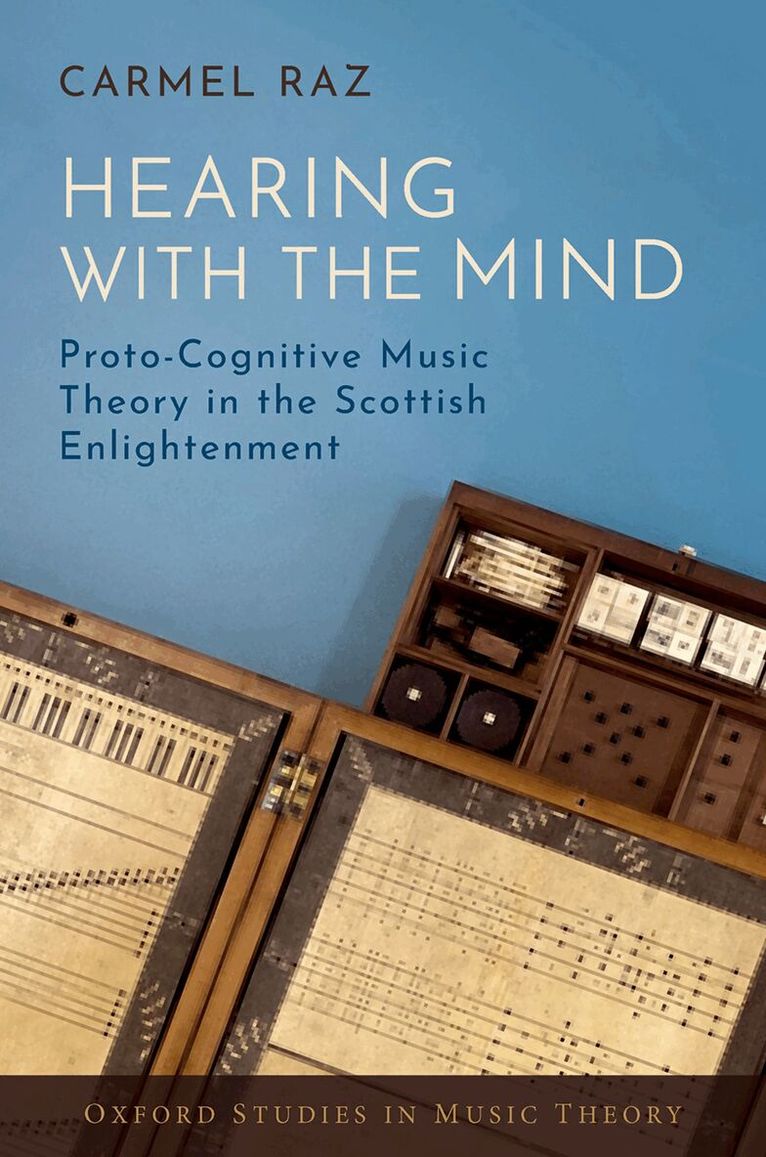
Hearing with the Mind synthesizes two exciting approaches to music--cognitive psychology and social history--by focusing on the remarkable work of musical theorist John Holden (1729--72) during the Scottish Enlightenment. One of the first musical thinkers to propose a detailed account of how the human mind perceives music, Holden had an unconventional background as a merchant potter and appears to have been largely self-taught in music theory. In his Essay toward a Rational Theory of Music (1770), Holden explores the cognitive aspects of music perception, focusing on chord relationships, key identification, and mental processes. He reinforces his cognitive claims using tenets of contemporaneous Scottish psychology pertaining to attention and memory. His ideas continued to resonate, as can be seen in the music-theoretical work of the Scottish minister Walter Young (1745--1814) and his sister, Anne Young (1756--c.1813), a piano teacher and the inventor of a complex and intriguing musical board game. Drawing widely from the histories of music theory, science, sociology, and philosophy, as well as from feminist criticism and ludo-musicology, Carmel Raz richly situates the lives and productions of John Holden and Walter and Anne Young within the contexts of the Scottish Enlightenment. Hearing with the Mind thereby shows how the contributions of relatively marginalized figures in the history of music theory reflect Britain's social transformations and global entanglements in the rising age of empire.This is an open access title available under the terms of a CC BY-NC-ND 4.0 International licence. It is free to read on the Oxford Academic platform and offered as a free PDF download from OUP and selected open access locations.
E-bok
PDF, Engelska, 2025921 kr
Läs direkt efter köp
Hearing with the Mind synthesizes two exciting approaches to music--cognitive psychology and social history--by focusing on the remarkable work of musical theorist John Holden (1729--72) during the Scottish Enlightenment. One of the first musical thinkers to propose a detailed account of how the human mind perceives music, Holden had an unconventional background as a merchant potter and appears to have been largely self-taught in music theory. In his Essay toward a Rational Theory of Music (1770), Holden explores the cognitive aspects of music perception, focusing on chord relationships, key identification, and mental processes. He reinforces his cognitive claims using tenets of contemporaneous Scottish psychology pertaining to attention and memory. His ideas continued to resonate, as can be seen in the music-theoretical work of the Scottish minister Walter Young (1745--1814) and his sister, Anne Young (1756--c.1813), a piano teacher and the inventor of a complex and intriguing musical board game. Drawing widely from the histories of music theory, science, sociology, and philosophy, as well as from feminist criticism and ludo-musicology, Carmel Raz richly situates the lives and productions of John Holden and Walter and Anne Young within the contexts of the Scottish Enlightenment. Hearing with the Mind thereby shows how the contributions of relatively marginalized figures in the history of music theory reflect Britain's social transformations and global entanglements in the rising age of empire. This is an open access title available under the terms of a CC BY-NC-ND 4.0 International licence. It is free to read on the Oxford Academic platform and offered as a free PDF download from OUP and selected open access locations.
978 kr
Läs direkt efter köp
Hearing with the Mind synthesizes two exciting approaches to music--cognitive psychology and social history--by focusing on the remarkable work of musical theorist John Holden (1729--72) during the Scottish Enlightenment. One of the first musical thinkers to propose a detailed account of how the human mind perceives music, Holden had an unconventional background as a merchant potter and appears to have been largely self-taught in music theory. In his Essay toward a Rational Theory of Music (1770), Holden explores the cognitive aspects of music perception, focusing on chord relationships, key identification, and mental processes. He reinforces his cognitive claims using tenets of contemporaneous Scottish psychology pertaining to attention and memory. His ideas continued to resonate, as can be seen in the music-theoretical work of the Scottish minister Walter Young (1745--1814) and his sister, Anne Young (1756--c.1813), a piano teacher and the inventor of a complex and intriguing musical board game. Drawing widely from the histories of music theory, science, sociology, and philosophy, as well as from feminist criticism and ludo-musicology, Carmel Raz richly situates the lives and productions of John Holden and Walter and Anne Young within the contexts of the Scottish Enlightenment. Hearing with the Mind thereby shows how the contributions of relatively marginalized figures in the history of music theory reflect Britain's social transformations and global entanglements in the rising age of empire. This is an open access title available under the terms of a CC BY-NC-ND 4.0 International licence. It is free to read on the Oxford Academic platform and offered as a free PDF download from OUP and selected open access locations.
Inbunden, Engelska, 2023
1 381 kr
Skickas inom 7-10 vardagar
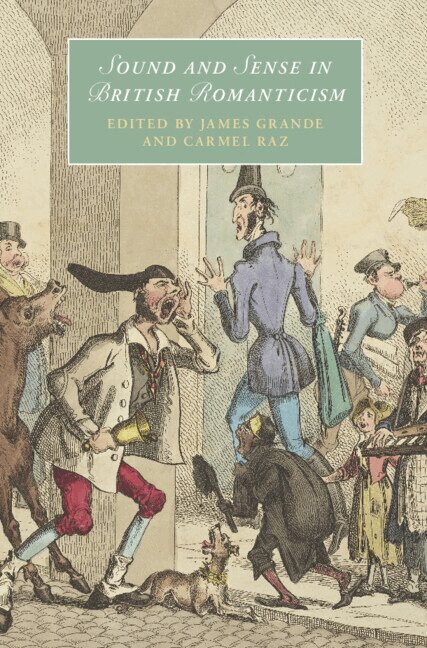
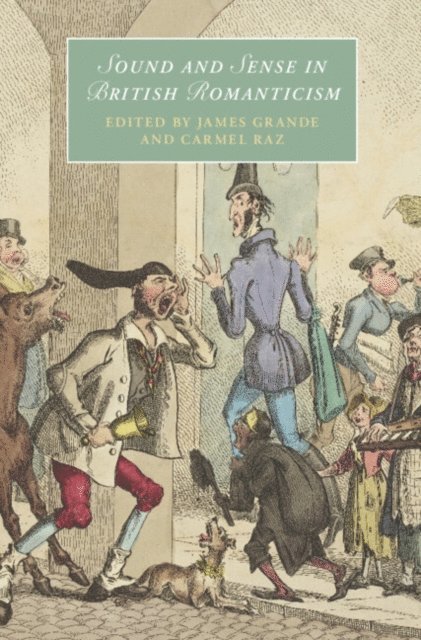
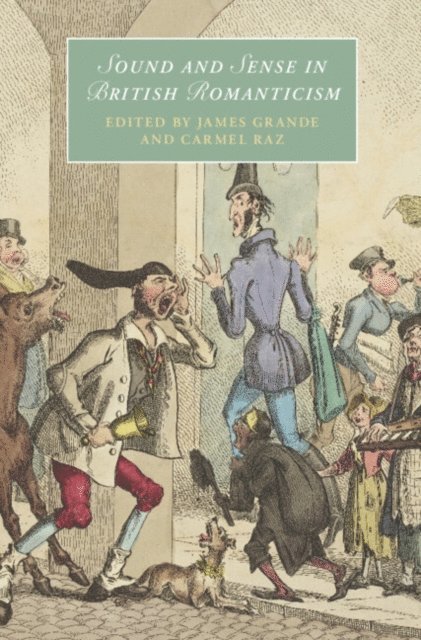
A radical re-imagining of the relationship between sound and sense took place in Britain in the decades around 1800. This new approach reconfigured sound as central to understandings of space and temporality, from the diurnal rhythms of everyday life in the modern city to the 'deep time' of the natural world. At the same time, sound emerged as a frequently disruptive phenomenon, a philosophical and political problem, and a force with the power to overwhelm listeners. This is the first book devoted to the topic and brings together scholars from literary studies, musicology, history and philosophy through the interdisciplinary frameworks of sound studies and the history of the senses. The chapters pursue a wide range of subjects, from 'national airs' to the London stage, and from experiments in sound to new musical and scientific instruments. Collectively, they demonstrate how a focus on sound can enrich our understanding of Romantic-era culture. This title is also available as Open Access on Cambridge Core.
E-bok
PDF, Engelska, 20231 615 kr
Läs direkt efter köp
E-bok
Engelska, 20231 620 kr
Läs direkt efter köp
Inbunden, Engelska, 2026
905 kr
Skickas inom 5-8 vardagar
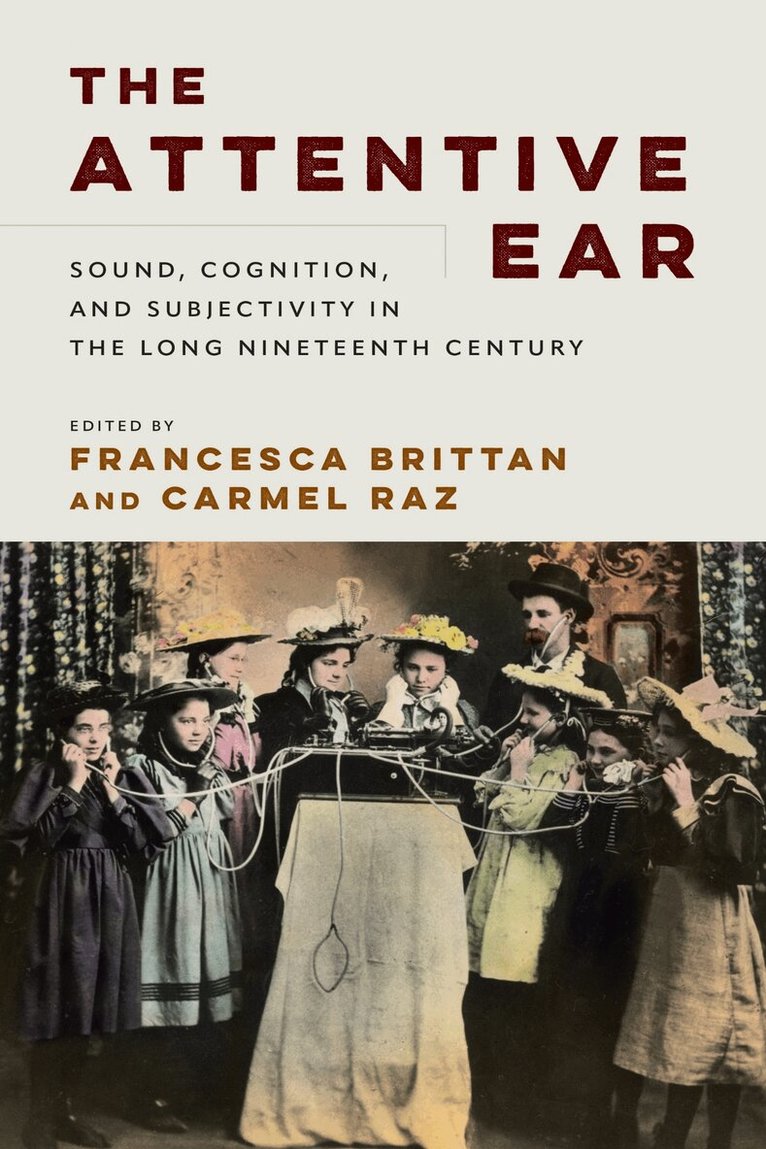
An interdisciplinary history of auditory attention that demonstrates the central role of audition in shaping our conceptions of focus and distractionOver the past decade, attention and its perceived opposite, distraction, have become sites of sustained anxiety and debate. Questions around attentive economies, histories, and cognitive modes have surfaced across a range of disciplines from cultural studies to computer science, philosophy, and medicine.The Attentive Ear fills a significant gap in current scholarship, exploring the history of auditory attention between roughly 1800-1930. Across boundaries of time, place, culture, and class, this period witnessed a marked uptick in discourses around attention and inattention, including attempts to define the states of multifocal, singular, spotlighted, intermittent, and distracted forms of focus underpinning perception and cognition. The richness of attention as a site of historical enquiry is indicated by the breadth of the volume's essays. Spanning aesthetic, scientific, pedagogical, and philosophical pasts, they show how conceptions of focus and unfocus have shaped musical culture, including modes of auditory production, reception, and mediatization.Featuring case studies from Europe, Asia, and North America by leading scholars of sound studies, the volume's contributors probe the origins, key theories, and experimental trajectories of attentional discourse around the globe, demonstrating the central role of audition in shaping our conceptions of focus and distraction. Though the groupings sketched above explore distinct arenas of attention's history, they also intersect, grappling with overlapping questions around the ideological valency of concentrated or distracted listening; the attentional conditioning of listeners, performers, and pedagogues; and the importance of cognitive modalities in shaping auditory subjectivities.Contributors: Francesca Brittan, D. Graham Burnett, Tony Day, Ewan Jones, Brian Kane, Alexandra Kieffer, Youn Kim, Céline Frigau Manning, Nicholas Mathew, Jacob Olley, Carmel Raz, Benjamin Steege, David Trippett, Sarah Weiss, Richard David Williams.