Carol Bolton – författare
Visar alla böcker från författaren Carol Bolton. Handla med fri frakt och snabb leverans.
32 produkter
Romanticism and Politics, 1789–1832
Av Carol Bolton
2006
14124 kr
Lägg i varukorg
The history of the Romantic period is often dominated by the cataclysmic political events that occurred within itThe collection is divided into thematically linked sections, each of which is prefaced with brief notes on themes, issues and texts, and lists of books for further study. The dates of …
Romanticism&Politics 1789-1832
Av Carol Bolton
E-bok, 2020
1138 kr
Lägg i varukorg
The history of the Romantic period is often dominated by the cataclysmic political events that occurred within it The collection is divided into thematically linked sections, each of which is prefaced with brief notes on themes, issues and texts, and lists of books for further study. The dates of …
Romanticism & Politics 1789-1832
Volume 2
Av Carol Bolton
E-bok, 2020
1175 kr
Lägg i varukorg
First published in 2006. A collection of five volumes containing, letters, text excerpts and papers illustrating Romanticism and Politics from 1789 to 1832. Volume 2 looks at Radical politics and loyalist responses, as well as Parliamentary reform.
Romanticism & Politics 1789-1832
Volume 3
Av Carol Bolton
E-bok, 2020
1150 kr
Lägg i varukorg
First published in 2006. A collection of five volumes containing, letters, text excerpts and papers illustrating Romanticism and Politics from 1789 to 1832. Volume 3 covers Political philosophy and Political economy.
Romanticism & Politics 1789-1832
Volume 4
Av Carol Bolton
E-bok, 2020
1138 kr
Lägg i varukorg
First published in 2006. A collection of five volumes containing, letters, text excerpts and papers illustrating Romanticism and Politics from 1789 to 1832. Volume 4 looks at Social reform, Politics and justice and Women and politics.
Romanticism & Politics 1789-1832
Volume 5
Av Carol Bolton
E-bok, 2020
1175 kr
Lägg i varukorg
First published in 2006. A collection of five volumes containing, letters, text excerpts and papers illustrating Romanticism and Politics from 1789 to 1832. Volume 5 covers Religious Reform, Foreign Policy, Colonial Politics and the Slavery Debate.
Romanticism and Politics, 1789-1832
Av Carol Bolton
E-bok, 2022
14707 kr
Lägg i varukorg
The history of the Romantic period is often dominated by the cataclysmic political events that occurred within it The collection is divided into thematically linked sections, each of which is prefaced with brief notes on themes, issues and texts, and lists of books for further study. The dates of …
Romanticism&Politics 1789-1832
Av Carol Bolton
E-bok, 2020
1175 kr
Lägg i varukorg
The history of the Romantic period is often dominated by the cataclysmic political events that occurred within it The collection is divided into thematically linked sections, each of which is prefaced with brief notes on themes, issues and texts, and lists of books for further study. The dates of …
Romanticism & Politics 1789-1832
Volume 2
Av Carol Bolton
E-bok, 2020
1150 kr
Lägg i varukorg
First published in 2006. A collection of five volumes containing, letters, text excerpts and papers illustrating Romanticism and Politics from 1789 to 1832. Volume 2 looks at Radical politics and loyalist responses, as well as Parliamentary reform.
Romanticism & Politics 1789-1832
Volume 3
Av Carol Bolton
E-bok, 2020
1175 kr
Lägg i varukorg
First published in 2006. A collection of five volumes containing, letters, text excerpts and papers illustrating Romanticism and Politics from 1789 to 1832. Volume 3 covers Political philosophy and Political economy.
Romanticism & Politics 1789-1832
Volume 4
Av Carol Bolton
E-bok, 2020
1175 kr
Lägg i varukorg
First published in 2006. A collection of five volumes containing, letters, text excerpts and papers illustrating Romanticism and Politics from 1789 to 1832. Volume 4 looks at Social reform, Politics and justice and Women and politics.
Romanticism & Politics 1789-1832
Volume 5
Av Carol Bolton
E-bok, 2020
1175 kr
Lägg i varukorg
First published in 2006. A collection of five volumes containing, letters, text excerpts and papers illustrating Romanticism and Politics from 1789 to 1832. Volume 5 covers Religious Reform, Foreign Policy, Colonial Politics and the Slavery Debate.
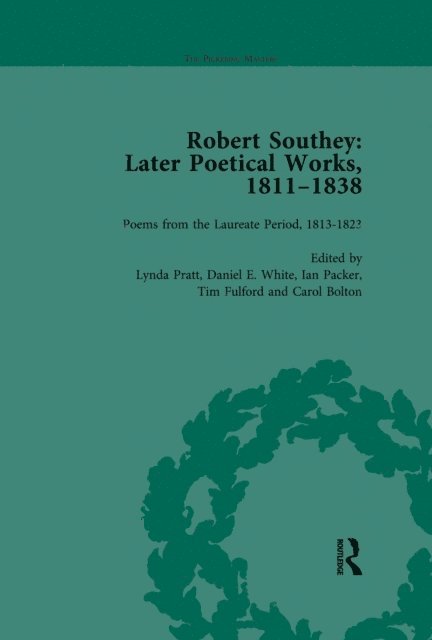
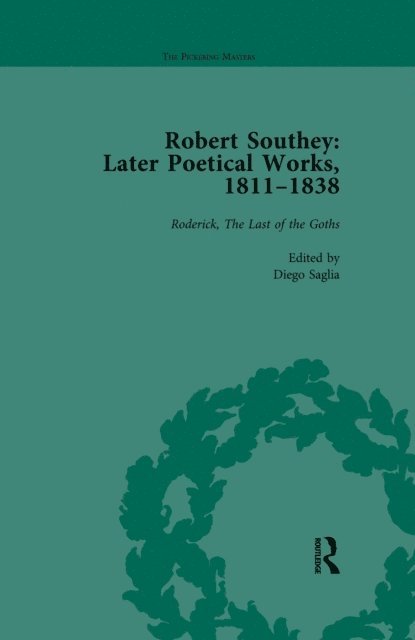
Robert Southey: Later Poetical Works, 1811-1838 Vol 4
Av Daniel E White, Diego Saglia m. fl.
E-bok, 2024
4049 kr
Lägg i varukorg
Central to any reappraisal of Southey’s mid to late career, is ''Roderick''. This best-selling epic romance has not been republished since 1838 and is contextualised here within Southey’s wider oeuvre. The four-volume edition also benefits from a general introduction, volume introductions, …
Robert Southey: Later Poetical Works, 1811-1838 Vol 1
Av Daniel E White, Diego Saglia m. fl.
E-bok, 2024
4091 kr
Lägg i varukorg
Central to any reappraisal of Southey’s mid to late career, is ''Roderick''. This best-selling epic romance has not been republished since 1838 and is contextualised here within Southey’s wider oeuvre. The four-volume edition also benefits from a general introduction, volume introductions, …
Robert Southey: Later Poetical Works, 1811-1838 Vol 3
Av Daniel E White, Diego Saglia m. fl.
E-bok, 2024
3942 kr
Lägg i varukorg
Central to any reappraisal of Southey’s mid to late career, is ''Roderick''. This best-selling epic romance has not been republished since 1838 and is contextualised here within Southey’s wider oeuvre. The four-volume edition also benefits from a general introduction, volume introductions, …
Robert Southey: Later Poetical Works, 1811-1838 Vol 2
Av Daniel E White, Diego Saglia m. fl.
E-bok, 2024
4049 kr
Lägg i varukorg
Central to any reappraisal of Southey’s mid to late career, is ''Roderick''. This best-selling epic romance has not been republished since 1838 and is contextualised here within Southey’s wider oeuvre. The four-volume edition also benefits from a general introduction, volume introductions, …
Robert Southey: Later Poetical Works, 1811-1838 Vol 4
Av Daniel E White, Diego Saglia m. fl.
E-bok, 2024
4091 kr
Lägg i varukorg
Central to any reappraisal of Southey’s mid to late career, is ''Roderick''. This best-selling epic romance has not been republished since 1838 and is contextualised here within Southey’s wider oeuvre. The four-volume edition also benefits from a general introduction, volume introductions, …
Robert Southey: Later Poetical Works, 1811-1838 Vol 1
Av Daniel E White, Diego Saglia m. fl.
E-bok, 2024
4091 kr
Lägg i varukorg
Central to any reappraisal of Southey’s mid to late career, is ''Roderick''. This best-selling epic romance has not been republished since 1838 and is contextualised here within Southey’s wider oeuvre. The four-volume edition also benefits from a general introduction, volume introductions, …
Robert Southey: Later Poetical Works, 1811-1838 Vol 3
Av Daniel E White, Diego Saglia m. fl.
E-bok, 2024
3857 kr
Lägg i varukorg
Central to any reappraisal of Southey’s mid to late career, is ''Roderick''. This best-selling epic romance has not been republished since 1838 and is contextualised here within Southey’s wider oeuvre. The four-volume edition also benefits from a general introduction, volume introductions, …
Robert Southey: Later Poetical Works, 1811-1838 Vol 2
Av Daniel E White, Diego Saglia m. fl.
E-bok, 2024
4091 kr
Lägg i varukorg
Central to any reappraisal of Southey’s mid to late career, is ''Roderick''. This best-selling epic romance has not been republished since 1838 and is contextualised here within Southey’s wider oeuvre. The four-volume edition also benefits from a general introduction, volume introductions, …
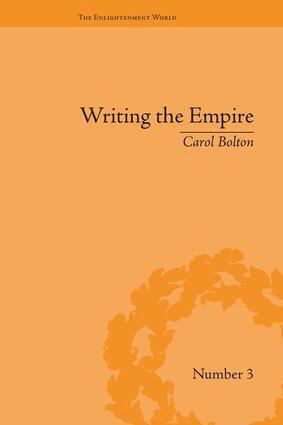
Writing the Empire
Robert Southey and Romantic Colonialism
Av Carol Bolton
Häftad, 2016
946 kr
Lägg i varukorg
Examines a range of Robert Southey's writing to explore the relationship between Romantic literature and colonial politics during the expansion of Britain's second empire. This study draws upon a range of interdisciplinary materials to consider the impact of his work upon nineteenth-century views …
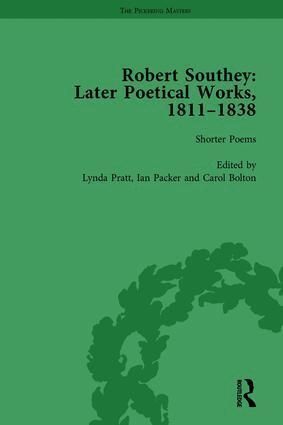
Robert Southey: Later Poetical Works, 1811-1838 Vol 1
Av Tim Fulford, Lynda Pratt m. fl.
Inbunden, 2012
3525 kr
Lägg i varukorg
Central to any reappraisal of Southey’s mid to late career, is 'Roderick'. This best-selling epic romance has not been republished since 1838 and is contextualised here within Southey’s wider oeuvre. The four-volume edition also benefits from a general introduction, volume introductions, textual …
Robert Southey: Later Poetical Works, 1811-1838 Vol 2
Av Tim Fulford, Lynda Pratt m. fl.
Inbunden, 2012
3525 kr
Lägg i varukorg
Central to any reappraisal of Southey’s mid to late career, is 'Roderick'. This best-selling epic romance has not been republished since 1838 and is contextualised here within Southey’s wider oeuvre. The four-volume edition also benefits from a general introduction, volume introductions, textual …
Robert Southey: Later Poetical Works, 1811-1838 Vol 3
Av Tim Fulford, Lynda Pratt m. fl.
Inbunden, 2012
3525 kr
Lägg i varukorg
Central to any reappraisal of Southey’s mid to late career, is 'Roderick'. This best-selling epic romance has not been republished since 1838 and is contextualised here within Southey’s wider oeuvre. The four-volume edition also benefits from a general introduction, volume introductions, textual …
Robert Southey: Later Poetical Works, 1811-1838 Vol 4
Av Tim Fulford, Lynda Pratt m. fl.
Inbunden, 2012
3525 kr
Lägg i varukorg
Central to any reappraisal of Southey’s mid to late career, is 'Roderick'. This best-selling epic romance has not been republished since 1838 and is contextualised here within Southey’s wider oeuvre. The four-volume edition also benefits from a general introduction, volume introductions, textual …
Letters from England
by Don Manuel Alvarez Espriella
Av Carol Bolton
E-bok, 2016
3531 kr
Lägg i varukorg
In 1807 Robert Southey published a pseudonymous account of a journey made through England by a fictitious Spanish tourist, ‘Don Manuel Alvarez Espriella’. Letters from England (1807) relates Espriella’s travels. On his journey Espriella comments on every aspect of British society, from …
Letters from England
by Don Manuel Alvarez Espriella
Av Carol Bolton
E-bok, 2016
3942 kr
Lägg i varukorg
In 1807 Robert Southey published a pseudonymous account of a journey made through England by a fictitious Spanish tourist, ‘Don Manuel Alvarez Espriella’. Letters from England (1807) relates Espriella’s travels. On his journey Espriella comments on every aspect of British society, from …
Writing the Empire
Robert Southey and Romantic Colonialism
Av Carol Bolton
E-bok, 2015
1115 kr
Lägg i varukorg
Examines a range of Robert Southey's writing to explore the relationship between Romantic literature and colonial politics during the expansion of Britain's second empire. This study draws upon a range of interdisciplinary materials to consider the impact of his work upon nineteenth-century views …
Writing the Empire
Robert Southey and Romantic Colonialism
Av Carol Bolton
E-bok, 2015
1115 kr
Lägg i varukorg
Examines a range of Robert Southey's writing to explore the relationship between Romantic literature and colonial politics during the expansion of Britain's second empire. This study draws upon a range of interdisciplinary materials to consider the impact of his work upon nineteenth-century views …
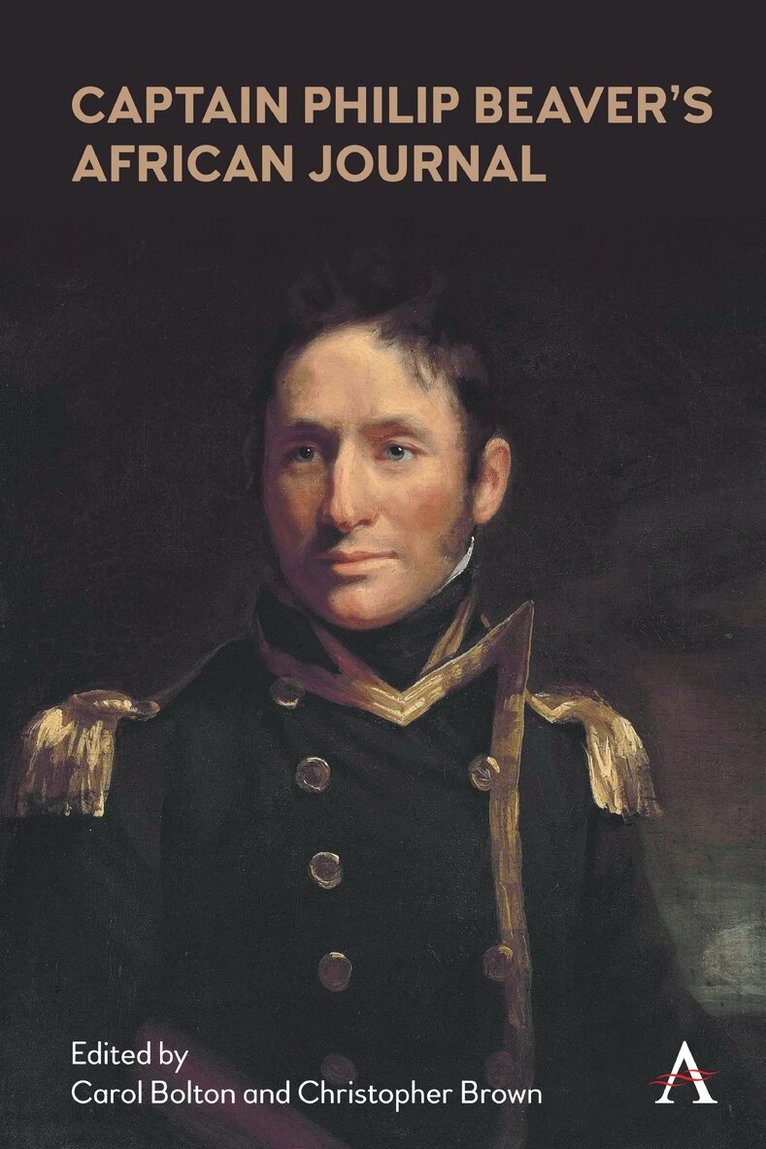
Captain Philip Beaver's African Journal
Av Carol Bolton, Christopher Brown
Inbunden, 2023
1892 kr
Lägg i varukorg
In 1805, naval officer Captain Philip Beaver (1766–1813) published his African Memoranda: Relative to an Attempt to Establish a British Settlement on the Island of Bulama, on the Western Coast of Africa, in the Year 1792. Beaver’s text in this modern scholarly edition provides an absorbing …