Carol van Driel-Murray – författare
Visar alla böcker från författaren Carol van Driel-Murray. Handla med fri frakt och snabb leverans.
4 produkter
4 produkter
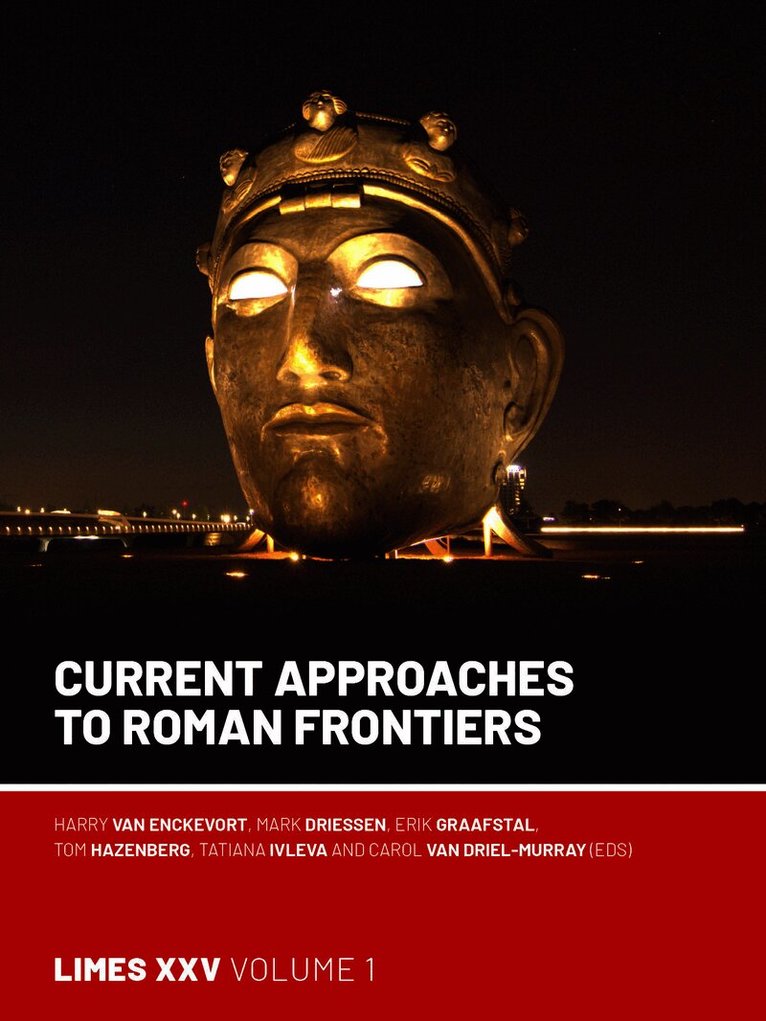
Current Approaches to Roman Frontiers
Proceedings of the 25th International Congress of Roman Frontier Studies 1
Häftad, Engelska, 2024
1 330 kr
Skickas inom 3-6 vardagar
This publication – Current Approaches to Roman Frontiers – is the first volume of the LIMES XXV’s congress proceedings arranged around the original sessions, in order to form coherent thematical collections that make the vast output more accessible to generalists and specialists alike. This volume starts with a recap of the congress. Regarding the themes it deals with a contemporary feminist approach; new digital methodologies and computational modelling; three themes on archaeological heritage management dealing inter alia with preservation, protection, citizen science and World Heritage aspects, and a comparison between the Roman Limes and the Great Wall of China. It ends with an overview of the sessions and lectures of the congress in Nijmegen.Frontiers are zones, or lines, of contact and coercion, of exchange and exclusion. As such they often express some of the most typical elements of the socio-political spaces that are defined by them. Spanning some 6,000 km along rivers, mountain ranges, artificial barriers and fringes of semi-desert, the frontiers of the Roman empire offer a wide variety of avenues and topics for a very diverse community of scholars. They are the central subject of the International Congress of Roman Frontier Studies (or just Limes Congress after the Latin word for ‘border’), organised every three years since 1949\. This four-volume publication contains most of the papers presented at the 25th edition which was hosted by the municipality of Nijmegen in August 2022.
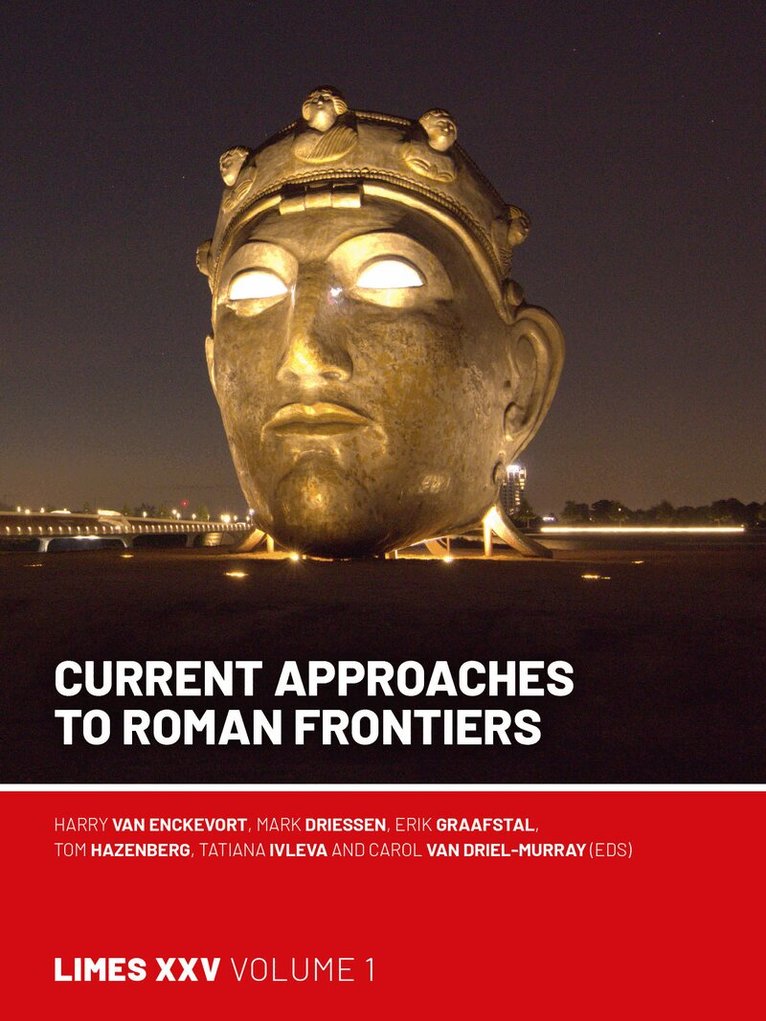
Current Approaches to Roman Frontiers
Proceedings of the 25th International Congress of Roman Frontier Studies 1
Inbunden, Engelska, 2024
1 629 kr
Skickas inom 3-6 vardagar
This publication – Current Approaches to Roman Frontiers – is the first volume of the LIMES XXV’s congress proceedings arranged around the original sessions, in order to form coherent thematical collections that make the vast output more accessible to generalists and specialists alike. This volume starts with a recap of the congress. Regarding the themes it deals with a contemporary feminist approach; new digital methodologies and computational modelling; three themes on archaeological heritage management dealing inter alia with preservation, protection, citizen science and World Heritage aspects, and a comparison between the Roman Limes and the Great Wall of China. It ends with an overview of the sessions and lectures of the congress in Nijmegen.Frontiers are zones, or lines, of contact and coercion, of exchange and exclusion. As such they often express some of the most typical elements of the socio-political spaces that are defined by them. Spanning some 6,000 km along rivers, mountain ranges, artificial barriers and fringes of semi-desert, the frontiers of the Roman empire offer a wide variety of avenues and topics for a very diverse community of scholars. They are the central subject of the International Congress of Roman Frontier Studies (or just Limes Congress after the Latin word for ‘border’), organised every three years since 1949\. This four-volume publication contains most of the papers presented at the 25th edition which was hosted by the municipality of Nijmegen in August 2022.
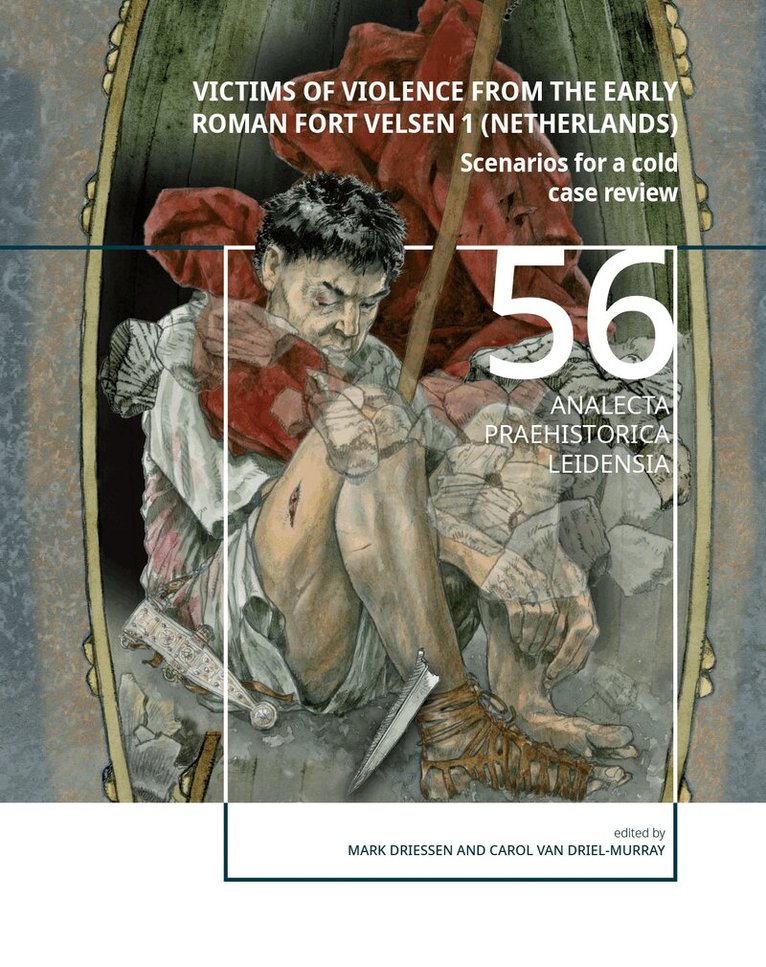
Victims of Violence from the early Roman fort Velsen 1 (Netherlands)
Scenarios for a cold case review
Häftad, Engelska, 2026
963 kr
Kommande
In 1977, a remarkable discovery was made at the early Roman fort of Velsen (Netherlands): on the bottom of a well lay the skeleton of a man with traumatic injuries. Who was he, how did he die, and what circumstances led to his deposition? This book revisits this 2,000-year-old ‘cold case’, combining archaeological, historical, and scientific evidence to reconstruct the final moments of the victim and the events surrounding his death.Renewed research, prompted by preparations for a museum exhibition, brought together a wide range of analytical approaches. Isotope analysis revealed that the man, as well as two others found in a nearby well, were not local to the region. Detailed study of skeletal trauma, supported by 3D imaging and experimental reconstructions, sheds new light on the nature of the injuries and the weapon used, fundamentally altering earlier interpretations. Additional finds from the well, including a military dagger, belt, and decorated sheath, provide further clues to the man’s identity and status.Set against the historical backdrop of the Frisian rebellion of AD 28, as described by Tacitus, this multi-authored volume presents the results of interdisciplinary research, including pathology, environmental analysis, and site interpretation. Rather than offering a single definitive answer, the book invites readers to evaluate six plausible scenarios, highlighting the tensions between historical sources and archaeological evidence in reconstructing past violence.
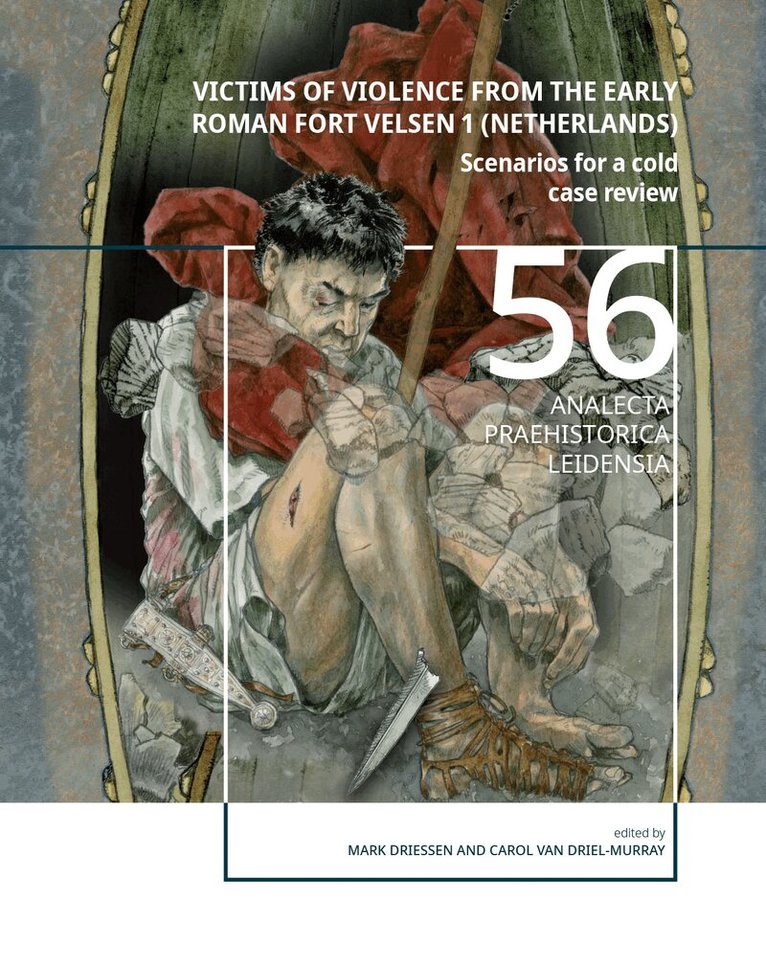
Victims of Violence from the early Roman fort Velsen 1 (Netherlands)
Scenarios for a cold case review
Inbunden, Engelska, 2026
1 890 kr
Kommande
In 1977, a remarkable discovery was made at the early Roman fort of Velsen (Netherlands): on the bottom of a well lay the skeleton of a man with traumatic injuries. Who was he, how did he die, and what circumstances led to his deposition? This book revisits this 2,000-year-old ‘cold case’, combining archaeological, historical, and scientific evidence to reconstruct the final moments of the victim and the events surrounding his death.Renewed research, prompted by preparations for a museum exhibition, brought together a wide range of analytical approaches. Isotope analysis revealed that the man, as well as two others found in a nearby well, were not local to the region. Detailed study of skeletal trauma, supported by 3D imaging and experimental reconstructions, sheds new light on the nature of the injuries and the weapon used, fundamentally altering earlier interpretations. Additional finds from the well, including a military dagger, belt, and decorated sheath, provide further clues to the man’s identity and status.Set against the historical backdrop of the Frisian rebellion of AD 28, as described by Tacitus, this multi-authored volume presents the results of interdisciplinary research, including pathology, environmental analysis, and site interpretation. Rather than offering a single definitive answer, the book invites readers to evaluate six plausible scenarios, highlighting the tensions between historical sources and archaeological evidence in reconstructing past violence.