Carole B. Balin - Böcker
Visar alla böcker från författaren Carole B. Balin. Handla med fri frakt och snabb leverans.
2 produkter
2 produkter
438 kr
Skickas inom 10-15 vardagar
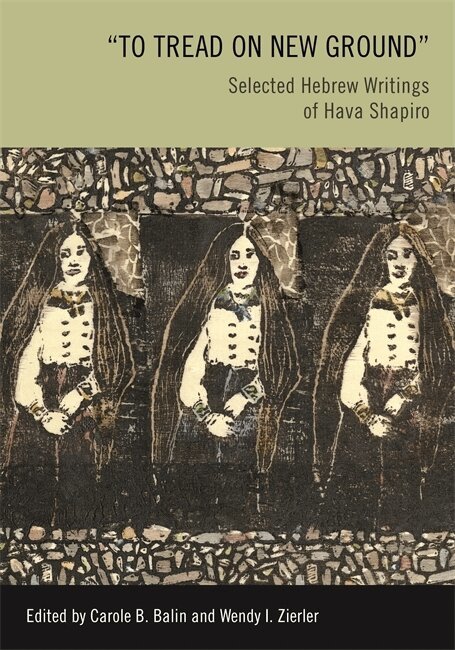
Hava Shapiro is among the nearly forgotten Jewish women writers who sought acceptance in Jewish literary circles of the last century. Born in Slavuta (modern-day Ukraine) in 1878, she published works of fiction, memoir, literary criticism, and journalism, including a volume of short fiction and a scholarly monograph on the Czech leader Masaryk. Her handwritten diary - the first known diary to be kept by a woman in Hebrew - evokes not only the momentous events of her day but also the experiences of women like herself who failed to follow the dictates of Jewish tradition and aspired to roles beyond those of wife and mother.In ""To Tread New Ground"": Selected Writings of Hava Shapiro editors and translators Carole B. Balin and Wendy I. Zierler present an English anthology of Shapiro’s late-nineteenth and early-twentieth century Hebrew writings. The selection culls from her short fiction, feminist literary criticism, reportage and literary essays, as well as her diary and hundreds of letters. Shapiro chronicled publicly and privately such cataclysmic events as the Russian Revolution and both World Wars, in addition to critical episodes in the Jewish past, including pogroms, mass migration, ruptures in traditional Jewish life, and the development of Zionism. A list of Shapiro’s intimates, whom she describes in both her diary and published reminiscences, reads like a ""who’s who"" of the Russian Haskalah: including Y. L. Peretz, Reuven Brainin, David Frischmann, Nahum Sokolov, Micha Yosef Berdischevsky, and Hayim Nahman Bialik. To further contextualize Shapiro’s writings, Balin and Zierler include a thorough introduction and translations of critical essays about Shapiro.Balin and Zierler’s Hebrew edition of Shapiro’s writing, Behikansi atah, which was published in Israel in 2008, brought the first broad attention and readership to Shapiro’s remarkable biography and writings. The translations in ""To Tread New Ground"", which include previously uncollected materials, will be welcomed by English-speaking readers interested in Hebrew literature, East European Jewish history, and gender studies.
Del 24 - Monographs of the Hebrew Union College
To Reveal Our Hearts
Jewish Women Writers in Tsarist Russia
Häftad, Engelska, 2000
413 kr
Tillfälligt slut
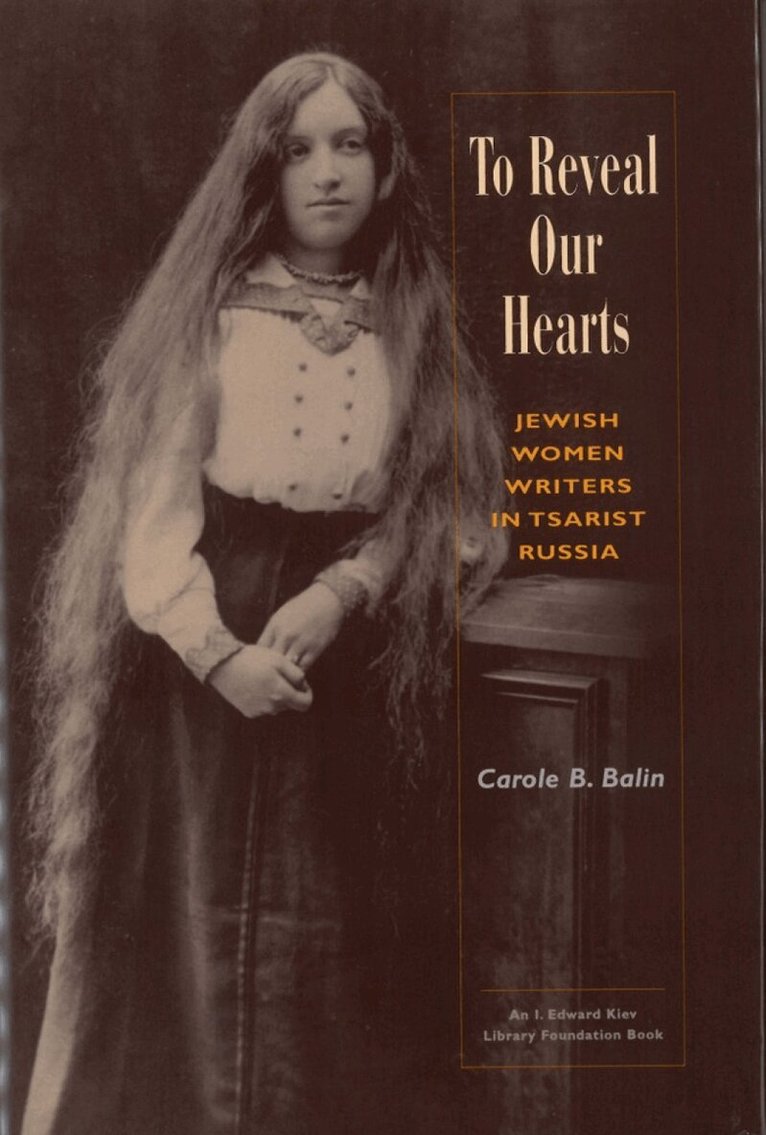
Carole Balin introduces us to dozens of Jewish women writers from late nineteenth- and early twentieth- century Tsarist Russia, focusing on five who were among the most prolific. Their extant literary remains include not only fiction, poetry, drama, translations, and essays, but also memoirs, autobiographies, diaries, and letters. Balin contextualizes the works of each within the culture in which she lived and wrote. Miriam Markel-Mosessohn (1839-1920) toiled to advance the goals of the Russian Haskalah (Enlightenment), translated German works into Hebrew, tried her hand at poetry, and became a foreign correspondent for a Hebrew newspaper at the age of 48. Hava Shapiro (1879-1943) published short stories and newspaper articles in Hebrew, earned a doctorate at the University of Berne, and was an active participant in the writing circle convened at the Warsaw home of Y. L. Peretz. Rashel Mironovna Khin (1861-1928) wrote numerous short stories and plays in Russian, two of which were staged at Moscow's Malyi Theater. Feiga Israilevna Kogan (1891-1974) composed books of Symbolist poetry in Russian while harboring a love of Hebrew, which she nurtured at the Society for Lovers of the Hebrew Language. Sofia Dubnova-Erlikh (1885-1986) was the daughter of historian Simon Dubnov, the wife of socialist Genrikh Erlikh, and an accomplished poet, essayist, biographer, and political activist in her own right. The life-like and touching portraits that emerge of these talented writers allow us a penetrating view of Jewish women within their Russian-Jewish milieu that is far more nuanced than the images of housewife and revolutionary currently held in collective Jewish memory. The lives and works of these women help to tell a larger story of Jewish cultural history in the Russian Empire.