Carolina Maria de Jesus - Böcker
Visar alla böcker från författaren Carolina Maria de Jesus. Handla med fri frakt och snabb leverans.
4 produkter
4 produkter
88 kr
Skickas inom 3-6 vardagar
Bitita's Diary: The Autobiography of Carolina Maria de Jesus
The Autobiography of Carolina Maria de Jesus
Inbunden, Engelska, 1997
2 229 kr
Skickas inom 10-15 vardagar
Carolina Maria de Jesus (1914-1977), nicknamed Bitita, was a destitute black Brazilian woman born in the rural interior who migrated to the industrial city of Sao Paulo. This is her autobiography, which includes details about her experiences of race relations and sexual intimidation.
Bitita's Diary: The Autobiography of Carolina Maria de Jesus
The Autobiography of Carolina Maria de Jesus
Häftad, Engelska, 1997
796 kr
Skickas inom 10-15 vardagar
Carolina Maria de Jesus (1914-1977), nicknamed Bitita, was a destitute black Brazilian woman born in the rural interior who migrated to the industrial city of Sao Paulo. This is her autobiography, which includes details about her experiences of race relations and sexual intimidation.
220 kr
Skickas inom 10-15 vardagar
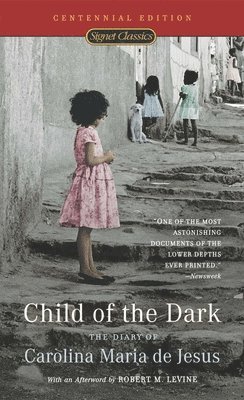
In August 1960 the publication of Quarto de Despejo (Child of the Dark) created a sensation in Brazil—and in the rest of the world—as it appeared in translations in fourteen languages. That diary of a poor black woman from a favela on the outskirts of São Paulo became the best-selling book in Brazilian history. In it, Carolina Maria de Jesus chronicled her life as an unemployed, single parent of three children, eking out a precarious existence selling scrap paper and other detritus found in the city streets. She described how she wrote at night on the scavenged scraps. Her remarkable diary—angry, proud, wretched, and hopeful—was found and published by an enterprising journalist. The book's success permitted Carolina to leave her flimsy shack in triumph and move into the cinder-block house of her fantasy. I'm Going to Have a Little House is de Jesus's second diary. It covers the first year following her rise to fame. In it she recounts her struggles with celebrity, middle-class expectations, and the racial and social tensions her success had exacerbated. This work, never previously translated into English, tells the rest of the story—the grim truth that favela life doesn't prepare one for middle-class "respectability" and that the fall back into poverty is as easy as the struggle to escape it is difficult. Carolina Maria de Jesus died in 1977, forgotten and in poverty.