Caroline J. Tolbert - Böcker
Visar alla böcker från författaren Caroline J. Tolbert. Handla med fri frakt och snabb leverans.
14 produkter
14 produkter
371 kr
Skickas inom 5-8 vardagar
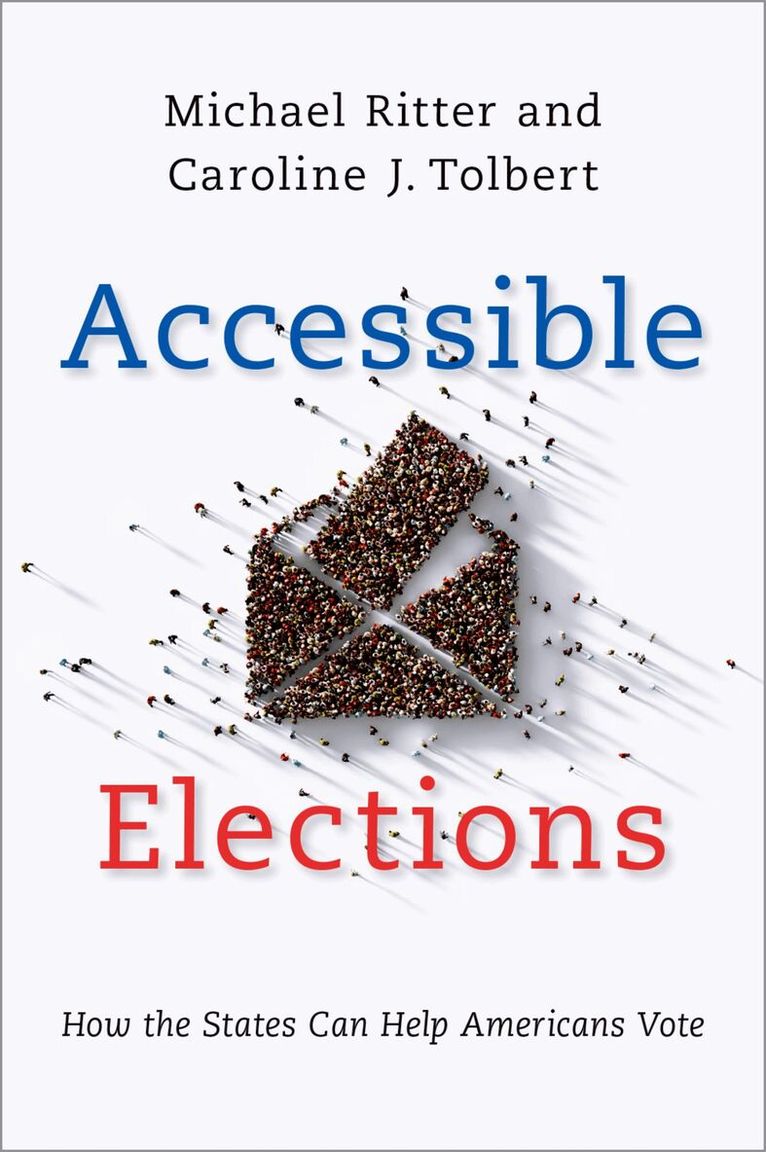
Recent years have witnessed widespread changes in state voting and registration laws. These include same day registration, automatic voter registration, early voting, mail voting, and no-excuse absentee voting where people mail in their ballots. Most research on these voting reforms has downplayed their effects, showing that they generally benefit educated, older, and more affluent people. This book shows the positive effects that these reforms have on overall voter turnout, and among voters of disadvantaged groups. Specifically, it emphasizes the ways that state governments are making it easier to participate in elections in an effort to strengthen democratic government. In Accessible Elections, Michael Ritter and Caroline J. Tolbert explore the wide variation from state to state in convenience voting methods and provide new empirical analysis of the beneficial effects of these policies, not only in boosting participation rates overall, but in increasing voter turnout for disadvantaged groups. The authors measure both convenience methods and implementation of the laws, and explore how elections are conducted across the fifty states, where average turnout has varied more than 25 percentage points over the past four decades. The authors also draw on national voter files with millions of cases and vote histories of the same individuals over time in order to show the real effects of election reform and to make a case for how state governments can modernize their electoral practices, increase voter turnout, and make the experience of voting more accessible and equitable. Ritter and Tolbert assert that in the wake of covid-19 and efforts to maintain social distancing, early voting and absentee/mail voting are of particular importance to avoid election-day crowds and ensure equitable elections in states with large populations. With important implications for the 2020 general election and beyond, Accessible Elections underscores how state governments can modernize their electoral procedures to increase voter turnout, address inequalities, and influence campaign and party mobilization strategies.
1 146 kr
Skickas inom 7-10 vardagar
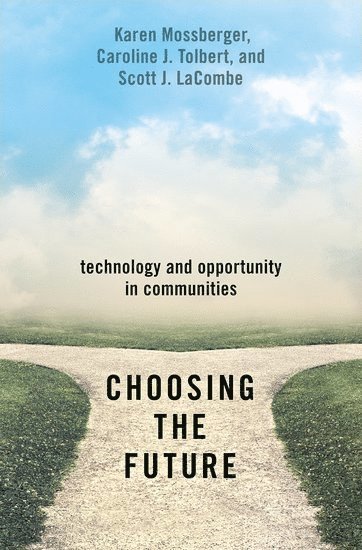
Digital information drives participation in politics, the economy, and society. Yet great disparities exist as to which communities have access to the internet. In 2017, only half of residents of formerly industrial Flint, Michigan, had broadband or satellite internet at home, while over 90 percent of those in thriving Sunnyvale, California, in Silicon Valley, were connected. More recently, Covid-19 laid bare these persistent digital divides in both urban and rural communities, illustrating that broadband use is a fundamental resource for the future of opportunity in communities. While previous studies have examined the impacts of broadband infrastructure, they have indicated little about the extent to which local populations can afford and use the technology. Moreover, there has been limited scientific evidence on how broadband adoption matters for collective benefits. Including new data on broadband subscriptions from 2000-2017, and comprehensive analysis for U.S. states, counties, metros, cities, and neighborhoods, Choosing the Future argues that broadband use in the population is a form of digital human capital that benefits communities as well as individuals. Broadband has a causal impact across all types of communities--for economic prosperity, growth, income, employment, and policy innovation. Yet there are urban neighborhoods and rural counties where as little as one-quarter of the population has a broadband subscription, even when mobile is included. As we build "smart" cities and communities, as economies and jobs continue to experience rapid change, and as more information and services migrate online, it is communities with widespread broadband use that will be best positioned for inclusive innovation, with the digital human capital to thrive.
359 kr
Skickas inom 5-8 vardagar
Digital information drives participation in politics, the economy, and society. Yet great disparities exist as to which communities have access to the internet. In 2017, only half of residents of formerly industrial Flint, Michigan, had broadband or satellite internet at home, while over 90 percent of those in thriving Sunnyvale, California, in Silicon Valley, were connected. More recently, Covid-19 laid bare these persistent digital divides in both urban and rural communities, illustrating that broadband use is a fundamental resource for the future of opportunity in communities. While previous studies have examined the impacts of broadband infrastructure, they have indicated little about the extent to which local populations can afford and use the technology. Moreover, there has been limited scientific evidence on how broadband adoption matters for collective benefits. Including new data on broadband subscriptions from 2000-2017, and comprehensive analysis for U.S. states, counties, metros, cities, and neighborhoods, Choosing the Future argues that broadband use in the population is a form of digital human capital that benefits communities as well as individuals. Broadband has a causal impact across all types of communities--for economic prosperity, growth, income, employment, and policy innovation. Yet there are urban neighborhoods and rural counties where as little as one-quarter of the population has a broadband subscription, even when mobile is included. As we build "smart" cities and communities, as economies and jobs continue to experience rapid change, and as more information and services migrate online, it is communities with widespread broadband use that will be best positioned for inclusive innovation, with the digital human capital to thrive.
1 932 kr
Skickas inom 5-8 vardagar
In an age when the United Nations has declared access to the Internet a human right, and universal access to high-speed broadband is a national goal, urban areas have been largely ignored by federal policy. The cost of that neglect may well be the failure to realize the social benefits of broadband and a broadly-connected digital society. Technology offers unparalleled advantages for innovation in urban areas - in the economy, health care, education, energy, transportation, government services, civic engagement, and more. With their density and networks of activity, cities hold the most potential for reaping the benefits of technology. But there are surprisingly substantial disparities in broadband adoption across cities. More puzzlingly, rather than promoting innovation or addressing the high cost of broadband access, the US has mostly funded expensive rural infrastructure in sparsely-populated areas. Digital Cities tells the story of information technology use and inequality in American metropolitan areas and discusses directions for change. The authors argue that mobile-only Internet, the form used by many minorities and urban poor, is a second-class form of access, as they offer evidence that users with such limited access have dramatically lower levels of online activity and skill. Digital citizenship and full participation in economic, social and political life requires home access. Using multilevel statistical models, the authors present new data ranking broadband access and use in the nation's 50 largest cities and metropolitan areas, showing considerable variation across places. Unique, neighborhood data from Chicago examines the impact of poverty and segregation on access in a large and diverse city, and it parallels analysis of national patterns in urban, suburban and rural areas. Digital Cities demonstrate the significance of place for shaping our digital future and the need for policies that recognize the critical role of cities in addressing both social inequality and opportunity.
526 kr
Skickas inom 5-8 vardagar
In an age when the United Nations has declared access to the Internet a human right, and universal access to high-speed broadband is a national goal, urban areas have been largely ignored by federal policy. The cost of that neglect may well be the failure to realize the social benefits of broadband and a broadly-connected digital society. Technology offers unparalleled advantages for innovation in urban areas - in the economy, health care, education, energy, transportation, government services, civic engagement, and more. With their density and networks of activity, cities hold the most potential for reaping the benefits of technology. But there are surprisingly substantial disparities in broadband adoption across cities. More puzzlingly, rather than promoting innovation or addressing the high cost of broadband access, the US has mostly funded expensive rural infrastructure in sparsely-populated areas. Digital Cities tells the story of information technology use and inequality in American metropolitan areas and discusses directions for change. The authors argue that mobile-only Internet, the form used by many minorities and urban poor, is a second-class form of access, as they offer evidence that users with such limited access have dramatically lower levels of online activity and skill. Digital citizenship and full participation in economic, social and political life requires home access. Using multilevel statistical models, the authors present new data ranking broadband access and use in the nation's 50 largest cities and metropolitan areas, showing considerable variation across places. Unique, neighborhood data from Chicago examines the impact of poverty and segregation on access in a large and diverse city, and it parallels analysis of national patterns in urban, suburban and rural areas. Digital Cities demonstrate the significance of place for shaping our digital future and the need for policies that recognize the critical role of cities in addressing both social inequality and opportunity.
Why Iowa?
How Caucuses and Sequential Elections Improve the Presidential Nominating Process
Häftad, Engelska, 2010
298 kr
Skickas inom 7-10 vardagar
If Barack Obama had not won in Iowa, most commentators believe that he would not have been able to go on to capture the Democratic nomination for president. "Why Iowa?" offers the definitive account of those early weeks of the campaign season: from how the Iowa caucuses work and what motivates the candidates' campaigns, to participation and turnout, as well as the lingering effects that the campaigning had on Iowa voters. Demonstrating how 'what happens in Iowa' truly reverberates throughout the country, five-time Iowa precinct caucus chair David P. Redlawsk and his coauthors take us on an inside tour of one of the most media-saturated and speculated-about campaign events in American politics. Considering whether a sequential primary system, in which early, smaller states such as Iowa and New Hampshire have such a tremendous impact, is fair or beneficial to the country as a whole, the authors here demonstrate that not only is the impact warranted, but it also reveals a great deal about informational elements of the campaigns.Contrary to conventional wisdom, this sequential system does confer huge benefits on the nominating process, while Iowa's particularly well-designed caucus system - extensively explored here for the first time - brings candidates' arguments, strengths, and weaknesses into the open and under the media's lens.
564 kr
Skickas inom 5-8 vardagar
519 kr
Skickas inom 5-8 vardagar
354 kr
Skickas inom 10-15 vardagar
Democracy in the States offers a 21st century agenda for election reform in America based on lessons learned in the fifty states. Combining accessibility and rigor, leading scholars of U.S. politics and elections examine the impact of reforms intended to increase the integrity, fairness, and responsiveness of the electoral system. While some of these reforms focus on election administration, which has been the subject of much controversy since the 2000 presidential election, others seek more broadly to increase political participation and improve representation. For example, Paul Gronke (Reed College) and his colleagues study the relationship between early voting and turnout. Barry Burden (University of WisconsinMadison) examines the hurdles that third-party candidates must clear to get on the ballot in different states. Michael McDonald (George Mason University) analyzes the leading strategies for redistricting reform. And Todd Donovan (Western Washington University) focuses on how the spread of ""safe"" legislative seats affects both representation and participation. Supreme Court Justice Louis Brandeis famously observed that ""a single courageous state may, if its citizens choose, serve as a laboratory; and try novel social and economic experiments without risk to the rest of the country."" Nowhere is this function more essential than in the sphere of election reform, as this important book shows.
629 kr
Skickas inom 7-10 vardagar
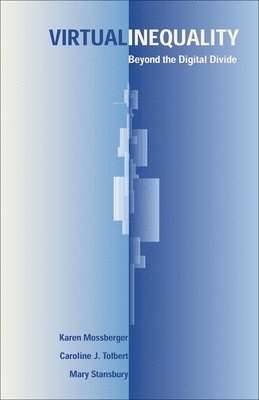
That there is a "digital divide" - which falls between those who have and can afford the latest in technological tools and those who have neither in our society - is indisputable. "Virtual Inequality" redefines the issue as it explores the cascades of that divide, which involve access, skill, political participation, as well as the obvious economics. Computer and Internet access are insufficient without the skill to use the technology, and economic opportunity and political participation provide primary justification for realizing that this inequality is a public problem and not simply a matter of private misfortune. Defying those who say the divide is growing smaller, this volume, based on a unique national survey that includes data from over 1800 respondents in low-income communities, shows otherwise. In addition to demonstrating why disparities persist in such areas as technological abilities, the survey also shows that the digitally disadvantaged often share many of the same beliefs as their more privileged counterparts. African-Americans, for instance, are even more positive in their attitudes toward technology than whites are in many respects, contrary to conventional wisdom.The rigorous research on which the conclusions are based is presented accessibly and in an easy-to-follow manner. Not content with analysis alone, nor the untangling of the complexities of policymaking, Virtual Inequality views the digital divide compassionately in its human dimensions and recommends a set of practical and common-sense policy strategies. Inequality, even in a virtual form this book reminds us, is unacceptable and a situation that society is compelled to address.
We the People
2022
1 132 kr
Skickas inom 7-10 vardagar
We the People
2022
1 629 kr
Skickas inom 7-10 vardagar
Building on We the People’s unparalleled focus on participation and the citizen’s role, new coauthor Megan Ming Francis uses her experience as an instructor and scholar of race and ethnicity politics to?energize coverage of race and social movements. New Check Your Understanding questions—in both print and ebook formats—motivate students and builds confidence in their learning. In the Norton Illumine Ebook Check Your Understanding questions include rich answer-feedback that helps students practice their learning. InQuizitive activities confirm chapter-level understanding and allow students to practice applying essential concepts.
We the People
2025
1 807 kr
Skickas inom 7-10 vardagar
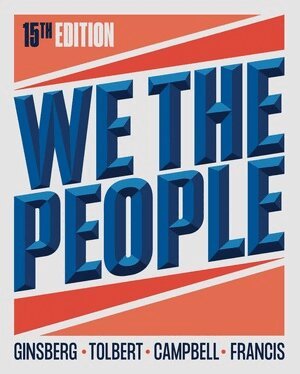
Building on We the People’s focus on the citizen’s role, why participation matters, and the influence of gender, class, race, and ethnicity in American politics, the Fifteenth Edition delivers new ways for students to understand and participate in politics. New chapter-opening author videos in the Norton Illumine Ebook draw students in with engaging personal stories and explain the learning objectives. New interactive features invite students to engage with data and understand the role of participation and representation in American politics. Check Your Understanding questions with feedback for each major section in the ebook help students retain what they’ve read, while InQuizitive helps students master and apply key concepts.
We the People
2025
1 248 kr
Skickas inom 7-10 vardagar
Building on We the People’s focus on the citizen’s role, why participation matters, and the influence of gender, class, race, and ethnicity in American politics, the Fifteenth Edition delivers new ways for students to understand and participate in politics. New chapter-opening author videos in the Norton Illumine Ebook draw students in with engaging personal stories and explain the learning objectives. New interactive features invite students to engage with data and understand the role of participation and representation in American politics. Check Your Understanding questions with feedback for each major section in the ebook help students retain what they’ve read, while InQuizitive helps students master and apply key concepts.