Catherine Donnelly - Böcker
Visar alla böcker från författaren Catherine Donnelly. Handla med fri frakt och snabb leverans.
2 produkter
2 produkter
646 kr
Skickas inom 3-6 vardagar
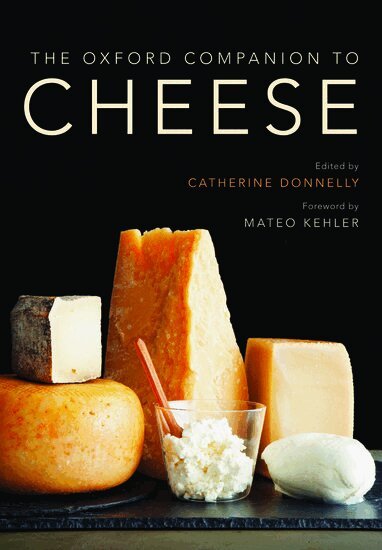
The discovery of cheese is a narrative at least 8,000 years old, dating back to the Neolithic era. Yet, after all of these thousands of years we are still finding new ways to combine the same four basic ingredients - milk, bacteria, salt, and enzymes - into new and exciting products with vastly different shapes, sizes, and colors, and equally complex and varied tastes, textures, and, yes, aromas. In fact, after a long period of industrialized, processed, and standardized cheese, cheesemakers, cheesemongers, affineurs, and most of all consumers are rediscovering the endless variety of cheeses across cultures. The Oxford Companion to Cheese is the first major reference work dedicated to cheese, containing 855 A-Z entries on cheese history, culture, science, and production. From cottage cheese to Camembert, from Gorgonzola to Gruyère, there are entries on all of the major cheese varieties globally, but also many cheeses that are not well known outside of their region of production. The concentrated whey cheeses popular in Norway, brunost, are covered here, as are the traditional Turkish and Iranian cheeses that are ripened in casings prepared from sheep's or goat's skin. There are entries on animal species whose milk is commonly (cow, goat, sheep) and not so commonly (think yak, camel, and reindeer) used in cheesemaking, as well as entries on a few highly important breeds within each species, such as the Nubian goat or the Holstein cow. Regional entries on places with a strong history of cheese production, biographies of influential cheesemakers, innovative and influential cheese shops, and historical entries on topics like manorial cheesemaking and cheese in children's literature round out the Companion's eclectic cultural coverage. The Companion also reflects a fascination with the microbiology and chemistry of cheese, featuring entries on bacteria, molds, yeasts, cultures, and coagulants used in cheesemaking and cheese maturing. The blooms, veins, sticky surfaces, gooey interiors, crystals, wrinkles, strings, and yes, for some, the odors of cheese are all due to microbial action and growth. And today we have unprecedented insight into the microbial complexity of cheese, thanks to advances in molecular biology, whole-genome sequencing technologies, and microbiome research. The Companion is equally interested in the applied elements of cheesemaking, with entries on production methodologies and the technology and equipment used in cheesemaking. An astonishing 325 authors contributed entries to the Companion, residing in 35 countries. These experts included cheesemakers, cheesemongers, dairy scientists, anthropologists, food historians, journalists, archaeologists, and on, from backgrounds as diverse as the topics they write about. Every entry is signed by the author, and includes both cross references to related topics and further reading suggestions. The endmatter includes a list of cheese-related museums and a thorough index. Three 8-page colour inserts and well over a hundred black and white images help bring the entries to life. This landmark encyclopedia is the most wide-ranging, comprehensive, and reliable reference work on cheese available, suitable for both novices and industry insiders alike.
Delegation of Governmental Power to Private Parties
A Comparative Perspective
Inbunden, Engelska, 2007
1 657 kr
Skickas inom 5-8 vardagar
Through a comparative analysis of England, the European Union, and the United States, this book considers legal responses to delegation of governmental power to private parties. Although private delegation has the potential to enhance the efficiency and effectiveness of governance, it should not be assumed to have this result. Private delegation creates risks to democracy, accountability, and human rights. Any legal controls must therefore respond to the challenge of enhancing the potential effectiveness of private delegation, while minimising the risks.The legal responses of the three jurisdictions to private delegation are categorised in a two-fold and functional way: responses which impose controls on the delegator of governmental power, and responses which impose controls on the private delegate of governmental power. The controls imposed by different legal disciplines such as constitutional law, administrative law, regulatory law, and private law are assessed.Three goals are pursued. First, the relationship between the different legal responses is illustrated. The challenge of private delegation is a complex one, which requires a multi-faceted response from a number of different legal disciplines. No one source of legal control is in itself adequate to respond to the challenge. Second, within the discussion of each individual legal control, appropriate responses to private delegation are analysed. Third, Donnelly demonstrates that at present, the response of all three jurisdictions to private delegation is inadequate, albeit to differing degrees. A much greater awareness of the risks of private delegation and a greater sense of responsibility on the part of the judiciary are required if these legal systems are to respond appropriately to the challenge of delegation of governmental power to private parties.