Catherine Labio - Böcker
Visar alla böcker från författaren Catherine Labio. Handla med fri frakt och snabb leverans.
2 produkter
2 produkter
458 kr
Skickas inom 5-8 vardagar
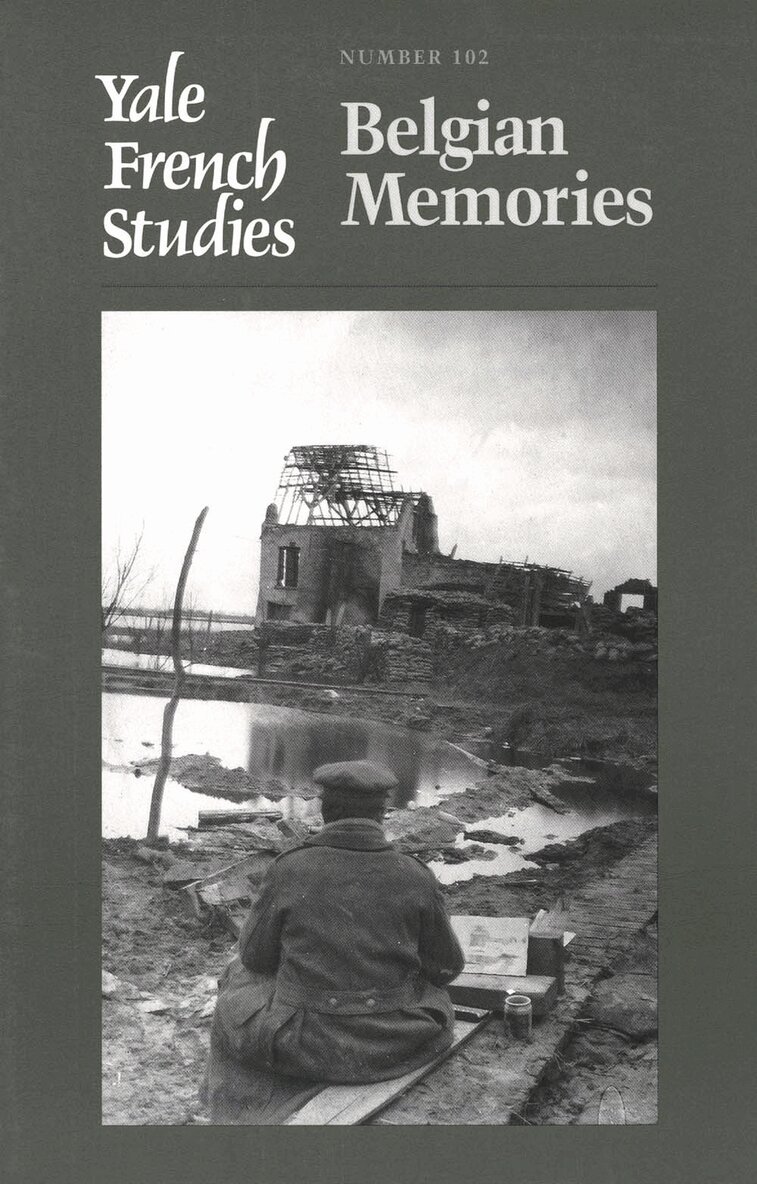
Part 1Pierre Mertens, Perasma: A Novel (excerpt) Antoon Van den Braembussche, The Silenced Past: Trauma and Taboo in Belgian MemoriesLuc de Heusch, Ceci n’est pas la BelgiquePiet Van de Craen, What, if Anything, Is a Belgian?Jacques Dubois, Wallonia: The Will to RememberPart 2Marc Quaghebeur, The Sixteenth Century: A Decisive MythSophie de Schaepdrijver, Death Is Elsewhere: The Shifting Locus of Tragedy in Belgian Great War LiteratureAntoine Tshitungu Kongolo, Colonial Memories in Belgian and Congolese LiteraturePart 3Serge Tisseron, Family Secrets and Social Memory in Les Aventures de TintinPhilip Mosley, Anxiety, Memory, and Place in Belgian CinemaFrançoise Aubry, Victor Horta: Vicissitudes of a WorkAlexander Murphy, Landscapes for Whom? The Twentieth-Century Remaking of Brussels
609 kr
Skickas inom 10-15 vardagar
What epistemic assumptions framed eighteenth-century thinkers' speculations regarding origins? What, if anything, connected these speculations? The best way to understand the Enlightenment's obsession with origins is to study it in conjunction with the contemporary conceptualization of originality as a criterion of aesthetic value, Catherine Labio maintains. Her expansive survey of the era's thought places special emphasis on epistemology and is genuinely interdisciplinary, drawing on such fields as anthropology, geometry, historiography, literary criticism, and political economy. One of the most striking facets of Enlightenment thought, according to Labio, is the emergence of aesthetics as a master discourse that enabled its users to make sense of worlds ostensibly unrelated to the arts. In particular, once knowledge became defined as knowledge of things made by human beings, originality became valued not only for its novelty but also as a guarantee of epistemological certainty.Labio analyzes the views held by a variety of European thinkers—including Baumgarten, Condillac, Descartes, Kant, Locke, Rousseau, Adam Smith, Vico, and Edward Young—on the origins of ideas, languages, nations, nature, and wealth. Throughout, the author deals with a wide range of primary and secondary materials.