• Fri frakt över 249 kr
  • •
  • Snabba leveranser
  • •
  • Billiga böcker
Kundservice

Du är på sajten för privatpersoner.

Företag, bibliotek eller offentlig verksamhet?

Du handlar på classic.bokus.com, där alla dina funktioner finns intakta.
Till classic.bokus.com
Bokus logotyp. Gå till startsidan.
  • Erbjudanden
  • Nyheter
  • Student
  • Topplistor
  • Barn & ungdom
  • Bokus Play
  • E-böcker
  • Pocketböcker
  • Spel & pussel

10% rabatt på allt med kod: NYSTART10 →

Sidfot

Mina sidor

    Hjälp

    • Kundservice
    • Vanliga frågor och svar
    • Frakt och leverans
    • Retur vid ångerrätt
    • Reklamera vara
    • Betalning
    • Köpvillkor
    • Allmänna villkor
    • Information om webbplatsens tillgänglighet

    Om Bokus

    • Om oss
    • Pressrum
    • För studenter
    • För företag
    • För bibliotek och offentlig verksamhet
    • För leverantörer
    • Hållbarhet

    Populärt

    • Aktuella erbjudanden
    • Presentkort
    • Studentlitteratur
    • Nya böcker
    • Topplistor
    • Signerade böcker
    • Engelska böcker

    Inspiration

    • Boktips
    • BookTok
    • Populära bokserier
    • Barnbokskaraktärer
    • Populära författare
    Logotyp för Bokus
    Följ oss på Facebook (extern länk)Följ oss på Instagram (extern länk)Följ oss på YouTube (extern länk)Följ oss på TikTok (extern länk)
    bokus @ CookiesAnpassa cookiesIntegritetspolicyKöpvillkor
    Till Citymail hemsida (extern länk)Till Budbee hemsida (extern länk)Till Postnord hemsida (extern länk)Till Schenker hemsida (extern länk)Till Early Bird hemsida (extern länk)Till Walleys hemsida (extern länk)
    1. Filosofi och religion
    2. Filosofi
    3. Filosofiska discipliner

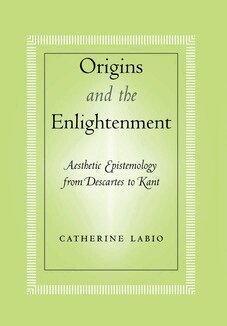
    Origins and the Enlightenment

    Aesthetic Epistemology from Descartes to Kant

    AvCatherine Labio

    Inbunden, Engelska, 2004

    742 kr

    Beställningsvara. Skickas inom 10-15 vardagar. Fri frakt över 249 kr.

    Beskrivning

    What epistemic assumptions framed eighteenth-century thinkers' speculations regarding origins? What, if anything, connected these speculations? The best way to understand the Enlightenment's obsession with origins is to study it in conjunction with the contemporary conceptualization of originality as a criterion of aesthetic value, Catherine Labio maintains. Her expansive survey of the era's thought places special emphasis on epistemology and is genuinely interdisciplinary, drawing on such fields as anthropology, geometry, historiography, literary criticism, and political economy. One of the most striking facets of Enlightenment thought, according to Labio, is the emergence of aesthetics as a master discourse that enabled its users to make sense of worlds ostensibly unrelated to the arts. In particular, once knowledge became defined as knowledge of things made by human beings, originality became valued not only for its novelty but also as a guarantee of epistemological certainty.Labio analyzes the views held by a variety of European thinkers—including Baumgarten, Condillac, Descartes, Kant, Locke, Rousseau, Adam Smith, Vico, and Edward Young—on the origins of ideas, languages, nations, nature, and wealth. Throughout, the author deals with a wide range of primary and secondary materials.

    Produktinformation

    • Utgivningsdatum:2004-10-06
    • Mått:152 x 229 x 22 mm
    • Vikt:454 g
    • Format:Inbunden
    • Språk:Engelska
    • Antal sidor:208
    • Förlag:Cornell University Press
    • ISBN:9780801442759

    Utforska kategorier

    • Filosofiska discipliner inom Filosofi och religion

    Mer om författaren

    Catherine Labio is Associate Professor of Comparative Literature and French at Yale University.

    Recensioner i media

    "In a mature, far-reaching book, Catherine Labio explores the complexity and variety of early modern theories of origins, originality, and authorship, from Descartes and Vico to Kant. With erudition, attentiveness to philosophical arguments, and an evenhanded approach to earlier scholarship, she analyzes the profound tensions within the framework of the 'esprit systématique,' central to the Enlightenment project, between epistemological models based on simultaneity and synchrony and those based on linearity or successivity."