Catherine Nall - Böcker
Visar alla böcker från författaren Catherine Nall. Handla med fri frakt och snabb leverans.
4 produkter
4 produkter
Del 362 - Early English Text Society Original Series
William Worcester, The Boke of Noblesse and the English Texts from its Codicil
Inbunden, Engelska, 2023
1 177 kr
Skickas inom 5-8 vardagar
The fifteenth-century chronicler, topographer, and antiquary, William Worcester, composed his political treatise, The Boke of Noblesse, first around 1451, and subsequently revised it twice, around 1475, when he intended to present it to Edward IV, along with a 'Codicil' of documents about past wars, to encourage and advise the king in his plans to invade France after England's disastrous defeats under Henry VI. William's autograph of this revision survives. The treatise was later presented by William's son to Richard III, with a new preface, also included in this edition. The treatise draws on diverse sources: older English and French history; classical or pseudo-classical works, including a section translated from Cicero; recent French authors, including Christine de Pizan; and the history of the French wars under Henry V and Henry VI, including eyewitness reports by Worcester's former employer Sir John Fastolf (1380-1459). It offers a record of military history and political thought in the fifteenth century and changing literary tastes on the cusp of the Renaissance. In addition to the treatise, many manuscripts survive with William's annotations, revealing his many debts to other sources. With the copious surviving records of his life, they give a unique insight into this medieval author's research and working methods.
178 kr
Kommande
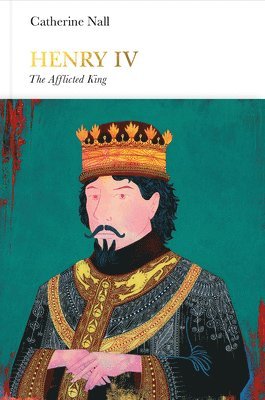
When Henry IV seized the throne from his cousin Richard II, people saw it as a hopeful new beginning for England. The first monarch to have English as his mother tongue since the Norman conquest, Henry seemed to embody the ideals of chivalric kingship: mercy, piety, military prowess and learning.Yet deposing a crowned monarch was not a stable foundation on which to build a reign. Henry IV found himself challenged from all sides, plagued by conspiracies, rebellions, assassination attempts and crippling debts, while his tense relationships with Parliament and with his own son, Shakespeare's Prince Hal, saw his grip on power falter. Nevertheless, he was the first king and founder of a Lancastrian dynasty which would go on to shape England for centuries to come.In this lively study, Catherine Nall reappraises a monarch who weathered upheaval and uncertainty and held on to the throne through sheer force of will.
1 195 kr
Skickas inom 7-10 vardagar
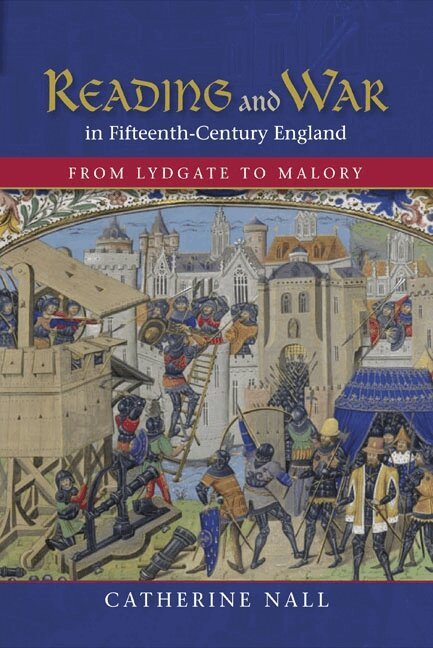
An investigation into the connections between military and literary culture in the late medieval period, and how warfare shaped such texts as Malory's Morte.Offers an impressive vision of a militaristic culture and its thinking, reading and writing. This is war as political and economic practice - the continuation of politics by other means. The book develops that feeling of war as avery real practical and intellectual problem and shows how a discourse community comes to share its thinking: in the processes of translating, annotating, rewriting, and so on. A major contribution to the literary history of thefifteenth century. Professor Daniel Wakelin, University of Oxford.Reading, writing and the prosecution of warfare went hand in hand in the fifteenth century, demonstrated by the wide circulation and ownership of military manuals and ordinances, and the integration of military concerns into a huge corpus of texts; but their relationship has hitherto not received the attention it deserves, a gap which this book remedies, arguing that the connections are vital to the literary culture of the time, and should be recognised on a much wider scale. Beginning with a detailed consideration of the circulation of one of the most important military manuals in the Middle Ages, Vegetius' De re militari, it highlights the importance of considering the activities of a range of fifteenth-century readers and writers in relation to the wider contemporary military culture. It shows how England's wars in France and at home, and the wider rhetoric and military thinking those wars generated, not only shaped readers' responses to their texts but also gave rise to the production of one of the most elaborate, rich and under-recognised pieces of verse of the Wars of the Roses in the form of Knyghthode and Bataile. It also indicates how the structure, language and meaning of canonical texts, including those by Lydgate and Malory, were determined by the military culture of the period.Catherine Nall is Senior Lecturer in Medieval Literature at Royal Holloway, University of London.
1 334 kr
Skickas inom 7-10 vardagar
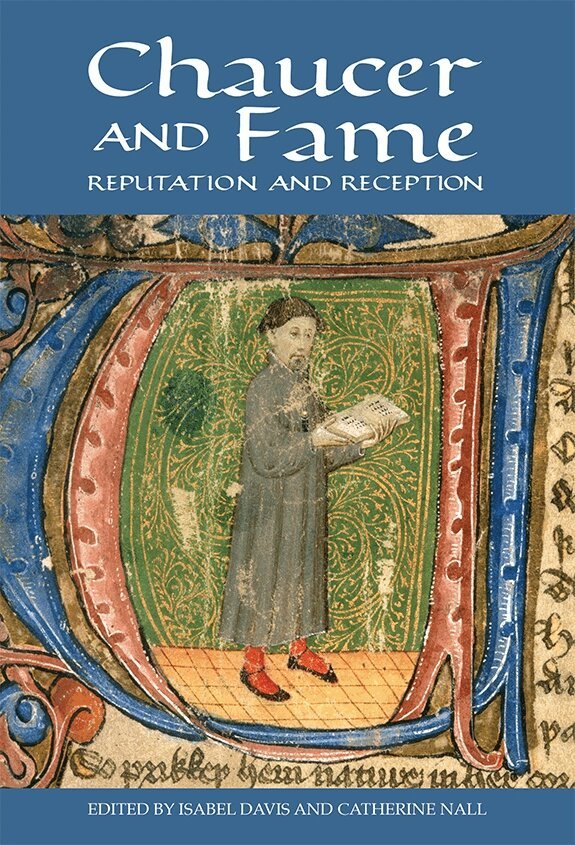
The questions of fame and reputation are central to Chaucer's writings; the essays here discuss their various treatments and manifestations.Fama, or fame, is a central concern of late medieval literature: where fame came from, who deserved it, whether it was desirable and how it was acquired and kept. An interest in fame was not new but was renewed and rethought within the vernacular revolutions of the later Middle Ages. The work of Geoffrey Chaucer collates received ideas on the subject of fama, both from the classical world and from the work of his contemporaries. Chaucer's place in these intertextual negotiations was readily recognized in his aftermath, as later writers adopted and reworked postures which Chaucer had struck, in their own bids for literary authority. This volume tracks debates onfama which were past, present and future to Chaucer, using his work as a centre point to investigate canon formation in European literature from the late Middle Ages and into the Early Modern period. Isabel Davis is Senior Lecturer in Medieval Literature at Birkbeck, University of London; Catherine Nall is Senior Lecturer in Medieval Literature at Royal Holloway, University of London.Contributors: Joanna Bellis, Alcuin Blamires, Julia Boffey, Isabel Davis, Stephanie Downes, A.S.G. Edwards, Jamie C. Fumo, Andrew Galloway, Nick Havely, Thomas A. Prendergast, Mike Rodman Jones, William T. Rossiter, Elizaveta Strakhov.