Catherine Osborne - Böcker
Visar alla böcker från författaren Catherine Osborne. Handla med fri frakt och snabb leverans.
7 produkter
7 produkter
598 kr
Skickas inom 5-8 vardagar
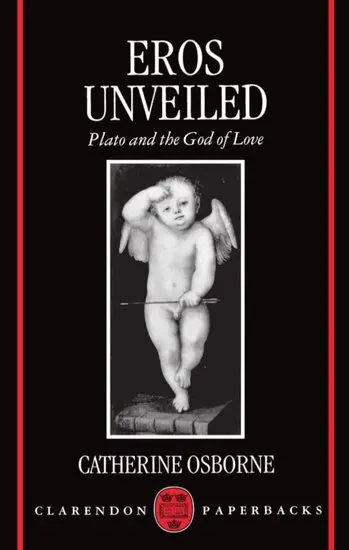
Few books on love can claim to make significant contributions to our understanding both of ancient views on eros and its place in the Christian tradition. On the basis of a new and sympathetic reading of Plato, Catherine Osborne shows that the long-standing distrust of eros, rather than agape, as a model for the believer's relation to God in Christian thought derives from a misunderstanding of ancient thought on love. Focusing on a number of classic texts, including Plato's Symposium and Lysis, Aristotle's Ethics and Metaphysics, and famous passages in Gregory of Nyssa, Origen, Dionysius the Areopagite, Plotinus, Augustine, and Thomas Aquinas, she shows that love is not motivated by a need that seeks fulfilment. On the contrary, Dr Osborne argues, to seek a motive for love, whether in Plato's account or our own, is to pursue a philosophical confusion. To mention love is to mention the motive that explains our response of affection or devotion or desire; the response cannot be the motive for our love, but is an attitude that belongs in a vision of the beloved transfigured by love. It is for this reason that we have to restore the image of Cupid, whose mischievous darts picture the impossiblity of seeking some further grounds or explanation for love.
Dumb Beasts and Dead Philosophers
Humanity and the Humane in Ancient Philosophy and Literature
Inbunden, Engelska, 2007
1 053 kr
Skickas inom 3-6 vardagar
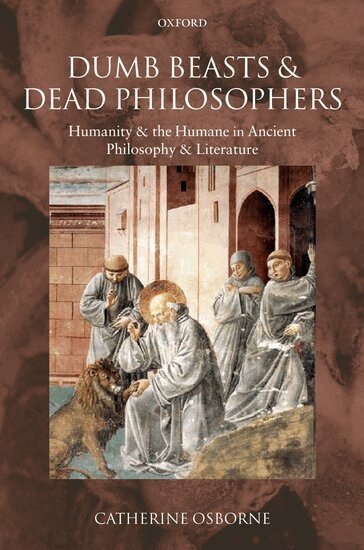
Animal rights do not feature explicitly in ancient thought. Indeed the notion of natural rights in general is not obviously present in the classical world. Plato and Aristotle are typically read as racist and elitist thinkers who barely recognise the humanity of their fellow humans. Surely they would be the last to show up as models of the humane view of other kinds?In this unusual philosophy book, Catherine Osborne asks the reader to think again. She shows that Plato's views on reincarnation and Aristotle's views on the souls of plants and animals reveal a continuous thread of life in which humans are not morally superior to beasts; Greek tragedy turns up thoughts that mirror the claims of rights activists when they speak for the voiceless; the Desert Fathers teach us to admire the natural perceptiveness of animals rather than the corrupt ways of urban man; the long tradition of arguments for vegetarianism in antiquity highlights how mankind's abuse of other animals is the more offensive the more it is for indulgent ends.What, then, is the humane attitude, and why is it better? How does the humane differ from the sentimental? Is there a truth about how we should treat animals? By reflecting on the work of the ancient poets and philosophers, Osborne argues, we can see when and how we lost touch with the natural intelligence of dumb animals.
Dumb Beasts and Dead Philosophers
Humanity and the Humane in Ancient Philosophy and Literature
Häftad, Engelska, 2009
581 kr
Skickas inom 5-8 vardagar
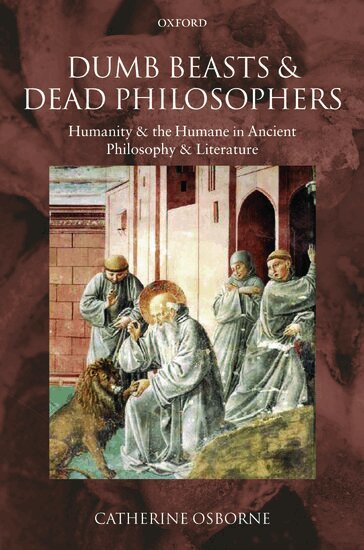
Animal rights do not feature explicitly in ancient thought. Indeed the notion of natural rights in general is not obviously present in the classical world. Plato and Aristotle are typically read as racist and elitist thinkers who barely recognise the humanity of their fellow humans. Surely they would be the last to show up as models of the humane view of other kinds? In this unusual philosophy book, Catherine Osborne asks the reader to think again. She shows that Plato's views on reincarnation and Aristotle's views on the souls of plants and animals reveal a continuous thread of life in which humans are not morally superior to beasts; Greek tragedy turns up thoughts that mirror the claims of rights activists when they speak for the voiceless; the Desert Fathers teach us to admire the natural perceptiveness of animals rather than the corrupt ways of urban man; the long tradition of arguments for vegetarianism in antiquity highlights how mankind's abuse of other animals is the more offensive the more it is for indulgent ends. What, then, is the humane attitude, and why is it better? How does the humane differ from the sentimental? Is there a truth about how we should treat animals? By reflecting on the work of the ancient poets and philosophers, Osborne argues, we can see when and how we lost touch with the natural intelligence of dumb animals.
2 028 kr
Skickas inom 5-8 vardagar
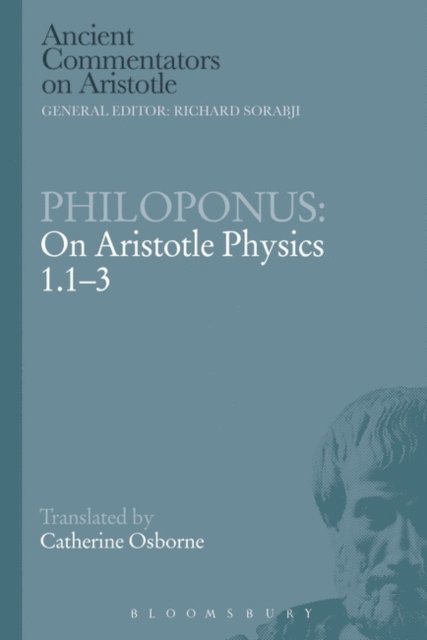
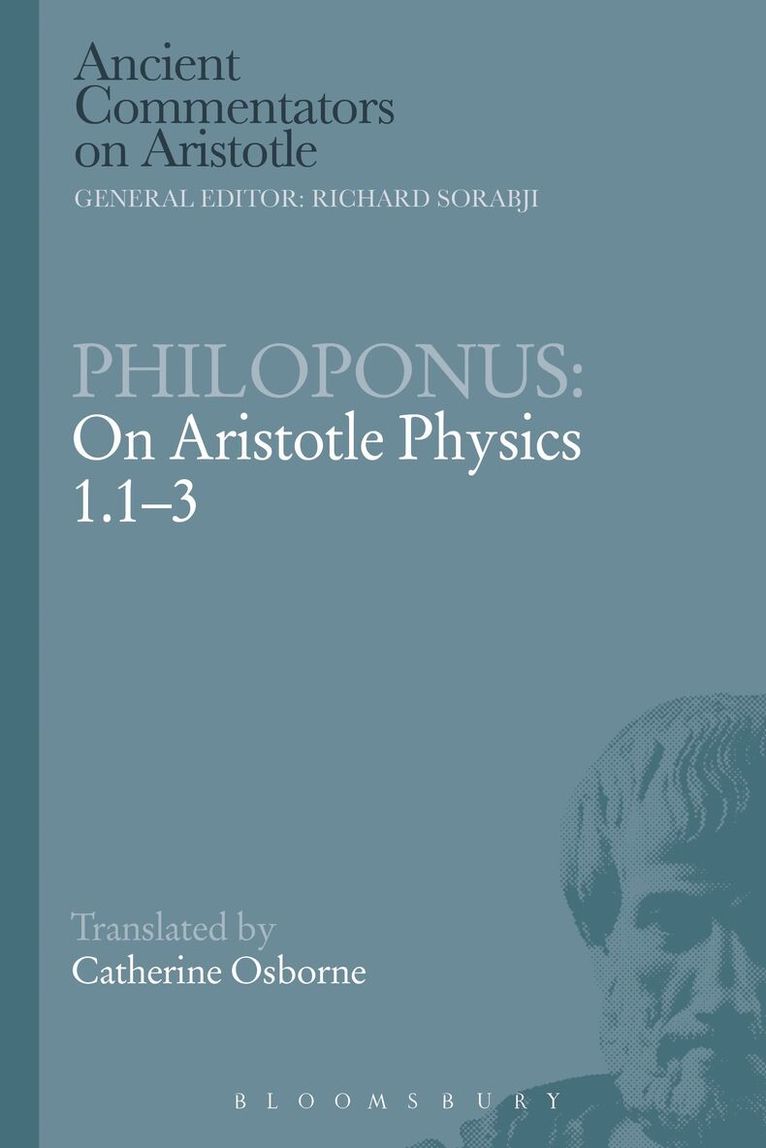
Until the launch of this series over fifteen years ago, the 15,000 volumes of the ancient Greek commentators on Aristotle, written mainly between 200 and 600 AD, constituted the largest corpus of extant Greek philosophical writings not translated into English or other European languages. Over 40 volumes have now appeared in the series, which is planned in some 80 volumes altogether. In this, the first half of Philoponus' analysis of book one of "Aristotle's Physics", the principal themes are metaphysical. Aristotle's opening chapter in the "Physics" is an abstract reflection on methodology for the investigation of nature, 'physics'. Aristotle suggests that one must proceed from things that are familiar but vague, and derive more precise but less obvious principles to constitute genuine knowledge. His controversial claim that this is to progress from the universal to the more particular occasions extensive apologetic exegesis, typical of Philoponus' meticulous and somewhat pedantic method. Philoponus explains away the apparent conflict between the 'didactic method' (unavoidable in physics) and the strict demonstrative method described in the "Analytics".After 20 pages on chapter 1, Philoponus devotes the remaining 66 pages to Aristotle's objections to two major Presocratic thinkers, Parmenides and Melissus. Aristotle included these thinkers as an aside, because they were not engaged in physics, but in questioning the very basis of physics. Philoponus investigates Aristotle's claims about the relation between a science and its axioms, explores alternative ways of formalising Aristotle's refutation of Eleatic monism and provides a sustained critique of Aristotle's analysis of the Eleatics' purported mistakes about unity and being.
528 kr
Skickas inom 10-15 vardagar
Until the launch of this series over fifteen years ago, the 15,000 volumes of the ancient Greek commentators on Aristotle, written mainly between 200 and 600 AD, constituted the largest corpus of extant Greek philosophical writings not translated into English or other European languages. In this, the first half of Philoponus' analysis of book one of Aristotle's Physics, the principal themes are metaphysical. Aristotle's opening chapter in the Physics is an abstract reflection on methodology for the investigation of nature, or 'physics'. Aristotle suggests that one must proceed from things that are familiar but vague, and derive more precise but less obvious principles to constitute genuine knowledge. His controversial claim that this is to progress from the universal to the more particular occasions extensive apologetic exegesis, typical of Philoponus' meticulous and somewhat pedantic method. Philoponus explains away the apparent conflict between the 'didactic method' (unavoidable in physics) and the strict demonstrative method described in the Analytics. After 20 pages on Chapter 1, Philoponus devotes the remaining 66 pages to Aristotle's objections to two major Presocratic thinkers, Parmenides and Melissus. Aristotle included these thinkers as an aside, because they were not engaged in physics, but in questioning the very basis of physics. Philoponus investigates Aristotle's claims about the relation between a science and its axioms, explores alternative ways of formalising Aristotle's refutation of Eleatic monism and provides a sustained critique of Aristotle's analysis of the Eleatics' purported mistakes about unity and being.
429 kr
Skickas inom 7-10 vardagar
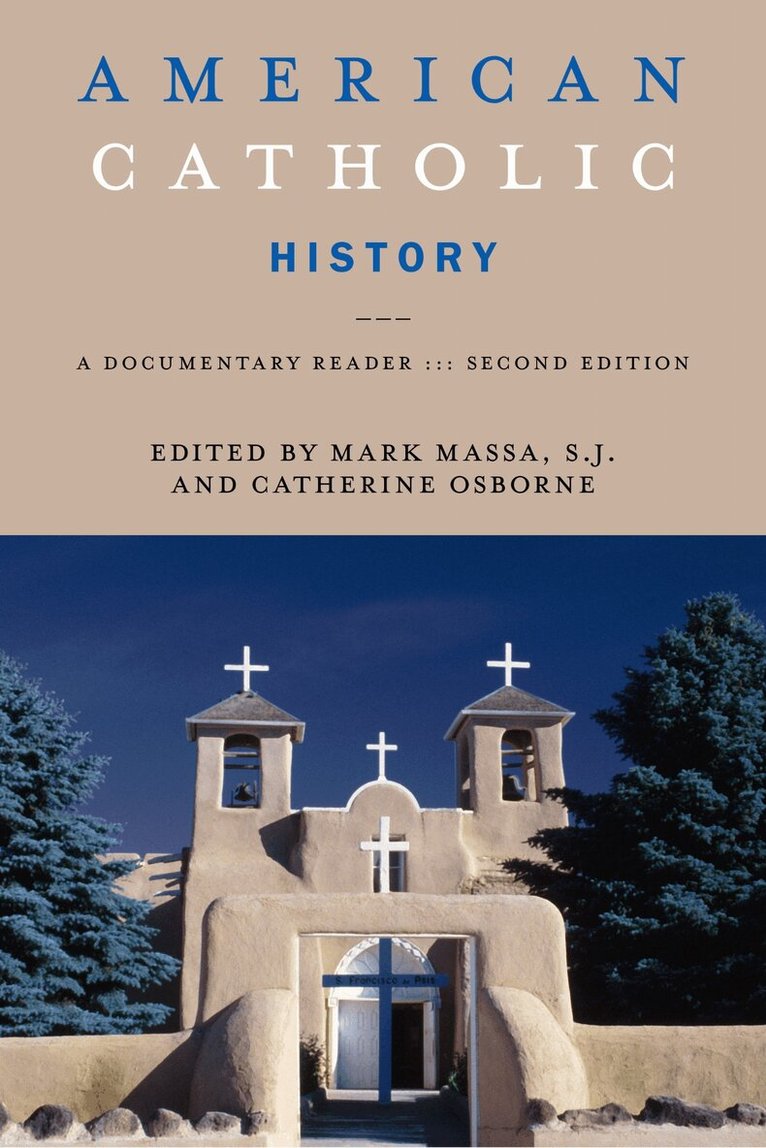
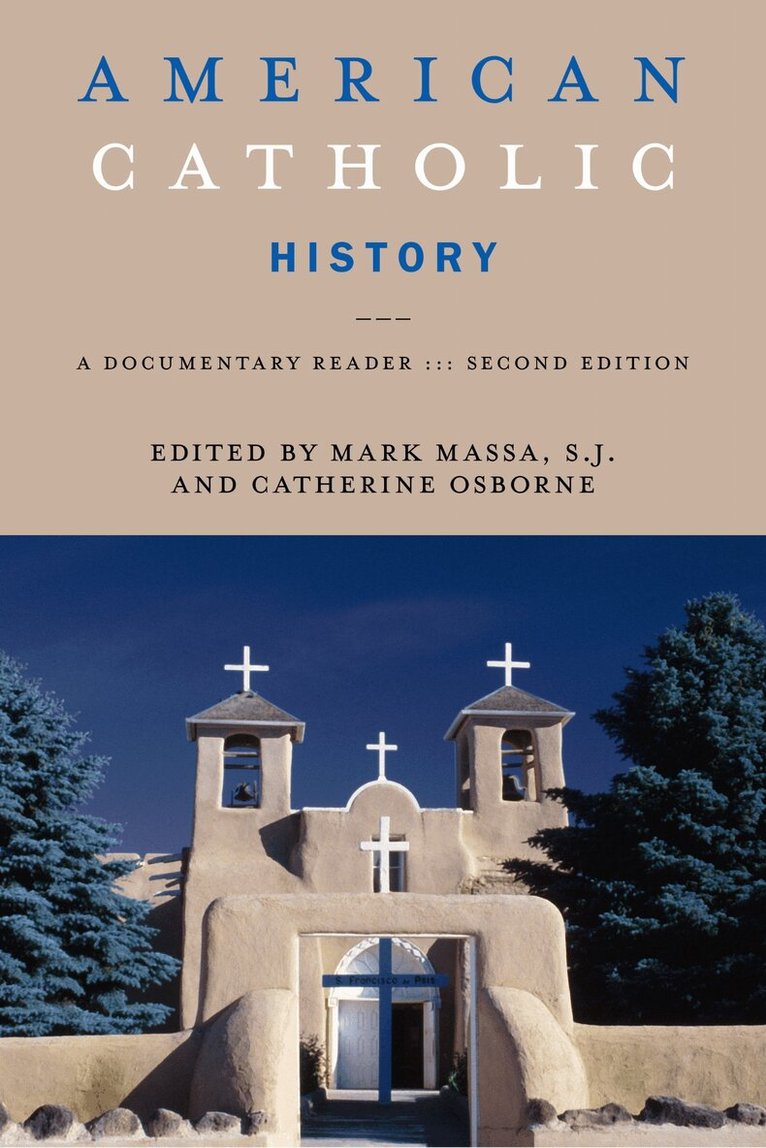
An overview in primary documents of almost four hundred years of the American Catholic experience Among the first European explorers of the Americas, Catholics have a long and rich history in the United States. In this collection of significant letters, diaries, theological reflections, and other primary documents, the voices of Catholics in this country reveal what they have thought, believed, feared, and dreamed. American Catholic History spans the earliest missionary voyages in the sixteenth century, to the present day, illuminating the complex history, beliefs, and practices of what has become North American Roman Catholicism. In an engaging and accessible style, the brief introductions to each text provide historical and biographical context and illuminate broad themes in the development of the American Catholic tradition. From Catholicism's encounters with new frontiers to its long-time position outside mainstream culture, and from its intellectual life and political engagement to patterns of worship and spirituality, this book offers a lively first-hand review of Catholicism's multifaceted history in the United States. This expanded edition includes 34 new documents, and offers more robust coverage of the diverse communities of Catholics in this country.
1 170 kr
Skickas inom 10-15 vardagar
An overview in primary documents of almost four hundred years of the American Catholic experience Among the first European explorers of the Americas, Catholics have a long and rich history in the United States. In this collection of significant letters, diaries, theological reflections, and other primary documents, the voices of Catholics in this country reveal what they have thought, believed, feared, and dreamed. American Catholic History spans the earliest missionary voyages in the sixteenth century, to the present day, illuminating the complex history, beliefs, and practices of what has become North American Roman Catholicism. In an engaging and accessible style, the brief introductions to each text provide historical and biographical context and illuminate broad themes in the development of the American Catholic tradition. From Catholicism's encounters with new frontiers to its long-time position outside mainstream culture, and from its intellectual life and political engagement to patterns of worship and spirituality, this book offers a lively first-hand review of Catholicism's multifaceted history in the United States. This expanded edition includes 34 new documents, and offers more robust coverage of the diverse communities of Catholics in this country.