Cem Behar – författare
Visar alla böcker från författaren Cem Behar. Handla med fri frakt och snabb leverans.
2 produkter
2 produkter
Del 15 - Cambridge Studies in Population, Economy and Society in Past Time
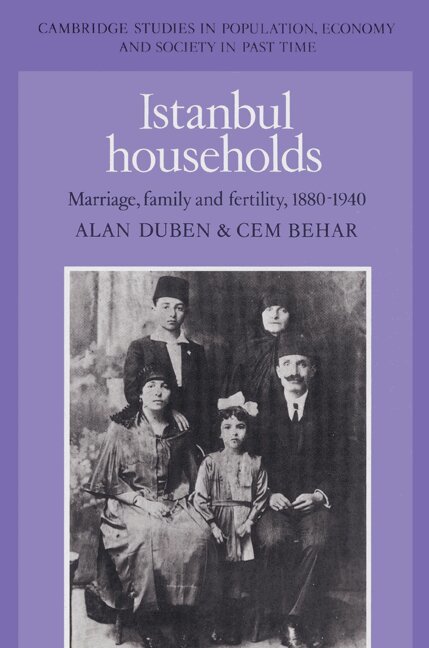
Istanbul Households
Marriage, Family and Fertility, 1880-1940
Häftad, Engelska, 2002
645 kr
Skickas inom 7-10 vardagar
Istanbul Households is a social history of marriage, the family and population in Istanbul during the turbulent period of transition from the Ottoman Empire to the Turkish Republic in the late nineteenth and early twentieth centuries. Istanbul was the first Muslim city to experience a systematic decline in fertility and major changes in family life, and, as such, set the tone for many social and cultural changes in Turkey and the Muslim world. Istanbul was the major focal point for the forces of westernization of Turkish society, processes which not only transformed political and economic institutions in that country, but also had a profound and lasting impact on domestic life. This is the first systematic historical study of the family and population in Turkey or the Middle East, combining the methods and approaches of social anthropology, historical demography and social history.
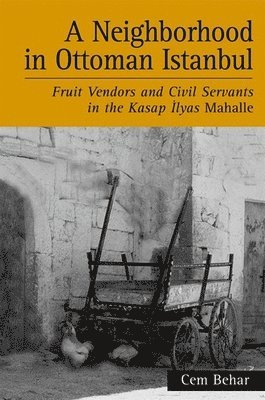
Neighborhood in Ottoman Istanbul
Fruit Vendors and Civil Servants in the Kasap İlyas Mahalle
Häftad, Engelska, 2003
363 kr
Skickas inom 11-20 vardagar
A detailed history of a small neighborhood community of Ottoman Istanbul.Combining the vivid and colorful detail of a micro-history with a wider historical perspective, this groundbreaking study looks at the urban and social history of a small neighborhood community (a mahalle) of Ottoman Istanbul, the Kasap İlyas. Drawing on exceptionally rich historical documentation starting in the early sixteenth century, Cem Behar focuses on how the Kasap İlyas mahalle came to mirror some of the overarching issues of the capital city of the Ottoman Empire. Also considered are other issues central to the historiography of cities, such as rural migration and urban integration of migrants, including avenues for professional integration and the solidarity networks migrants formed, and the role of historical guilds and non-guild labor, the ancestor of the "informal" or "marginal" sector found today in less developed countries.