Charles A. Kupchan - Böcker
Visar alla böcker från författaren Charles A. Kupchan. Handla med fri frakt och snabb leverans.
8 produkter
8 produkter
336 kr
Skickas
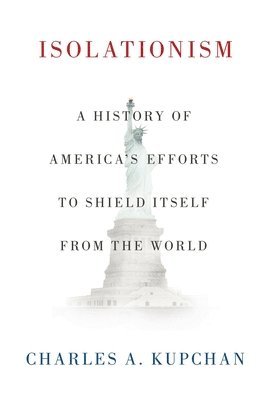
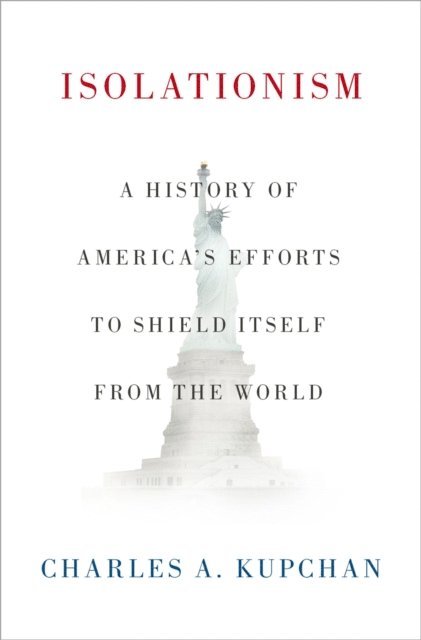
The first book to tell the full story of American isolationism, from the founding era through the Trump presidency.In his Farewell Address of 1796, President George Washington admonished the young nation "to steer clear of permanent alliances with any portion of the foreign world." Isolationism thereafter became one of the most influential political trends in American history. From the founding era until the Japanese attack on Pearl Harbor, the United States shunned strategic commitments abroad, making only brief detours during the Spanish-American War and World War I. Amid World War II and the Cold War, Americans abandoned isolationism; they tried to run the world rather than run away from it. But isolationism is making a comeback as Americans tire of foreign entanglement. In this definitive and magisterial analysis-the first book to tell the fascinating story of isolationism across the arc of American history-Charles Kupchan explores the enduring connection between the isolationist impulse and the American experience. He also refurbishes isolationism's reputation, arguing that it constituted dangerous delusion during the 1930s, but afforded the nation clear strategic advantages during its ascent.Kupchan traces isolationism's staying power to the ideology of American exceptionalism. Strategic detachment from the outside world was to protect the nation's unique experiment in liberty, which America would then share with others through the power of example. Since 1941, the United States has taken a much more interventionist approach to changing the world. But it has overreached, prompting Americans to rediscover the allure of nonentanglement and an America First foreign policy. The United States is hardly destined to return to isolationism, yet a strategic pullback is inevitable. Americans now need to find the middle ground between doing too much and doing too little.
216 kr
Skickas inom 5-8 vardagar
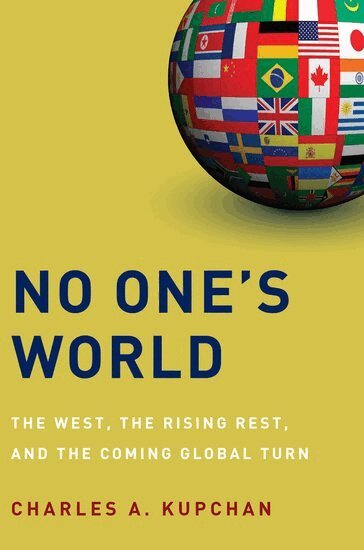
The world is on the cusp of a global turn. Between 1500 and 1800, the West sprinted ahead of other centers of power in Asia and the Middle East. Europe and the United States have dominated the world since. But today the West's preeminence is slipping away as China, India, Brazil and other emerging powers rise. Although most strategists recognize that the dominance of the West is on the wane, they are confident that its founding ideas--democracy, capitalism, and secular nationalism--will continue to spread, ensuring that the Western order will outlast its primacy. In No One's World, Charles A. Kupchan boldly challenges this view, arguing that the world is headed for political and ideological diversity; emerging powers will neither defer to the West's lead nor converge toward the Western way. The ascent of the West was the product of social and economic conditions unique to Europe and the United States. As other regions now rise, they are following their own paths to modernity and embracing their own conceptions of domestic and international order. Kupchan contends that the Western order will not be displaced by a new great power or dominant political model. The twenty-first century will not belong to America, China, Asia, or anyone else. It will be no one's world. For the first time in history, an interdependent world will be without a center of gravity or global guardian. More than simply diagnosing what lies ahead, Kupchan provides a detailed strategy for striking a bargain between the West and the rising rest by fashioning a new consensus on issues of legitimacy, sovereignty, and governance. Thoughtful, provocative, sweeping in scope, this work is nothing less than a global guidebook for the 21st century.
363 kr
Skickas inom 5-8 vardagar
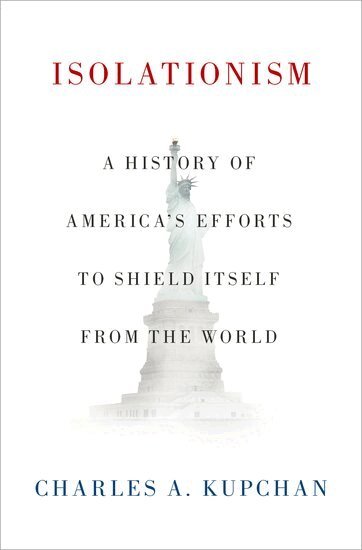
The first book to tell the full story of American isolationism, from the founding era through the Trump presidency.In his Farewell Address of 1796, President George Washington admonished the young nation "to steer clear of permanent alliances with any portion of the foreign world." Isolationism thereafter became one of the most influential political trends in American history. From the founding era until the Japanese attack on Pearl Harbor, the United States shunned strategic commitments abroad, making only brief detours during the Spanish-American War and World War I. Amid World War II and the Cold War, Americans abandoned isolationism; they tried to run the world rather than run away from it. But isolationism is making a comeback as Americans tire of foreign entanglement. In this definitive and magisterial analysis-the first book to tell the fascinating story of isolationism across the arc of American history-Charles Kupchan explores the enduring connection between the isolationist impulse and the American experience. He also refurbishes isolationism's reputation, arguing that it constituted dangerous delusion during the 1930s, but afforded the nation clear strategic advantages during its ascent.Kupchan traces isolationism's staying power to the ideology of American exceptionalism. Strategic detachment from the outside world was to protect the nation's unique experiment in liberty, which America would then share with others through the power of example. Since 1941, the United States has taken a much more interventionist approach to changing the world. But it has overreached, prompting Americans to rediscover the allure of nonentanglement and an America First foreign policy. The United States is hardly destined to return to isolationism, yet a strategic pullback is inevitable. Americans now need to find the middle ground between doing too much and doing too little.
309 kr
Skickas inom 5-8 vardagar
The world is on the cusp of a global turn. Between 1500 and 1800, the West sprinted ahead of other centers of power in Asia and the Middle East. Europe and the United States have dominated the world since. But today the West's preeminence is slipping away as China, India, Brazil and other emerging powers rise. Although most strategists recognize that the dominance of the West is on the wane, they are confident that its founding ideas--democracy, capitalism, and secular nationalism--will continue to spread, ensuring that the Western order will outlast its primacy. In No One's World, Charles A. Kupchan boldly challenges this view, arguing that the world is headed for political and ideological diversity; emerging powers will neither defer to the West's lead nor converge toward the Western way. The ascent of the West was the product of social and economic conditions unique to Europe and the United States. As other regions now rise, they are following their own paths to modernity and embracing their own conceptions of domestic and international order. Kupchan contends that the Western order will not be displaced by a new great power or dominant political model. The twenty-first century will not belong to America, China, Asia, or anyone else. It will be no one's world. For the first time in history, the world will be interdependent--but without a center of gravity or global guardian. More than simply diagnosing what lies ahead, Kupchan provides a detailed strategy for striking a bargain between the West and the rising rest by fashioning a new consensus on issues of legitimacy, sovereignty, and governance. Thoughtful, provocative, sweeping in scope, this work is nothing less than a global guidebook for the 21st century.
367 kr
Kommande
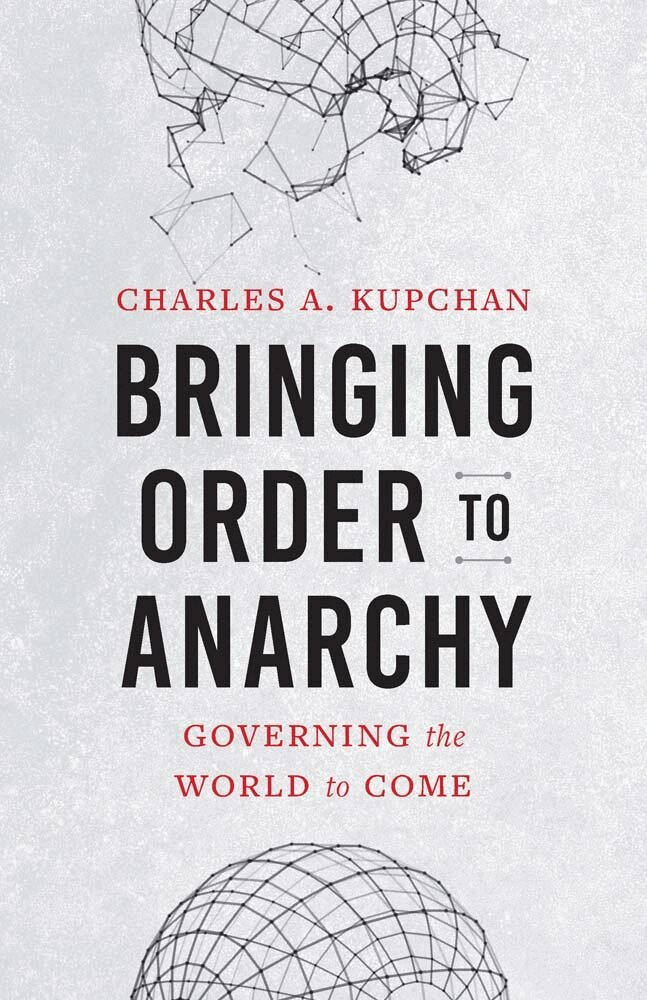
With the United States and the world it leads in disarray, how should we construct a new international order?The stable and open international order erected on America’s watch is unraveling. Democracy is losing ground to autocracy; globalized markets are fragmenting; and the era of perpetual peace foreseen at the close of the Cold War has given way to great-power rivalry. This fracture of the international system comes just as many of our greatest challenges, such as climate change, the threat of pandemics, and rapidly changing technologies, require collective action.Charles A. Kupchan diagnoses the sources of global disarray and offers a handbook for building a new order fit for the emerging multipolar world. Drawing on the Concert of Europe, which preserved great-power peace after the Napoleonic Wars, Kupchan proposes a global system of concerts—high-level steering groups that cut across ideological dividing lines—to anchor a regionalized, polycentric world. The mission of order building must begin with the revival of American democracy and the nation’s steady leadership abroad. Only when democracies can outperform illiberal and autocratic alternatives, Kupchan says, will they be able to guide the world through the coming transition and ultimately bend the arc of history back toward freedom.
243 kr
Skickas inom 7-10 vardagar
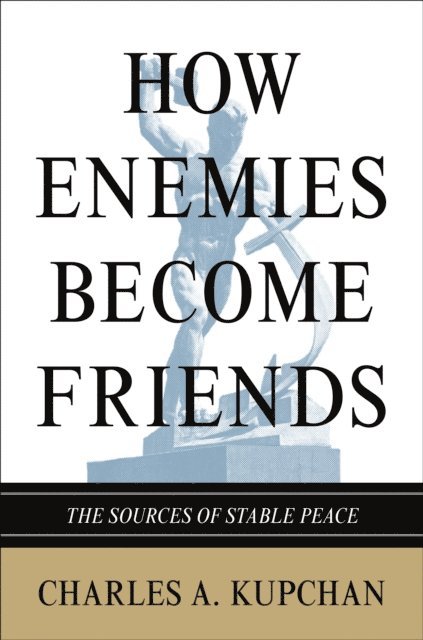
Is the world destined to suffer endless cycles of conflict and war? Can rival nations become partners and establish a lasting and stable peace? How Enemies Become Friends provides a bold and innovative account of how nations escape geopolitical competition and replace hostility with friendship. Through compelling analysis and rich historical examples that span the globe and range from the thirteenth century through the present, foreign policy expert Charles Kupchan explores how adversaries can transform enmity into amity--and he exposes prevalent myths about the causes of peace. Kupchan contends that diplomatic engagement with rivals, far from being appeasement, is critical to rapprochement between adversaries. Diplomacy, not economic interdependence, is the currency of peace; concessions and strategic accommodation promote the mutual trust needed to build an international society. The nature of regimes matters much less than commonly thought: countries, including the United States, should deal with other states based on their foreign policy behavior rather than on whether they are democracies.Kupchan demonstrates that similar social orders and similar ethnicities, races, or religions help nations achieve stable peace. He considers many historical successes and failures, including the onset of friendship between the United States and Great Britain in the early twentieth century, the Concert of Europe, which preserved peace after 1815 but collapsed following revolutions in 1848, and the remarkably close partnership of the Soviet Union and China in the 1950s, which descended into open rivalry by the 1960s. In a world where conflict among nations seems inescapable, How Enemies Become Friends offers critical insights for building lasting peace.
211 kr
Skickas inom 5-8 vardagar
207 kr
Skickas inom 5-8 vardagar