Charles H. Hillman – författare
Visar alla böcker från författaren Charles H. Hillman. Handla med fri frakt och snabb leverans.
3 produkter
3 produkter
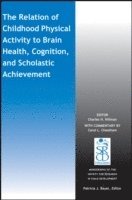
Relation of Childhood Physical Activity to Brain Health, Cognition, and Scholastic Achievement
Häftad, Engelska, 2014
467 kr
Skickas inom 11-20 vardagar
There is a growing public health burden of inactivity in industrialized nations. In recent years, children have become increasingly inactive, leading to concomitant increases in the prevalence of being overweight and unfit. Inactivity during childhood has implications for the prevalence of several chronic diseases (e.g., obesity, type 2 diabetes) observed in adulthood. These 'adult-onset' diseases have also become more prevalent during childhood and adolescence, exacerbating the need to develop novel treatments that provide enduring benefit by altering the chronic and oftentimes debilitating course of these lifestyle diseases. Of further interest is the absence of public health concern for the effect of inactivity on brain health and cognition. It is curious that this has not emerged as a larger societal issue, given its obvious relation to childhood obesity and other inactivity-related disorders that have captured the United States and other industrialized nations. Many schools have minimized physical activity opportunities despite a growing literature indicating their benefits to cognition and learning. Such educational practices are increasing in popularity due to budgetary constraints and an increased emphasis placed upon student performance on standardized tests. It is counterintuitive that spending less time in the classroom and more time engaged in physical activities might improve learning, yet research is consonant in suggesting that physical activity benefits brain health and cognition. Accordingly, this monograph describes a body of research, which examines the complex relationship of physical activity to cognitive and brain health from a translational perspective, with the goal of maximizing effective function across the lifespan.
3 049 kr
Skickas inom 10-15 vardagar
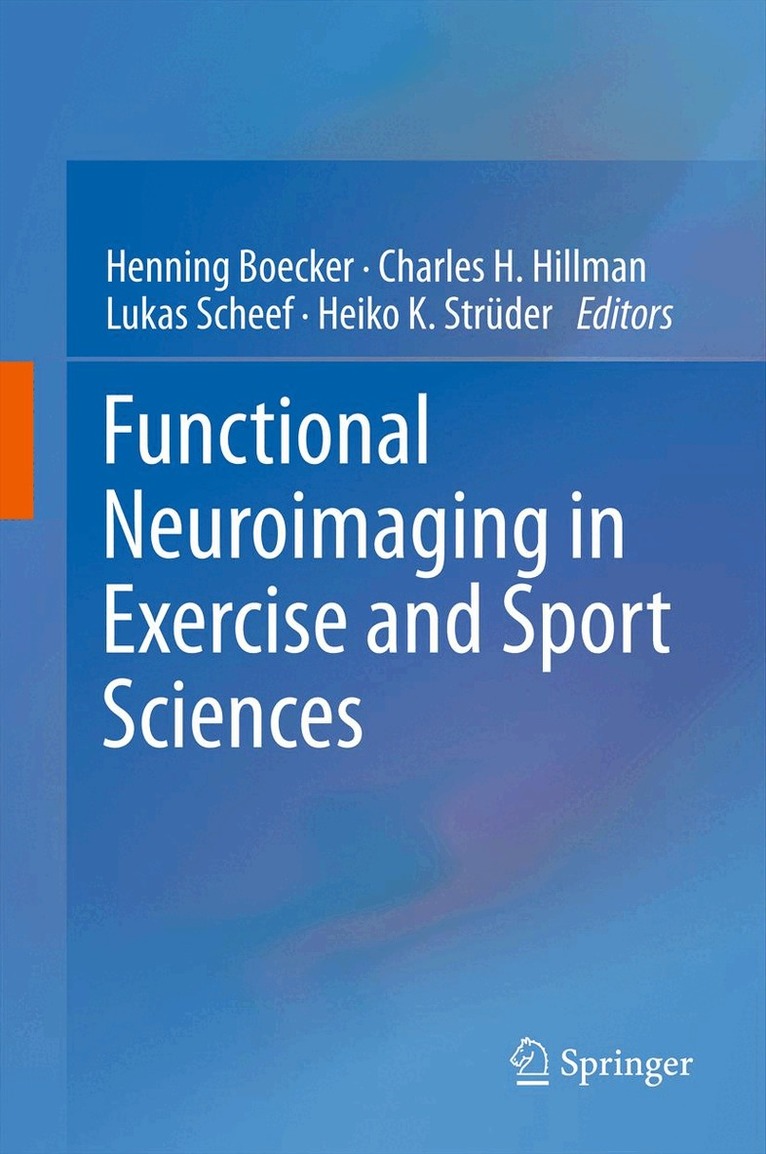
Regular physical exercise is associated with substantial health benefits. Recent evidence not only holds for cardiovascular effects promoting "physical health", but also for the central nervous system believed to promote "brain health”. Moderate physical exercise has been found to improve learning, memory, and attentional processing, with recent research indicating that neuroprotective mechanisms and associated plasticity in brain structure and function also benefit. Physical exercise is also known to induce a range of acute or sustained psychophysiological effects, among these mood elevation, stress reduction, anxiolysis, and hypoalgesia. Today, modern functional neuroimaging techniques afford direct measurement of the acute and chronic relation of physical exercise on the human brain, as well as the correlation of the derived physiological in vivo signals with behavioral outcomes recorded during and after exercise. A wide range of imaging techniques have been applied to human exercise research, ranging from electroencephalography (EEG), magnetoencephalography (MEG), near infrared spectroscopy (NIRS), magnetic resonance imaging (MRI) to positron emission tomography (PET). All of these imaging methods provide distinct information, and they differ considerably in terms of spatial and temporal resolution, availability, cost, and associated risks. However, from a “multimodal imaging” perspective, neuroimaging provides an unprecedented potential to unravel the neurobiology of human exercise, covering a wide spectrum ranging from structural plasticity in gray and white matter, network dynamics, global and regional perfusion, evoked neuronal responses to the quantification of neurotransmitter release. The aim of this book is to provide the current state of the human neuroimaging literature in the emerging field of the neurobiological exercise sciences and to outline future applications and directions of research.
3 049 kr
Skickas inom 10-15 vardagar
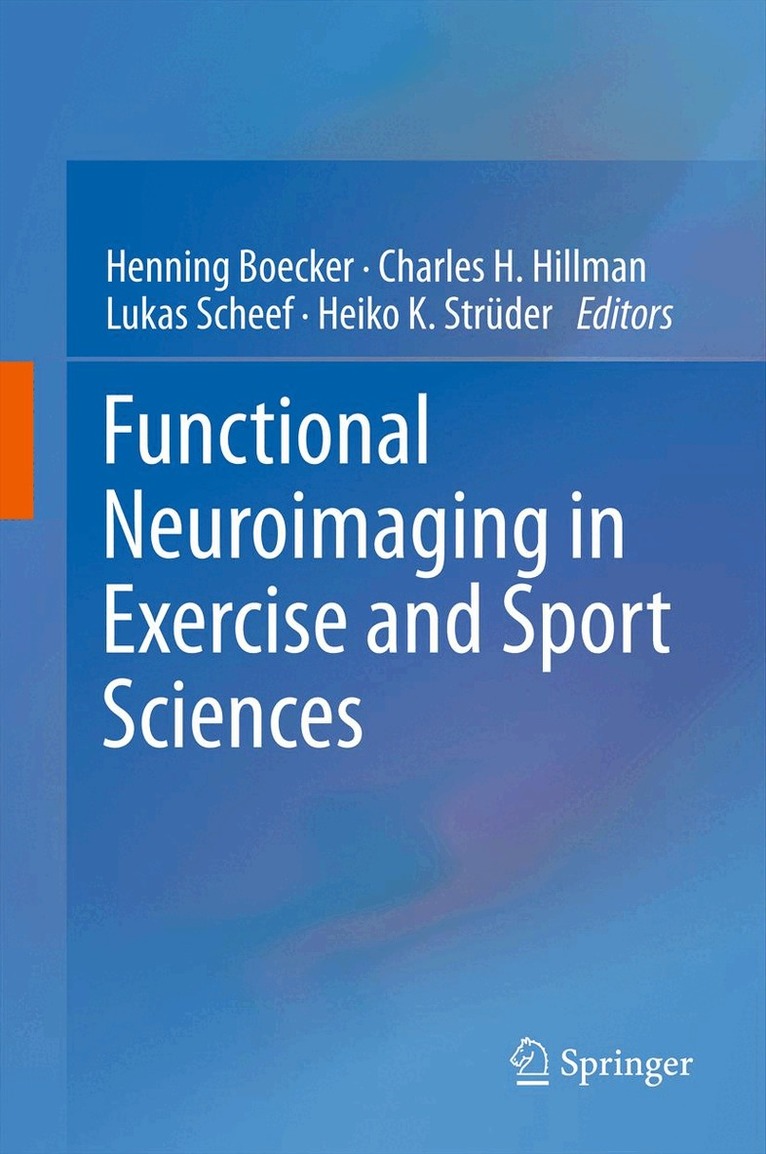
Regular physical exercise is associated with substantial health benefits. Recent evidence not only holds for cardiovascular effects promoting "physical health", but also for the central nervous system believed to promote "brain health”. Moderate physical exercise has been found to improve learning, memory, and attentional processing, with recent research indicating that neuroprotective mechanisms and associated plasticity in brain structure and function also benefit. Physical exercise is also known to induce a range of acute or sustained psychophysiological effects, among these mood elevation, stress reduction, anxiolysis, and hypoalgesia. Today, modern functional neuroimaging techniques afford direct measurement of the acute and chronic relation of physical exercise on the human brain, as well as the correlation of the derived physiological in vivo signals with behavioral outcomes recorded during and after exercise. A wide range of imaging techniques have been applied to human exercise research, ranging from electroencephalography (EEG), magnetoencephalography (MEG), near infrared spectroscopy (NIRS), magnetic resonance imaging (MRI) to positron emission tomography (PET). All of these imaging methods provide distinct information, and they differ considerably in terms of spatial and temporal resolution, availability, cost, and associated risks. However, from a “multimodal imaging” perspective, neuroimaging provides an unprecedented potential to unravel the neurobiology of human exercise, covering a wide spectrum ranging from structural plasticity in gray and white matter, network dynamics, global and regional perfusion, evoked neuronal responses to the quantification of neurotransmitter release. The aim of this book is to provide the current state of the human neuroimaging literature in the emerging field of the neurobiological exercise sciences and to outline future applications and directions of research.