Charles Molesworth – författare
Visar alla böcker från författaren Charles Molesworth. Handla med fri frakt och snabb leverans.
7 produkter
7 produkter
Inbunden, Engelska, 2012
917 kr
Skickas inom 5-8 vardagar
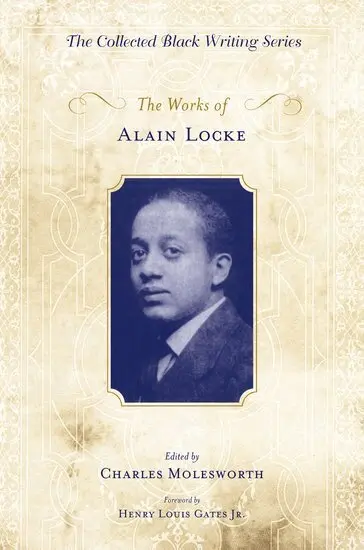
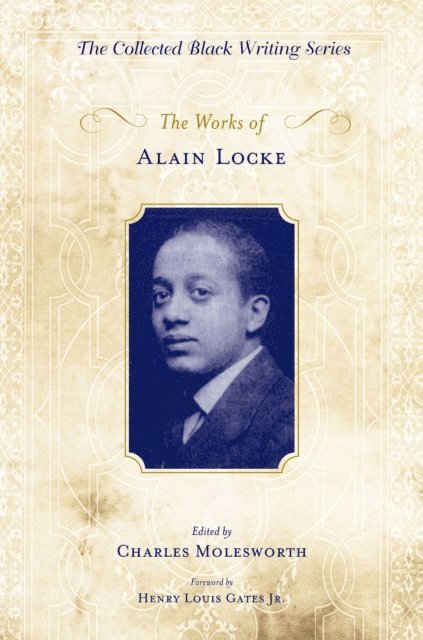
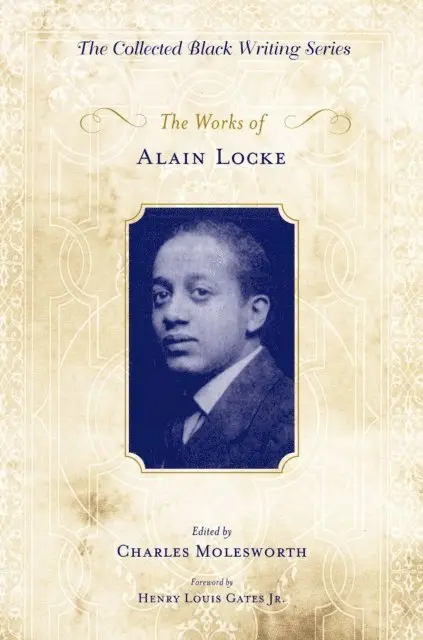
This book features a comprehensive collection of essays by Alain Locke (1885-1954), the most formidable African American public intellectual of his generation. It is by far the largest collection of his brilliant essays, gathered from a career that spanned forty years. The range of the work covers an impressively broad field of subjects: philosophy, literary criticism, art and music criticism, value theory, race, politics, and multiculturalism. His inquisitive mind, his refined taste and his pragmatic temperament brought him renown as the "godfather" of the Harlem Renaissance. But his contributions to many fields extended well beyond that remarkable period, to the very beginning of the civil rights movement. Locke's standing among today's readers will be secured through this presentation of his skillful writing and impressive thought. By virtue of his learning and his commitment to intellectual excellence, Locke can now be seen in the sweep of American culture. Here he can take his rightful place, as the leading African American thinker between W. E. B. Du Bois and Martin Luther King, Jr.Here, Charles Molesworth gathers Locke's writings to showcase his achievements as a whole, both as a civil rights pioneer and as a writer of significant gifts. With a foreword by Henry Louis Gates, Jr., this collection provides a definitive resource on the works of a towering figure in African American thought.
E-bok
Engelska, 20121 146 kr
Läs direkt efter köp
With the publication of The New Negro in 1925, Alain Locke introduced readers all over the U.S. to the vibrant world of African American thought. As an author, editor, and patron, Locke rightly earned the appellation "Godfather of the Harlem Renaissance." Yet, his intellectual contributions extend far beyond that single period of cultural history. Throughout his life he penned essays, on topics ranging from John Keats to Sigmund Freud, in addition to his trenchant social commentary on race and society.The Works of Alain Locke provides the largest collection available of his brilliant essays, gathered from a career that spanned forty years. They cover an impressively broad field of subjects: philosophy, literature, the visual arts, music, the theory of value, race, politics, and multiculturalism. Alongside seminal works such as "The New Negro" the volume features essays like "The Ethics of Culture," "Apropos of Africa," and "Pluralism and Intellectual Democracy." Together, these writings demonstrate Locke''s standing as the leading African American thinker between W. E. B. Du Bois and Martin Luther King, Jr.The foreword by Henry Louis Gates Jr. and the introduction by
E-bok
Engelska, 20121 146 kr
Läs direkt efter köp
With the publication of The New Negro in 1925, Alain Locke introduced readers all over the U.S. to the vibrant world of African American thought. As an author, editor, and patron, Locke rightly earned the appellation "Godfather of the Harlem Renaissance." Yet, his intellectual contributions extend far beyond that single period of cultural history. Throughout his life he penned essays, on topics ranging from John Keats to Sigmund Freud, in addition to his trenchant social commentary on race and society.The Works of Alain Locke provides the largest collection available of his brilliant essays, gathered from a career that spanned forty years. They cover an impressively broad field of subjects: philosophy, literature, the visual arts, music, the theory of value, race, politics, and multiculturalism. Alongside seminal works such as "The New Negro" the volume features essays like "The Ethics of Culture," "Apropos of Africa," and "Pluralism and Intellectual Democracy." Together, these writings demonstrate Locke''s standing as the leading African American thinker between W. E. B. Du Bois and Martin Luther King, Jr.The foreword by Henry Louis Gates Jr. and the introduction by
Inbunden, Engelska, 2008
879 kr
Skickas inom 5-8 vardagar
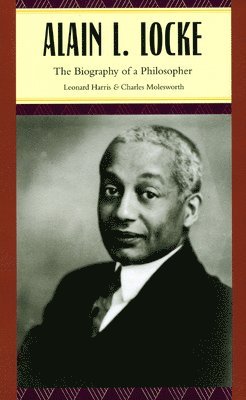
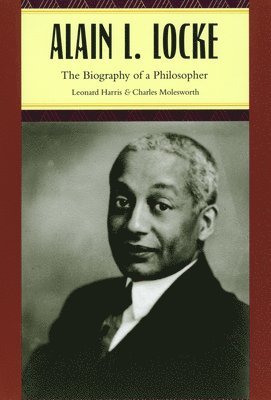
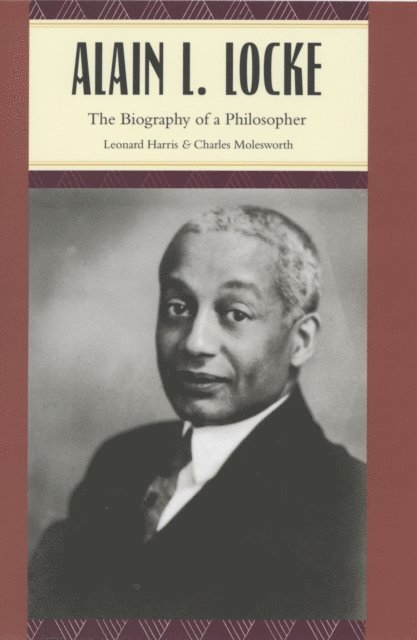
Alain L. Locke, in his famous 1925 anthology "The New Negro", declared that 'the pulse of the Negro world has begun to beat in Harlem'. The first biography of this extraordinarily gifted philosopher and writer, Alain L. Locke narrates the untold story of his profound impact on twentieth-century America's cultural and intellectual life. The heart of this narrative illuminates Locke's heady years in 1920s New York City and his forty-year career at Howard University, where he helped spearhead the adult education movement of the 1930s and wrote on topics ranging from the philosophy of value to the theory of democracy.
Häftad, Engelska, 2010
316 kr
Skickas inom 5-8 vardagar
Alain L. Locke, in his famous 1925 anthology "The New Negro", declared that 'the pulse of the Negro world has begun to beat in Harlem'. The first biography of this extraordinarily gifted philosopher and writer, Alain L. Locke narrates the untold story of his profound impact on twentieth-century America's cultural and intellectual life. The heart of this narrative illuminates Locke's heady years in 1920s New York City and his forty-year career at Howard University, where he helped spearhead the adult education movement of the 1930s and wrote on topics ranging from the philosophy of value to the theory of democracy.
E-bok
Engelska, 2010684 kr
Läs direkt efter köp
Alain L. Locke (1886-1954), in his famous 1925 anthology TheNew Negro, declared that “the pulse of the Negro world has begun to beat in Harlem.” Often called the father of the Harlem Renaissance, Locke had his finger directly on that pulse, promoting, influencing, and sparring with such figures as Langston Hughes, Zora Neale Hurston, Jacob Lawrence, Richmond Barthé, William Grant Still, Booker T. Washington, W. E. B. Du Bois, Ralph Bunche, and John Dewey. The long-awaited first biography of this extraordinarily gifted philosopher and writer, Alain L. Locke narrates the untold story of his profound impact on twentieth-century America’s cultural and intellectual life. Leonard Harris and Charles Molesworth trace this story through Locke’s Philadelphia upbringing, his undergraduate years at Harvard—where William James helped spark his influential engagement with pragmatism—and his tenure as the first African American Rhodes Scholar. The heart of their narrative illuminates Locke’s heady years in 1920s New York City and his forty-year career at Howard University, where he helped spearhead the adult education movement of the 1930s and wrote on topics ranging from the philosophy of value to the theory of democracy. Harris and Molesworth show that throughout this illustrious career—despite a formal manner that many observers interpreted as elitist or distant—Locke remained a warm and effective teacher and mentor, as well as a fierce champion of literature and art as means of breaking down barriers between communities. The multifaceted portrait that emerges from this engaging account effectively reclaims Locke’s rightful place in the pantheon of America’s most important minds.
Häftad, Engelska, 2022
304 kr
Skickas inom 5-8 vardagar
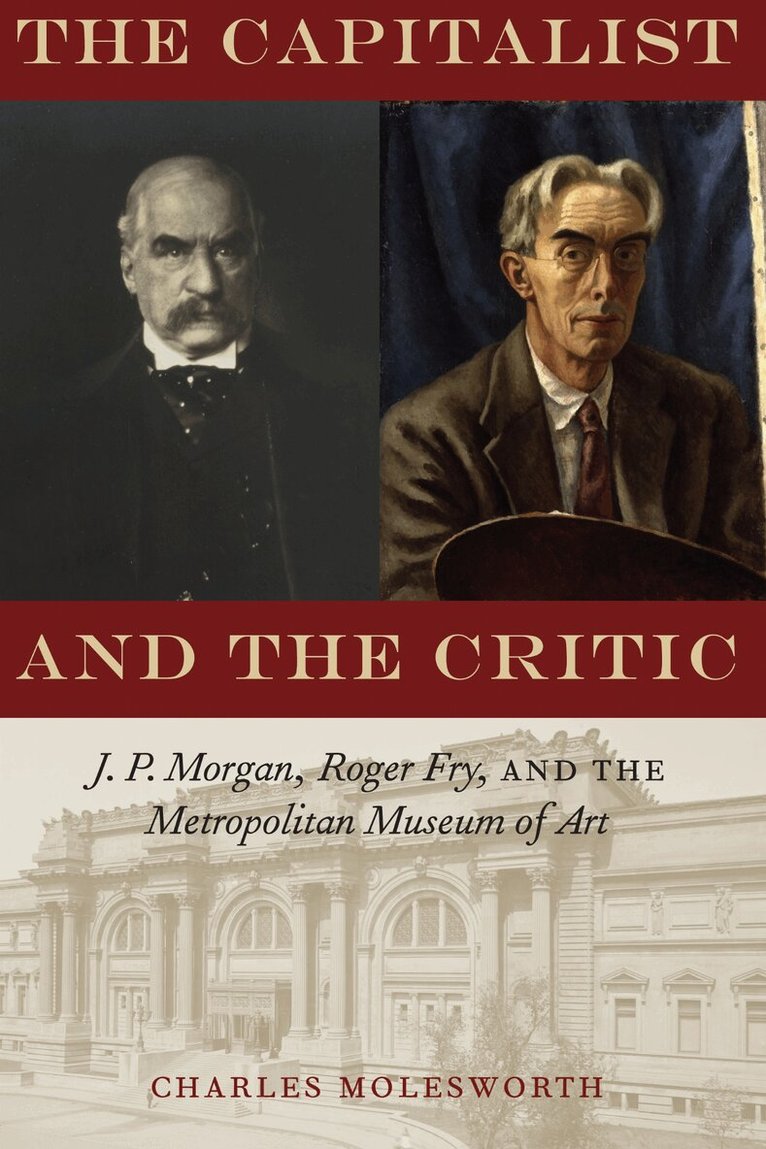
A skillful and fascinating retelling of the often testy relationship between J. P. Morgan and Roger Fry, two men who did more to establish the preeminence of the Metropolitan Museum of Art than any collector and curator before or since.Shortly after the turn of the twentieth century, the Metropolitan Museum of Art began an ambitious program of collection building and physical expansion that transformed it into one of the world’s foremost museums, an eminence that it has maintained ever since. Two men of singular qualities and accomplishments played key roles in the Met’s transformation-J. P. Morgan, America’s leading financier and a prominent art collector, and Roger Fry, the headstrong English expert in art history who served as the Met’s curator of painting. Their complicated, often contentious relationship embodies and illuminates the myriad tensions between commerce and art, philanthropists and professional staff, that a great museum must negotiate to define and fulfill its mission. In this masterful, multidisciplinary narrative, Charles Molesworth offers the first in-depth look at how Morgan and Fry helped to mold the cultural legacy of masterpieces of painting and the development of the “encyclopedic” museum. Structuring the book as a joint biography, Molesworth describes how Morgan used his vast wealth to bring European art to an American citizenry, while Fry brought high standards of art history from the world of connoisseurs to a general public. Their clashes over the purpose and functions of the Met, which ultimately led to Fry’s ouster, reveal the forces-personal and societal-that helped to shape the Metropolitan Museum and other major American cultural institutions during the twentieth century.