Charles Ramírez Berg - Böcker
Visar alla böcker från författaren Charles Ramírez Berg. Handla med fri frakt och snabb leverans.
4 produkter
4 produkter
277 kr
Skickas inom 10-15 vardagar
La crisis, a period of political and economic turmoil in Mexico that began in the late 1960s, spawned a new era in Mexican cinema. Known as el Nuevo Cine (the New Cinema), these films presented alienated characters caught in a painful transition period in which old family, gender, and social roles have ceased to function without being replaced by viable new ones. These are the films explored by Charles RamÍrez Berg in Cinema of Solitude, the first book-length critical study of Mexican cinema in English.Berg discusses the major films and filmmakers of el Nuevo Cine in depth. He analyzes dozens of commercial movies, from popular comedies and adventures to award-winning films. Introductory chapters address the issue of mexicanidad (Mexican national identity) and outline Mexican history, the history of film as popular culture and as a leading national industry, and the ideological dynamics of Mexican cinema.In thematically arranged chapters, Berg investigates the images of women, men, and social structures portrayed in New Cinema films. He finds that women characters have begun to reject traditional stereotypes for more positive images, while male characters have grown ambiguous and undefined as machismo is abandoned. Other chapters trace the continuing marginalization of Indians in Mexican culture, the changes in male dominance within the family, and the disruptive social and economic effects caused by migration.For everyone interested in Mexican culture as reflected in its major cinematic productions, as well as students of film theory and national cinemas, this book will be important reading.
271 kr
Skickas inom 7-10 vardagar
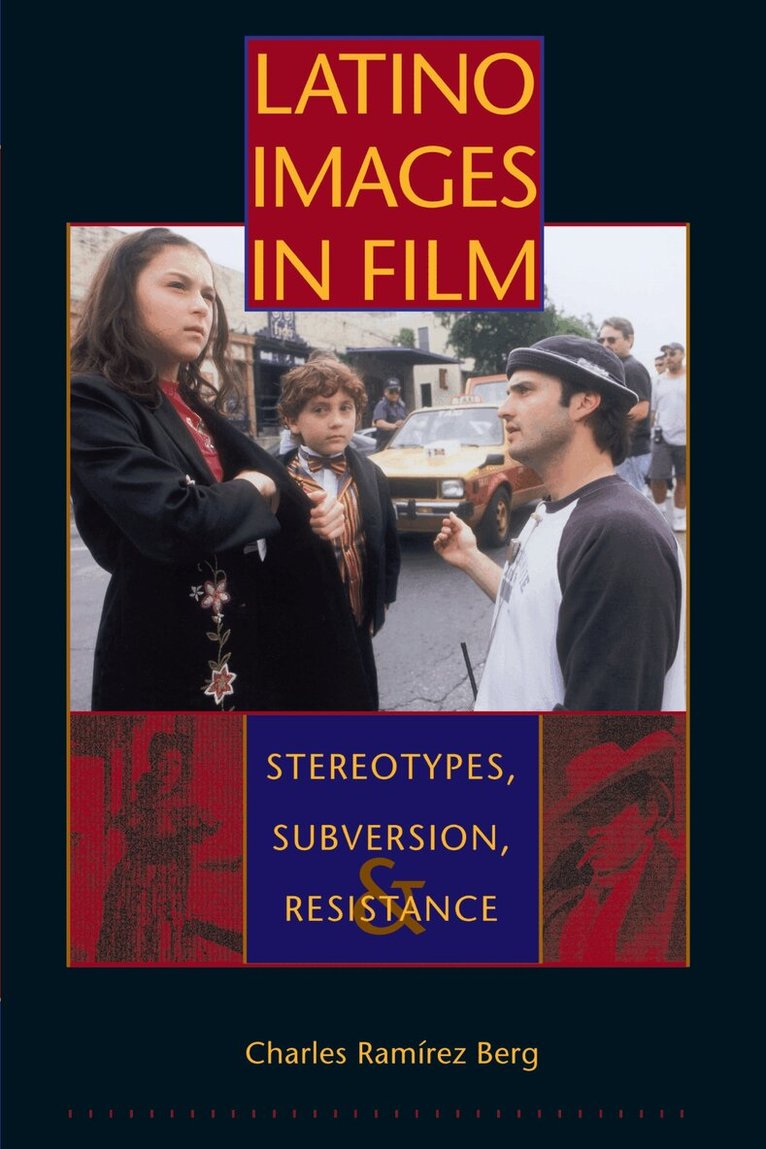
The bandido, the harlot, the male buffoon, the female clown, the Latin lover, and the dark lady-these have been the defining, and demeaning, images of Latinos in U.S. cinema for more than a century. In this book, Charles RamÍrez Berg develops an innovative theory of stereotyping that accounts for the persistence of such images in U.S. popular culture. He also explores how Latino actors and filmmakers have actively subverted and resisted such stereotyping. In the first part of the book, Berg sets forth his theory of stereotyping, defines the classic stereotypes, and investigates how actors such as RaÚl Julia, Rosie PÉrez, JosÉ Ferrer, Lupe VÉlez, and Gilbert Roland have subverted stereotypical roles. In the second part, he analyzes Hollywood's portrayal of Latinos in three genres: social problem films, John Ford westerns, and science fiction films. In the concluding section, Berg looks at Latino self-representation and anti-stereotyping in Mexican American border documentaries and in the feature films of Robert RodrÍguez. He also presents an exclusive interview in which RodrÍguez talks about his entire career, from Bedhead to Spy Kids, and comments on the role of a Latino filmmaker in Hollywood and how he tries to subvert the system.
329 kr
Skickas inom 7-10 vardagar
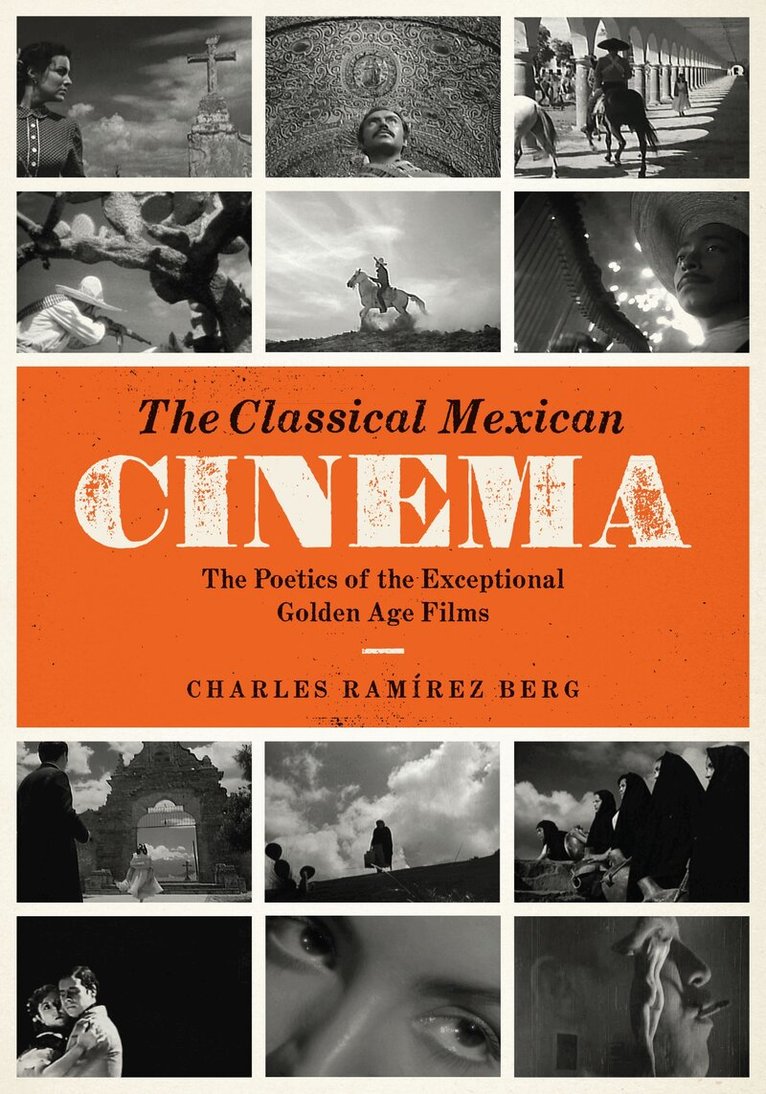
From the mid-1930s to the late 1950s, Mexican cinema became the most successful Latin American cinema and the leading Spanish-language film industry in the world. Many Cine de Oro (Golden Age cinema) films adhered to the dominant Hollywood model, but a small yet formidable filmmaking faction rejected Hollywood’s paradigm outright. Directors Fernando de Fuentes, Emilio FernÁndez, Luis BuÑuel, Juan Bustillo Oro, Adolfo Best Maugard, and Julio Bracho sought to create a unique national cinema that, through the stories it told and the ways it told them, was wholly Mexican. The Classical Mexican Cinema traces the emergence and evolution of this Mexican cinematic aesthetic, a distinctive film form designed to express lo mexicano.Charles RamÍrez Berg begins by locating the classical style’s pre-cinematic roots in the work of popular Mexican artist JosÉ Guadalupe Posada at the turn of the twentieth century. He also looks at the dawning of Mexican classicism in the poetics of Enrique Rosas’ El AutomÓvil Gris, the crowning achievement of Mexico’s silent filmmaking era and the film that set the stage for the Golden Age films. Berg then analyzes mature examples of classical Mexican filmmaking by the predominant Golden Age auteurs of three successive decades. Drawing on neoformalism and neoauteurism within a cultural studies framework, he brilliantly reveals how the poetics of Classical Mexican Cinema deviated from the formal norms of the Golden Age to express a uniquely Mexican sensibility thematically, stylistically, and ideologically.
671 kr
Kommande
A guide to the fundamentals of understanding film history, filmmaking, and film appreciation.Film is not just a medium; it is also a language—and a global one at that. Essential Film History describes how this language emerged and how it has matured over the course of more than 125 years. Beginning with the experiments of the late nineteenth century, and tracking the development of cinematic storytelling, commercial distribution, and audience reception into the era of digital recording, Charles Ramírez Berg and John Bruns offer a comprehensive course in both the history and artistry of film.Essential Film History breaks cinematic language into three core components: image, sound, and narrative. Between the 1890s and 1940s, this audiovisual language both consolidated and spread, becoming comprehensible worldwide. Since then, filmmakers have adapted and extended the language of cinema to suit an ever-growing range of aesthetic and narrative projects, from documentaries and full-length animation to avant-garde and made-for-TV movies. Covering major figures, studios, and events as well as key technological and sociopolitical developments, Essential Film History is an indispensable guide to the evolution of cinematic style.