Charles T. Clotfelter - Böcker
Visar alla böcker från författaren Charles T. Clotfelter. Handla med fri frakt och snabb leverans.
14 produkter
14 produkter
732 kr
Skickas inom 7-10 vardagar
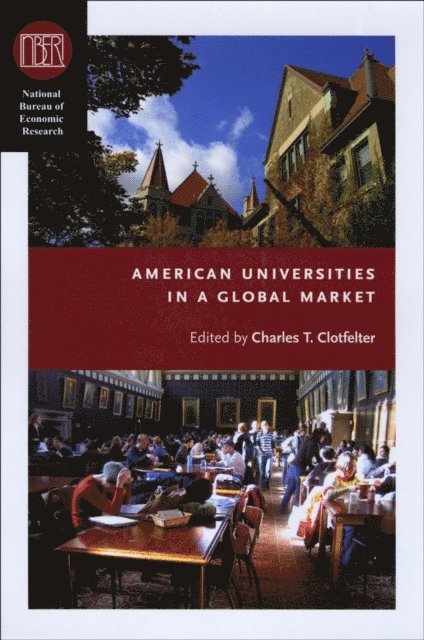
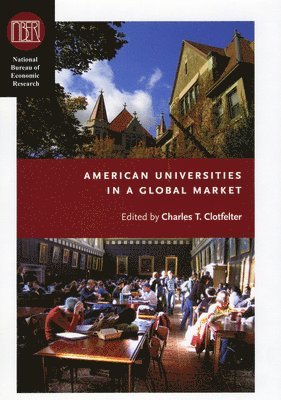
In higher education, the United States is the preeminent global leader, dominating the list of the world's top research universities. But there are signs that America's position of global leadership will face challenges in the future, as it has in other realms of international competition. "American Universities in a Global Market" addresses the variety of issues crucial to understanding this challenge. The book examines the various factors that contributed to America's success in higher education, including openness to people and ideas, generous governmental support, and a tradition of decentralized friendly competition. By discussing the differences in quality among students and institutions around the world, this volume sheds light on the singular aspects of American higher education.
776 kr
Skickas inom 7-10 vardagar
The United States is distinctive among Western countries in its reliance on nonprofit institutions to perform major social functions. This reliance is rooted in American history and is fostered by federal tax provisions for charitable giving. In this study, Charles T. Clotfelter demonstrates that changes in tax policy—effected through legislation or inflation—can have a significant impact on the level and composition of giving. Clotfelter focuses on empirical analysis of the effects of tax policy on charitable giving in four major areas: individual contributions, volunteering, corporate giving, and charitable bequests. For each area, discussions of economic theory and relevant tax law precede a review of the data and methodology used in econometric studies of charitable giving. In addition, new econometric analyses are presented, as well as empirical data on the effect of taxes on foundations. While taxes are not the most important determinant of contributions, the results of the analyses presented here suggest that charitable deductions, as well as tax rates and other aspects of the tax system, are significant factors in determining the size and distribution of charitable giving. This work is a model for policy-oriented research efforts, but it also supplies a major (and very timely) addition to the evidence that must inform future proposals for tax reform.
780 kr
Tillfälligt slut
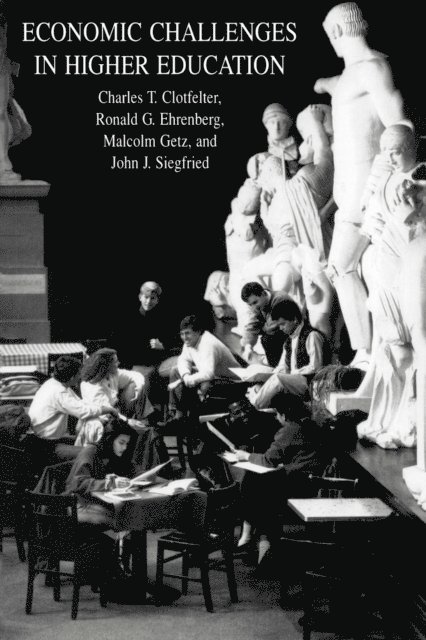
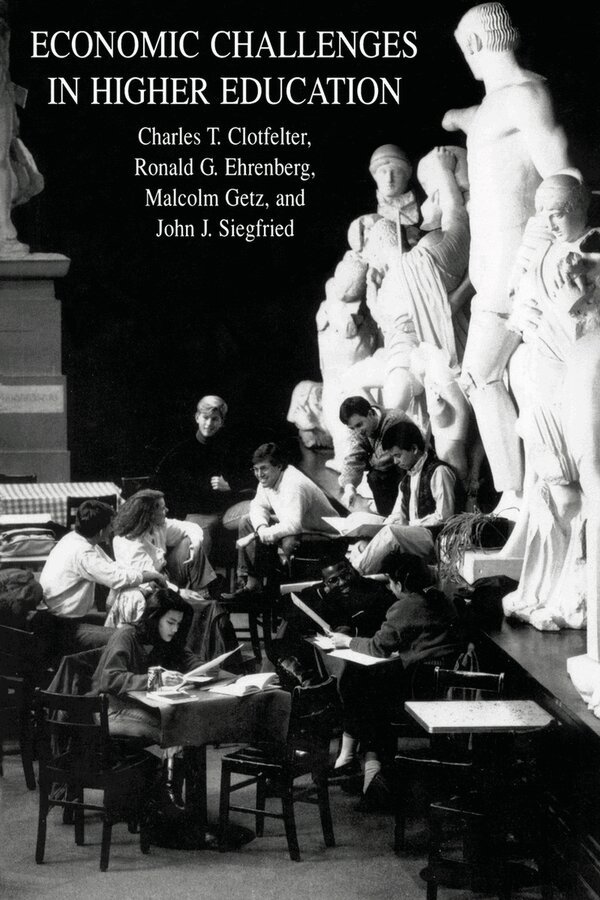
The last two decades have been a turbulent period for American higher education, with profound demographic shifts, gyrating salaries, and marked changes in the economy. While enrollments rose about 50% in that period, sharp increases in tuition and fees at colleges and universities provoke accusations of inefficiency, even outright institutional greed and irresponsibility. As the 1990s progress, surpluses in the academic labor supply may give way to shortages in many fields, but will there be enough new Ph.D.'s to go around? Drawing on the authors' experience as economists and educators, this book offers an accessible analysis of three crucial economic issues: the growth and composition of undergraduate enrollments, the supply of faculty in the academic labor market, and the cost of operating colleges and universities. The study provides valuable insights for administrators and scholars of education.
489 kr
Tillfälligt slut
This accessible study examines all the major elements of the nonprofit sector of the economy of the United States --health services, educational and research institutions, religious organizations, social services, arts and cultural organizations, and foundations--describing the institutions and their functions, and then exploring how their benefits are distributed across various economic classes. The book's findings indicate that while few institutions serve primarily the poor, there is no evidence of a gross distribution of benefits upward toward the more affluent. The analysis of this data makes for a book with profound implications for future social and tax policy.
245 kr
Skickas inom 7-10 vardagar
This accessible study examines all the major elements of the nonprofit sector of the economy of the United States —health services, educational and research institutions, religious organizations, social services, arts and cultural organizations, and foundations—describing the institutions and their functions, and then exploring how their benefits are distributed across various economic classes. The book's findings indicate that while few institutions serve primarily the poor, there is no evidence of a gross distribution of benefits upward toward the more affluent. The analysis of this data makes for a book with profound implications for future social and tax policy.
723 kr
Tillfälligt slut
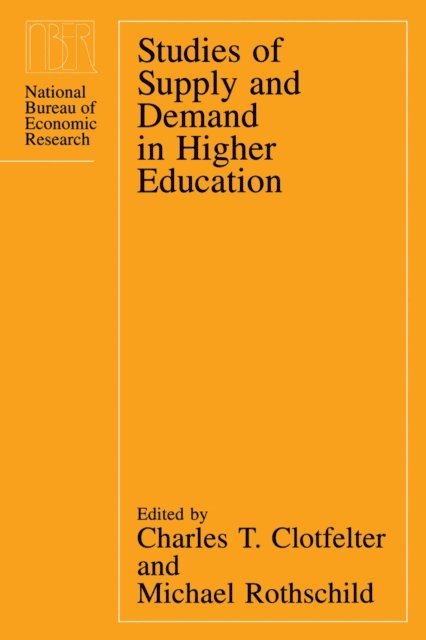
In the United States today, there are some 3,400 separately governed colleges and universities, amounting to a higher education industry with expenditures that constitute 2.8% of the gross national product. Yet, the economic issues affecting this industry have been paid relatively little attention. In this collection of eight essays, experts in economics and education bring economic analysis to bear on such underexamined topics as the nature of competition in higher education, higher education's use of resources, and who chooses to purchase what kind of education and why. In higher education, supply refers to such issues as government support for public colleges and universities, the means by which graduate programs allocate financial support to students, and the criteria that universities use for investing endowments. Demand pertains to patterns of student enrollment and to the government, business, and individual market for the service and research activities of higher education. Why are tuitions nearly the same among schools despite differences in prestige? How are institutions with small endowments able to compete successfully with institutions that have huge endowments?How are race and ethnicity reflected in enrollment trends? Where do the best students go? What choices among colleges do young people from low-income backgrounds face? This volume addresses these questions and suggests subjects for further study of the economics of higher education.
395 kr
Skickas inom 10-15 vardagar
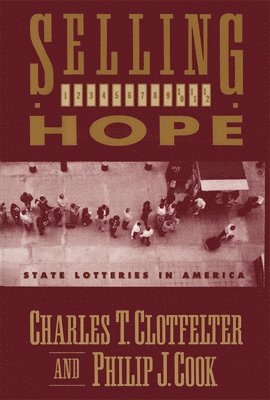
With its huge jackpots and heartwarming rags-to-riches stories, the lottery has become the hope and dream of millions of Americans—and the fastest-growing source of state revenue. Despite its popularity, however, there remains much controversy over whether this is an appropriate business for state government and, if so, how this business should be conducted.
394 kr
Skickas inom 10-15 vardagar
For decades, leaders in higher education have voiced their intention to expand college education to include disadvantaged groups. Colleges have embraced and defended public policies that push back against discrimination and make college more affordable. And yet, as the economist Charles Clotfelter shows, America’s system of undergraduate education was unequal in 1970 and is even more so today.In Unequal Colleges in the Age of Disparity, Clotfelter presents quantitative comparisons across selective and less selective colleges from the 1970s to the present, in exploration of three themes: diversity, competition, and inequality. Diversity shows itself in the variety of colleges’ objectives but also in the disparity of the material and human resources at their disposal. Competition operates through both the supply and the demand sides of the market, with college admissions becoming more meritocratic even as the most desirable colleges choose to contend fiercely for top-tier students rather than accommodate rising numbers of qualified applicants. Clotfelter shows that exclusive colleges have also benefited disproportionately from America’s growing income inequality. As their endowments have ballooned, their students have become more academically advantaged, owing in part to the extraordinary steps affluent families take to groom their children for college admission.Clotfelter finds that despite a revolution in civil rights, billions spent on financial aid, and the commitment of colleges to greater equality, stratification has grown starker. Top colleges cater largely to children of elites.
342 kr
Skickas inom 7-10 vardagar
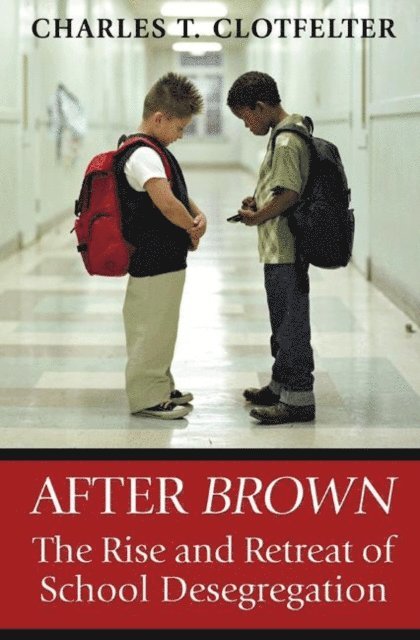
The United States Supreme Court's 1954 landmark decision, Brown v. Board of Education, set into motion a process of desegregation that would eventually transform American public schools. This book provides a comprehensive and up-to-date assessment of how Brown's most visible effect--contact between students of different racial groups--has changed over the fifty years since the decision. Using both published and unpublished data on school enrollments from across the country, Charles Clotfelter uses measures of interracial contact, racial isolation, and segregation to chronicle the changes. He goes beyond previous studies by drawing on heretofore unanalyzed enrollment data covering the first decade after Brown, calculating segregation for metropolitan areas rather than just school districts, accounting for private schools, presenting recent information on segregation within schools, and measuring segregation in college enrollment. Two main conclusions emerge. First, interracial contact in American schools and colleges increased markedly over the period, with the most dramatic changes occurring in the previously segregated South.Second, despite this change, four main factors prevented even larger increases: white reluctance to accept racially mixed schools, the multiplicity of options for avoiding such schools, the willingness of local officials to accommodate the wishes of reluctant whites, and the eventual loss of will on the part of those who had been the strongest protagonists in the push for desegregation. Thus decreases in segregation within districts were partially offset by growing disparities between districts and by selected increases in private school enrollment.
493 kr
Skickas inom 7-10 vardagar
Since the early 1980s, the rapidly increasing cost of college, together with what many see as inadequate attention to teaching, has elicited a barrage of protest. Buying the Best looks at the realities behind these criticisms--at the economic factors that are in fact driving the institutions that have been described as machines without brakes. In designing his study, Charles Clotfelter examines the escalation in spending in the arts and sciences at four elite institutions: Harvard, Duke, Chicago, and Carleton. He argues that the rise in costs has less to do with increasing faculty salaries or lowered productivity than with a broad-based effort to improve quality, provide new services to students, pay for large investments in new facilities and equipment (including computers), and ensure access for low-income students through increasingly expensive financial aid. In Clotfelter's view, spiraling costs arise from the institutions' lofty ambitions and are made possible by steadily intensifying demand for places in the country's elite colleges and universities. Only if this demand slackens will universities be pressured to make cuts or pursue efficiencies.Buying the Best is the first study to make use of the internal historical records of specific institutions, as opposed to the frequently unreliable aggregate records made available by the federal government for the use of survey researchers. As such, it has the virtue of allowing Clotfelter to draw much more realistic comparative conclusions than have hitherto been reported. While acknowledging the obvious drawbacks of a small sample, Clotfelter notes that the institutions studied are significant for the disproportionate influence they, and comparable elite institutions, exercise upon research and upon the training of future leaders. The book contains a foreword by William G. Bowen, President of the Mellon Foundation, and Harold T. Shapiro, President of Princeton University. "Concern about ever-rising costs runs like a thread through the myriad critiques of higher education that have been published in recent years...One of the great contributions of Clotfelter's work is to dismiss easy explanations for the problems that worry us.With some of the scales removed from their eyes, both those with responsibility for the future of higher education and observers who continue to expect an ever-wider scope of effort from particular colleges and universities, can now adjust their focus. Armed with this original and extremely useful analysis, we can confront more directly (and with less romanticism) the real choices before us as we seek to employ limited resources most effectively in the service of teaching and research."-William G. Bowen, President, Mellon Foundation, Harold T. Shapiro, President, Princeton University, from the foreword Originally published in 1996. The Princeton Legacy Library uses the latest print-on-demand technology to again make available previously out-of-print books from the distinguished backlist of Princeton University Press. These editions preserve the original texts of these important books while presenting them in durable paperback and hardcover editions. The goal of the Princeton Legacy Library is to vastly increase access to the rich scholarly heritage found in the thousands of books published by Princeton University Press since its founding in 1905.
1 303 kr
Skickas inom 7-10 vardagar
Since the early 1980s, the rapidly increasing cost of college, together with what many see as inadequate attention to teaching, has elicited a barrage of protest. Buying the Best looks at the realities behind these criticisms--at the economic factors that are in fact driving the institutions that have been described as machines without brakes. In designing his study, Charles Clotfelter examines the escalation in spending in the arts and sciences at four elite institutions: Harvard, Duke, Chicago, and Carleton. He argues that the rise in costs has less to do with increasing faculty salaries or lowered productivity than with a broad-based effort to improve quality, provide new services to students, pay for large investments in new facilities and equipment (including computers), and ensure access for low-income students through increasingly expensive financial aid. In Clotfelter's view, spiraling costs arise from the institutions' lofty ambitions and are made possible by steadily intensifying demand for places in the country's elite colleges and universities. Only if this demand slackens will universities be pressured to make cuts or pursue efficiencies.Buying the Best is the first study to make use of the internal historical records of specific institutions, as opposed to the frequently unreliable aggregate records made available by the federal government for the use of survey researchers. As such, it has the virtue of allowing Clotfelter to draw much more realistic comparative conclusions than have hitherto been reported. While acknowledging the obvious drawbacks of a small sample, Clotfelter notes that the institutions studied are significant for the disproportionate influence they, and comparable elite institutions, exercise upon research and upon the training of future leaders. The book contains a foreword by William G. Bowen, President of the Mellon Foundation, and Harold T. Shapiro, President of Princeton University. "Concern about ever-rising costs runs like a thread through the myriad critiques of higher education that have been published in recent years...One of the great contributions of Clotfelter's work is to dismiss easy explanations for the problems that worry us.With some of the scales removed from their eyes, both those with responsibility for the future of higher education and observers who continue to expect an ever-wider scope of effort from particular colleges and universities, can now adjust their focus. Armed with this original and extremely useful analysis, we can confront more directly (and with less romanticism) the real choices before us as we seek to employ limited resources most effectively in the service of teaching and research."-William G. Bowen, President, Mellon Foundation, Harold T. Shapiro, President, Princeton University, from the foreword Originally published in 1996. The Princeton Legacy Library uses the latest print-on-demand technology to again make available previously out-of-print books from the distinguished backlist of Princeton University Press. These editions preserve the original texts of these important books while presenting them in durable paperback and hardcover editions. The goal of the Princeton Legacy Library is to vastly increase access to the rich scholarly heritage found in the thousands of books published by Princeton University Press since its founding in 1905.
429 kr
Skickas inom 5-8 vardagar
1 466 kr
Skickas inom 7-10 vardagar
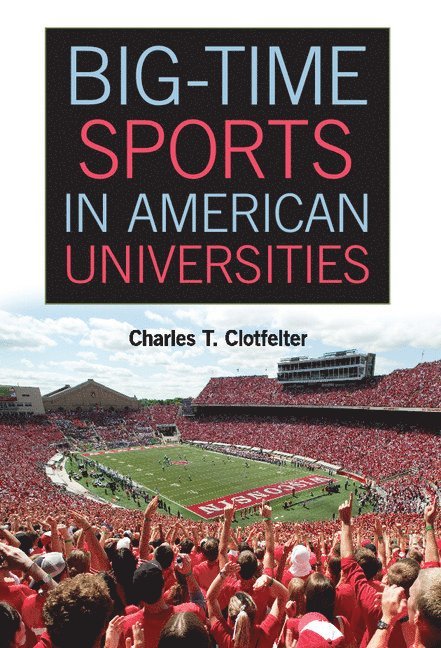
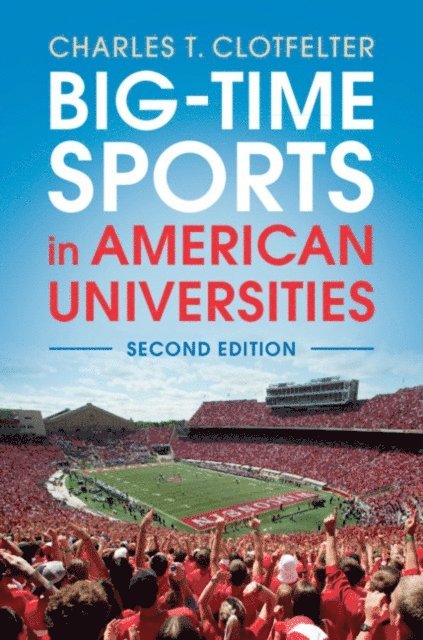
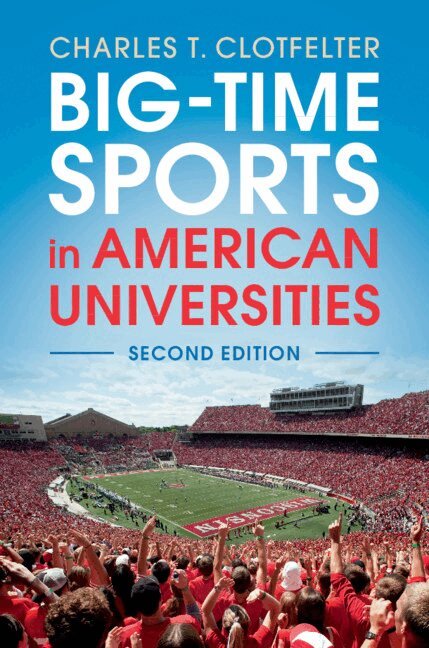
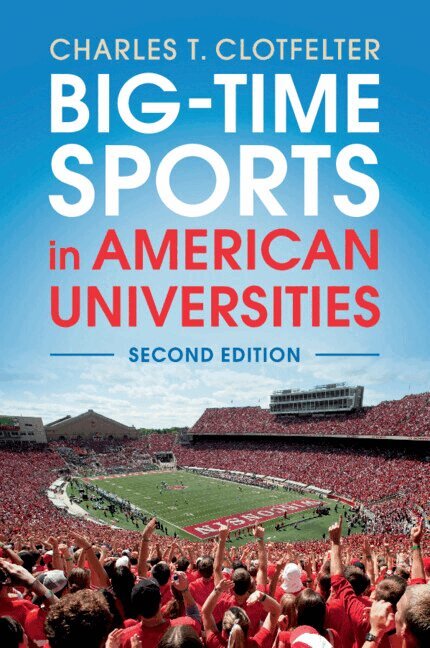
For almost a century, big-time college athletics has been a wildly popular but consistently problematic part of American higher education. The challenges it poses to traditional academic values have been recognized from the start, but they have grown more ominous in recent decades, as cable television has become ubiquitous, commercial opportunities have proliferated, and athletic budgets have ballooned. In the second edition of his influential book Big-Time Sports in American Universities, Clotfelter continues to examine the role of athletics in American universities, building on his argument that commercial sports have become a core function of the universities that engage in them. Drawing on recent scandals on large-scale college campuses and updates on several high-profile court cases, Clotfelter brings clear economic analysis to the variety of problems that sports raise for university and public policy, providing the basis for the continuation of constructive conversations about the value of big-time sports in higher education.
301 kr
Skickas inom 7-10 vardagar
For almost a century, big-time college athletics has been a wildly popular but consistently problematic part of American higher education. The challenges it poses to traditional academic values have been recognized from the start, but they have grown more ominous in recent decades, as cable television has become ubiquitous, commercial opportunities have proliferated, and athletic budgets have ballooned. In the second edition of his influential book Big-Time Sports in American Universities, Clotfelter continues to examine the role of athletics in American universities, building on his argument that commercial sports have become a core function of the universities that engage in them. Drawing on recent scandals on large-scale college campuses and updates on several high-profile court cases, Clotfelter brings clear economic analysis to the variety of problems that sports raise for university and public policy, providing the basis for the continuation of constructive conversations about the value of big-time sports in higher education.