Charlie English - Böcker
Visar alla böcker från författaren Charlie English. Handla med fri frakt och snabb leverans.
11 produkter
11 produkter
297 kr
Skickas
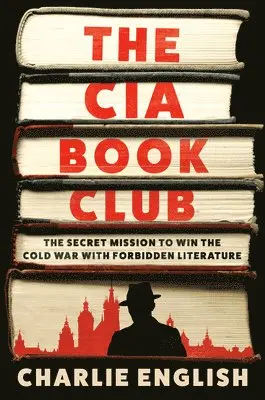
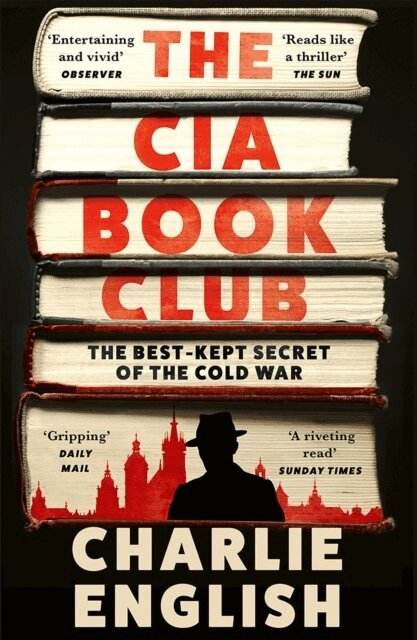
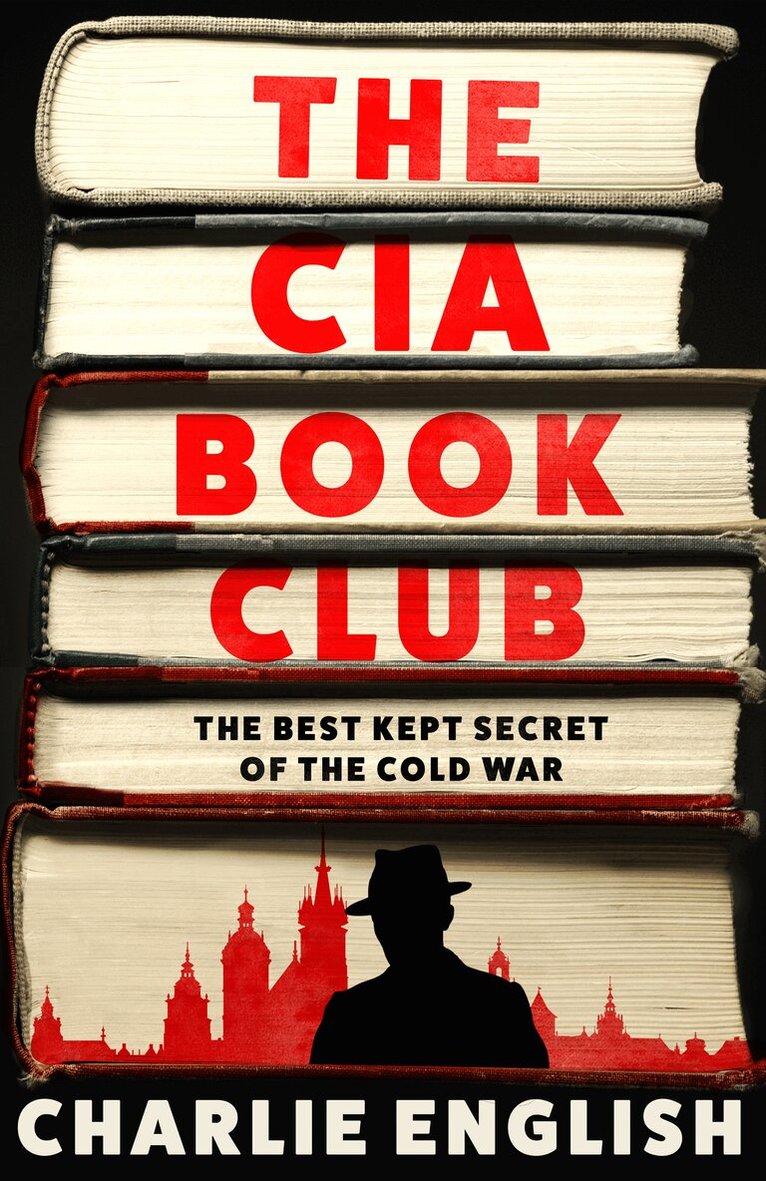
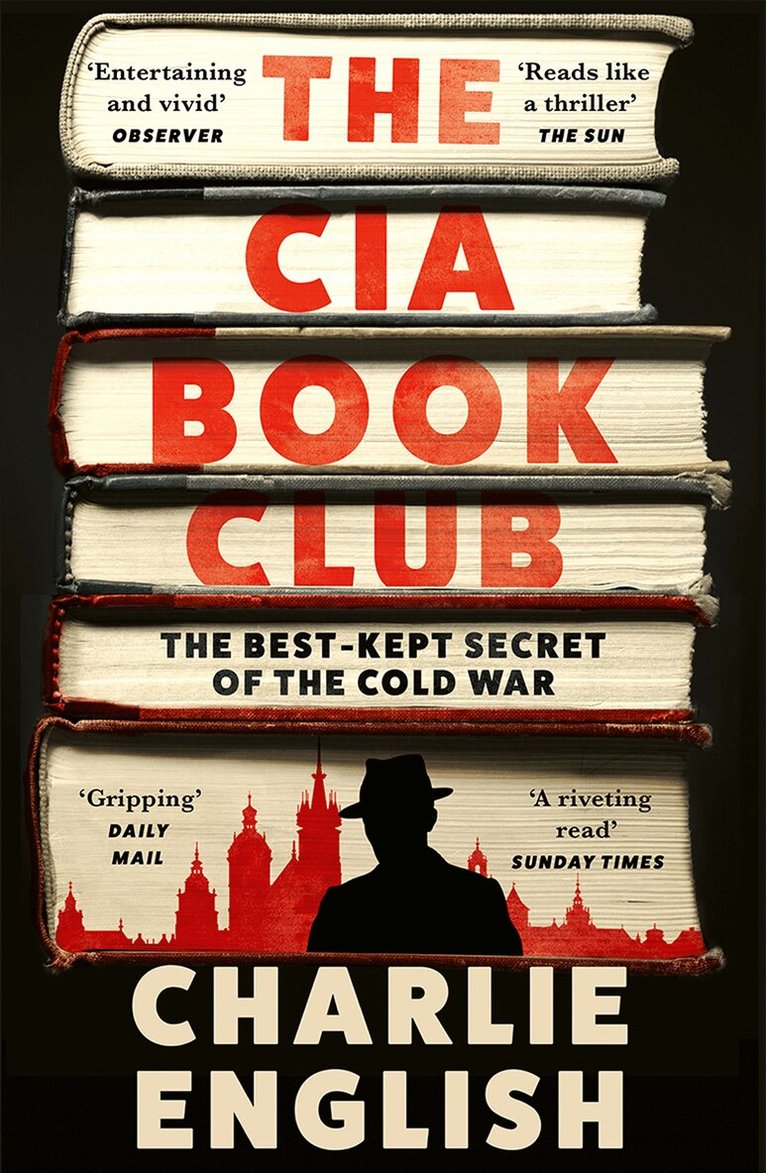
A Book of the Year in the Daily Telegraph and Economist LONGLISTED for the CWA ALCS Gold Dagger for Non-Fiction 2026 'This book reads like a spy novel' FINANICAL TIMES'Entertaining and vivid' OBSERVER–––––––––––––––––––––––––––––––––––- The astonishing story of the ten million books that were smuggled across the Iron Curtain during the Cold War. For almost five decades after the Second World War, Europe was divided by the longest and most heavily guarded border on earth. The Iron Curtain, a near-impenetrable barrier of wire and wall, tank traps, minefields, watchtowers and men with dogs, stretched for 4,300 miles from the Arctic to the Black Sea. No physical combat would take place along this frontier: the risk of nuclear annihilation was too high for that. Instead, the conflict would be fought in the psychological sphere. It was a battle for hearts, minds and intellects.No one understood this more clearly than George Minden, the head of a covert intelligence operation known as the ‘CIA books programme’, which aimed to win the Cold War with literature.From its Manhattan headquarters, Minden’s global CIA ‘book club’ would infiltrate millions of banned titles into the Eastern Bloc, written by a vast and eclectic list of authors, including Hannah Arendt and Aleksandr Solzhenitsyn, George Orwell and Agatha Christie. Volumes were smuggled on trucks and aboard yachts, dropped from balloons, and hidden in the luggage of hundreds of thousands of individual travellers. Once inside Soviet bloc, each book would circulate secretly among dozens of like-minded readers, quietly turning them into dissidents. Latterly, underground print shops began to reproduce the books, too. By the late 1980s, illicit literature in Poland was so pervasive that the system of communist censorship broke down, and the Iron Curtain soon followed.Charlie English tells this true story of spycraft, smuggling and secret printing operations for the first time, highlighting the work of a handful of extraordinary people who risked their lives to stand up to the intellectual strait-jacket Stalin created. People like Miroslaw Chojecki, an underground Polish publisher who endured beatings, force-feeding and exile in service of this mission. And Minden, the CIA’s mastermind, who didn’t waver in his belief that truth, culture, and diversity of thought could help free the ‘captive nations’ of Eastern Europe. This is a story about the power of the printed word as a means of resistance and liberation. Books, it shows, can set you free.
227 kr
Skickas
A Book of the Year in the Daily Telegraph and Economist LONGLISTED for the CWA ALCS Gold Dagger for Non-Fiction 2026 'This book reads like a spy novel' FINANICAL TIMES'Entertaining and vivid' OBSERVER–––––––––––––––––––––––––––––––––––- The astonishing story of the ten million books that were smuggled across the Iron Curtain during the Cold War. For almost five decades after the Second World War, Europe was divided by the longest and most heavily guarded border on earth. The Iron Curtain, a near-impenetrable barrier of wire and wall, tank traps, minefields, watchtowers and men with dogs, stretched for 4,300 miles from the Arctic to the Black Sea. No physical combat would take place along this frontier: the risk of nuclear annihilation was too high for that. Instead, the conflict would be fought in the psychological sphere. It was a battle for hearts, minds and intellects.No one understood this more clearly than George Minden, the head of a covert intelligence operation known as the ‘CIA books programme’, which aimed to win the Cold War with literature.From its Manhattan headquarters, Minden’s global CIA ‘book club’ would infiltrate millions of banned titles into the Eastern Bloc, written by a vast and eclectic list of authors, including Hannah Arendt and Aleksandr Solzhenitsyn, George Orwell and Agatha Christie. Volumes were smuggled on trucks and aboard yachts, dropped from balloons, and hidden in the luggage of hundreds of thousands of individual travellers. Once inside Soviet bloc, each book would circulate secretly among dozens of like-minded readers, quietly turning them into dissidents. Latterly, underground print shops began to reproduce the books, too. By the late 1980s, illicit literature in Poland was so pervasive that the system of communist censorship broke down, and the Iron Curtain soon followed.Charlie English tells this true story of spycraft, smuggling and secret printing operations for the first time, highlighting the work of a handful of extraordinary people who risked their lives to stand up to the intellectual strait-jacket Stalin created. People like Miroslaw Chojecki, an underground Polish publisher who endured beatings, force-feeding and exile in service of this mission. And Minden, the CIA’s mastermind, who didn’t waver in his belief that truth, culture, and diversity of thought could help free the ‘captive nations’ of Eastern Europe. This is a story about the power of the printed word as a means of resistance and liberation. Books, it shows, can set you free.
130 kr
Skickas
A Book of the Year in the Daily Telegraph and Economist LONGLISTED for the CWA ALCS Gold Dagger for Non-Fiction 2026 'This book reads like a spy novel' FINANICAL TIMES'Entertaining and vivid' OBSERVER–––––––––––––––––––––––––––––––––––- The astonishing story of the ten million books that were smuggled across the Iron Curtain during the Cold War. For almost five decades after the Second World War, Europe was divided by the longest and most heavily guarded border on earth. The Iron Curtain, a near-impenetrable barrier of wire and wall, tank traps, minefields, watchtowers and men with dogs, stretched for 4,300 miles from the Arctic to the Black Sea. No physical combat would take place along this frontier: the risk of nuclear annihilation was too high for that. Instead, the conflict would be fought in the psychological sphere. It was a battle for hearts, minds and intellects.No one understood this more clearly than George Minden, the head of a covert intelligence operation known as the ‘CIA books programme’, which aimed to win the Cold War with literature.From its Manhattan headquarters, Minden’s global CIA ‘book club’ would infiltrate millions of banned titles into the Eastern Bloc, written by a vast and eclectic list of authors, including Hannah Arendt and Aleksandr Solzhenitsyn, George Orwell and Agatha Christie. Volumes were smuggled on trucks and aboard yachts, dropped from balloons, and hidden in the luggage of hundreds of thousands of individual travellers. Once inside Soviet bloc, each book would circulate secretly among dozens of like-minded readers, quietly turning them into dissidents. Latterly, underground print shops began to reproduce the books, too. By the late 1980s, illicit literature in Poland was so pervasive that the system of communist censorship broke down, and the Iron Curtain soon followed.Charlie English tells this true story of spycraft, smuggling and secret printing operations for the first time, highlighting the work of a handful of extraordinary people who risked their lives to stand up to the intellectual strait-jacket Stalin created. People like Miroslaw Chojecki, an underground Polish publisher who endured beatings, force-feeding and exile in service of this mission. And Minden, the CIA’s mastermind, who didn’t waver in his belief that truth, culture, and diversity of thought could help free the ‘captive nations’ of Eastern Europe. This is a story about the power of the printed word as a means of resistance and liberation. Books, it shows, can set you free.
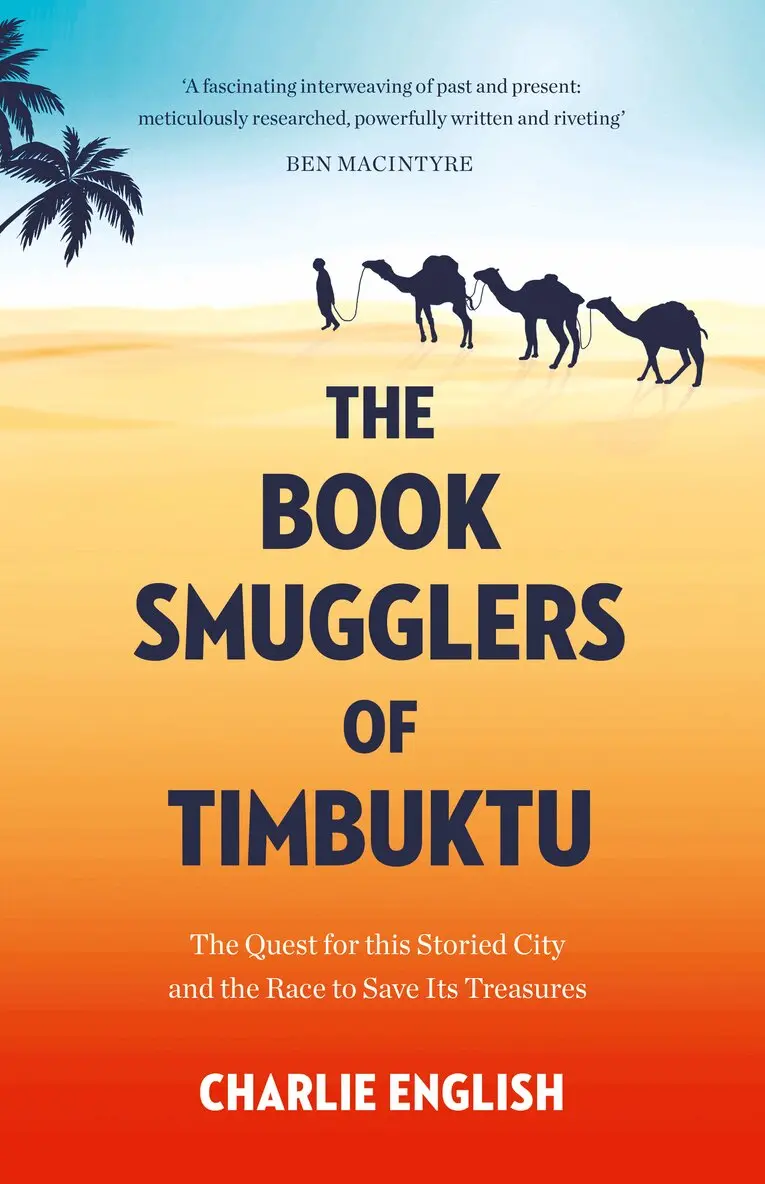
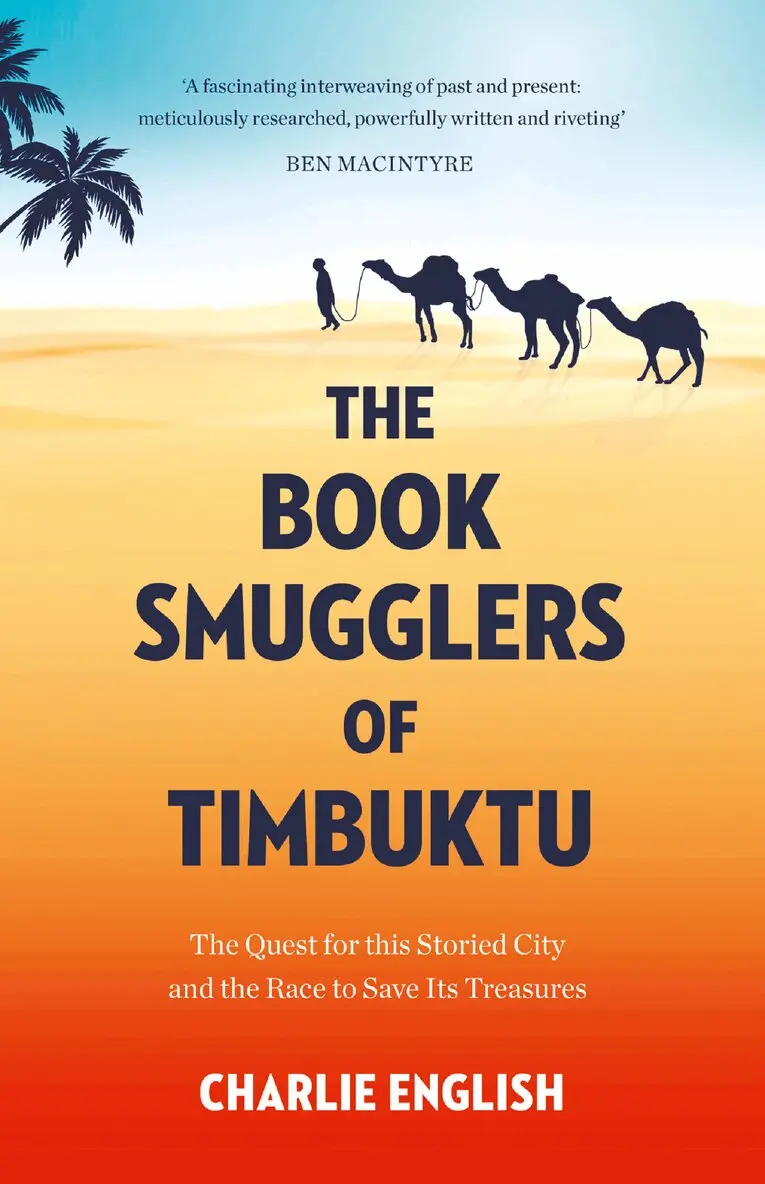
Book Smugglers of Timbuktu
The Quest for This Storied City and the Race to Save its Treasures
Häftad, Engelska, 2018
163 kr
Skickas
‘An exemplary work of investigative journalism that is also a wonderfully colourful book of history and travel’ Observer, Book of the Year ‘A piece of postmodern historiography of quite extraordinary sophistication and ingenuity… [written with] exceptional delicacy and restraint’ TLS The fabled city of Timbuktu has captured the Western imagination for centuries. The search for this ‘African El Dorado’ cost the lives of many explorers but Timbuktu is rich beyond its legends. Home to many thousands of ancient manuscripts on poetry, history, religion, law, pharmacology and astronomy, the city has been a centre of learning since medieval times.When jihadists invaded Mali in 2012 threatening destruction to Timbuktu’s libraries, a remarkable thing happened. A team of librarians and archivists joined forces to spirit the precious manuscripts into hiding. Based on new research and first-hand reporting, Charlie English expertly tells this story set in one of the world’s most fascinating places, and the myths from which it has become inseparable.
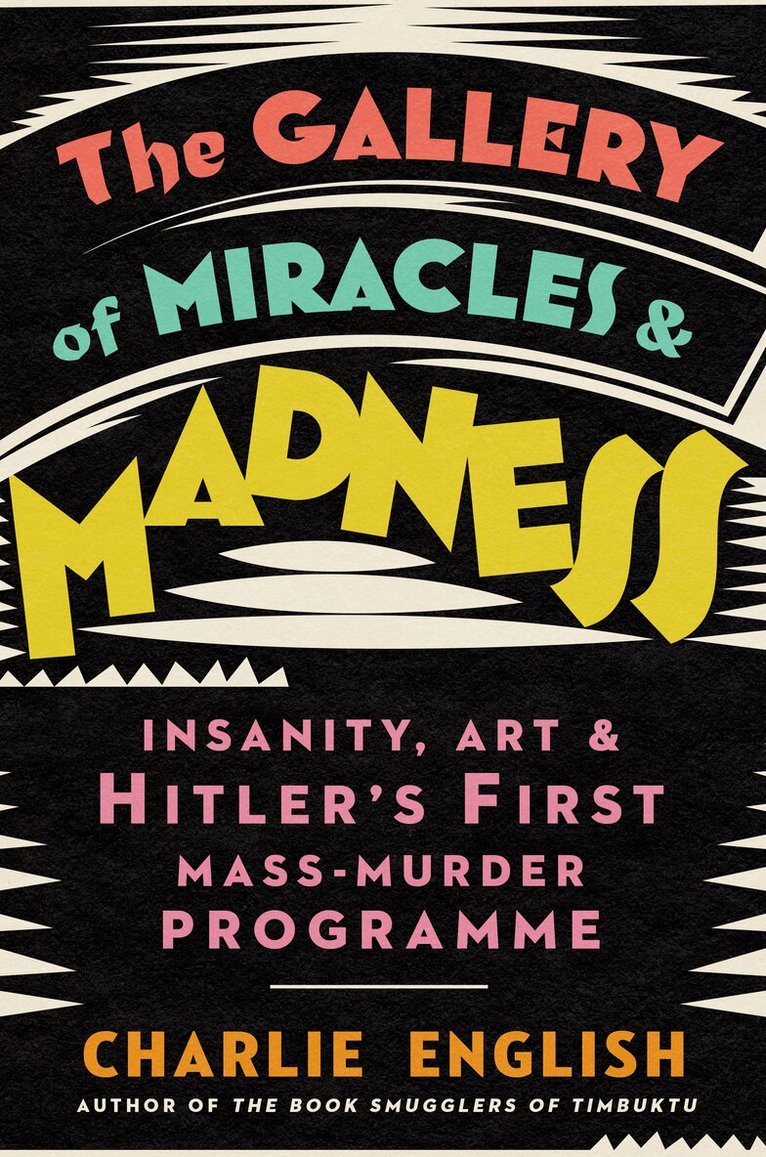
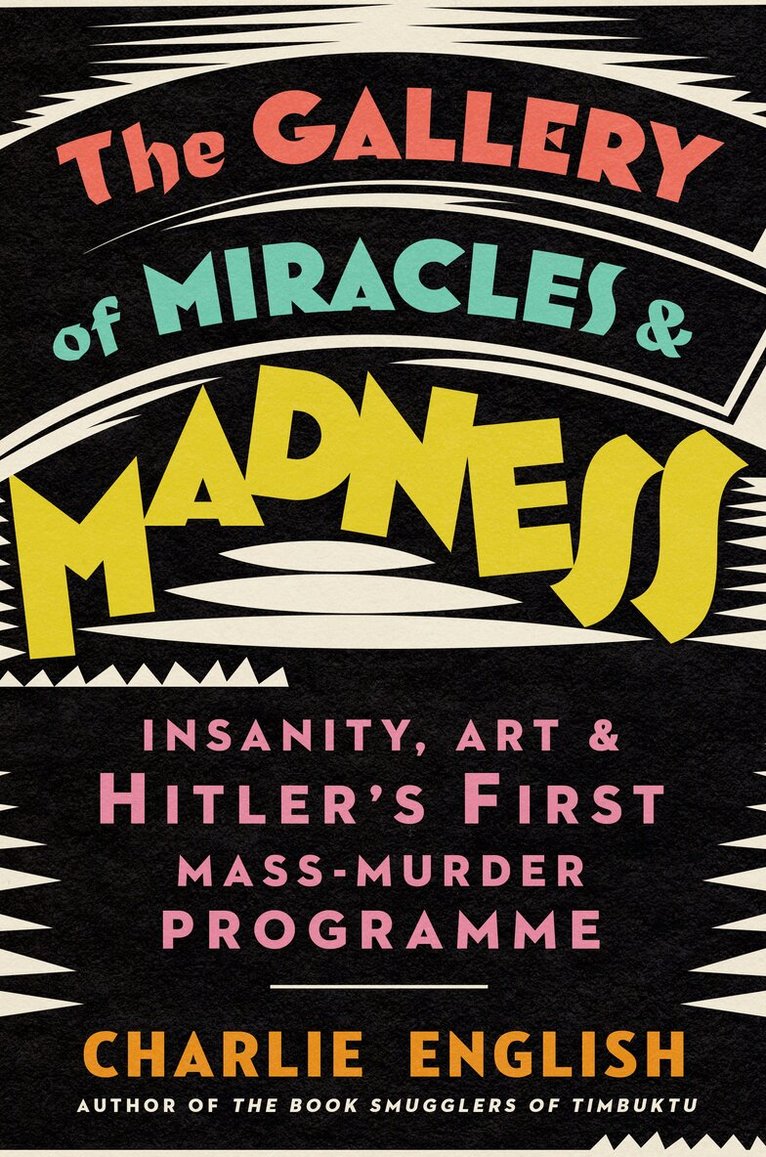
Gallery of Miracles and Madness
Insanity, Art and Hitler’s First Mass-Murder Programme
Inbunden, Engelska, 2021
231 kr
Skickas
‘A riveting tale, brilliantly told' Philippe Sands The little-known story of Hitler’s war on modern art and the mentally ill. In the first years of the Weimar Republic, the German psychiatrist Hans Prinzhorn gathered a remarkable collection of works by schizophrenic patients that would astonish and delight the world.The Prinzhorn collection, as it was called, inspired a new generation of artists, including Paul Klee, Max Ernst and Salvador Dali. What the doctor could not have known, however, was that these works would later be used to prepare the ground for mass-murder.Soon after his rise to power, Hitler—a failed artist of the old school—declared war on modern art. The Nazis staged giant ‘Degenerate Art’ shows to ridicule the avant-garde, and seized and destroyed the cream of Germany's modern art collections. This action was mere preparation, however, for the even more sinister campaign Hitler would later wage against so-called "degenerate" people, and Prinzhorn's artists were caught up in both.Bringing together inspirational art history, genius and madness, and the wanton cruelty of the fanatical "artist-Führer", this astonishing story lays bare the culture war that paved the way for Hitler's first extermination programme, the psychiatric Holocaust.
Gallery of Miracles and Madness
Insanity, Art and Hitler’s First Mass-Murder Programme
Häftad, Engelska, 2021
142 kr
Skickas
‘A riveting tale, brilliantly told' Philippe Sands The little-known story of Hitler’s war on modern art and the mentally ill. In the first years of the Weimar Republic, the German psychiatrist Hans Prinzhorn gathered a remarkable collection of works by schizophrenic patients that would astonish and delight the world.The Prinzhorn collection, as it was called, inspired a new generation of artists, including Paul Klee, Max Ernst and Salvador Dali. What the doctor could not have known, however, was that these works would later be used to prepare the ground for mass-murder.Soon after his rise to power, Hitler—a failed artist of the old school—declared war on modern art. The Nazis staged giant ‘Degenerate Art’ shows to ridicule the avant-garde, and seized and destroyed the cream of Germany's modern art collections. This action was mere preparation, however, for the even more sinister campaign Hitler would later wage against so-called "degenerate" people, and Prinzhorn's artists were caught up in both.Bringing together inspirational art history, genius and madness, and the wanton cruelty of the fanatical "artist-Führer", this astonishing story lays bare the culture war that paved the way for Hitler's first extermination programme, the psychiatric Holocaust.
Gallery of Miracles and Madness
Insanity, Art and Hitler’s First Mass-Murder Programme
Häftad, Engelska, 2022
119 kr
Skickas
‘A riveting tale, brilliantly told' Philippe Sands The little-known story of Hitler’s war on modern art and the mentally ill. In the first years of the Weimar Republic, the German psychiatrist Hans Prinzhorn gathered a remarkable collection of works by schizophrenic patients that would astonish and delight the world.The Prinzhorn collection, as it was called, inspired a new generation of artists, including Paul Klee, Max Ernst and Salvador Dali. What the doctor could not have known, however, was that these works would later be used to prepare the ground for mass-murder.Soon after his rise to power, Hitler—a failed artist of the old school—declared war on modern art. The Nazis staged giant ‘Degenerate Art’ shows to ridicule the avant-garde, and seized and destroyed the cream of Germany's modern art collections. This action was mere preparation, however, for the even more sinister campaign Hitler would later wage against so-called "degenerate" people, and Prinzhorn's artists were caught up in both.Bringing together inspirational art history, genius and madness, and the wanton cruelty of the fanatical "artist-Führer", this astonishing story lays bare the culture war that paved the way for Hitler's first extermination programme, the psychiatric Holocaust.
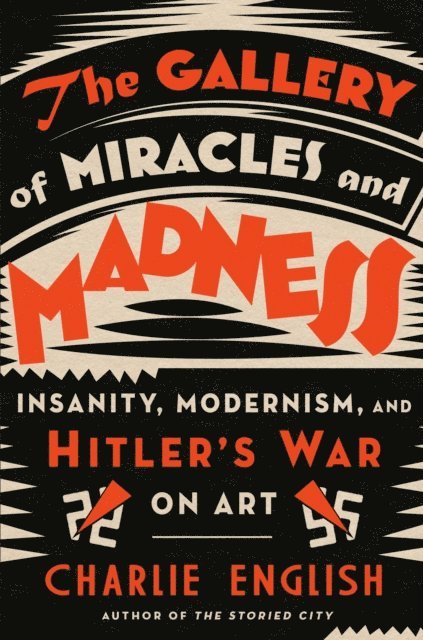
The Gallery of Miracles and Madness
Insanity, Modernism, and Hitler's War on Art
Inbunden, Engelska, 2021
212 kr
Skickas inom 11-20 vardagar
The CIA Book Club: The Secret Mission to Win the Cold War with Forbidden Literature
Inbunden, Engelska, 2025
389 kr
Skickas inom 3-6 vardagar
275 kr
Skickas inom 3-6 vardagar
316 kr
Skickas inom 3-6 vardagar