Charlotte A. Roberts - Böcker
Visar alla böcker från författaren Charlotte A. Roberts. Handla med fri frakt och snabb leverans.
11 produkter
11 produkter
1 602 kr
Skickas inom 5-8 vardagar
Evolutionary medicine has been steadily gaining recognition, not only in modern clinical research and practice, but also in bioarchaeology (the study of archaeological human remains) and especially its sub-discipline, palaeopathology. To date, however, palaeopathology has not been necessarily recognised as particularly useful to the field and most key texts in evolutionary medicine have tended to overlook it. This novel text is the first to highlight the benefits of using palaeopathological research to answer questions about the evolution of disease and its application to current health problems, as well as the benefits of using evolutionary thinking in medicine to help interpret historical disease processes. It presents hypothesis-driven research by experts in biological anthropology (including palaeopathology), medicine, health sciences, and evolutionary medicine through a series of unique case studies that address specific research questions. Each chapter has been co-authored by two or more researchers with different disciplinary perspectives in order to provide original, insightful, and interdisciplinary contributions that will provide new insights for both palaeopathology and evolutionary medicine. Palaeopathology and Evolutionary Medicine is intended for graduate level students and professional researchers in a wide range of fields including the humanities (history), social sciences (anthropology, archaeology, palaeopathology, geography), and life sciences (medicine and biology). Relevant courses include evolutionary medicine, evolutionary anthropology, medical anthropology, and palaeopathology.
680 kr
Skickas inom 5-8 vardagar
Evolutionary medicine has been steadily gaining recognition, not only in modern clinical research and practice, but also in bioarchaeology (the study of archaeological human remains) and especially its sub-discipline, palaeopathology. To date, however, palaeopathology has not been necessarily recognised as particularly useful to the field and most key texts in evolutionary medicine have tended to overlook it. This novel text is the first to highlight the benefits of using palaeopathological research to answer questions about the evolution of disease and its application to current health problems, as well as the benefits of using evolutionary thinking in medicine to help interpret historical disease processes. It presents hypothesis-driven research by experts in biological anthropology (including palaeopathology), medicine, health sciences, and evolutionary medicine through a series of unique case studies that address specific research questions. Each chapter has been co-authored by two or more researchers with different disciplinary perspectives in order to provide original, insightful, and interdisciplinary contributions that will provide new insights for both palaeopathology and evolutionary medicine. Palaeopathology and Evolutionary Medicine is intended for graduate level students and professional researchers in a wide range of fields including the humanities (history), social sciences (anthropology, archaeology, palaeopathology, geography), and life sciences (medicine and biology). Relevant courses include evolutionary medicine, evolutionary anthropology, medical anthropology, and palaeopathology.
684 kr
Skickas inom 3-6 vardagar
The Archaeology of Disease shows how the latest scientific and archaeological techniques can be used to identify the common illnesses and injuries from which humans suffered in antiquity. Charlotte Roberts and Keith Manchester offer a vivid picture of ancient disease and trauma by combining the results of scientific research with information gathered from documents, other areas of archaeology, art, and ethnography. The book contains information on congenital, infectious, dental, joint, endocrine, and metabolic diseases. The authors provide a clinical context for specific ailments and accidents and consider the relevance of ancient demography, basic bone biology, funerary practices, and prehistoric medicine. This fully revised third edition has been updated to and encompasses rapidly developing research methods of in this fascinating field.
749 kr
Skickas inom 5-8 vardagar
Del 80 - Cambridge Studies in Biological and Evolutionary Anthropology
The Backbone of Europe
Health, Diet, Work and Violence over Two Millennia
Inbunden, Engelska, 2018
1 218 kr
Skickas inom 7-10 vardagar
Using human skeletal remains, this volume traces health, workload and violence in the European population over the past 2,000 years. Health was surprisingly good for people who lived during the early Medieval Period. The Plague of Justinian of the sixth century was ultimately beneficial for health because the smaller population had relatively more resources that contributed to better living conditions. Increasing population density and inequality in the following centuries imposed an unhealthy diet - poor in protein - on the European population. With the onset of the Little Ice Age in the late Middle Ages, a further health decline ensued, which was not reversed until the nineteenth century. While some aspects of health declined, other attributes improved. During the early modern period, interpersonal violence (outside of warfare) declined possibly because stronger states and institutions were able to enforce compromise and cooperation. European health over the past two millennia was hence multifaceted in nature.
Del 91 - Cambridge Studies in Biological and Evolutionary Anthropology
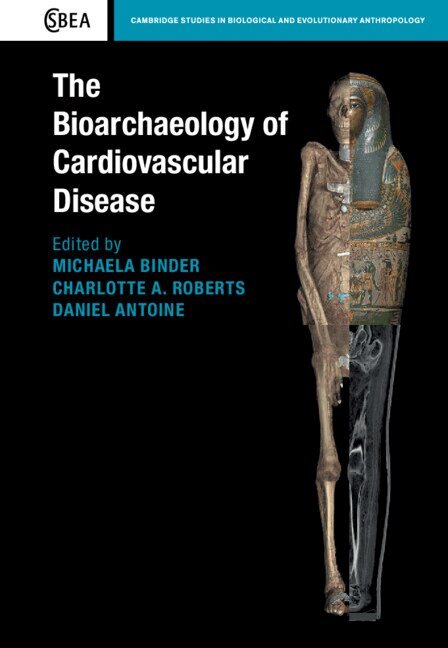
The Bioarchaeology of Cardiovascular Disease
Inbunden, Engelska, 2023
1 083 kr
Skickas inom 7-10 vardagar
Cardiovascular diseases (CVDs) are the leading cause of death worldwide today, but are not just a modern phenomenon. To explore the deep roots of CVDs in human history, this book, for the first time, brings together bioarchaeological evidence from different periods, as old as 5000 BC, and geographic locations from Alaska to Northern Africa. Experts in their fields showcase the powerful tool set available to bioarchaeology, which allows a more comprehensive reconstruction of the human past through evidence for disease. The tools include aDNA and histological analyses and digital imaging techniques for studying skeletal and mummified human remains. The insights gained from these studies are not only of value to historical research but also demonstrate how the science of archaeological human remains can provide the long view of the history of disease and contributes to modern biomedical research within the context of evolutionary medicine.
Del 700 - British
Bamburgh Bowl Hole Anglian-period Cemetery
A bioarchaeological study of a Northumbrian royal site
Häftad, Engelska, 2025
1 307 kr
Skickas inom 5-8 vardagar
1 626 kr
Kommande
This revised fourth edition of The Archaeology of Disease focuses on reconstructing the origin, evolution, and history of disease as seen mainly through human skeletons from archaeological sites. In addition, this edition addresses new concepts in medicine and explores the challenges faced by individuals and populations, including their children. Integrating conceptual frameworks from bioarchaeology, medical history, and clinical health, the authors take a long view of disease over thousands of years to examine how frequencies of disease have changed over time in relation to epidemiological transitions. They further investigate the risk of disease in populations at specific time periods and geographic locations. As a result, they provide a better understanding of the impact of health problems on our ancestors and present ethical considerations for palaeopathologists around the world when working with human remains using both archaeological and historical evidence.
461 kr
Kommande
This revised fourth edition of The Archaeology of Disease focuses on reconstructing the origin, evolution, and history of disease as seen mainly through human skeletons from archaeological sites. In addition, this edition addresses new concepts in medicine and explores the challenges faced by individuals and populations, including their children. Integrating conceptual frameworks from bioarchaeology, medical history, and clinical health, the authors take a long view of disease over thousands of years to examine how frequencies of disease have changed over time in relation to epidemiological transitions. They further investigate the risk of disease in populations at specific time periods and geographic locations. As a result, they provide a better understanding of the impact of health problems on our ancestors and present ethical considerations for palaeopathologists around the world when working with human remains using both archaeological and historical evidence.
1 436 kr
Skickas inom 10-15 vardagar
Through an unprecedented multidisciplinary and global approach, this book documents the dramatic several-thousand-year history of leprosy using bioarchaeological, clinical, and historical information from a wide variety of contexts, dispelling many long-standing myths about the disease.Drawing on her 30 years of research on the infection, Charlotte Roberts begins by outlining its bacterial causes, how it spreads, and how it affects the body. She then considers its diagnosis and treatment, both historically and in the present. She also looks at the methods and tools used by paleopathologists to identify signs of leprosy in skeletons. Examining evidence in human remains from many countries, particularly in Europe and including Britain, Hungary, and Sweden, Roberts demonstrates that those affected were usually buried in the same cemeteries as their communities, contrary to the popular belief that they were all ostracized or isolated from society into leprosy hospitals. Other myths addressed by Roberts include the assumptions that leprosy can't be cured, that leprosy is no longer a problem today, and that what is called "leprosy" in the Bible is the same illness as the disease with that name now. Roberts concludes by projecting the future of leprosy, arguing that researchers need to study the disease through an ethically grounded evolutionary perspective. Importantly, she advises against use of the word "leper" to avoid perpetuating stigma today surrounding people with the infection and resulting disabilities. Leprosy will stand as the authoritative source on the subject for years to come.A volume in the series Bioarchaeological Interpretations of the Human Past: Local, Regional, and Global Perspectives, edited by Clark Spencer Larsen.
Past and Present of Leprosy
Archaeological, historical, palaeopathological and clinical approaches
Häftad, Engelska, 2002
1 307 kr
Skickas inom 5-8 vardagar