Clark Spencer Larsen - Böcker
Visar alla böcker från författaren Clark Spencer Larsen. Handla med fri frakt och snabb leverans.
8 produkter
8 produkter
Del 69 - Cambridge Studies in Biological and Evolutionary Anthropology
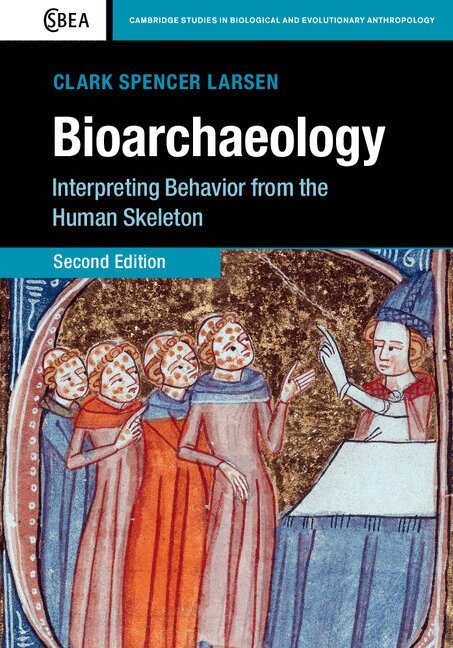
Bioarchaeology
Interpreting Behavior from the Human Skeleton
Häftad, Engelska, 2015
772 kr
Skickas inom 7-10 vardagar
Now including numerous full colour figures, this updated and revised edition of Larsen's classic text provides a comprehensive overview of the fundamentals of bioarchaeology. Reflecting the enormous advances made in the field over the past twenty years, the author examines how this discipline has matured and evolved in fundamental ways. Jargon free and richly illustrated, the text is accompanied by copious case studies and references to underscore the central role that human remains play in the interpretation of life events and conditions of past and modern cultures. From the origins and spread of infectious disease to the consequences of decisions made by humans with regard to the kinds of foods produced, and their nutritional, health and behavioral outcomes. With local, regional, and global perspectives, this up-to-date text provides a solid foundation for all those working in the field.
Del 69 - Cambridge Studies in Biological and Evolutionary Anthropology
Bioarchaeology
Interpreting Behavior from the Human Skeleton
Inbunden, Engelska, 2015
1 716 kr
Skickas inom 7-10 vardagar
Now including numerous full colour figures, this updated and revised edition of Larsen's classic text provides a comprehensive overview of the fundamentals of bioarchaeology. Reflecting the enormous advances made in the field over the past twenty years, the author examines how this discipline has matured and evolved in fundamental ways. Jargon free and richly illustrated, the text is accompanied by copious case studies and references to underscore the central role that human remains play in the interpretation of life events and conditions of past and modern cultures. From the origins and spread of infectious disease to the consequences of decisions made by humans with regard to the kinds of foods produced, and their nutritional, health and behavioral outcomes. With local, regional, and global perspectives, this up-to-date text provides a solid foundation for all those working in the field.
388 kr
Skickas inom 7-10 vardagar
The dead tell no tales. Or do they? In this fascinating book, Clark Spencer Larsen shows that the dead can speak to us--about their lives, and ours--through the remarkable insights of bioarchaeology, which reconstructs the lives and lifestyles of past peoples based on the study of skeletal remains. The human skeleton is an amazing storehouse of information. It records the circumstances of our growth and development as reflected in factors such as disease, stress, diet, nutrition, climate, activity, and injury. Bioarchaeologists, by combining the methods of forensic science and archaeology, along with the resources of many other disciplines (including chemistry, geology, physics, and biology), "read" the information stored in bones to understand what life was really like for our human ancestors. They are unearthing some surprises. For instance, the shift from hunting and gathering to agriculture approximately 10,000 years ago has commonly been seen as a major advancement in the course of human evolution. However, as Larsen provocatively shows, this change may not have been so positive.Compared to their hunter-gatherer ancestors, many early farmers suffered more disease, had to work harder, and endured a poorer quality of life due to poorer diets and more marginal living conditions. Moreover, the past 10,000 years have seen dramatic changes in the human physiognomy as a result of alterations in our diet and lifestyle. Some modern health problems, including obesity and chronic disease, may also have their roots in these earlier changes. Drawing on vivid accounts from his own experiences as a bioarchaeologist, Larsen guides us through some of the key developments in recent human evolution, including the adoption of agriculture, the arrival of Europeans in the Americas and the biological consequences of this contact, and the settlement of the American West in the eighteenth and nineteenth centuries. Written in a lively and engaging manner, this book is for anyone interested in what the dead have to tell us about the living.
Del 80 - Cambridge Studies in Biological and Evolutionary Anthropology
The Backbone of Europe
Health, Diet, Work and Violence over Two Millennia
Inbunden, Engelska, 2018
1 218 kr
Skickas inom 7-10 vardagar
Using human skeletal remains, this volume traces health, workload and violence in the European population over the past 2,000 years. Health was surprisingly good for people who lived during the early Medieval Period. The Plague of Justinian of the sixth century was ultimately beneficial for health because the smaller population had relatively more resources that contributed to better living conditions. Increasing population density and inequality in the following centuries imposed an unhealthy diet - poor in protein - on the European population. With the onset of the Little Ice Age in the late Middle Ages, a further health decline ensued, which was not reversed until the nineteenth century. While some aspects of health declined, other attributes improved. During the early modern period, interpersonal violence (outside of warfare) declined possibly because stronger states and institutions were able to enforce compromise and cooperation. European health over the past two millennia was hence multifaceted in nature.
1 895 kr
Skickas inom 7-10 vardagar
A Companion to Biological AnthropologyThe discipline of biological anthropology—the study of the variation and evolution of human beings and their evolutionary relationships with past and living hominin and primate relatives—has undergone enormous growth in recent years. Advances in DNA research, behavioral anthropology, nutrition science, and other fields are transforming our understanding of what makes us human.A Companion to Biological Anthropology provides a timely and comprehensive account of the foundational concepts, historical development, current trends, and future directions of the discipline. Authoritative yet accessible, this field-defining reference work brings together 37 chapters by established and younger scholars on the biological and evolutionary components of the study of human development. The authors discuss all facets of contemporary biological anthropology including systematics and taxonomy, population and molecular genetics, human biology and functional adaptation, early primate evolution, paleoanthropology, paleopathology, bioarchaeology, forensic anthropology, and paleogenetics.Updated and expanded throughout, this second edition explores new topics, revisits key issues, and examines recent innovations and discoveries in biological anthropology such as race and human variation, epidemiology and catastrophic disease outbreaks, global inequalities, migration and health, resource access and population growth, recent primate behavior research, the fossil record of primates and humans, and much more.A Companion to Biological Anthropology, Second Edition is an indispensable guide for researchers and advanced students in biological anthropology, geosciences, ancient and modern disease, bone biology, biogeochemistry, behavioral ecology, forensic anthropology, systematics and taxonomy, nutritional anthropology, and related disciplines.
522 kr
Kommande
A Companion to Biological Anthropology The discipline of biological anthropology—the study of the variation and evolution of human beings and their evolutionary relationships with past and living hominin and primate relatives—has undergone enormous growth in recent years. Advances in DNA research, behavioral anthropology, nutrition science, and other fields are transforming our understanding of what makes us human. A Companion to Biological Anthropology provides a timely and comprehensive account of the foundational concepts, historical development, current trends, and future directions of the discipline. Authoritative yet accessible, this field-defining reference work brings together 37 chapters by established and younger scholars on the biological and evolutionary components of the study of human development. The authors discuss all facets of contemporary biological anthropology including systematics and taxonomy, population and molecular genetics, human biology and functional adaptation, early primate evolution, paleoanthropology, paleopathology, bioarchaeology, forensic anthropology, and paleogenetics. Updated and expanded throughout, this second edition explores new topics, revisits key issues, and examines recent innovations and discoveries in biological anthropology such as race and human variation, epidemiology and catastrophic disease outbreaks, global inequalities, migration and health, resource access and population growth, recent primate behavior research, the fossil record of primates and humans, and much more. A Companion to Biological Anthropology, Second Edition is an indispensable guide for researchers and advanced students in biological anthropology, geosciences, ancient and modern disease, bone biology, biogeochemistry, behavioral ecology, forensic anthropology, systematics and taxonomy, nutritional anthropology, and related disciplines.
Our Origins
2025
1 858 kr
Skickas inom 7-10 vardagar
Our Origins provides an accessible and engaging introduction to biological anthropology, with an emphasis on the discipline’s relevance and latest research advancements. Through balanced and clear explanations, author Clark Larsen ensures that students not only grasp the basics but also understand how what they’re learning applies to their own lives, communities, and prospective career paths. The book’s clear and concise writing, rich art program, and focus on new discoveries empower every student to succeed in the course. Available for the first time as a Norton Illumine Ebook, the Sixth Edition features brand-new 3D-model interactive activities, new “Anthropology at Work” features and videos, and end-of-section Check Your Understanding questions designed to keep students engaged and on track.
1 761 kr
Skickas inom 7-10 vardagar
Essentials of Biological Anthropology provides an accessible and engaging introduction to biological anthropology, with an emphasis on the discipline’s relevance and latest research advancements. Through balanced and clear explanations, author Clark Larsen ensures that students not only grasp the basics, but also understand how what they’re learning applies to their own lives, communities, and prospective career paths. The book’s clear and concise writing, rich art program, and focus on new discoveries empower every student to succeed in the course. Available for the first time as a Norton Illumine Ebook, the Sixth Edition features brand-new 3D model interactive activities, new “Anthropology at Work” features and videos, and end-of-section Check Your Understanding questions designed to keep students engaged and on track.