Charlotte Bigg - Böcker
Visar alla böcker från författaren Charlotte Bigg. Handla med fri frakt och snabb leverans.
4 produkter
4 produkter
1 343 kr
Kommande
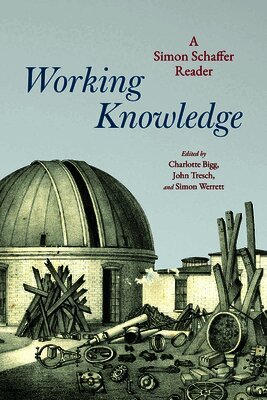
Collects key articles by Simon Schaffer, one of the most important historians of science working today. Working Knowledge is the first English-language collection of essays by Simon Schaffer, coauthor of Leviathan and the Air-Pump, a landmark text in the history of science. Though the latter may be his most famous book, Schaffer is also renowned for seminal articles on Isaac Newton and the cultures of popular spectacle, nineteenth-century physics and its practices of labor discipline and standardization, the history of anthropology and collecting, and the globe-spanning cultural interactions that have shaped modern science. Working Knowledge compiles these well-known pieces alongside newer selections, making them accessible in a single place and representing the huge scope and impact of Schaffer’s oeuvre.The Reader divides sixteen of Schaffer’s articles across five thematic sections, which take up timely issues like the turn toward global histories of science; the intersection of science and capitalism; the interaction between bodies and machines; and the connection between science, politics, and the environment. Eight new essays by notable historians such as Adrian Johns, Lissa Roberts, and Steven Shapin bring Schaffer’s pieces into discussion with current scholarship. Illustrations and brief commentaries by Schaffer and the artist Adam Lowe, a longtime collaborator, are included throughout the volume. Bringing together essential articles that were previously scattered across several publications, Working Knowledge is an insightful introduction to Schaffer and his ever-relevant writing.
472 kr
Skickas
Collects key articles by Simon Schaffer, one of the most important historians of science working today. Working Knowledge is the first English-language collection of essays by Simon Schaffer, coauthor of Leviathan and the Air-Pump, a landmark text in the history of science. Though the latter may be his most famous book, Schaffer is also renowned for seminal articles on Isaac Newton and the cultures of popular spectacle, nineteenth-century physics and its practices of labor discipline and standardization, the history of anthropology and collecting, and the globe-spanning cultural interactions that have shaped modern science. Working Knowledge compiles these well-known pieces alongside newer selections, making them accessible in a single place and representing the huge scope and impact of Schaffer's oeuvre. The Reader divides sixteen of Schaffer's articles across five thematic sections, which take up timely issues like the turn toward global histories of science; the intersection of science and capitalism; the interaction between bodies and machines; and the connection between science, politics, and the environment. Eight new essays by notable historians such as Adrian Johns, Lissa Roberts, and Steven Shapin bring Schaffer's pieces into discussion with current scholarship. Illustrations and brief commentaries by Schaffer and the artist Adam Lowe, a longtime collaborator, are included throughout the volume. Bringing together essential articles that were previously scattered across several publications, Working Knowledge is an insightful introduction to Schaffer and his ever-relevant writing.
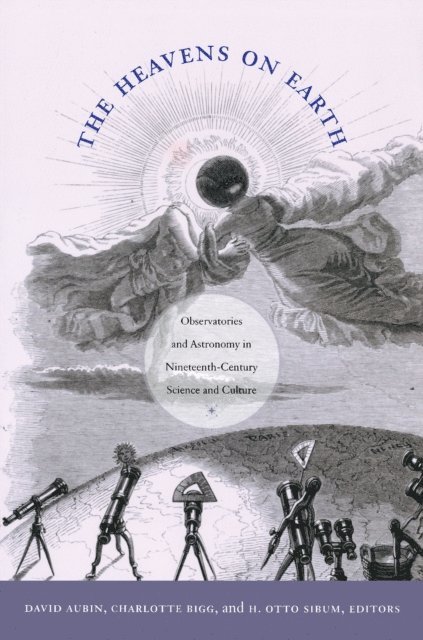
Heavens on Earth
Observatories and Astronomy in Nineteenth-Century Science and Culture
Häftad, Engelska, 2010
415 kr
Skickas inom 7-10 vardagar
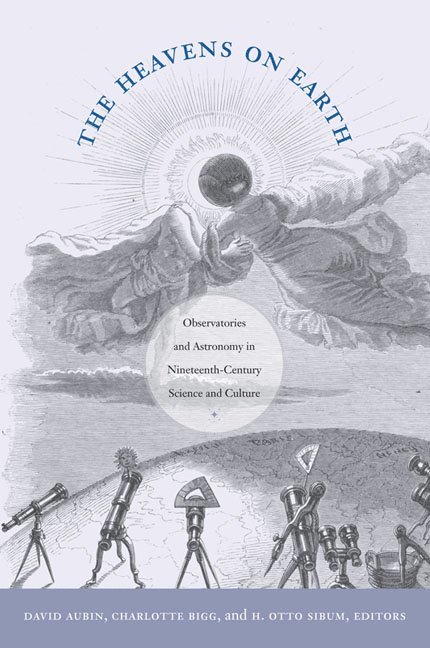
The Heavens on Earth explores the place of the observatory in nineteenth-century science and culture. Astronomy was a core pursuit for observatories, but usually not the only one. It belonged to a larger group of “observatory sciences” that also included geodesy, meteorology, geomagnetism, and even parts of physics and statistics. These pursuits coexisted in the nineteenth-century observatory; this collection surveys them as a coherent whole. Broadening the focus beyond the solitary astronomer at his telescope, it illuminates the observatory’s importance to technological, military, political, and colonial undertakings, as well as in advancing and popularizing the mathematical, physical, and cosmological sciences. The contributors examine “observatory techniques” developed and used not only in connection with observatories but also by instrument makers in their workshops, navy officers on ships, civil engineers in the field, and many others. These techniques included the calibration and coordination of precision instruments for making observations and taking measurements; methods of data acquisition and tabulation; and the production of maps, drawings, and photographs, as well as numerical, textual, and visual representations of the heavens and the earth. They also encompassed the social management of personnel within observatories, the coordination of international scientific collaborations, and interactions with dignitaries and the public. The state observatory occupied a particularly privileged place in the life of the city. With their imposing architecture and ancient traditions, state observatories served representative purposes for their patrons, whether as symbols of a monarch’s enlightened power, a nation’s industrial and scientific excellence, or republican progressive values. Focusing on observatory techniques in settings from Berlin, London, Paris, and Rome to Australia, Russia, Thailand, and the United States, The Heavens on Earth is a major contribution to the history of science.Contributors: David Aubin, Charlotte Bigg, Guy Boistel, Theresa Levitt, Massimo Mazzotti, Ole Molvig, Simon Schaffer, Martina Schiavon , H. Otto Sibum, Richard Staley, John Tresch, Simon Werrett, Sven Widmalm
437 kr
Kommande
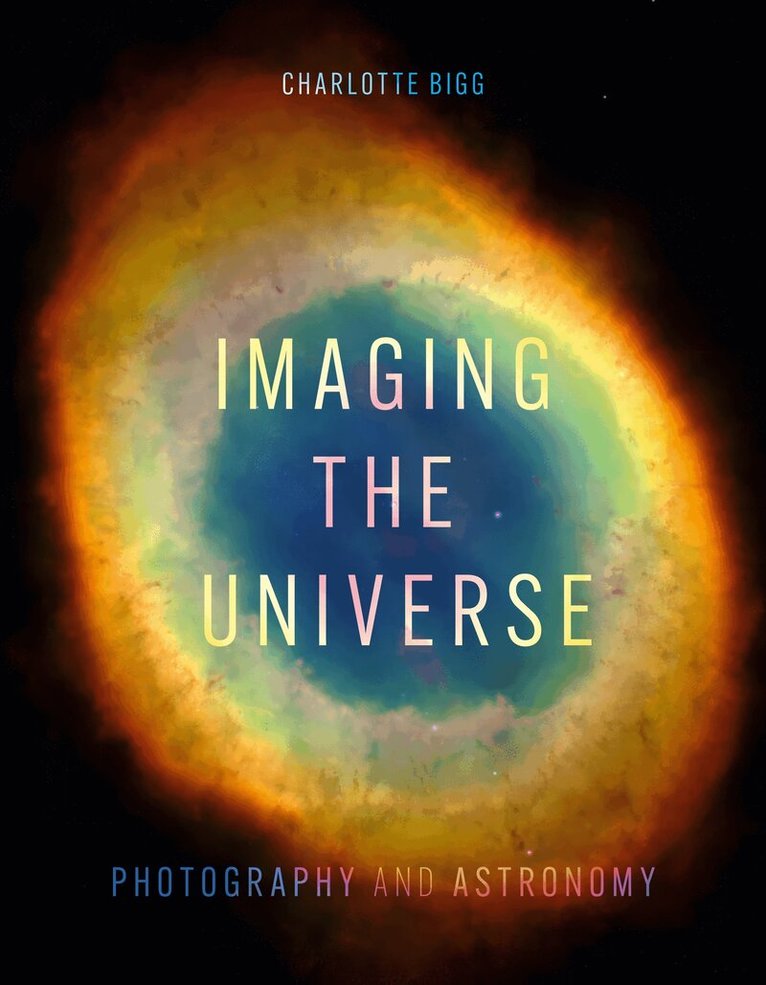
What does the universe look like? From daguerreotypes of the Moon to colourful vistas of nebulae from space telescopes, photography and astronomy have developed hand in hand, transforming the ways in which our skies have been observed, understood and viewed over the past two centuries. Charlotte Bigg reveals how astronomers, chemists, photographers, electronic experts and other often forgotten individuals from different walks of life came together to develop new methods to record the light of the Moon, the Sun and the stars, and to share their images with a broad audience. Featuring a wide variety of compelling images, Imaging the Universe explores the visual cultures of astrophotography and how they have shaped our visions of the cosmos.