Chris Hogg – Författare
Visar alla böcker från författaren Chris Hogg. Handla med fri frakt och snabb leverans.
5 produkter
5 produkter
178 kr
Skickas
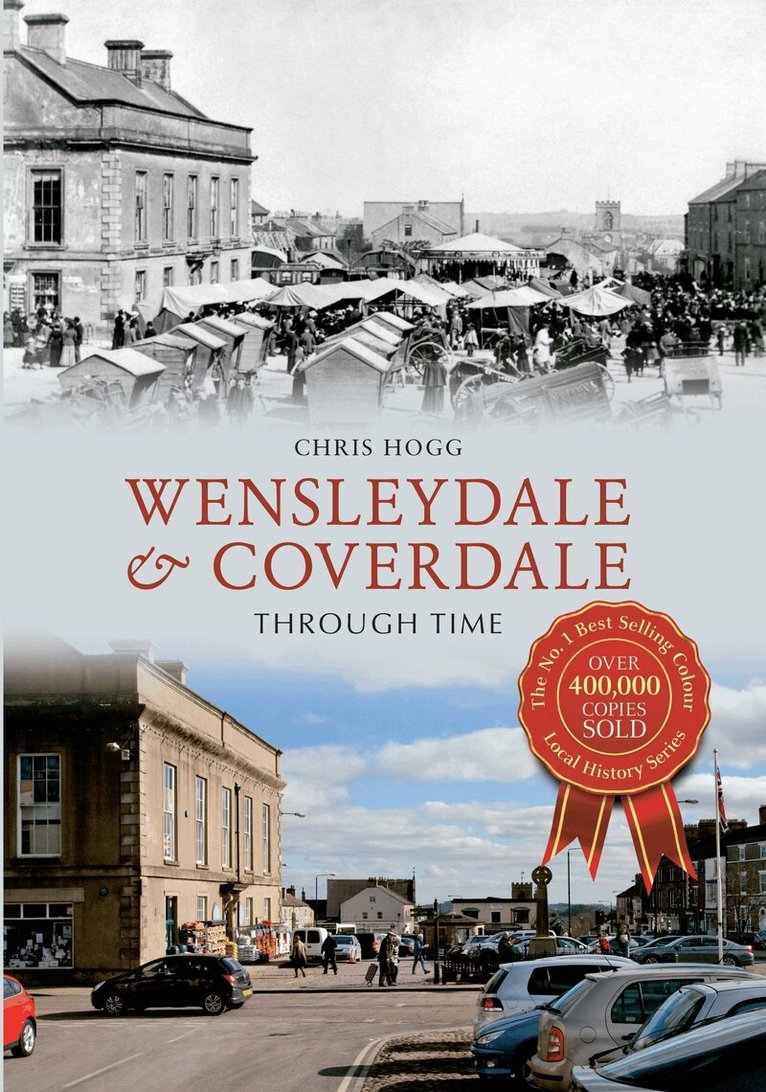
Wensleydale & Coverdale Through Time documents not only how the towns and villages of two related Yorkshire dales have developed and changed, but also gives the reader an insight into how the lives of the 'dalesfolk' have altered beyond all recognition. Wensleydale is the larger of the dales, while Coverdale is a secluded miniature of its 'parent' and was once passed by the main route from London to the North. Following the rivers Ure and Cover from the stark beauty of the high dales eastwards down through the hay meadows and pastures to their convergence beyond Ulshaw Bridge, the beauty of these dales is all too visible. Themes include farming, cheesemaking, market days, transport, industry, the Church, the mail, horse racing, schools, public houses, tourism, notable characters, three abbeys and Middleham Castle (the home of Richard III).

167 kr
Tillfälligt slut
The Glasgow, Cowal & Bute Route follows the development of the railways on the southern shores of the River Clyde, describing their influence on life in the towns and resorts of the river and Firth. The book also examines shipping, steamboats, ferries and tramways during a journey westwards from Glasgow via Paisley, Bishopton, Langbank, Port Glasgow, Greenock, Gourock and Inverkip to Wemyss Bay, the Cowal Peninsula and the Isle of Bute.The Clyde, once famous for its heavy industry and shipbuilding, was also the playground for thousands of Glaswegians who left the noise and grime of the city behind to venture ‘doon the watter’. Meanwhile, the wealthy moved out to the large houses in the beautiful and peaceful surroundings of the Firth. The river played a significant role in the Second World War, with troopships of GIs training on its shores.
168 kr
Tillfälligt slut
‘Railway Mania’ changed Victorian Scotland forever. Fortunes were made and lost as rival railway promoters transformed the landscape with stations, cuttings, tunnels and bridges. In fact Scotland had its own railway system well before a link was established with England. Scottish railways had a ‘flavour’, evident in its engineering and architecture, the more innovative of which attained ‘icon’ status, at a local, national and even international level.Over the years a number of railways and associated infrastructure proved to be unprofitable or redundant, leading to closure and demolition, principally in the 1960s when cuts recommended by the ‘Beeching Report’ triggered public protest.Today the railway industry is thriving. New investment has sanctioned the re-instatement of lines at Bathgate, Alloa and the Borders, upgrades at Glasgow Queen Street and Edinburgh’s Waverley and Haymarket stations, electrification of the Cumbernauld and Coatbridge lines and construction of the controversial Edinburgh tramway, all signal an ongoing commitment to rail travel.Scottish Railway Icons: Central Belt to the Borders documents today’s railway and that of an earlier age, some of which has been repurposed abandoned or demolished, but primarily it’s a celebration of the regions railway its people, history and legacy.
168 kr
Kommande
A look at The Highlands' lost and in some cases still extant railway structures and feats of engineering
168 kr
Kommande
A look at Eastern Scotland's lost and in some cases still extant railway structures and feats of engineering