Christine Hayes - Böcker
Visar alla böcker från författaren Christine Hayes. Handla med fri frakt och snabb leverans.
11 produkter
11 produkter
212 kr
Skickas inom 7-10 vardagar
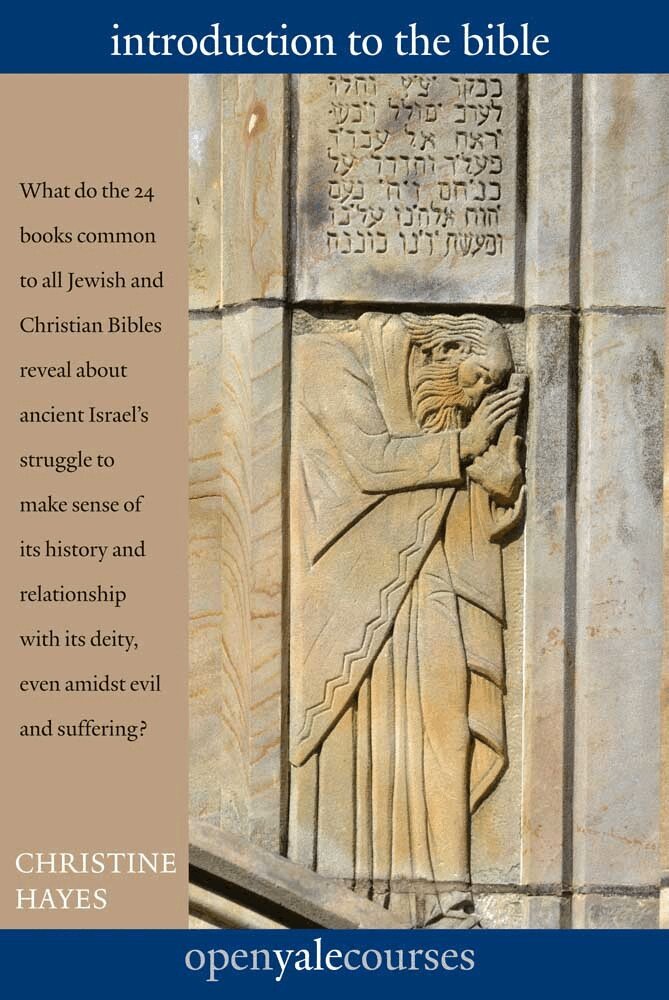
This book examines the small library of 24 books common to all Jewish and Christian Bibles—books that preserve the efforts of diverse writers over a span of many centuries to make sense of their personal experiences and those of their people, the ancient Israelites. Professor Christine Hayes guides her readers through the complexities of this polyphonous literature that has served as a foundational pillar of Western civilization, underscoring the variety and even disparities among the voices that speak in the biblical texts.Biblical authors wrote in many contexts and responded to a sweeping range of crises and questions concerning issues that were political, economic, historical, cultural, philosophical, religious, and moral. In probing chapters devoted to each of the 24 books of the Hebrew Bible, or Old Testament, Hayes reconstructs the meanings and messages of each book and encourages a deeper appreciation of the historical and cultural settings of ancient biblical literature.
415 kr
Kommande
368 kr
Tillfälligt slut
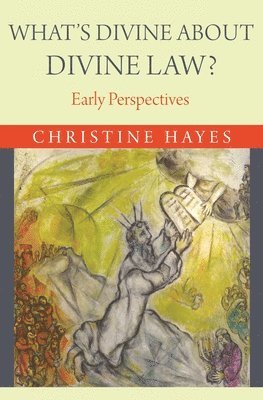
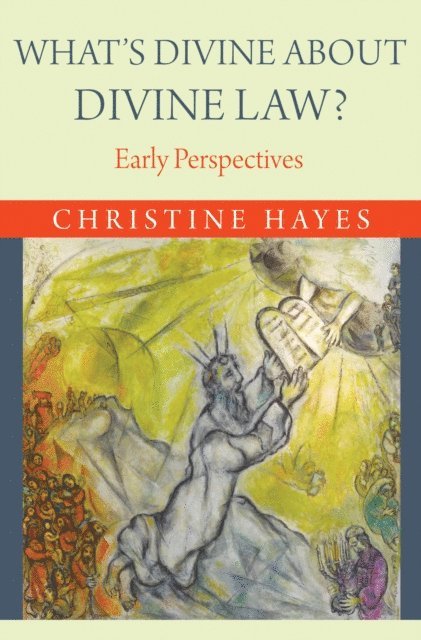
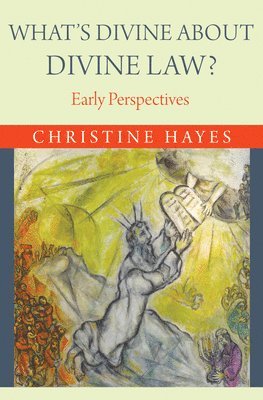
In the thousand years before the rise of Islam, two radically diverse conceptions of what it means to say that a law is divine confronted one another with a force that reverberates to the present. What's Divine about Divine Law? untangles the classical and biblical roots of the Western idea of divine law and shows how early adherents to biblical tradition--Hellenistic Jewish writers such as Philo, the community at Qumran, Paul, and the talmudic rabbis--struggled to make sense of this conflicting legacy. Christine Hayes shows that for the ancient Greeks, divine law was divine by virtue of its inherent qualities of intrinsic rationality, truth, universality, and immutability, while for the biblical authors, divine law was divine because it was grounded in revelation with no presumption of rationality, conformity to truth, universality, or immutability. Hayes describes the collision of these opposing conceptions in the Hellenistic period, and details competing attempts to resolve the resulting cognitive dissonance.She shows how Second Temple and Hellenistic Jewish writers, from the author of 1 Enoch to Philo of Alexandria, were engaged in a common project of bridging the gulf between classical and biblical notions of divine law, while Paul, in his letters to the early Christian church, sought to widen it. Hayes then delves into the literature of classical rabbinic Judaism to reveal how the talmudic rabbis took a third and scandalous path, insisting on a construction of divine law intentionally at odds with the Greco-Roman and Pauline conceptions that would come to dominate the Christianized West. A stunning achievement in intellectual history, What's Divine about Divine Law? sheds critical light on an ancient debate that would shape foundational Western thought, and that continues to inform contemporary views about the nature and purpose of law and the nature and authority of Scripture.
276 kr
Skickas inom 7-10 vardagar
In the thousand years before the rise of Islam, two radically diverse conceptions of what it means to say that a law is divine confronted one another with a force that reverberates to the present. What's Divine about Divine Law? untangles the classical and biblical roots of the Western idea of divine law and shows how early adherents to biblical tradition--Hellenistic Jewish writers such as Philo, the community at Qumran, Paul, and the talmudic rabbis--struggled to make sense of this conflicting legacy. Christine Hayes shows that for the ancient Greeks, divine law was divine by virtue of its inherent qualities of intrinsic rationality, truth, universality, and immutability, while for the biblical authors, divine law was divine because it was grounded in revelation with no presumption of rationality, conformity to truth, universality, or immutability. Hayes describes the collision of these opposing conceptions in the Hellenistic period, and details competing attempts to resolve the resulting cognitive dissonance.She shows how Second Temple and Hellenistic Jewish writers, from the author of 1 Enoch to Philo of Alexandria, were engaged in a common project of bridging the gulf between classical and biblical notions of divine law, while Paul, in his letters to the early Christian church, sought to widen it. Hayes then delves into the literature of classical rabbinic Judaism to reveal how the talmudic rabbis took a third and scandalous path, insisting on a construction of divine law intentionally at odds with the Greco-Roman and Pauline conceptions that would come to dominate the Christianized West. A stunning achievement in intellectual history, What's Divine about Divine Law? sheds critical light on an ancient debate that would shape foundational Western thought, and that continues to inform contemporary views about the nature and purpose of law and the nature and authority of Scripture.
634 kr
Skickas inom 5-8 vardagar
1 021 kr
Skickas inom 7-10 vardagar
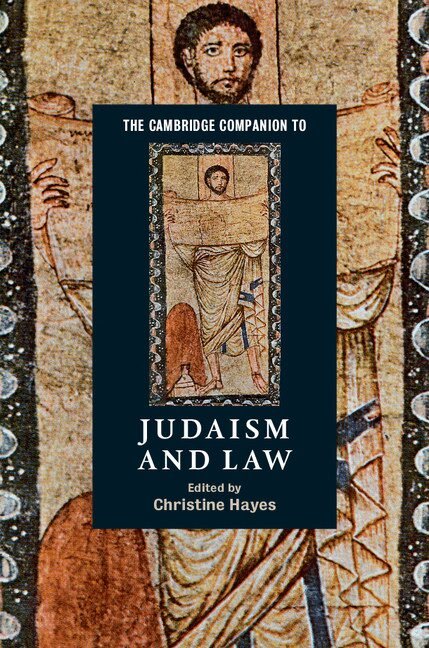
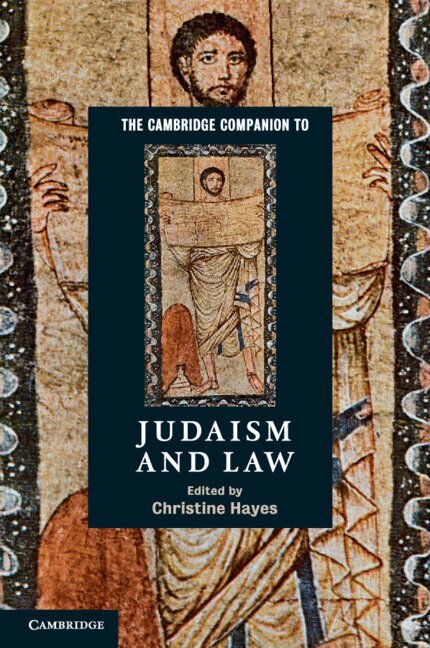
The Cambridge Companion to Judaism and Law explores the Jewish conception of law as an essential component of the divine-human relationship from biblical to modern times, as well as resistance to this conceptualization. It also traces the political, social, intellectual, and cultural circumstances that spawned competing Jewish approaches to its own 'divine' law and the 'non-divine' law of others, including that of the modern, secular state of Israel. Part I focuses on the emergence and development of law as an essential element of religious expression in biblical Israel and classical Judaism through the medieval period. Part II considers the ramifications for the law arising from political emancipation and the invention of Judaism as a 'religion' in the modern period. Finally, Part III traces the historical and ideological processes leading to the current configuration of religion and state in modern Israel, analysing specific conflicts between religious law and state law.
410 kr
Skickas inom 7-10 vardagar
The Cambridge Companion to Judaism and Law explores the Jewish conception of law as an essential component of the divine-human relationship from biblical to modern times, as well as resistance to this conceptualization. It also traces the political, social, intellectual, and cultural circumstances that spawned competing Jewish approaches to its own 'divine' law and the 'non-divine' law of others, including that of the modern, secular state of Israel. Part I focuses on the emergence and development of law as an essential element of religious expression in biblical Israel and classical Judaism through the medieval period. Part II considers the ramifications for the law arising from political emancipation and the invention of Judaism as a 'religion' in the modern period. Finally, Part III traces the historical and ideological processes leading to the current configuration of religion and state in modern Israel, analysing specific conflicts between religious law and state law.
5 590 kr
Skickas inom 10-15 vardagar
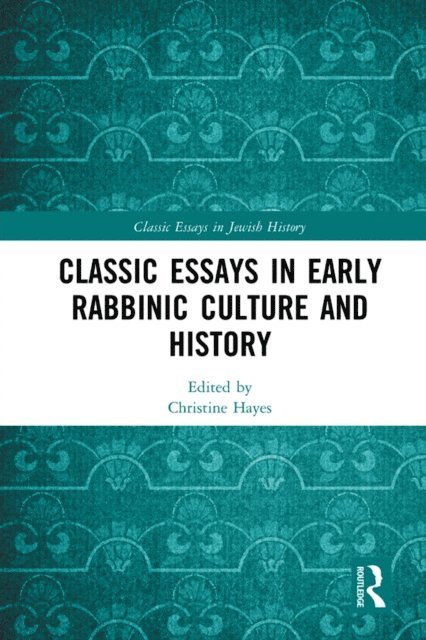
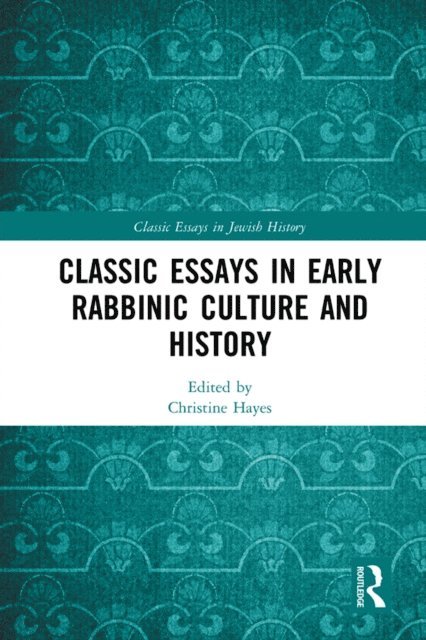
This volume brings together a set of classic essays on early rabbinic history and culture, seven of which have been translated into English especially for this publication. The studies are presented in three sections according to theme: (1) sources, methods and meaning; (2) tradition and self-invention; and (3) rabbinic contexts. The first section contains essays that made a pioneering contribution to the identification of sources for the historical and cultural study of the rabbinic period, articulated methodologies for the study of rabbinic history and culture, or addressed historical topics that continue to engage scholars to the present day. The second section contains pioneering contributions to our understanding of the culture of the sages whose sources we deploy for the purposes of historical reconstruction, contributions which grappled with the riddle and rhythm of the rabbis’ emergence to authority, or pierced the veil of their self-presentation. The essays in the third section made contributions of fundamental importance to our understanding of the broader cultural contexts of rabbinic sources, identified patterns of rabbinic participation in prevailing cultural systems, or sought to define with greater precision the social location of the rabbinic class within Jewish society of late antiquity. The volume is introduced by a new essay from the editor, summarizing the field and contextualizing the reprinted papers.About the seriesClassic Essays in Jewish History(Series Editor: Kenneth Stow)The 6000 year history of the Jewish peoples, their faith and their culture is a subject of enormous importance, not only to the rapidly growing body of students of Jewish studies itself, but also to those working in the fields of Byzantine, eastern Christian, Islamic, Mediterranean and European history. Classic Essays in Jewish History is a library reference collection that makes available the most important articles and research papers on the development of Jewish communities across Europe and the Middle East. By reprinting together in chronologically-themed volumes material from a widespread range of sources, many difficult to access, especially those drawn from sources that may never be digitized, this series constitutes a major new resource for libraries and scholars. The articles are selected not only for their current role in breaking new ground, but also for their place as seminal contributions to the formation of the field, and their utility in providing access to the subject for students and specialists in other fields. A number of articles not previously published in English will be specially translated for this series. Classic Essays in Jewish History provides comprehensive coverage of its subject. Each volume in the series focuses on a particular time-period and is edited by an authority on that field. The collection is planned to consist of 10 thematically ordered volumes, each containing a specially-written introduction to the subject, a bibliographical guide, and an index. All volumes are hardcover and printed on acid-free paper, to suit library needs. Subjects covered include: The Biblical Period The Second Temple Period The Development of Jewish Culture in Spain Jewish Communities in Medieval Central Europe Jews in Medieval England and FranceJews in Renaissance Europe Jews in Early Modern Europe Jews under Medieval Islam Jews in the Ottoman Empire and North Africa
362 kr
Skickas inom 3-6 vardagar
362 kr
Skickas inom 3-6 vardagar
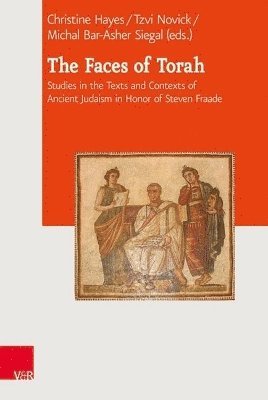
Faces of Torah
Studies in the Texts and Contexts of Ancient Judaism in Honor of Steven Fraade
Inbunden, Engelska, 2021
2 229 kr
Skickas inom 11-20 vardagar
This volume is a festschrift in honor of Steven Fraade, the Mark Taper Professor of the History of Judaism at Yale University. The contributions to the volume, written by colleagues and former students of Professor Fraade, reflect many of his scholarly interests. The scholarly credentials of the contributors are exceedingly high. The volume is divided into three sections, one on Second Temple literature and its afterlife, a second on rabbinic literature and rabbinic history, and a third on prayer and the ancient synagogue. Contributors are Alan Applebaum, Joshua Burns, Elizabeth Shanks Alexander, Chaya Halberstam, John J. Collins, Marc Bregman, Aharon Shemesh, Ishay Rosen-Zvi, Vered Noam, Robert Brody, Albert Baumgarten, Marc Hirshman, Moshe Bar-Asher, Aaron Amit, Yose Yahalom, Lee Levine, Jan Joosten, Daniel Boyarin, Charlotte Hempel, David Stern, Beth Berkowitz, Azzan Yadin, Joshua Levinson, Elitzur Bar-Asher Siegal, Michal Bar-Asher Siegal, Tzvi Novick, Devora Diamant, Richard Kalmin, Carol Bakhos, Judith Hauptman, Jeff Rubenstein, Martha Himmelfarb, Stuart Miller, Esther Chazon, James Kugel, Chaim Milikowsky, Maren Niehoff, Peter Schaefer, and Adiel Schremer.