Christoph Baumgartner – författare
Visar alla böcker från författaren Christoph Baumgartner. Handla med fri frakt och snabb leverans.
4 produkter
4 produkter
1 977 kr
Skickas inom 10-15 vardagar
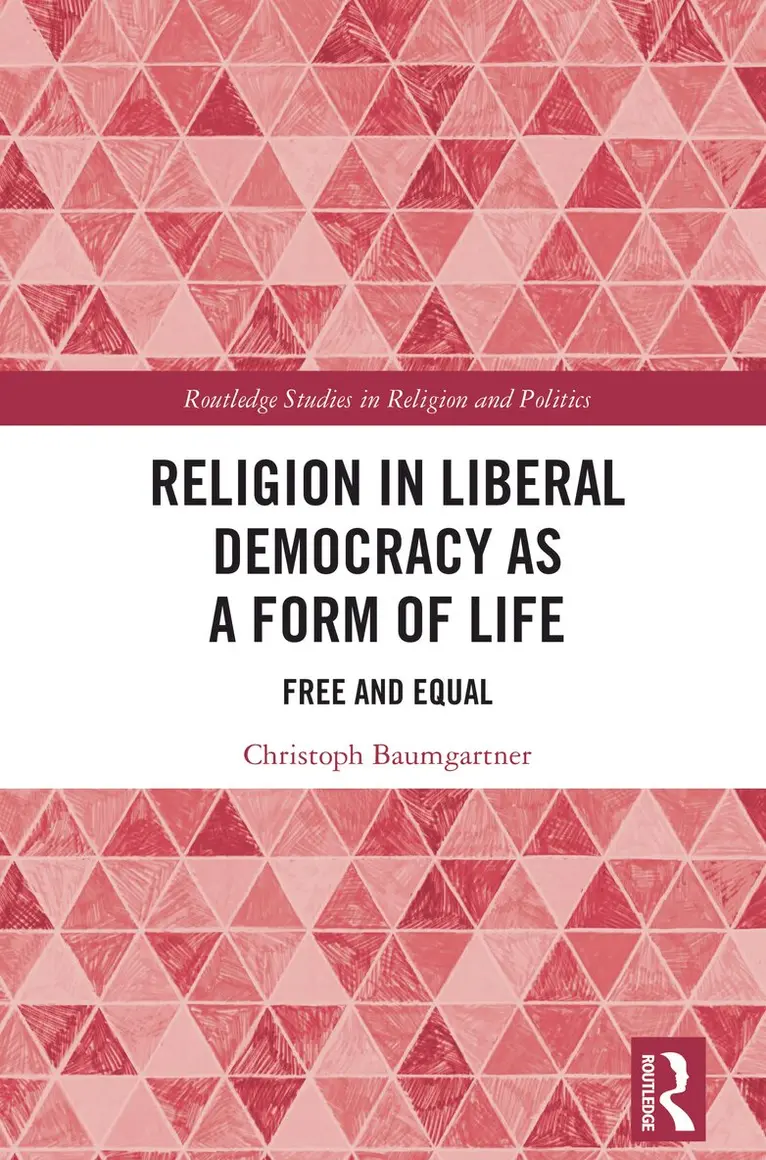
Religion in Liberal Democracy as a Form of Life advances a theory to deal with the challenges connected to the liberal democratic ideal that all people are free to codetermine the future of their society and equally entitled to their religion and beliefs, given the historical bias towards Christianity in politics and culture within many European societies.Religious diversity and social and political participation are in fact fiercely contested issues. Critical scholars from philosophy and cultural theory contest that liberal political theories of freedom of religion can adequately deal with issues connected to an increasingly diversified and secularized religious field in historically Christian societies. Consequently, they claim that politics based on such theories cannot deliver on the promise to ensure conditions that allow all members of society equal religious freedom and political participation. By outlining historical developments, and by closely examining case studies of recent controversies about religious diversity in Germany and the Netherlands, this book identifies shortcomings of the currently predominant liberal account of freedom of religion or belief. Based on this analysis, the author proposes a more complex theory of liberal democracy as a form of life, with religion and religious freedom as components of it. This takes into account that informal norms, social structures, and predominant notions of belonging can function as powerful obstacles to freedom and equality, even if formal legal and political institutions prohibit discrimination based on religion. Construing liberal democracy as a “form of life”—that is, as a set of social practices, attitudes, and their institutional manifestations and material expressions—shifts the focus of critical analysis from the law to informal structures and components. This provides an understanding of the dynamics of (culturalized) religion in society, which has often been missing in political philosophical theories. The theory proposed in this book provides normative criteria for building liberal democracies that are tolerant with respect to religious differences and solidaric in terms of ensuring conditions that allow all members of society to codetermine, as equals, the future of society, irrespective of their religion or beliefs.This book will appeal to scholars of political theory, social and political philosophy, religious studies, sociology, and anthropology.
675 kr
Kommande
Religion in Liberal Democracy as a Form of Life advances a theory to deal with the challenges connected to the liberal democratic ideal that all people are free to codetermine the future of their society and equally entitled to their religion and beliefs, given the historical bias towards Christianity in politics and culture within many European societies.Religious diversity and social and political participation are in fact fiercely contested issues. Critical scholars from philosophy and cultural theory contest that liberal political theories of freedom of religion can adequately deal with issues connected to an increasingly diversified and secularized religious field in historically Christian societies. Consequently, they claim that politics based on such theories cannot deliver on the promise to ensure conditions that allow all members of society equal religious freedom and political participation. By outlining historical developments, and by closely examining case studies of recent controversies about religious diversity in Germany and the Netherlands, this book identifies shortcomings of the currently predominant liberal account of freedom of religion or belief. Based on this analysis, the author proposes a more complex theory of liberal democracy as a form of life, with religion and religious freedom as components of it. This takes into account that informal norms, social structures, and predominant notions of belonging can function as powerful obstacles to freedom and equality, even if formal legal and political institutions prohibit discrimination based on religion. Construing liberal democracy as a “form of life”—that is, as a set of social practices, attitudes, and their institutional manifestations and material expressions—shifts the focus of critical analysis from the law to informal structures and components. This provides an understanding of the dynamics of (culturalized) religion in society, which has often been missing in political philosophical theories. The theory proposed in this book provides normative criteria for building liberal democracies that are tolerant with respect to religious differences and solidaric in terms of ensuring conditions that allow all members of society to codetermine, as equals, the future of society, irrespective of their religion or beliefs.This book will appeal to scholars of political theory, social and political philosophy, religious studies, sociology, and anthropology.
Clinical Electrophysiology of the Somatosensory Cortex
A Combined Study Using Electrocorticography, Scalp-EEG, and Magnetoencephalography
Häftad, Engelska, 1993
550 kr
Skickas inom 10-15 vardagar
The functional anatomy of human somatosensory cortex is of both scientific and clinical interest. Scientifically, it provides insights in information processing in the human brain. Clinically, it helps to avoid neurological deficits by sparing essential brain regions during neurosurgical procedures adjacent to central fissure. In the present study the functional organization of the human somatosensory cortex was investigated with electrophysiological techniques using a combined approach of cortical stimulations and somatosensory evoked responses on electrocorticography, scalp-EEG, and magnetoencephalography. The spatiotemporal structure of the evoked response was studiedwith biophysical modeling techniqueswhich allowed identification of the three-dimensional intracerebral location, time activity, and interaction of the neuronal sources activated following peripheral somatosensory stimulation. Furthermore, the somatotopic organization ofhand and lip somatosensory cortex was investigated. The relative value of invasive (cortical stimulations and electrocorticography) and non-invasive (scalp-EEGand magnetoencephalography) was assessed.The combined use ofscalp-EEG and magnetoencephalography was useful to increase non-invasive localization accuracy. I want to thank several people who significantly contributed in completion of the present work. Univ. -Prof Dr. Luder Deecke, Chairman of the Neurological University Clinic, Vienna, Austria, supported me throughout my career at the Neurological University Clinic in Vienna since 1985. Dr. William W Sutherling, Associate Professor at the University of California, Los Angeles, who was my advisor during my stay from 1987-1989 at the Department ofNeurology, University of California, Los Angeles where most of the present work was done.
1 226 kr
Skickas inom 10-15 vardagar
Die Epilepsien zählen zu den häufigsten schwerwiegenden neurologischen Erkrankungen, deren Klinik, Diagnostik und Behandlung in den letzten Jahren durch die bessere Charakterisierung verschiedener Epilepsiesyndrome, die Verfeinerung von diagnostischen Verfahren und die Einführung neuer Therapieoptionen einen beträchtlichen Wandel erfahren haben. Im vorliegenden Buch werden aktuelle Aspekte der Epidemiologie, der Prognose und des Verlaufs, der Ursachen (inklusive Genetik), der Diagnostik und Differentialdiagnostik, der Klinik (Anfallssemiologie und relevante Epilepsiesyndrome), der Therapie (medikamentöse Therapie inklusive neue Antiepileptika, Epilepsiechirurgie, alternative Therapien inklusive ketogene Diät) und der psychosozialen Aspekte der Epilepsien dargestellt. Besonderer Wert wurde dabei auf eine praxisorientierte Darstellung gelegt. Dieses Buch bietet eine Entscheidungsgrundlage im klinischen Alltag und hilft, die diagnostischen und therapeutischen Maßnahmen auf eine rationale, dem aktuellsten Wissensstand entsprechende Basis zu stellen.