Christopher Belshaw - Böcker
Visar alla böcker från författaren Christopher Belshaw. Handla med fri frakt och snabb leverans.
11 produkter
11 produkter
789 kr
Tillfälligt slut
10 Good Questions about Life and Death makes us think again about some of the most important issues we ever have to face. * Addresses the fundamental questions that many of us ask about life and death. * Written in an engaging and straightforward style, ideal for those with no formal background in philosophy. * Focuses on commonly pondered issues, such as: Is life sacred? Is it bad to die? Is there life after death? Does life have meaning? And which life is best? * Encourages readers to think about and respond to the human condition. * Features case studies, thought-experiments, and references to literature, film, music, religion and myth.
2 103 kr
Skickas inom 10-15 vardagar
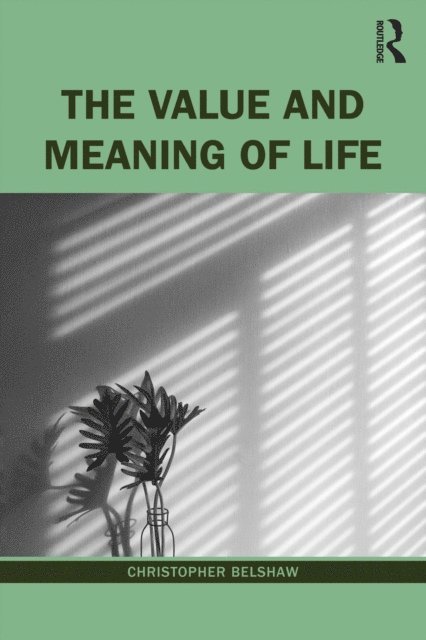
In this book Christopher Belshaw draws on earlier work concerning death, identity, animals, immortality, and extinction, and builds a large-scale argument dealing with questions of both value and meaning. Rejecting suggestions that life is sacred or intrinsically valuable, he argues instead that its value varies, and varies considerably, both within and between different kinds of things. So in some cases we might have reason to improve or save a life, while in others that reason will be lacking.What about starting lives? The book’s central section takes this as its focus, and asks whether we ever have reason to start lives, just for the sake of the one whose life it is. Not only is it denied that there is any such reason, but some sympathy is afforded to the anti-natalist contention that there is always reason against.The final chapters deal with meaning. There is support here for the sober and familiar view that meaning derives from an enthusiasm for, and some success with, the pursuit of worthwhile projects. Now suppose we are immortal. Or suppose, in contrast, that we face imminent extinction. Would either of these threaten meaning? The claim is made that the force of such threats is often exaggerated.The Value and Meaning of Life is essential reading for students and researchers in philosophy, ethics, and religion, and will be of interest to all those concerned with how to live, and how to think about the lives of others.
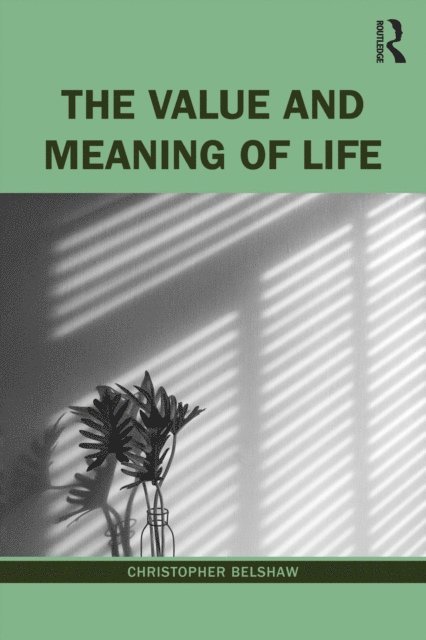
580 kr
Skickas inom 10-15 vardagar
In this book Christopher Belshaw draws on earlier work concerning death, identity, animals, immortality, and extinction, and builds a large-scale argument dealing with questions of both value and meaning. Rejecting suggestions that life is sacred or intrinsically valuable, he argues instead that its value varies, and varies considerably, both within and between different kinds of things. So in some cases we might have reason to improve or save a life, while in others that reason will be lacking.What about starting lives? The book’s central section takes this as its focus, and asks whether we ever have reason to start lives, just for the sake of the one whose life it is. Not only is it denied that there is any such reason, but some sympathy is afforded to the anti-natalist contention that there is always reason against.The final chapters deal with meaning. There is support here for the sober and familiar view that meaning derives from an enthusiasm for, and some success with, the pursuit of worthwhile projects. Now suppose we are immortal. Or suppose, in contrast, that we face imminent extinction. Would either of these threaten meaning? The claim is made that the force of such threats is often exaggerated.The Value and Meaning of Life is essential reading for students and researchers in philosophy, ethics, and religion, and will be of interest to all those concerned with how to live, and how to think about the lives of others.
1 086 kr
Skickas inom 7-10 vardagar
10 Good Questions about Life and Death makes us think again about some of the most important issues we ever have to face. Addresses the fundamental questions that many of us ask about life and death.Written in an engaging and straightforward style, ideal for those with no formal background in philosophy.Focuses on commonly pondered issues, such as: Is life sacred? Is it bad to die? Is there life after death? Does life have meaning? And which life is best?Encourages readers to think about and respond to the human condition.Features case studies, thought-experiments, and references to literature, film, music, religion and myth.
362 kr
Skickas inom 7-10 vardagar
10 Good Questions about Life and Death makes us think again about some of the most important issues we ever have to face. Addresses the fundamental questions that many of us ask about life and death.Written in an engaging and straightforward style, ideal for those with no formal background in philosophy.Focuses on commonly pondered issues, such as: Is life sacred? Is it bad to die? Is there life after death? Does life have meaning? And which life is best?Encourages readers to think about and respond to the human condition.Features case studies, thought-experiments, and references to literature, film, music, religion and myth.
880 kr
Tillfälligt slut
296 kr
Skickas inom 7-10 vardagar
Featuring essays from leading philosophical scholars, 12 Modern Philosophers explores the works, origins, and influences of twelve of the most important late 20th Century philosophers working in the analytic tradition. Draws on essays from well-known scholars, including Thomas Baldwin, Catherine Wilson, Adrian Moore and Lori GruenLocates the authors and their oeuvre within the context of the discipline as a wholeConsiders how contemporary philosophy both draws from, and contributes to, the broader intellectual and cultural milieu
2 088 kr
Skickas inom 10-15 vardagar
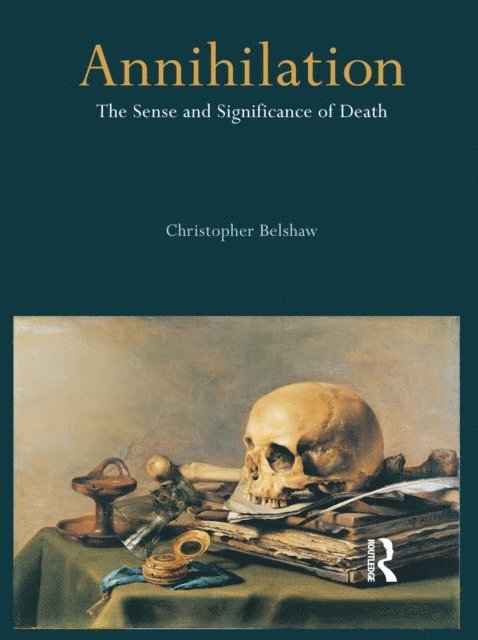
The ever-present possibility of death forces upon us the question of life's meaning and for this reason death has been a central concern of philosophers throughout history. From Socrates to Heidegger, philosophers have grappled with the nature and significance of death. In "Annihilation", Christopher Belshaw explores two central questions at the heart of philosophy's engagement with death: what is death; and is it bad that we die? Belshaw begins by distinguishing between literal and metaphorical uses of the term and offers a unified and biological account of death, denying that death brings about non-existence. How our death relates to the death of the brain is explored in detail. Belshaw considers the common-sense view that death is often bad for us by examining the circumstances that might make it bad as well as the grounds for thinking that one death can be worse than another. In addition, Belshaw explores whether we can be harmed after we die and before we were born. The final chapters explore whether we should prevent more deaths and whether, via cryonics, brain transplants, data storage, we might cheat death. Throughout Belshaw shows how questions of personhood and life's value are bound up with our views on the sense and significance of death. "Annihilation's" in-depth analysis and insightful exposition will be welcomed not only by philosophers working on the metaphysics of death but also by students and scholars alike looking for a foundation for discussions of the ethics of abortion, euthanasia, life-support and suicide.
576 kr
Skickas inom 10-15 vardagar
The ever-present possibility of death forces upon us the question of life's meaning and for this reason death has been a central concern of philosophers throughout history. From Socrates to Heidegger, philosophers have grappled with the nature and significance of death. In "Annihilation", Christopher Belshaw explores two central questions at the heart of philosophy's engagement with death: what is death; and is it bad that we die? Belshaw begins by distinguishing between literal and metaphorical uses of the term and offers a unified and biological account of death, denying that death brings about non-existence. How our death relates to the death of the brain is explored in detail. Belshaw considers the common-sense view that death is often bad for us by examining the circumstances that might make it bad as well as the grounds for thinking that one death can be worse than another. In addition, Belshaw explores whether we can be harmed after we die and before we were born. The final chapters explore whether we should prevent more deaths and whether, via cryonics, brain transplants, data storage, we might cheat death. Throughout Belshaw shows how questions of personhood and life's value are bound up with our views on the sense and significance of death. "Annihilation's" in-depth analysis and insightful exposition will be welcomed not only by philosophers working on the metaphysics of death but also by students and scholars alike looking for a foundation for discussions of the ethics of abortion, euthanasia, life-support and suicide.
1 502 kr
Tillfälligt slut
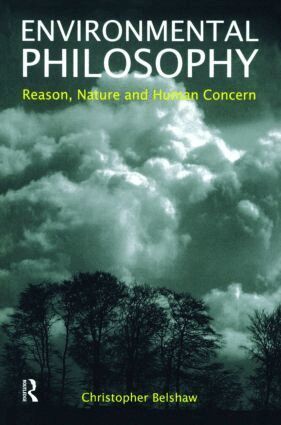
This introduction to the philosophy of the environment examines current debates on how we should think about the natural world and our place within it. The subject is examined from a determinedly analytic philosophical perspective, focusing on questions of value, but taking in attendant issues in epistemology and metaphysics as well. The book begins by considering the nature, extent and origin of the environmental problems with which we need to be concerned. Chapters go on to consider familiar strategies for dealing with environmental problems, and then consider what sort of things are of direct moral concern, examining in turn at animals, non-sentient life-forms, natural but non-living things and deep ecology. The final part of the book investigates notions of value, natural beauty and the place of human beings in the scheme of things.
594 kr
Skickas inom 10-15 vardagar
This introduction to the philosophy of the environment examines current debates on how we should think about the natural world and our place within it. The subject is examined from a determinedly analytic philosophical perspective, focusing on questions of value, but taking in attendant issues in epistemology and metaphysics as well. The book begins by considering the nature, extent and origin of the environmental problems with which we need to be concerned. Chapters go on to consider familiar strategies for dealing with environmental problems, and then consider what sort of things are of direct moral concern, examining in turn at animals, non-sentient life-forms, natural but non-living things and deep ecology. The final part of the book investigates notions of value, natural beauty and the place of human beings in the scheme of things.