Gary Kemp - Böcker
Visar alla böcker från författaren Gary Kemp. Handla med fri frakt och snabb leverans.
20 produkter
20 produkter
134 kr
Skickas
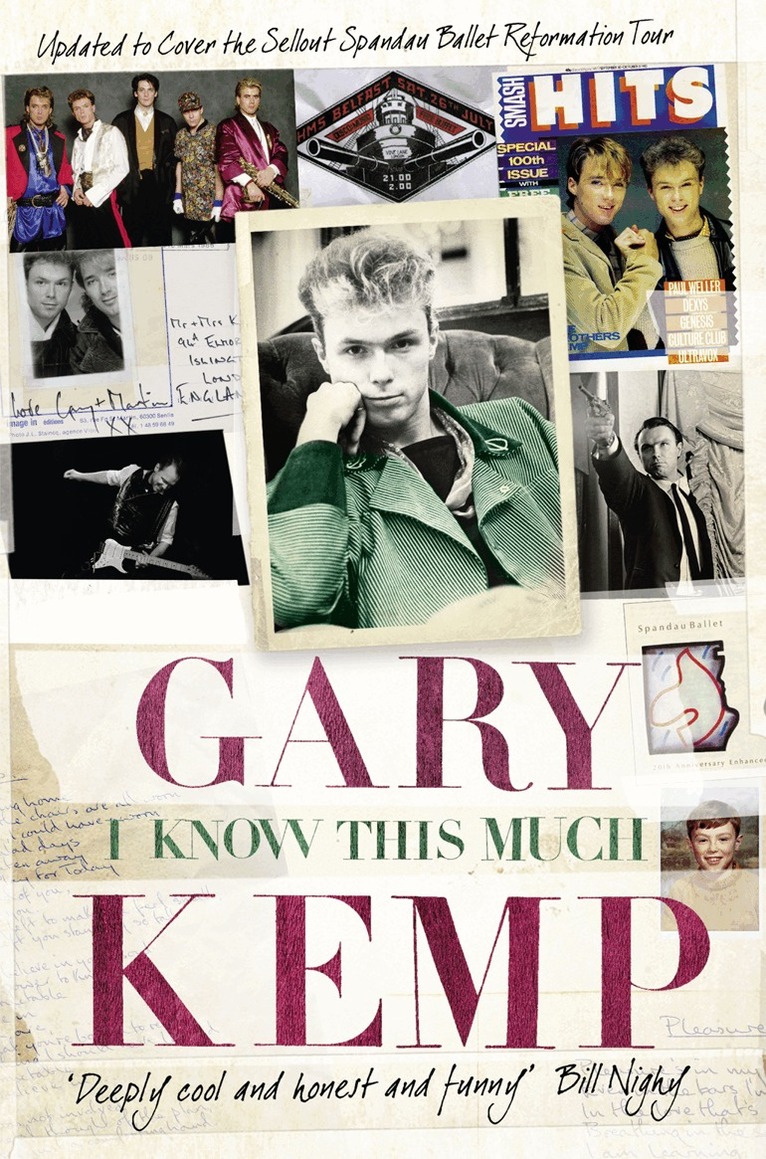
‘I Know This Much’ – by Gary Kemp, Spandau Ballet’s prime mover – is simply the freshest, most exciting and best-written memoir to arrive for years.Gary’s story begins in North London, where the Kemp family rented a home with no bathrooms and chickens in the yard. After a couple of failed attempts to kill his brother Martin, his parents gave him a guitar for Christmas.From schoolyard battles between the Bowie Boys and the Prog Rockers to Mrs Kemp’s firm insistence on net curtains, and from acting for the Children’s Film Foundation to manning a fruit and veg stall on Saturdays, Gary brilliantly evokes an upbringing full of love, creativity and optimism.As the Thatcher years begin, Gary’s account of the outrageous London club scene centred around the Blitz and Billy’s is just sizzling. Out of this glamorous mayhem of kilt-wearing mascara’d peacocks would emerge Spandau Ballet – the band that would define the era, and hold high the victorious standard of the New Romantics.Gary’s thrilling journey with Spandau Ballet would see them record worldwide hits such as ‘True’, ‘Gold’ and ‘Through the Barricades’, play the biggest stadiums in the world and take to the stage in togas when their luggage gets lost in flight. Stallions, supermodels and dwarves would be hired for video shoots, and through it all, Gary records the wonderful friendships, and the slowly-building tensions, that would eventually see five old friends facing each other in court.‘I Know This Much’ tells the story of Spandau Ballet, but it’s far more than a book about being in a band. Whether it’s meeting Ronnie Kray before filming ‘The Krays’, sketching out the fashions and subcultures of the day, or hanging out with Princess Diana, this book offers a story on every page. And all the more so because it’s all written – brilliantly – by Gary himself.
938 kr
Skickas inom 5-8 vardagar
Gary Kemp presents a penetrating investigation of key issues in the philosophy of language, by means of a comparative study of two great figures of late twentieth-century philosophy. So far as language and meaning are concerned, Willard Van Orman Quine and Donald Davidson are usually regarded as birds of a feather. The two disagreed in print on various matters over the years, but fundamentally they seem to be in agreement; most strikingly, Davidson's thought experiment of Radical Interpretation looks to be a more sophisticated, technically polished version of Quinean Radical Translation. Yet Quine's most basic and general philosophical commitment is to his methodological naturalism, which is ultimately incompatible with Davidson's main commitments. In particular, it is impossible to endorse, from Quine's perspective, the roles played by the concepts of truth and reference in Davidson's philosophy of language: Davidson's employment of the concept of truth is from Quine's point of view needlessly adventurous, and his use of the concept of reference cannot be divorced from unscientific 'intuition'. From Davidson's point of view, Quine's position looks needlessly scientistic, and seems blind to the genuine problems of language and meaning. Gary Kemp offers a powerful argument for Quine's position, and in favour of methodological naturalism and its corollary, naturalized epistemology. It is possible to give a consistent and explanatory account of language and meaning without problematic uses of the concepts truth and reference, which in turn makes a strident naturalism much more plausible.
662 kr
Skickas inom 10-15 vardagar
Pictorial representation is one of the core questions in aesthetics and philosophy of art. What is a picture? How do pictures represent things? This collection of specially commissioned chapters examines the influential thesis that the core of pictorial representation is not resemblance but 'seeing-in', in particular as found in the work of Richard Wollheim.We can see a passing cloud as a rabbit, but we also see a rabbit in the clouds. 'Seeing-in' is an imaginative act of the kind employed by Leonardo’s pupils when he told them to see what they could - for example, battle scenes - in a wall of cracked plaster. This collection examines the idea of 'seeing-in' as it appears primarily in the work of Wollheim but also its origins in the work of Wittgenstein. An international roster of contributors examine topics such as the contrast between seeing-in and seeing-as; whether or in what sense Wollheim can be thought of as borrowing from Wittgenstein; the idea that all perception is conceptual or propositional; the metaphor of figure and ground and its relation to the notion of 'two-foldedness'; the importance in art of emotion and the imagination.Wollheim, Wittgenstein and Pictorial Representation: Seeing-as and Seeing-in is essential reading for students and scholars of aesthetics and philosophy of art, and also of interest to those in related subjects such as philosophy of mind and art theory.
811 kr
Tillfälligt slut
2 103 kr
Skickas inom 10-15 vardagar
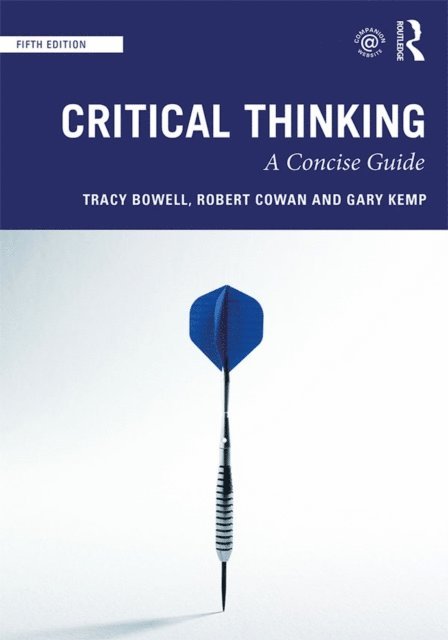
We are frequently confronted with arguments. Arguments are attempts to persuade us – to influence our beliefs and actions – by giving us reasons to believe this or that. Critical Thinking: A Concise Guide will equip students with the concepts and techniques used in the identification, analysis and assessment of arguments whatever the subject matter or context. Through precise and accessible discussion, this book provides the tools to become a successful critical thinker, one who can act and believe in accordance with good reasons, and who can articulate and make explicit those reasons.Key topics discussed include: Core concepts in argumentationHow language can serve to obscure or conceal the real content of arguments How to distinguish argumentation from rhetoricHow to avoid common confusions surrounding words such as ‘truth’, ‘knowledge’ and ‘opinion’How to identify and evaluate the most common types of argumentHow to distinguish good reasoning from bad in terms of deductive validity and induction.This fifth edition has been revised and extensively updated throughout, including a significantly expanded range of ‘complete examples’, the introduction of Venn diagrams and the discussion of fake news and related phenomena arising in the contemporary scene. The dynamic Routledge Critical Thinking companion website provides thoroughly updated resources for both instructors and students, including new examples and case studies, flashcards, sample questions, practice questions and answers, student activities and a testbank of questions for use in the classroom. Visit www.routledge.com/cw/bowell.
519 kr
We are frequently confronted with arguments. Arguments are attempts to persuade us – to influence our beliefs and actions – by giving us reasons to believe this or that. Critical Thinking: A Concise Guide will equip students with the concepts and techniques used in the identification, analysis and assessment of arguments whatever the subject matter or context. Through precise and accessible discussion, this book provides the tools to become a successful critical thinker, one who can act and believe in accordance with good reasons, and who can articulate and make explicit those reasons.Key topics discussed include: Core concepts in argumentationHow language can serve to obscure or conceal the real content of arguments How to distinguish argumentation from rhetoricHow to avoid common confusions surrounding words such as ‘truth’, ‘knowledge’ and ‘opinion’How to identify and evaluate the most common types of argumentHow to distinguish good reasoning from bad in terms of deductive validity and induction.This fifth edition has been revised and extensively updated throughout, including a significantly expanded range of ‘complete examples’, the introduction of Venn diagrams and the discussion of fake news and related phenomena arising in the contemporary scene. The dynamic Routledge Critical Thinking companion website provides thoroughly updated resources for both instructors and students, including new examples and case studies, flashcards, sample questions, practice questions and answers, student activities and a testbank of questions for use in the classroom. Visit www.routledge.com/cw/bowell.
1 476 kr
Skickas inom 10-15 vardagar
Continuum's "Guides for the Perplexed" are clear, concise and accessible introductions to thinkers, writers and subjects that students and readers can find especially challenging. Concentrating specifically on what it is that makes the subject difficult to fathom, these books explain and explore key themes and ideas, guiding the reader towards a thorough understanding of demanding material. Willard Van Orman Quine is one of the most influential analytic philosophers of the latter half of the twentieth century. His contribution to the study of logic, metaphysics, the theory of knowledge and the philosophy of mind and language can hardly be underestimated. No serious student of modern analytic philosophy can afford to ignore Quine's work, yet there is no doubt that it presents a considerable challenge. "Quine: A Guide for the Perplexed" is the ideal book for anyone who needs to meet that challenge. The book offers clear explication and analysis of Quine's writings and ideas in all those areas of philosophy to which he contributed. Quine's work is set in its intellectual context, illuminating his connections to Russell, Carnap and logical positivism.Detailed attention is paid to Word and Object, Quine's seminal text, and to his important theories on the nature of truth, knowledge and reality. Above all, this text presents Quine's philosophy as a unified whole, identifying and exploring the themes and approaches common to his seemingly disparate concerns, and showing this to be the key to understanding fully the work of this major modern thinker.
381 kr
Skickas inom 10-15 vardagar
Continuum's "Guides for the Perplexed" are clear, concise and accessible introductions to thinkers, writers and subjects that students and readers can find especially challenging. Concentrating specifically on what it is that makes the subject difficult to fathom, these books explain and explore key themes and ideas, guiding the reader towards a thorough understanding of demanding material. Willard Van Orman Quine is one of the most influential analytic philosophers of the latter half of the twentieth century. His contribution to the study of logic, metaphysics, the theory of knowledge and the philosophy of mind and language can hardly be underestimated. No serious student of modern analytic philosophy can afford to ignore Quine's work, yet there is no doubt that it presents a considerable challenge. "Quine: A Guide for the Perplexed" is the ideal book for anyone who needs to meet that challenge. The book offers clear explication and analysis of Quine's writings and ideas in all those areas of philosophy to which he contributed. Quine's work is set in its intellectual context, illuminating his connections to Russell, Carnap and logical positivism.Detailed attention is paid to Word and Object, Quine's seminal text, and to his important theories on the nature of truth, knowledge and reality. Above all, this text presents Quine's philosophy as a unified whole, identifying and exploring the themes and approaches common to his seemingly disparate concerns, and showing this to be the key to understanding fully the work of this major modern thinker.
3 565 kr
Kommande
Ludwig Wittgenstein left an indelible footprint on contemporary philosophy and his influence is incredibly rich and wide-ranging. However, the interpretation or understanding of Wittgenstein’s views - both his early views and his late views - is exceedingly fraught and contentious. How was Wittgenstein's thought received by his contemporaries, such as Frank Ramsey, Bertrand Russell, Gilbert Ryle and Elizabeth Anscombe? How did it shape the philosophical outlook of later philosophers, such as Michael Dummett, Willard Quine, Hilary Putnam and Richard Rorty?The Routledge Handbook of Wittgenstein and Other Philosophers: Part 1 examines the impact and influence of Wittgenstein's thought on some of the most significant philosophers of the twentieth and early twenty-first centuries. Comprising forty chapters by a stellar line up of contributors, Part 1 considers Wittgenstein's impact on the forementioned figures as well as many more, with chapters on Wilfrid Sellars, Noam Chomsky, Thomas Nagel, Cora Diamond, Saul Kripke, Robert Brandom and John McDowell.
3 565 kr
Kommande
Ludwig Wittgenstein left an indelible footprint on contemporary philosophy and his influence is incredibly rich and wide-ranging. However, the interpretation or understanding of Wittgenstein’s views - both his early views and his late views - is exceedingly fraught and contentious. How has Wittgenstein's thought been received by contemporary philosophers? How has it shaped the thinking of some of the leading philosophers of the post-war period?The Routledge Handbook of Wittgenstein and Other Philosophers: Part 2 examines the impact and influence of Wittgenstein's thought on some of the most significant philosophers of the twentieth and early twenty-first centuries, as well as major thinkers from related disciplines such as economics and politics. Comprising forty-eight chapters by a stellar line up contributors, Part 2 considers Wittgenstein's impact on philosophers including Susan Stebbing, Alan Turing, G.E. Moore, Carl Hempel, Iris Murdoch, B.F. Skinner, Friedrich Hayek, Thomas Khun, Philippa Foot, Richard Wollheim and Jurgen Habermas.
580 kr
Skickas inom 10-15 vardagar
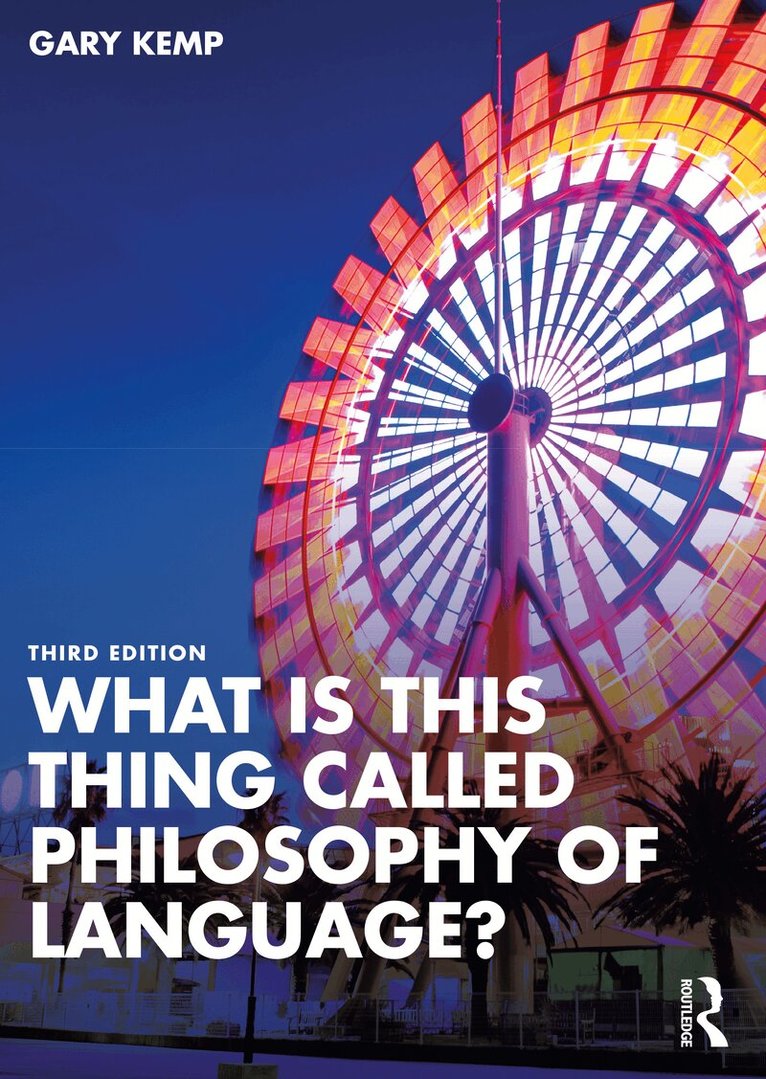
Philosophy of language explores some of the most abstract yet most fundamental questions in philosophy. The ideas of some of the subject's great founding figures, such as Gottlob Frege, Ludwig Wittgenstein and Bertrand Russell, as well as of more recent figures such as Saul Kripke and Hilary Putnam, are central to a great many philosophical debates to this day and are widely studied. In this clear and carefully structured introduction to the subject Gary Kemp explains the following key topics:the basic nature of philosophy of language, its concepts and its historical developmentFrege’s theory of sense and reference; Russell's theory of definite descriptionsWittgenstein's Tractatus, Ayer, and the Logical Positivistsrecent perspectives including Kripke, Kaplan, Putnam, Chomsky, Quine and Davidson; arguments concerning translation, necessity, indexicals, rigid designation and natural kindsthe pragmatics of language, including speech-acts, presupposition and conversational implicaturepuzzles surrounding the propositional attitudes (sentences which ascribe beliefs to people)the challenges presented by the later Wittgensteincontemporary directions, including contextualism, fictional objects and the phenomenon of slursThe third edition has been thoroughly revised throughout and includes a new chapter on Noam Chomsky's theory of Universal Grammar. In addition, the concluding chapter on modern directions in philosophy of language has been expanded to two chapters, and which now cover crucial emergent areas of study such as slurs, conceptual engineering and experimental philosophy.Chapter summaries, annotated further reading and a glossary make What is this thing called Philosophy of Language? an indispensable introduction to those teaching philosophy of language and will be particularly useful for students coming to the subject for the first time.
2 151 kr
Skickas inom 10-15 vardagar
Philosophy of language explores some of the most abstract yet most fundamental questions in philosophy. The ideas of some of the subject's great founding figures, such as Gottlob Frege, Ludwig Wittgenstein and Bertrand Russell, as well as of more recent figures such as Saul Kripke and Hilary Putnam, are central to a great many philosophical debates to this day and are widely studied. In this clear and carefully structured introduction to the subject Gary Kemp explains the following key topics:the basic nature of philosophy of language, its concepts and its historical developmentFrege’s theory of sense and reference; Russell's theory of definite descriptionsWittgenstein's Tractatus, Ayer, and the Logical Positivistsrecent perspectives including Kripke, Kaplan, Putnam, Chomsky, Quine and Davidson; arguments concerning translation, necessity, indexicals, rigid designation and natural kindsthe pragmatics of language, including speech-acts, presupposition and conversational implicaturepuzzles surrounding the propositional attitudes (sentences which ascribe beliefs to people)the challenges presented by the later Wittgensteincontemporary directions, including contextualism, fictional objects and the phenomenon of slursThe third edition has been thoroughly revised throughout and includes a new chapter on Noam Chomsky's theory of Universal Grammar. In addition, the concluding chapter on modern directions in philosophy of language has been expanded to two chapters, and which now cover crucial emergent areas of study such as slurs, conceptual engineering and experimental philosophy.Chapter summaries, annotated further reading and a glossary make What is this thing called Philosophy of Language? an indispensable introduction to those teaching philosophy of language and will be particularly useful for students coming to the subject for the first time.
1 073 kr
Skickas inom 10-15 vardagar
Containing three previously unpublished papers by W.V. Quine as well as historical, exegetical, and critical papers by several leading Quine scholars including Hylton, Ebbs, and Ben-Menahem, this volume aims to remedy the comparative lack of historical investigation of Quine and his philosophical context.
2 373 kr
Skickas inom 10-15 vardagar
Pictorial representation is one of the core questions in aesthetics and philosophy of art. What is a picture? How do pictures represent things? This collection of specially commissioned chapters examines the influential thesis that the core of pictorial representation is not resemblance but 'seeing-in', in particular as found in the work of Richard Wollheim.We can see a passing cloud as a rabbit, but we also see a rabbit in the clouds. 'Seeing-in' is an imaginative act of the kind employed by Leonardo’s pupils when he told them to see what they could - for example, battle scenes - in a wall of cracked plaster. This collection examines the idea of 'seeing-in' as it appears primarily in the work of Wollheim but also its origins in the work of Wittgenstein. An international roster of contributors examine topics such as the contrast between seeing-in and seeing-as; whether or in what sense Wollheim can be thought of as borrowing from Wittgenstein; the idea that all perception is conceptual or propositional; the metaphor of figure and ground and its relation to the notion of 'two-foldedness'; the importance in art of emotion and the imagination.Wollheim, Wittgenstein and Pictorial Representation: Seeing-as and Seeing-in is essential reading for students and scholars of aesthetics and philosophy of art, and also of interest to those in related subjects such as philosophy of mind and art theory.
1 753 kr
Tillfälligt slut
588 kr
Tillfälligt slut
287 kr
Skickas inom 10-15 vardagar
W.V. Quine is one of the leading figures of 20th century analytic philosophy, and still among the most influential. But his work can be challenging and complex, and indeed often misunderstood. In this updated introduction to Quine’s thought, Gary Kemp examines his seemingly disparate views as a unified whole and offers a valuable guide for anyone approaching Quine for the first time.Informed by current debates and updated throughout, this edition now includes:· Thoroughly revised and expanded text· More references to commentaries, secondary literature and works by Quine· Suggestions for further reading· Newly introduced material on Empirical Content, Explication, Nominalism, The Purported Third Dogma, Theoreticity, Natural Selection and Linguistics. · Historical notes on Quine’s relation to his predecessors and contemporariesPaying close attention to Quine’s seminal works including Word and Object and Philosophy of Logic, Kemp explains how his philosophy relates to thinkers including Rudolf Carnap and Wittgenstein, as well as to more recent figures such as Donald Davidson and Noam Chomsky. Kemp clearly and accurately emphasizes the systematic nature of Quine’s thought as one of naturalism. He advances our understanding of Quine and attests to his ongoing influence in philosophy of science, logic, language, ontology and epistemology. This unique introduction to Quine’s philosophy is recommended for any student interested in Quine and the history of analytic philosophy.
942 kr
Skickas inom 10-15 vardagar
W.V. Quine is one of the leading figures of 20th century analytic philosophy, and still among the most influential. But his work can be challenging and complex, and indeed often misunderstood. In this updated introduction to Quine’s thought, Gary Kemp examines his seemingly disparate views as a unified whole and offers a valuable guide for anyone approaching Quine for the first time.Informed by current debates and updated throughout, this edition now includes:· Thoroughly revised and expanded text· More references to commentaries, secondary literature and works by Quine· Suggestions for further reading· Newly introduced material on Empirical Content, Explication, Nominalism, The Purported Third Dogma, Theoreticity, Natural Selection and Linguistics. · Historical notes on Quine’s relation to his predecessors and contemporariesPaying close attention to Quine’s seminal works including Word and Object and Philosophy of Logic, Kemp explains how his philosophy relates to thinkers including Rudolf Carnap and Wittgenstein, as well as to more recent figures such as Donald Davidson and Noam Chomsky. Kemp clearly and accurately emphasizes the systematic nature of Quine’s thought as one of naturalism. He advances our understanding of Quine and attests to his ongoing influence in philosophy of science, logic, language, ontology and epistemology. This unique introduction to Quine’s philosophy is recommended for any student interested in Quine and the history of analytic philosophy.
880 kr
Tillfälligt slut
296 kr
Skickas inom 7-10 vardagar
Featuring essays from leading philosophical scholars, 12 Modern Philosophers explores the works, origins, and influences of twelve of the most important late 20th Century philosophers working in the analytic tradition. Draws on essays from well-known scholars, including Thomas Baldwin, Catherine Wilson, Adrian Moore and Lori GruenLocates the authors and their oeuvre within the context of the discipline as a wholeConsiders how contemporary philosophy both draws from, and contributes to, the broader intellectual and cultural milieu