Christopher E Smith - Böcker
Visar alla böcker från författaren Christopher E Smith. Handla med fri frakt och snabb leverans.
11 produkter
11 produkter
211 kr
Skickas inom 3-6 vardagar
682 kr
Skickas inom 10-15 vardagar
This book examines the criminal justice decisions of the Rehnquist Court era through analyses of individual justices' contributions to the development of law and policy. The Rehnquist Court era (1986-2005) produced a period of opportunity for the U.S. Supreme Court's judicial conservatives to reshape constitutional law concerning rights in the criminal justice process. It was an era in which the Court produced many hotly-debated decisions concerning such issues as capital punishment, search and seizure, police interrogations, and prisoners' rights. The Court's most conservative justice, William H. Rehnquist, ascended to the key leadership position of Chief Justice and he was joined on the Court by two new appointees, Antonin Scalia and Clarence Thomas, who were equally supportive of both greater authority for police and limited definitions of constitutional rights for suspects, defendants, and criminal offenders. The Rehnquist Court era decisions refined and narrowed many of the rights-expanding decisions of the Warren Court era (1953-1969). However, the Supreme Court did not ultimately eliminate the Warren era's foundational rights concepts in criminal justice, such as the exclusionary rule and Miranda warnings. As the leading liberal voices of the Warren era, William Brennan and Thurgood Marshall, retired early in the Rehnquist era, the Court experienced continued advocacy of broad conceptions for many rights through the increased assertiveness of Republican appointees Harry Blackmun, John Paul Stevens, and David Souter as well as the arrival of new Democratic appointees Ruth Bader Ginsburg and Stephen Breyer. In many important cases, the justices advocating the preservation of constitutional protections could prevail, even on a generally conservative Court, by persuading one or more of President Ronald Reagan's appointees to support a particular right for suspects and defendants. Sandra Day O'Connor and Anthony Kennedy, in particular, shaped outcomes within a divided Court as they determined which of the Court’s wings with which they would align in a particular case. The contributors to this volume identify and highlight the unique perspectives and influential decisions of individual justices as the means for understanding the Rehnquist Court’s imprint on criminal justice.
261 kr
Skickas inom 7-10 vardagar
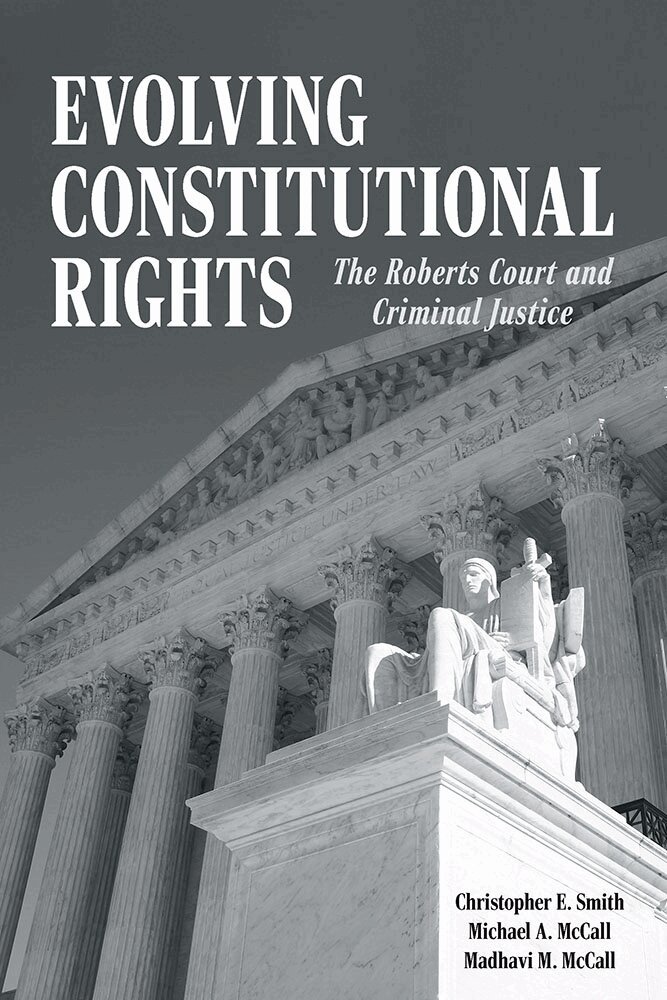
Illuminating continuity and change in Supreme Court decisions Evolving Constitutional Rights: The Roberts Court and Criminal Justice offers a compelling and in-depth analysis of how the U.S. Supreme Court has reshaped constitutional protections under Chief Justice John Roberts. Authors Christopher E. Smith, Michael A. McCall, and Madhavi M. McCall examine the Court’s significant decisions from 2005 to Justice Breyer’s retirement in 2022, revealing a complex judicial landscape where traditional doctrines are revised and fundamental rights are redefined. The Roberts Court played a decisive role in some of the most contentious issues in American law. Due to several justices’ application of originalist interpretations, its rulings have reconfigured key constitutional protections—often in ways that expand the authority of law enforcement while constraining legislative power over criminal statutes. The trajectory of the Court’s conservative supermajority raises pressing questions about the future of constitutional rights. Taking a rigorous yet accessible approach, Evolving Constitutional Rights breaks down the Court’s influence across the full spectrum of criminal justice issues, from sentencing and trial rights to search-and-seizure protections, Miranda warnings, and corrections policies. Using both legal and empirical analysis, the authors track patterns in judicial ideology, uncovering how the Roberts Court has not only reinforced conservative principles but also unexpectedly broadened rights in areas such as digital privacy and defense counsel obligations. This timely and insightful book goes beyond historical rulings to offer a forward-looking perspective on the Supreme Court’s role in shaping public safety, legal precedent, and the balance of power in American government. Essential reading for legal scholars, policymakers, and anyone concerned with the future of constitutional rights, this new volume provides a clear and authoritative examination of the Roberts Court’s lasting impact on American law.
829 kr
Skickas inom 7-10 vardagar
Illuminating continuity and change in Supreme Court decisionsEvolving Constitutional Rights: The Roberts Court and Criminal Justice offers a compelling and in-depth analysis of how the U.S. Supreme Court has reshaped constitutional protections under Chief Justice John Roberts. Authors Christopher E. Smith, Michael A. McCall, and Madhavi M. McCall examine the Court’s significant decisions from 2005 to Justice Breyer’s retirement in 2022, revealing a complex judicial landscape where traditional doctrines are revised and fundamental rights are redefined.The Roberts Court played a decisive role in some of the most contentious issues in American law. Due to several justices’ application of originalist interpretations, its rulings have reconfigured key constitutional protections—often in ways that expand the authority of law enforcement while constraining legislative power over criminal statutes. The trajectory of the Court’s conservative supermajority raises pressing questions about the future of constitutional rights.Taking a rigorous yet accessible approach, Evolving Constitutional Rights breaks down the Court’s influence across the full spectrum of criminal justice issues, from sentencing and trial rights to search-and-seizure protections, Miranda warnings, and corrections policies. Using both legal and empirical analysis, the authors track patterns in judicial ideology, uncovering how the Roberts Court has not only reinforced conservative principles but also unexpectedly broadened rights in areas such as digital privacy and defense counsel obligations.This timely and insightful book goes beyond historical rulings to offer a forward-looking perspective on the Supreme Court’s role in shaping public safety, legal precedent, and the balance of power in American government. Essential reading for legal scholars, policymakers, and anyone concerned with the future of constitutional rights, this new volume provides a clear and authoritative examination of the Roberts Court’s lasting impact on American law.
1 657 kr
Tillfälligt slut
First Published in 1997. Organised in a easily readable format this book on the Supreme Court and punishment takes the reader through the sentencing and incarceration issues that have been so controversial and yet, so relatively unchanged over the years.

621 kr
Skickas inom 10-15 vardagar
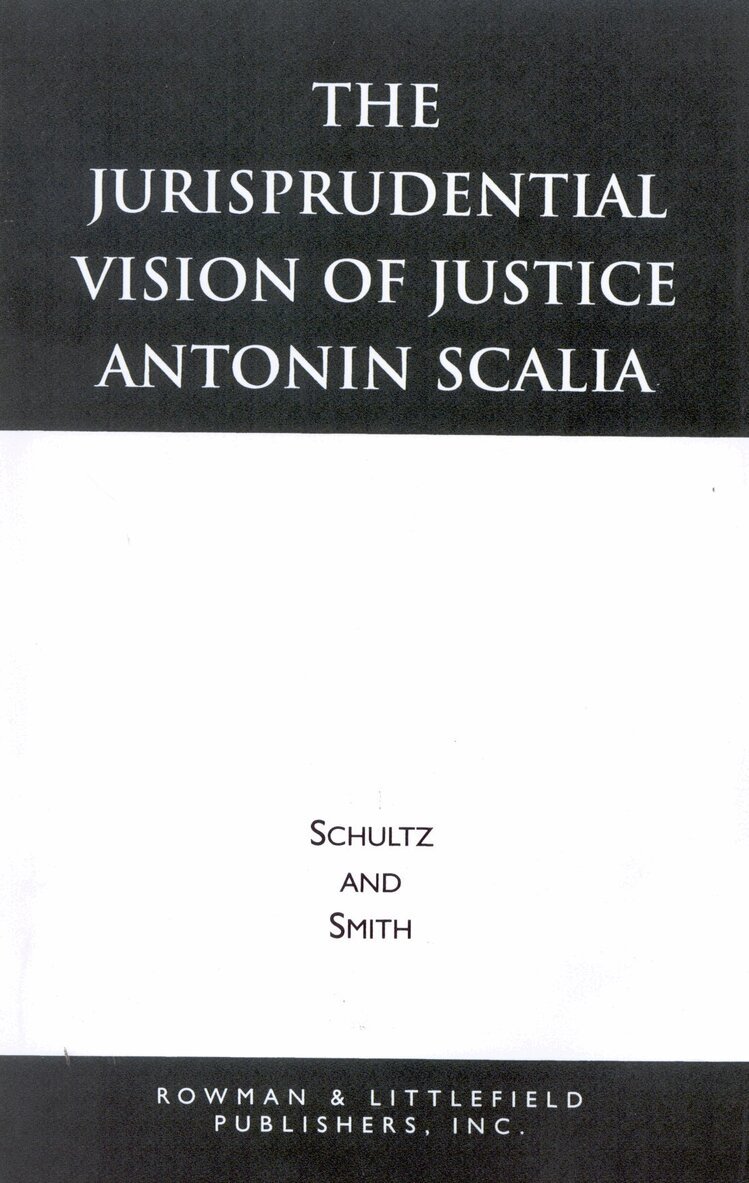
When Antonin Scalia was appointed to the Supreme Court in 1986, conservatives hoped he would become the intellectual leader of President Reagan's judicial counter-revolution. In this first book-length analysis of Scalia's jurisprudence, David A. Schultz and Christopher E. Smith argue that Scalia's impact has been neither what conservatives hoped nor what liberals feared. The authors examine Scalia's political and judicial philosophy and they outline the areas of the law that Scalia has most profoundly affected, particularly constitutional protections for property rights. Citing Scalia's use of judicial review to check legislative power and his attempts to limit several types of individual rights developed during the Warren and Burger Courts, the authors conclude that Scalia's decisions reflect an effort to create a post-Carolene Products jurisprudence and to form a new pattern of assumptions regarding the role of the Supreme Court in American society. This is essential reading for students, scholars, and anyone interested in the Supreme Court and constitutional law.
Supreme Court and the Development of Law
Through the Prism of Prisoners’ Rights
Inbunden, Engelska, 2016
495 kr
Skickas inom 10-15 vardagar
This book illuminates the decision-making processes of the US Supreme court through an examination of several prisoners' rights cases. Because of the controversial nature of prisoners’ rights issues, these cases serve to illuminate the full array of influences over Supreme Court decision making.
608 kr
Skickas inom 10-15 vardagar
First Published in 1997. Organised in a easily readable format this book on the Supreme Court and punishment takes the reader through the sentencing and incarceration issues that have been so controversial and yet, so relatively unchanged over the years.
621 kr
Skickas inom 10-15 vardagar
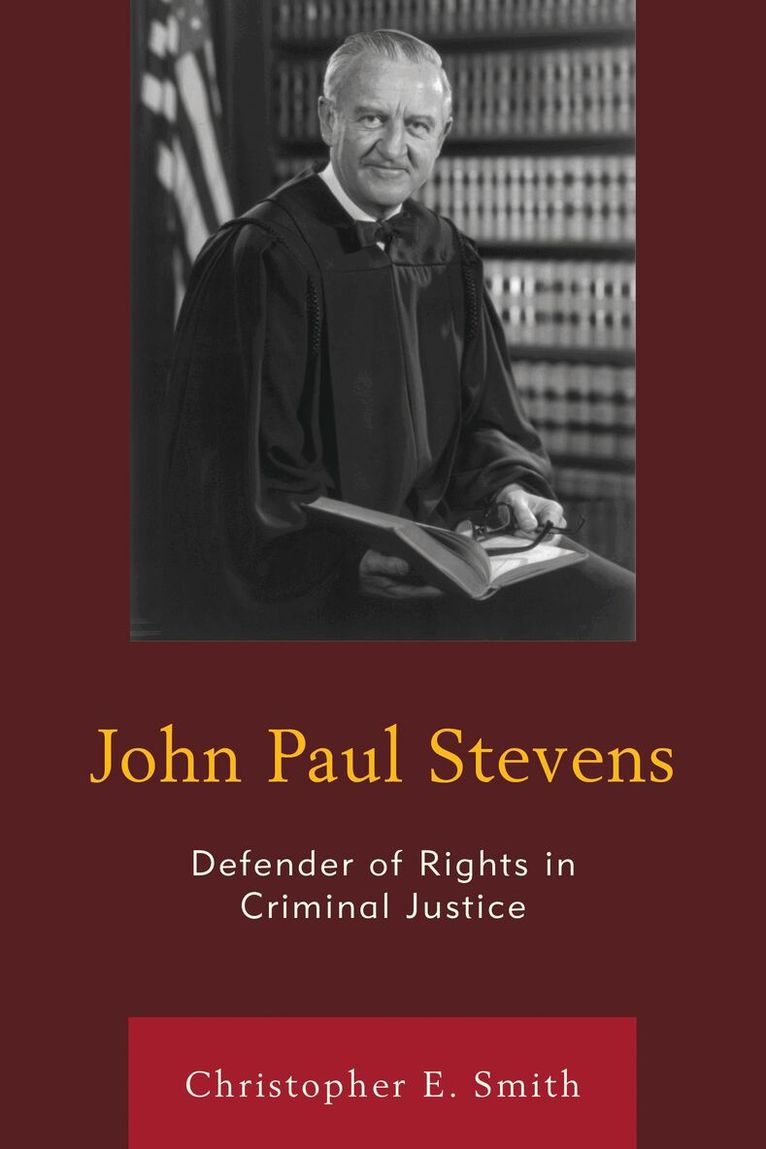
This book examines the judicial opinions and criminal justice policy impact of Justice John Paul Stevens, the U.S. Supreme Court’s most prolific opinion author during his 35-year career on the nation’s highest court. Although Justice Stevens, a Republican appointee of President Gerald Ford, had a professional reputation as a corporate antitrust law attorney, he immediately asserted himself as the Court’s foremost advocate of prisoners’ rights and Miranda rights when he arrived at the Court in 1975. In examining Justice Stevens’s opinions on these topics as well as others, including capital punishment and right to counsel, the chapters of the book connect his prior experiences with the development of his views on rights in criminal justice. In particular, the book examines his relevant experiences as a law clerk to Justice Wiley Rutledge in the Supreme Court’s 1947 term, a volunteer attorney handling criminal cases in Illinois, and a judge on the U.S. court of appeals to explore how these experiences shaped his understanding of the importance of rights in criminal justice. For many issues, such as those affecting imprisoned offenders, Justice Stevens was a strong defender of rights throughout his career. For other issues, such as capital punishment, there is evidence that he became increasingly protective of rights over the course of his Supreme Court career. The book also examines how Justice Stevens became increasingly important as a leading dissenter against the diminution of rights in criminal justice as the Supreme Court’s composition became increasingly conservative in the 1980s and thereafter. Because of the nature and complexity of Justice Stevens’s numerous and varied opinions over the course of his lengthy career, scholars find it difficult to characterize his judicial philosophy and impact with simple labels. Yet in the realm of criminal justice, close examination of his work reveals that he earned a reputation and an enduring legacy as an exceptionally important defender of constitutional rights.
1 535 kr
Kommande
Exiting the Cocoon of Academia describes a scholar's experiences in practical politics at local, state, and federal levels. Christopher E. Smith served on a local committee evaluating corporal punishment in public schools, provided expert testimony on capital punishment for a state legislature, ran for Congress, and led a non-profit advocacy organization focused on reducing gun violence. Throughout these experiences, Smith's assumptions about the value of social science research for the development of evidence-based policy collided with the practical power of decision makers' firmly held beliefs or political self-interest. Smith's experiences provide guidance on understanding and addressing belief-based resistance to research evidence and illuminate how anti-democracy elements of US politics and government impede the advancement of evidence-based policy making. His reflections also reveal behind-the-scenes aspects of political parties and elections. The political contexts examined in Exiting the Cocoon of Academia show how even seemingly small actions by individuals can contribute to policy change. Lessons drawn from these contexts encourage scholars and others in society to pursue engagement in politics and policy development with a practical understanding of frustrating impediments and challenges.
300 kr
Kommande