Christopher Ehret - Böcker
Visar alla böcker från författaren Christopher Ehret. Handla med fri frakt och snabb leverans.
7 produkter
7 produkter
Del 126 - UC Publications in Linguistics
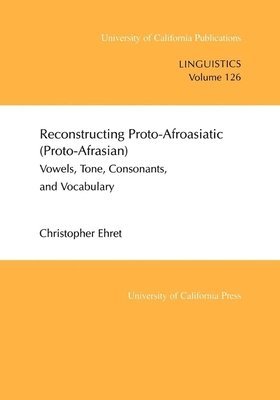
Reconstructing Proto-Afroasiatic (Proto-Afrasian)
Vowels, Tone, Consonants, and Vocabulary
Häftad, Engelska, 1995
691 kr
Skickas inom 7-10 vardagar
This work provides the first truly comprehensive and systematic reconstruction of proto-Afroasiatic (proto-Afrasian). It rigorously applies, throughout, the established canon and techniques of the historical-comparative method. It also fully incorporates the most up-to-date evidence from the distinctive African branches of the family, Cushitic, Chadic, and Omotic. Using concrete and specific evidence and argument, the author proposes full vowel and consonant reconstructions and a provisional reckoning of tone. Each aspect of these reconstructions is substantiated in detail in an extensive etymological vocabulary of more than 1000 roots. The results, while confirming some previous views on proto-Afroasiatic (proto-Afrasian), revise or overturn many others, and add much that is new.
Del 16 - California World History Library
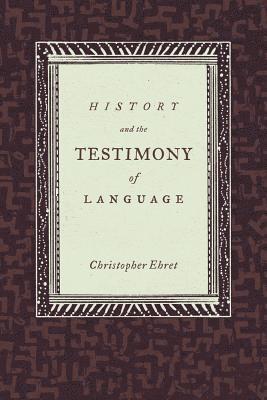
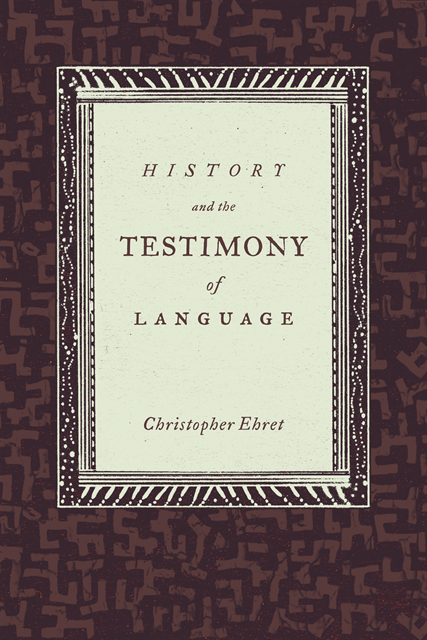
History and the Testimony of Language
Inbunden, Engelska, 2010
1 212 kr
Skickas inom 3-6 vardagar
This book is about history and the practical power of language to reveal historical change. Christopher Ehret offers a methodological guide to applying language evidence in historical studies. He demonstrates how these methods allow us not only to recover the histories of time periods and places poorly served by written documentation, but also to enrich our understanding of well-documented regions and eras. A leading historian as well as historical linguist of Africa, Ehret provides in-depth examples from the language phyla of Africa, arguing that his comprehensive treatment can be applied by linguistically trained historians and historical linguists working with any language and in any area of the world.
Del 16 - California World History Library
History and the Testimony of Language
Häftad, Engelska, 2010
609 kr
Skickas inom 3-6 vardagar
This book is about history and the practical power of language to reveal historical change. Christopher Ehret offers a methodological guide to applying language evidence in historical studies. He demonstrates how these methods allow us not only to recover the histories of time periods and places poorly served by written documentation, but also to enrich our understanding of well-documented regions and eras. A leading historian as well as historical linguist of Africa, Ehret provides in-depth examples from the language phyla of Africa, arguing that his comprehensive treatment can be applied by linguistically trained historians and historical linguists working with any language and in any area of the world.
835 kr
Skickas inom 3-6 vardagar
This title combines archaeology and linguistics to explore Africa's early history, especially where written records are scarce or absent. By pairing the physical evidence of past societies with insights from language evolution, the book reveals a fuller picture of Africa's cultural and historical development. Archaeology provides tangible data on material culture and timelines, while linguistics offers clues about past social structures, beliefs, and migrations through language relationships. Together, these fields offer complementary perspectives on Africa's past, allowing scholars to reconstruct societal links and movements across time and space.The book's contributors, experts in archaeology and linguistics, present case studies from four major regions: Nubia and northern Sudan, equatorial Africa, eastern Africa, and Ghana. Each section begins with a regional overview that synthesizes existing archaeological and linguistic findings, framing the case studies within broader historical patterns. For example, in Nubia, where evidence is relatively complete, the section discusses correlations that extend into northeastern Africa. In equatorial Africa, linguistic data is more robust, while archaeological evidence is still emerging, showing intriguing alignment with linguistic patterns. Eastern Africa focuses on the impacts of Bantu expansion and early agricultural practices, while the West African section, despite limited data, centers on recent insights from Ghana, illustrating both progress and research gaps.By presenting these regions, the book demonstrates the significant potential of combining archaeological and linguistic methods to uncover Africa's past. While some areas, such as West Africa, still require further exploration, the integration of these two disciplines reveals a complex, dynamic historical landscape and raises new questions for future research. The collection shows that archaeology and linguistics together provide a powerful framework for understanding Africa's early societies and lays a foundation for deeper investigations into the continent's history.This title is part of UC Press's Voices Revived program, which commemorates University of California Press’s mission to seek out and cultivate the brightest minds and give them voice, reach, and impact. Drawing on a backlist dating to 1893, Voices Revived makes high-quality, peer-reviewed scholarship accessible once again using print-on-demand technology. This title was originally published in 1982.
780 kr
Skickas inom 7-10 vardagar
This title combines archaeology and linguistics to explore Africa's early history, especially where written records are scarce or absent. By pairing the physical evidence of past societies with insights from language evolution, the book reveals a fuller picture of Africa's cultural and historical development. Archaeology provides tangible data on material culture and timelines, while linguistics offers clues about past social structures, beliefs, and migrations through language relationships. Together, these fields offer complementary perspectives on Africa's past, allowing scholars to reconstruct societal links and movements across time and space.The book's contributors, experts in archaeology and linguistics, present case studies from four major regions: Nubia and northern Sudan, equatorial Africa, eastern Africa, and Ghana. Each section begins with a regional overview that synthesizes existing archaeological and linguistic findings, framing the case studies within broader historical patterns. For example, in Nubia, where evidence is relatively complete, the section discusses correlations that extend into northeastern Africa. In equatorial Africa, linguistic data is more robust, while archaeological evidence is still emerging, showing intriguing alignment with linguistic patterns. Eastern Africa focuses on the impacts of Bantu expansion and early agricultural practices, while the West African section, despite limited data, centers on recent insights from Ghana, illustrating both progress and research gaps.By presenting these regions, the book demonstrates the significant potential of combining archaeological and linguistic methods to uncover Africa's past. While some areas, such as West Africa, still require further exploration, the integration of these two disciplines reveals a complex, dynamic historical landscape and raises new questions for future research. The collection shows that archaeology and linguistics together provide a powerful framework for understanding Africa's early societies and lays a foundation for deeper investigations into the continent's history.This title is part of UC Press's Voices Revived program, which commemorates University of California Press’s mission to seek out and cultivate the brightest minds and give them voice, reach, and impact. Drawing on a backlist dating to 1893, Voices Revived makes high-quality, peer-reviewed scholarship accessible once again using print-on-demand technology. This title was originally published in 1982.
235 kr
Skickas inom 7-10 vardagar
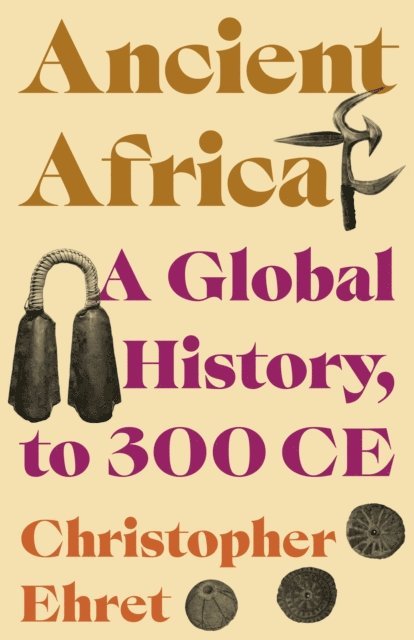
A panoramic narrative that places ancient Africa on the stage of world historyThis book brings together archaeological and linguistic evidence to provide a sweeping global history of ancient Africa, tracing how the continent played an important role in the technological, agricultural, and economic transitions of world civilization. Christopher Ehret takes readers from the close of the last Ice Age some ten thousand years ago, when a changing climate allowed for the transition from hunting and gathering to the cultivation of crops and raising of livestock, to the rise of kingdoms and empires in the first centuries of the common era.Ehret takes up the problem of how we discuss Africa in the context of global history, combining results of multiple disciplines. He sheds light on the rich history of technological innovation by African societies—from advances in ceramics to cotton weaving and iron smelting—highlighting the important contributions of women as inventors and innovators. He shows how Africa helped to usher in an age of agricultural exchange, exporting essential crops as well as new agricultural methods into other regions, and how African traders and merchants led a commercial revolution spanning diverse regions and cultures. Ehret lays out the deeply African foundations of ancient Egyptian culture, beliefs, and institutions and discusses early Christianity in Africa.A monumental achievement by one of today’s eminent scholars, Ancient Africa offers vital new perspectives on our shared past, explaining why we need to reshape our historical frameworks for understanding the ancient world as a whole.
218 kr
Skickas inom 7-10 vardagar
A panoramic narrative that places ancient Africa on the stage of world historyThis book brings together archaeological and linguistic evidence to provide a sweeping global history of ancient Africa, tracing how the continent played an important role in the technological, agricultural, and economic transitions of world civilization. Christopher Ehret takes readers from the close of the last Ice Age some ten thousand years ago, when a changing climate allowed for the transition from hunting and gathering to the cultivation of crops and raising of livestock, to the rise of kingdoms and empires in the first centuries of the common era.Ehret takes up the problem of how we discuss Africa in the context of global history, combining results of multiple disciplines. He sheds light on the rich history of technological innovation by African societies—from advances in ceramics to cotton weaving and iron smelting—highlighting the important contributions of women as inventors and innovators. He shows how Africa helped to usher in an age of agricultural exchange, exporting essential crops as well as new agricultural methods into other regions, and how African traders and merchants led a commercial revolution spanning diverse regions and cultures. Ehret lays out the deeply African foundations of ancient Egyptian culture, beliefs, and institutions and discusses early Christianity in Africa.A monumental achievement by one of today’s eminent scholars, Ancient Africa offers vital new perspectives on our shared past, explaining why we need to reshape our historical frameworks for understanding the ancient world as a whole.