Merrick Posnansky - Böcker
Visar alla böcker från författaren Merrick Posnansky. Handla med fri frakt och snabb leverans.
3 produkter
3 produkter
835 kr
Skickas inom 3-6 vardagar
This title combines archaeology and linguistics to explore Africa's early history, especially where written records are scarce or absent. By pairing the physical evidence of past societies with insights from language evolution, the book reveals a fuller picture of Africa's cultural and historical development. Archaeology provides tangible data on material culture and timelines, while linguistics offers clues about past social structures, beliefs, and migrations through language relationships. Together, these fields offer complementary perspectives on Africa's past, allowing scholars to reconstruct societal links and movements across time and space.The book's contributors, experts in archaeology and linguistics, present case studies from four major regions: Nubia and northern Sudan, equatorial Africa, eastern Africa, and Ghana. Each section begins with a regional overview that synthesizes existing archaeological and linguistic findings, framing the case studies within broader historical patterns. For example, in Nubia, where evidence is relatively complete, the section discusses correlations that extend into northeastern Africa. In equatorial Africa, linguistic data is more robust, while archaeological evidence is still emerging, showing intriguing alignment with linguistic patterns. Eastern Africa focuses on the impacts of Bantu expansion and early agricultural practices, while the West African section, despite limited data, centers on recent insights from Ghana, illustrating both progress and research gaps.By presenting these regions, the book demonstrates the significant potential of combining archaeological and linguistic methods to uncover Africa's past. While some areas, such as West Africa, still require further exploration, the integration of these two disciplines reveals a complex, dynamic historical landscape and raises new questions for future research. The collection shows that archaeology and linguistics together provide a powerful framework for understanding Africa's early societies and lays a foundation for deeper investigations into the continent's history.This title is part of UC Press's Voices Revived program, which commemorates University of California Press’s mission to seek out and cultivate the brightest minds and give them voice, reach, and impact. Drawing on a backlist dating to 1893, Voices Revived makes high-quality, peer-reviewed scholarship accessible once again using print-on-demand technology. This title was originally published in 1982.
777 kr
Skickas inom 7-10 vardagar
This title combines archaeology and linguistics to explore Africa's early history, especially where written records are scarce or absent. By pairing the physical evidence of past societies with insights from language evolution, the book reveals a fuller picture of Africa's cultural and historical development. Archaeology provides tangible data on material culture and timelines, while linguistics offers clues about past social structures, beliefs, and migrations through language relationships. Together, these fields offer complementary perspectives on Africa's past, allowing scholars to reconstruct societal links and movements across time and space.The book's contributors, experts in archaeology and linguistics, present case studies from four major regions: Nubia and northern Sudan, equatorial Africa, eastern Africa, and Ghana. Each section begins with a regional overview that synthesizes existing archaeological and linguistic findings, framing the case studies within broader historical patterns. For example, in Nubia, where evidence is relatively complete, the section discusses correlations that extend into northeastern Africa. In equatorial Africa, linguistic data is more robust, while archaeological evidence is still emerging, showing intriguing alignment with linguistic patterns. Eastern Africa focuses on the impacts of Bantu expansion and early agricultural practices, while the West African section, despite limited data, centers on recent insights from Ghana, illustrating both progress and research gaps.By presenting these regions, the book demonstrates the significant potential of combining archaeological and linguistic methods to uncover Africa's past. While some areas, such as West Africa, still require further exploration, the integration of these two disciplines reveals a complex, dynamic historical landscape and raises new questions for future research. The collection shows that archaeology and linguistics together provide a powerful framework for understanding Africa's early societies and lays a foundation for deeper investigations into the continent's history.This title is part of UC Press's Voices Revived program, which commemorates University of California Press’s mission to seek out and cultivate the brightest minds and give them voice, reach, and impact. Drawing on a backlist dating to 1893, Voices Revived makes high-quality, peer-reviewed scholarship accessible once again using print-on-demand technology. This title was originally published in 1982.
787 kr
Skickas inom 10-15 vardagar
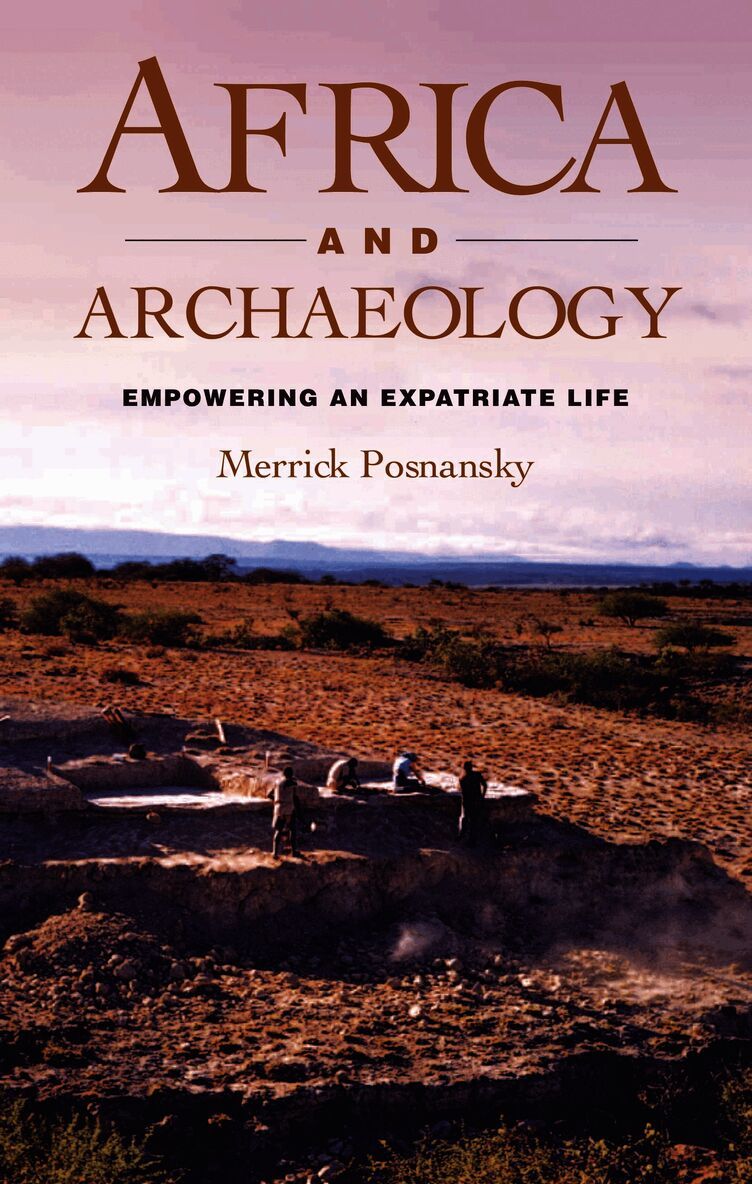
In this stimulating account of his life's experiences, renowned scholar and pioneer Africanist archaeologist Merrick Posnansky takes his readers on an unusual journey across the world, from his origins in a small Jewish community in Manchester to his adventures on archaeological sites in the villages of Africa before finally settling down to teach in Los Angeles.A Jewish British expatriate in an African social world, Posnansky struggled to establish his racial identity in the British colonial world where Jewish communities were rare. He crossed racial and religious boundaries by marrying a Christian woman from Uganda, a highly unusual step at that time.Written in a refreshing, candid style, these memoirs provide a fascinating glimpse into the changes taking place in modern Africa. "Africa and Archaeology" is a first hand account of the racial and religious prejudices of the twentieth century.