Christopher Herbst - Böcker
Visar alla böcker från författaren Christopher Herbst. Handla med fri frakt och snabb leverans.
5 produkter
5 produkter
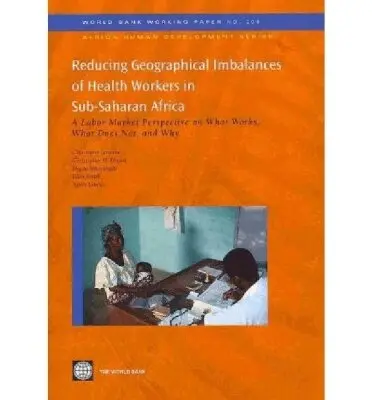
Reducing Geographical Imbalances of the Distribution of Health Workers in Sub-Saharan Africa
A Labor Market Angle on What Works, What Does not, and Why
Häftad, Engelska, 2010
173 kr
Skickas inom 10-15 vardagar
The human resources crisis in the health sector has been gathering attention on the global stage. To date, however, most of this attention has focused on shortages of health human resources (HRH) at the national level. At least as important are problems at the sub-national level. Massive geographic and skill mix imbalances are reflected in the perilous undersupply of HRH in most rural areas. Virtually all Sub-Saharan African countries suffer from significant geographic imbalances. Very little substantive information or documentation exists on the problem. Even less is known about the lessons from policies aimed at addressing urban-rural human resource imbalances, let alone experiences of Sub-Saharan Africa countries, with such policies. There also appears to be a disconnect between the objectives and efforts of policymakers on the one hand and the functioning of national health labor markets and labor market behavior on the other hand. This disconnect hinders policy effectiveness and the efficient utilization of resources intended to narrow urban-rural inequities.In Sub-Saharan Africa government policies, often limited to the management of public sector vacancies, appear to be elaborated, prescribed, and implemented independently of labor market considerations. Partly as a result, they are unable to effectively address urban-rural imbalances, which are an outcome of labor market dynamics. This report discusses and analyzes labor market dynamics and outcomes (including unemployment, worker shortages, and urban-rural imbalances of categories of health workers) from a labor economics perspective. It then use insights from this perspective as a basis for elaborating policy options that incorporate the underlying labor market forces. The goal of the study is to address undesirable outcomes (including urban-rural HRH imbalances) more effectively. The book is thus suitable for researchers, policy analysts and policy makers with an interest in understanding and improving the allocation of human resources for health in the developing world.
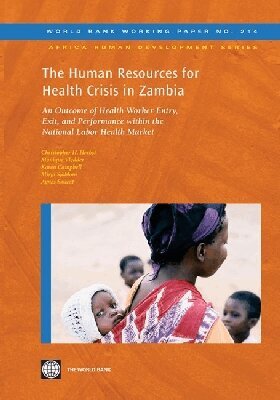
Human Resources for Health Crisis in Zambia
An Outcome of Health Worker Entry, Exit, and Performance Within the National Health Labor Market
Häftad, Engelska, 2011
228 kr
Skickas inom 10-15 vardagar
The Human Resources for Health Crisis in Zambia is part of the World Bank Working Paper series. These papers are published to communicate the results of the Bank's ongoing research and to stimulate public discussion. Despite reporting some health gains since the 1990s, health outcomes remain poor in Zambia and it will be very challenging to achieve the health-related Millennium Development Goals by 2015. The Government of Zambia recognises that the improvement of child and maternal health and the reduction in mortality from HIV/AIDs and malaria require better access to an appropriate number of well performing health workers or human resources for health (HRH). This paper compiles recent evidence on the Zambian health labour market and provides some baseline information on HRH to support the government address its HRH challenges. In addition, the paper analyses the available evidence on the national health labour market to better understand the number, distribution, and performance of HRH in Zambia. The paper also explains HRH outcomes by mapping, assessing, and analysing pre-service education and labour market dynamics and well as the core factors influencing these dynamics.
256 kr
Skickas inom 10-15 vardagar
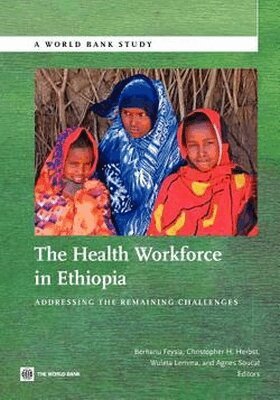
Health indicators particularly on child health and malaria in Ethiopia have improved significantly in recent years, with the next challenge now focused on improving maternal health indicators. Improvements in Child health and Malaria in particular can be attributed to strong government commitment towards health results in the country, reflected in a number of notable policies and programs related to Human Resources for Health (HRH), in particular the health extension worker program. However, indicators related to maternal health, remain problematic. Ethiopia has one of the lowest levels of assisted deliveries in the region. Although increases in the number of health workers particularly in rural areas may have contributed to improving access to some health services, it is in the government’s interest to further improve the stock, distribution and performance of relevant health workers in Ethiopia, particularly to bring about improvement in access to maternal health services for the poor. This document reviews the current HRH situation in Ethiopia, summarizes the evidence on population use of select health services, and offers relevant policy options to assist the government finalize its new Human Resources Strategy and address remaining health challenges.
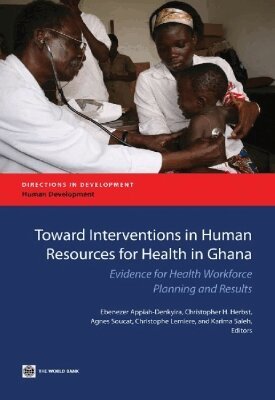
Towards Interventions on Human Resources for Health in Ghana
Evidence for Health Workforce Planning and Results
Häftad, Engelska, 2013
297 kr
Skickas inom 10-15 vardagar
This book was produced to support the policy dialogue on Human Resources for Health (HRH) in Ghana. Despite some recent successes, further improvements in health outcomes are in part hampered by the lack of skilled service providers, or human resources for health (HRH), particularly in rural areas, that prevent critical health services from being accessed and adequately delivered to those that need them most. To address the lack of information to guide the development of policies and programs on HRH, the book aims to paint a comprehensive picture on HRH, consolidating new and existing evidence on stock, distribution and performance of health workers to focus on the “what”, as in “What is the situation on HRH?” and the “how”, as in “How is this situation explained?” . The book highlights in particular new evidence on some of the underlying determinants impacting stock, distribution and performance of health workers in Ghana, including health worker production and attrition, management and accountability structures, the capacity of health training institutions, and health worker compensation. As is made clear, any potential policies to improve the situation on HRH need to be well targeted, and take into account some of the fiscal and political challenges that are specific to the health labor market in Ghana. The data and findings presented in this book are the result of extended and close collaboration between the Ghana Ministry of Health, and the World Bank’s Africa Region Technical Team on HRH and will provide a better basis for Ghanaian decision makers and external partners to dialogue on HRH and related policies, resulting in concrete HRH actions. More broadly, it will be of interest to all those working to improve Human Resources for Health in Africa and beyond.
394 kr
Skickas inom 10-15 vardagar
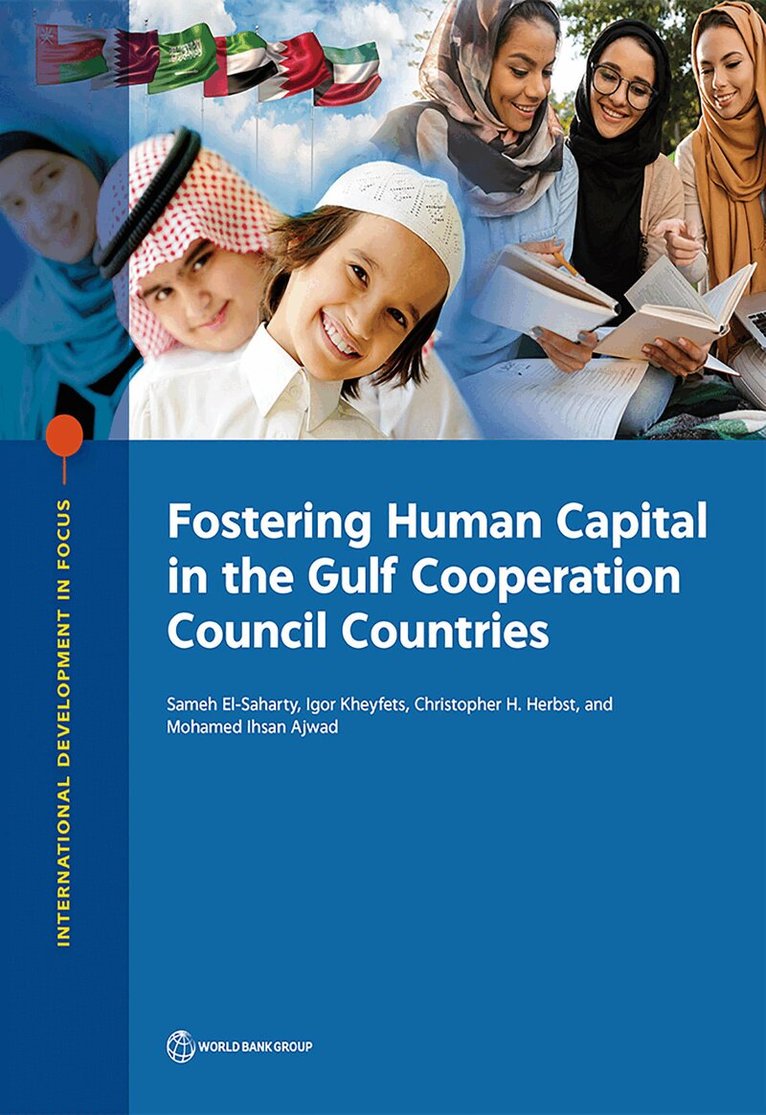
The formation of human capital--the knowledge, skills, and health that people accumulate over their lifetimes--is critical for the six Gulf Cooperation Council (GCC) countries. Human capital contributes not only to human development and employment but also to the long-term sustainability of a diversified economic growth model that is knowledge based and private sector driven. This approach is critical, given that income from oil and gas will eventually decline and that the nature of work is evolving in response to rapid technological changes, in turn demanding new skill sets. The GCC governments have demonstrated their strong political will for this shift: four of them are among the first countries to join the World Bank's Human Capital Project—a global effort to improve investments in people as measured by the Human Capital Index. The GCC countries face four main challenges:• Low levels of basic proficiency among schoolchildren• A mismatch between education and the labor market• A relatively high rate of adult mortality and morbidity• A unique labor market , in which wages in the public sector are more generous than in the private sector and government employment of nationals is virtually guaranteed. To address these challenges, this report outlines four strategies in a "whole-of-government" approach:• Investing in high-quality early childhood development• Preparing healthier, better educated, and skilled youth for the future• Enabling greater adult labor force participation• Creating an enabling environment for human capital formation. These strategies are based on best practices in other countries and feature some of the GCC countries' plans, including their national "Visions," to take their economies and societies further into the twenty-first century. With the COVID-19 pandemic, the GCC countries face additional challenges that may worsen some pre-existing vulnerabilities and erode human capital. In response, the GCC governments have taken multiple measures to protect their populations' health and their economies. Any country's decision to reopen its economy needs to closely consider public health consequences to avoid a resurgence of infections and any further erosion of its human capital. The COVID-19 crisis underscores that the need to accelerate and improve investment in human capital has never been greater. Once the GCC countries return to a "new normal," they will be in a position to achieve diversified and sustainable growth by adopting, and then tailoring, the strategies presented in this report.