Christopher J Bae - Böcker
Visar alla böcker från författaren Christopher J Bae. Handla med fri frakt och snabb leverans.
3 produkter
3 produkter
282 kr
Skickas inom 7-10 vardagar
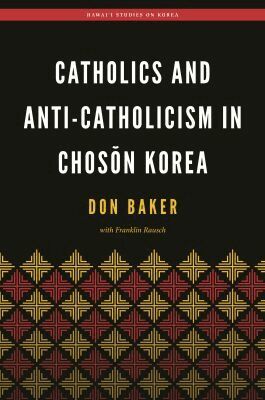
Korea's first significant encounter with the West occurred in the last quarter of the eighteenth century when a Korean Catholic community emerged on the peninsula. Decades of persecution followed, resulting in the deaths of thousands of Korean Catholics. Don Baker provides an invaluable analysis of late-Chosŏn (1392–1897) thought, politics, and society to help readers understand the response of Confucians to Catholicism and of Korean Catholics to years of violent harassment. His analysis is informed by two remarkable documents expertly translated with the assistance of Franklin Rausch and annotated here for the first time: an anti-Catholic essay written in the 1780s by Confucian scholar Ahn Chongbok (1712–1791) and a firsthand account of the 1801 anti-Catholic persecution by one of its last victims, the religious leader Hwang Sayong (1775–1801).Confucian assumptions about Catholicism are revealed in Ahn's essay, Conversation on Catholicism. The work is based on the scholar's exchanges with his son-in-law, who joined the small group of Catholics in the 1780s. Ahn argues that Catholicism is immoral because it puts more importance on the salvation of one's soul than on what is best for one's family or community. Conspicuously absent from his Conversation is the reason behind the conversions of his son-in-law and a few other young Confucian intellectuals. Baker examines numerous Confucian texts of the time to argue that, in the late eighteenth century, Korean Confucians were tormented by a growing concern over human moral frailty. Some among them came to view Catholicism as a way to overcome their moral weakness, become virtuous, and, in the process, gain eternal life. These anxieties are echoed in Hwang's Silk Letter, in which he details for the bishop in Beijing his persecution and the decade preceding it. He explains why Koreans joined (and some abandoned) the Catholic faith and their devotion to the new religion in the face of torture and execution. Together the two texts reveal much about not only Korean beliefs and values of two centuries ago, but also how Koreans viewed their country and their king as well as China and its culture.
317 kr
Skickas inom 7-10 vardagar
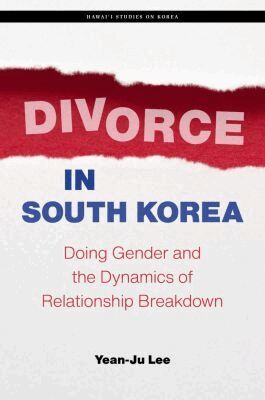
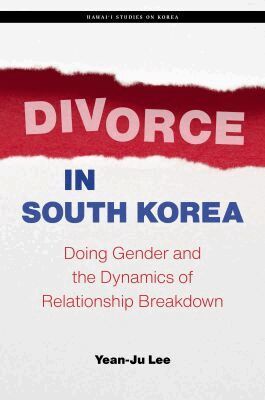
It may sound logical that individualistic attitudes boost divorce. This book argues otherwise. Conservative norms of specialized gender roles serve as the root cause of marital dissolution. Those expectations that prescribe what men should do and what women should do help break down marital relationships. Data from South Korea suggest that lingering norms of gendered roles can threaten married persons' self-identity and hence their marriages during the period of rapid structural changes.The existing literature predicting divorce does not conceptually distinguish between the process of relationship breakdown and the act of ending a marriage, implicitly but heavily focusing on the latter while obscuring the former. In contemporary societies, however, the social and economic cost of divorce is sufficiently low - that is, stigma against divorce is minimal and economic survival after divorce is a nonissue - and leaving a marriage is no longer dictated by one's being liberal or conservative or any particular characteristics. Thus, the right question to ask is not who leaves a marriage but why a marriage goes sour to begin with. In Korea, a majority of divorces occur through mutual consent of the two spouses without any court procedure, but when one spouse files for divorce, the fault-based divorce litigation rules require the court to lay out the entire chronicle of relevant events occurring up to the legal action, often with the help of court investigators. As such, court rulings provide glimpses into the entire marital dynamics, including verbatim exchanges between the spouses. Lee argues that the typical process of relationship breakdown is related to married persons' daily practices of verifying their gendered role identity.
829 kr
Skickas inom 7-10 vardagar
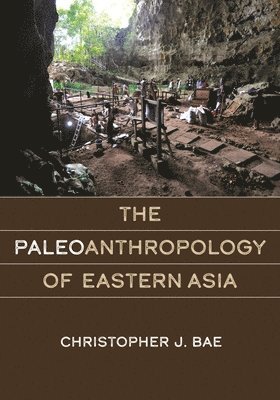
In Asia, research in human evolution has long been considered to have lagged far behind what was going on in places like Africa and Europe. Oftentimes this is due to the limited dissemination of research findings rather than the lack of actual research. The Paleoanthropology of Eastern Asia is an attempt to rectify this discrepancy by providing rich evidence rooted in deep research traditions from East and Southeast Asia. It covers fossils from the earliest arrival of hominins more than two million years ago to the end of the last Ice Age 15,000 years ago. During this wide span of time, many exciting and important events happened in eastern Asia. The earliest hominins arrived in the region; various hominin species evolved and interacted with one another, including Homo erectus, Homo sapiens, and a few more in between. While fossils can reveal what these hominins may have looked like, the rich Paleolithic archaeological record yields clues to their behavior. Handaxes have been found in eastern Asia where they were previously believed to have been absent. Watercraft was used by foragers as early as 40,000 years ago to reach regions like the Japanese archipelago, showing that deep-sea voyaging has a long and deep history. In Indonesia, captivating cave art older than the famous Lascaux paintings from France have been reported. The story continues with a tremendous amount of new and important discoveries from the region being reported almost daily. Providing comprehensive coverage of paleoanthropological research in eastern Asia—from the groundbreaking finds in a cave near Beijing in the early twentieth century to the discovery and identification of new human species during the twenty-first century—this book will interest anyone wishing to learn about the human evolutionary record.