Christopher (Kit) Kelen - Böcker
Visar alla böcker från författaren Christopher (Kit) Kelen. Handla med fri frakt och snabb leverans.
6 produkter
6 produkter
309 kr
Skickas inom 5-8 vardagar
271 kr
Skickas inom 5-8 vardagar
2 412 kr
Skickas inom 10-15 vardagar
Poetics and Ethics of Anthropomorphism: Children, Animals, and Poetry investigates a kind of poetry written mainly by adults for children. Many genres, including the picture book, are considered in asking for what purposes ‘animal poetry’ is composed and what function it serves. Critically contextualising anthropomorphism in traditional and contemporary poetic and theoretical discourses, these pages explore the representation of animals through anthropomorphism, anthropocentrism, and through affective responses to other-than-human others. Zoomorphism – the routine flipside of anthropomorphism – is crucially involved in the critical unmasking of the taken-for-granted textual strategies dealt with here. With a focus on the ethics entailed in poetic relations between children and animals, and between humans and nonhumans, this book asks important questions about the Anthropocene future and the role in it of literature intended for children. Poetics and Ethics of Anthropomorphism: Children, Animals, and Poetry is a vital resource for students and for scholars in children’s literature.
713 kr
Skickas inom 10-15 vardagar
Poetics and Ethics of Anthropomorphism: Children, Animals, and Poetry investigates a kind of poetry written mainly by adults for children. Many genres, including the picture book, are considered in asking for what purposes ‘animal poetry’ is composed and what function it serves. Critically contextualising anthropomorphism in traditional and contemporary poetic and theoretical discourses, these pages explore the representation of animals through anthropomorphism, anthropocentrism, and through affective responses to other-than-human others. Zoomorphism – the routine flipside of anthropomorphism – is crucially involved in the critical unmasking of the taken-for-granted textual strategies dealt with here. With a focus on the ethics entailed in poetic relations between children and animals, and between humans and nonhumans, this book asks important questions about the Anthropocene future and the role in it of literature intended for children. Poetics and Ethics of Anthropomorphism: Children, Animals, and Poetry is a vital resource for students and for scholars in children’s literature.
93 kr
Skickas inom 7-10 vardagar
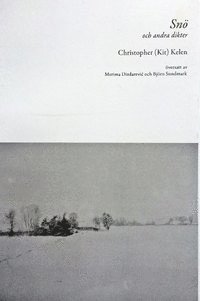
I december 2010 besökte poeten och konstnären Kit Kelen Sverige. Det rådde sträng vinter: en annorlunda och ny upplevelse för en australier verksam i Macao sedan många år. Snö avslöjar, spår syns tydligt - rådjurskövar över ett vitt fält, skidspårens skeva paralleller genom landskapet . men snö gör och ger också avtryck. Och så var det för Kelen. Vinterupplevelsen - både i snön vid stugan i Dalarna och i modden i centrala Malmö - gav honom uppslag till en svit dikter som här presenteras på svenska. För läsare välbekanta med snö ges ett annorlunda perspektiv. Samtidigt tjänar samlingen som en introduktion till ett viktigt författarskap som är föga känt i Sverige. Dikterna har översatts av Merima Dizdarevic och Björn Sundmark, som också skrivit en inledning.
110 kr
Skickas inom 7-10 vardagar
This book is not a tale of two cities. It is a rare glimpse, a reflection across worlds. In these pages we see photos and haiku from Malmö and Macao. The pictures present fleeting impressions, moments in time. And so do the haiku! The six languages of the book bear meanings like passenger pigeons across continents. The haiku is, in and of itself, almost a photographic form of poetry – with its three short surprising lines, with ideas and images seemingly at odds, and with the ‘expected unexpected’ turn at the end. Both photograph and haiku are art forms of the here-and-now. Six languages reveal subtle nuances in the understanding of a particular moment. But how has this book come about, and what can come of the chance meeting of Malmö and Macao, as documented here? And what of the invocation to the twin patron saints of Linnaeus and Palme (and thus to science and politics)? What will the final line reveal?