Christopher L. Carter – författare
Visar alla böcker från författaren Christopher L. Carter. Handla med fri frakt och snabb leverans.
4 produkter
4 produkter
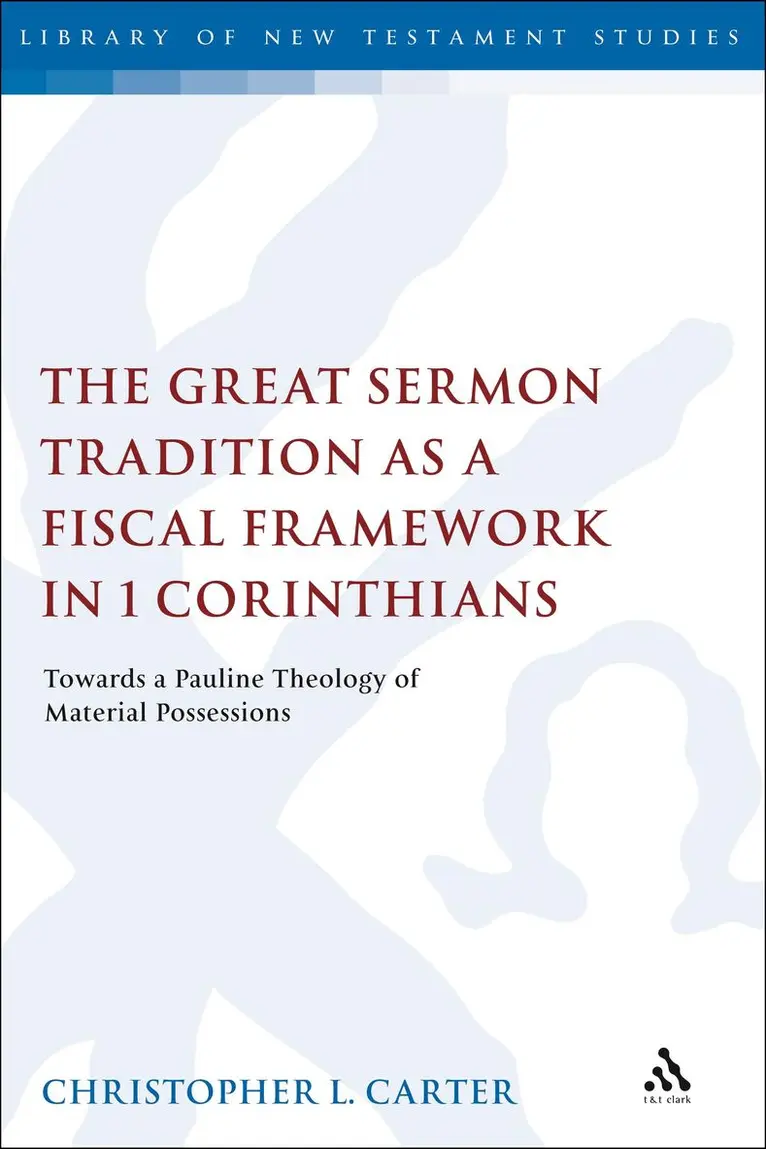
Great Sermon Tradition as a Fiscal Framework in 1 Corinthians
Towards a Pauline Theology of Material Possessions
Inbunden, Engelska, 2009
2 338 kr
Skickas inom 5-8 vardagar
This text addresses two separate but related questions. Firstly, what is Paul's theology of material possessions, and secondly, what is the source of the apostle's thought on this subject? Carter endeavours to answer these questions by posing the hypothesis that Paul owes his pecuniary thought to the synoptic sermon tradition. Unlike other studies that investigate this link, Carter does not appeal to verbal parallels to establish this theory. Rather, he demonstrates a continuity in the broad fiscal thought of Jesus and Paul. This is accomplished by first demonstrating the plausibility of Paul's acquaintance with the dominical tradition through evidence related to the apostle's historical environment and his extant writings. The author then establishes the likelihood that Paul knew the pre-synoptic sermon tradition because of its ubiquity in early church discipleship, the judgment of form critical scholars, and its pervasive resonances in Pauline literature. From this point of embarkation, Carter moves on to articulate the broad fiscal thought of the synoptic sermons. It is found that the synoptic sermons' fiscal material has a pervasively eschatological orientation, and that in the sermons, Jesus seeks to redefine the financial worldview of Christian disciples. Having examined the synoptic sermons, their fiscal thought is compared with that expressed by Paul in 1 Corinthians. Through the course of this comparison, alternate sources in Jewish and Hellenistic literature are considered as potential explanations for any correspondences. Ultimately, the study concludes that Jesus' and Paul's financial thought evidence remarkable symmetry that cannot be explained by a shared cultural environment. Consequently, it is determined that Paul very likely depends on the dominical tradition for the contours of his financial thought.
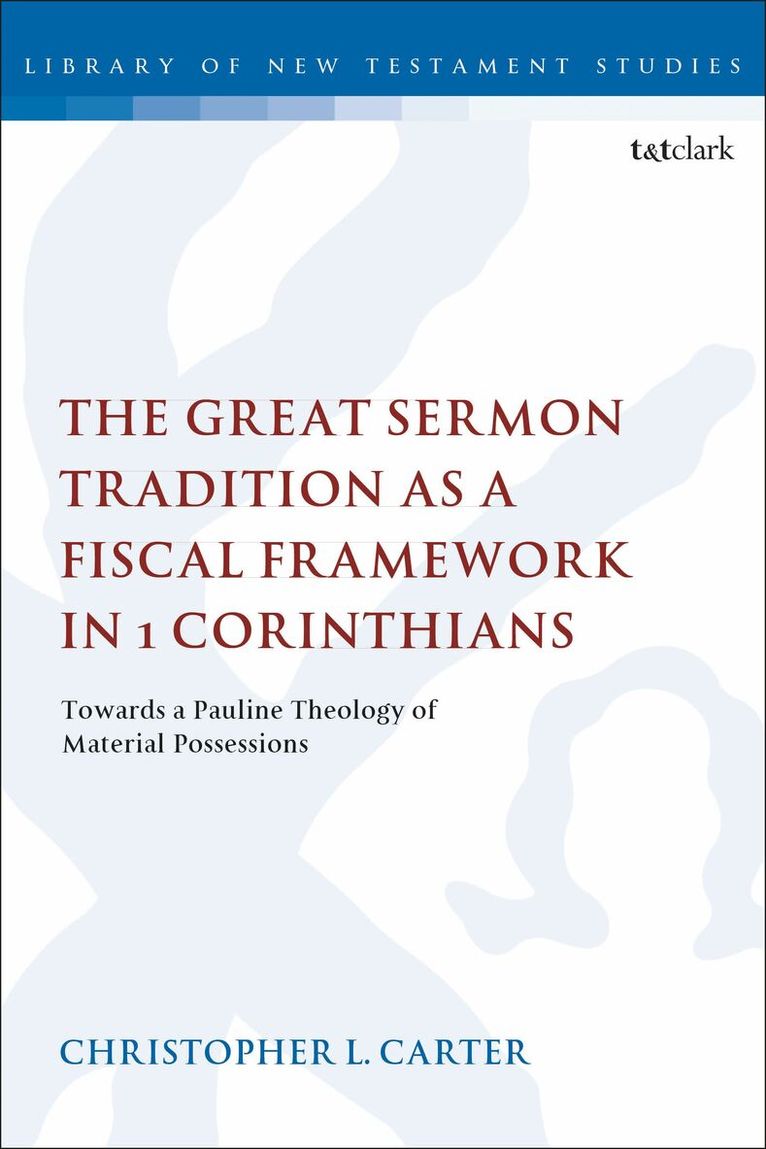
Great Sermon Tradition as a Fiscal Framework in 1 Corinthians
Towards a Pauline Theology of Material Possessions
Häftad, Engelska, 2019
557 kr
Skickas inom 5-8 vardagar
This text addresses two separate but related questions. Firstly, what is Paul's theology of material possessions, and secondly, what is the source of the apostle's thought on this subject? Carter endeavours to answer these questions by posing the hypothesis that Paul owes his pecuniary thought to the synoptic sermon tradition. Unlike other studies that investigate this link, Carter does not appeal to verbal parallels to establish this theory. Rather, he demonstrates a continuity in the broad fiscal thought of Jesus and Paul. This is accomplished by first demonstrating the plausibility of Paul's acquaintance with the dominical tradition through evidence related to the apostle's historical environment and his extant writings. The author then establishes the likelihood that Paul knew the pre-synoptic sermon tradition because of its ubiquity in early church discipleship, the judgment of form critical scholars, and its pervasive resonances in Pauline literature. From this point of embarkation, Carter moves on to articulate the broad fiscal thought of the synoptic sermons. It is found that the synoptic sermons' fiscal material has a pervasively eschatological orientation, and that in the sermons, Jesus seeks to redefine the financial worldview of Christian disciples. Having examined the synoptic sermons, their fiscal thought is compared with that expressed by Paul in 1 Corinthians. Through the course of this comparison, alternate sources in Jewish and Hellenistic literature are considered as potential explanations for any correspondences. Ultimately, the study concludes that Jesus' and Paul's financial thought evidence remarkable symmetry that cannot be explained by a shared cultural environment. Consequently, it is determined that Paul very likely depends on the dominical tradition for the contours of his financial thought.
1 542 kr
Skickas inom 3-6 vardagar
How resistance to extraction shaped Indigenous demands for autonomy, integration, or assimilationFrom the onset of colonialism, Indigenous communities have faced seizure of their land, labor, and resources by non-Indigenous actors. In The Long Shadow of Extraction, Christopher Carter argues that the native groups’ resistance to extraction took distinct forms, and that this variation explains why some communities demanded autonomy while others demanded integration or assimilation. Countering existing scholarship that assumes a universal demand for autonomy, Carter shows that some Indigenous communities in fact refused government offers to recognize their local political authority and longstanding economic institutions.Carter argues that contemporary Indigenous demands were forged in early twentieth-century efforts to resist extraction. Drawing on two emblematic Latin American cases, Peru and Bolivia, Carter shows that in communities where traditional Indigenous leaders organized resistance, ethnic mobilization occurred and gave rise to enduring demands for autonomy, or state recognition of Indigenous identities and institutions. In communities where unions and leftist parties organized resistance, class-based mobilization became the norm. This led communities to reject autonomy and demand instead integration (state recognition of Indigenous identities but not Indigenous institutions) or assimilation (state recognition of neither Indigenous identities nor institutions). Carter’s groundbreaking account of Indigenous resistance has important implications for understanding not only the historical emergence of autonomy but variations in identity-based mobilization in multiethnic democracies.
244 kr
Skickas inom 7-10 vardagar
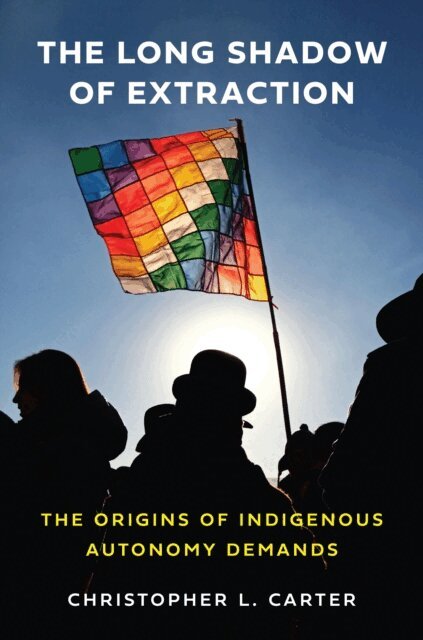
How resistance to extraction shaped Indigenous demands for autonomy, integration, or assimilationFrom the onset of colonialism, Indigenous communities have faced seizure of their land, labor, and resources by non-Indigenous actors. In The Long Shadow of Extraction, Christopher Carter argues that the native groups’ resistance to extraction took distinct forms, and that this variation explains why some communities demanded autonomy while others demanded integration or assimilation. Countering existing scholarship that assumes a universal demand for autonomy, Carter shows that some Indigenous communities in fact refused government offers to recognize their local political authority and longstanding economic institutions.Carter argues that contemporary Indigenous demands were forged in early twentieth-century efforts to resist extraction. Drawing on two emblematic Latin American cases, Peru and Bolivia, Carter shows that in communities where traditional Indigenous leaders organized resistance, ethnic mobilization occurred and gave rise to enduring demands for autonomy, or state recognition of Indigenous identities and institutions. In communities where unions and leftist parties organized resistance, class-based mobilization became the norm. This led communities to reject autonomy and demand instead integration (state recognition of Indigenous identities but not Indigenous institutions) or assimilation (state recognition of neither Indigenous identities nor institutions). Carter’s groundbreaking account of Indigenous resistance has important implications for understanding not only the historical emergence of autonomy but variations in identity-based mobilization in multiethnic democracies.