Christopher M. Graney - Böcker
Visar alla böcker från författaren Christopher M. Graney. Handla med fri frakt och snabb leverans.
6 produkter
6 produkter
361 kr
Skickas inom 3-6 vardagar
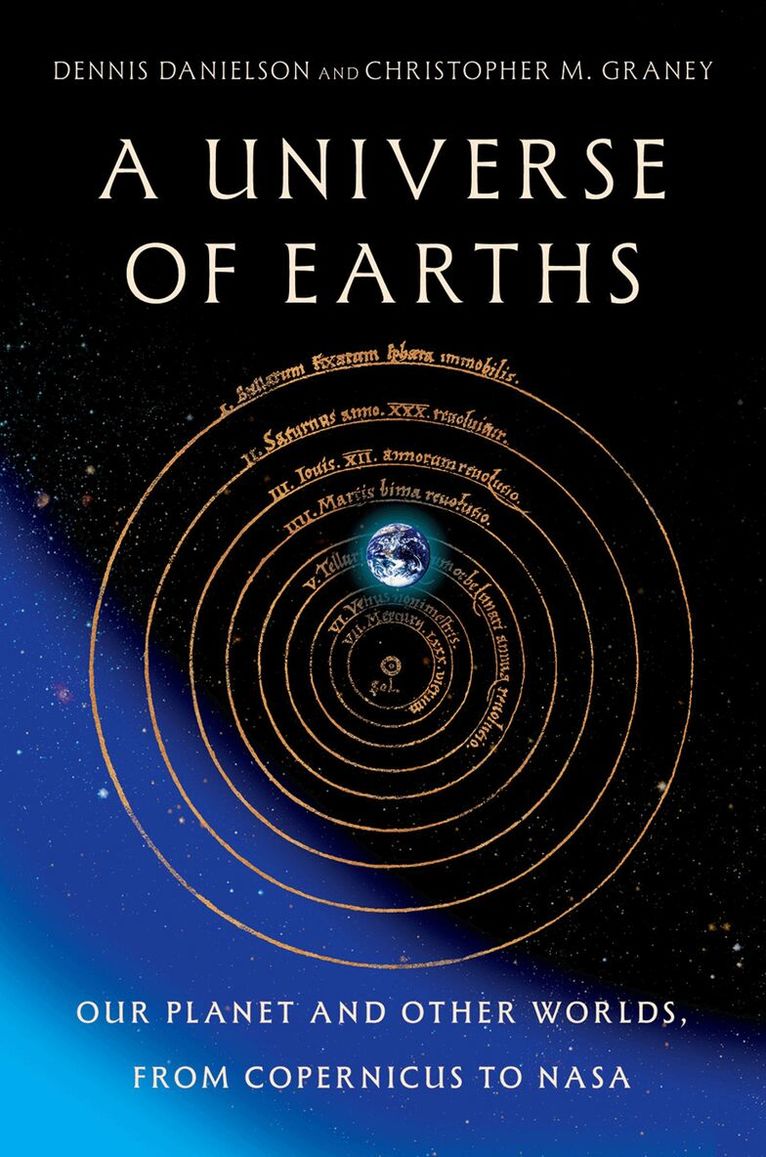
Planet Earth has been a familiar concept for a mere fraction of recorded history. Until about the mid-1600s, most humans thought of Earth as immobile, likely either dim or simply invisible from the Moon or anywhere else in the heavens, and not (like the planets) participating in what Galileo called "the dance of the stars." A Universe of Earths: Our Planet and Other Worlds, from Copernicus to NASA retraces the exhilarating story of how all that changed, and how we came to perceive the Earth as a "wandering star." It's a story that has vastly augmented and enriched our understanding of how Earth and its inhabitants fit into the big picture of the Cosmos. But almost as soon as humans started to grasp that Earth is a planet, many also began wondering if perhaps the other planets might be earths. This bold conjecture ignited the whole gripping history and literature of space travel, of extraterrestrials, of other worlds. And yet the thesis that the Universe is full of other worlds like Earth has from the start been fuelled more by imagination than by scientific evidence. For all its appeal, it has consistently been undermined by observations of the actual Universe. A Universe of Earths offers a surprising alternative to that "other worlds" account, one that releases humans not only from the pre-Copernican view of Earth as low, lowly, dark, a cosmic sump, but also from the persistent modern aspersion of Earth as cosmically ordinary, "mediocre," "dethroned." Instead, from Copernicus to the present, we are confronted with the bracing realization that Earth is in the classical sense a star, a dynamically wandering one, and a bright, maybe even peerless participant in the dance of the stars.
Setting Aside All Authority
Giovanni Battista Riccioli and the Science Against Copernicus in the Age of Galileo
Häftad, Engelska, 2015
311 kr
Skickas inom 10-15 vardagar
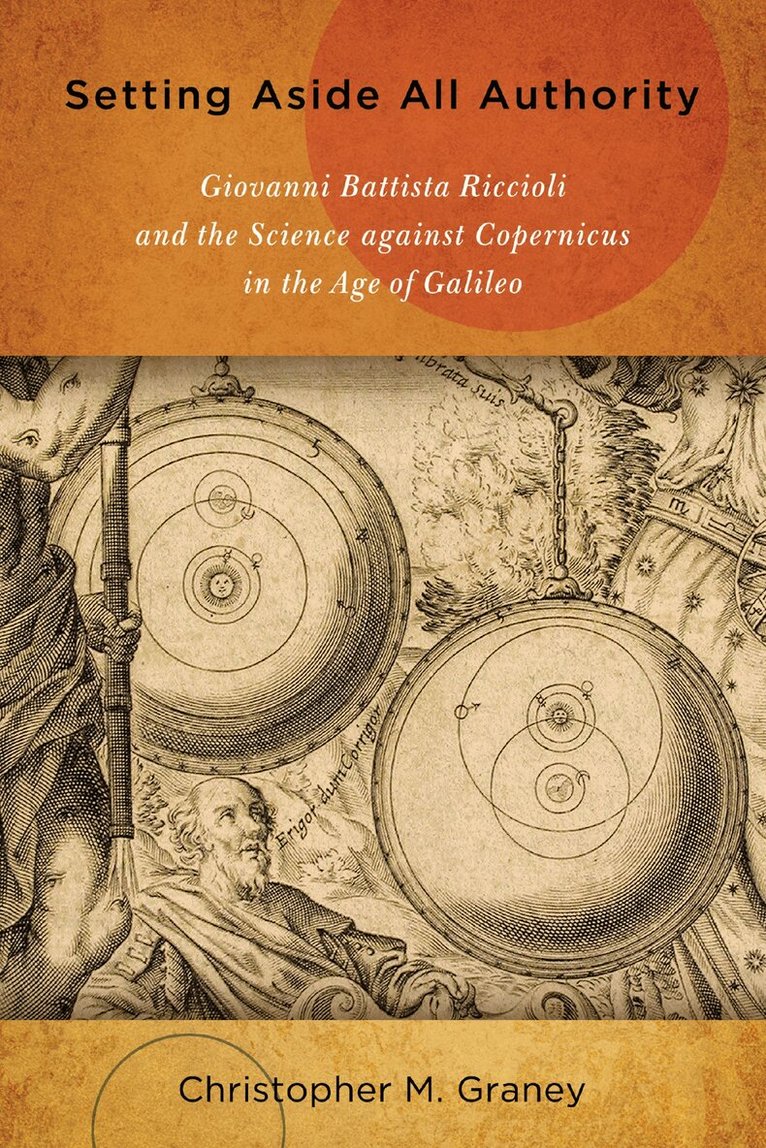
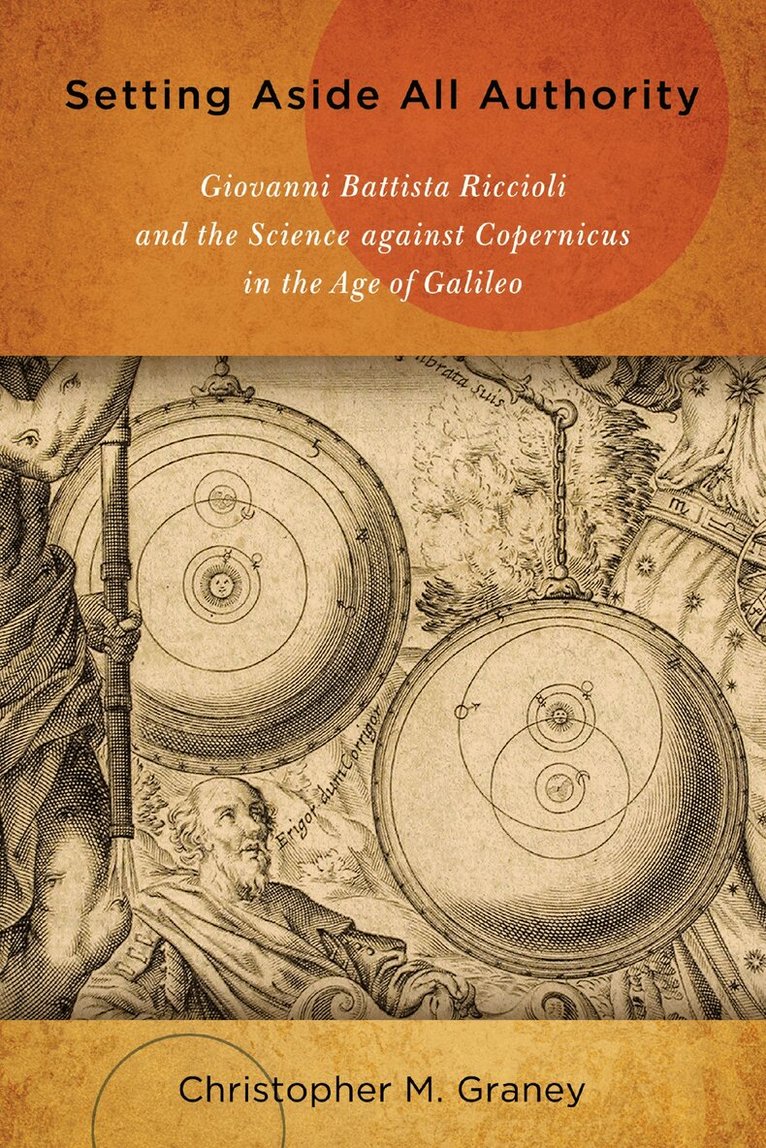
Setting Aside All Authority is an important account and analysis of seventeenth-century scientific arguments against the Copernican system. Christopher M. Graney challenges the long-standing ideas that opponents of the heliocentric ideas of Copernicus and Galileo were primarily motivated by religion or devotion to an outdated intellectual tradition, and that they were in continual retreat in the face of telescopic discoveries. Graney calls on newly translated works by anti-Copernican writers of the time to demonstrate that science, not religion, played an important, and arguably predominant, role in the opposition to the Copernican system. Anti-Copernicans, building on the work of the Danish astronomer Tycho Brahe, were in fact able to build an increasingly strong scientific case against the heliocentric system at least through the middle of the seventeenth century, several decades after the advent of the telescope. The scientific case reached its apogee, Graney argues, in the 1651 New Almagest of the Italian Jesuit astronomer Giovanni Battista Riccioli, who used detailed telescopic observations of stars to construct a powerful scientific argument against Copernicus. Setting Aside All Authority includes the first English translation of Monsignor Francesco Ingoli's essay to Galileo (disputing the Copernican system on the eve of the Inquisition's condemnation of it in 1616) and excerpts from Riccioli's reports regarding his experiments with falling bodies.
837 kr
Skickas inom 10-15 vardagar
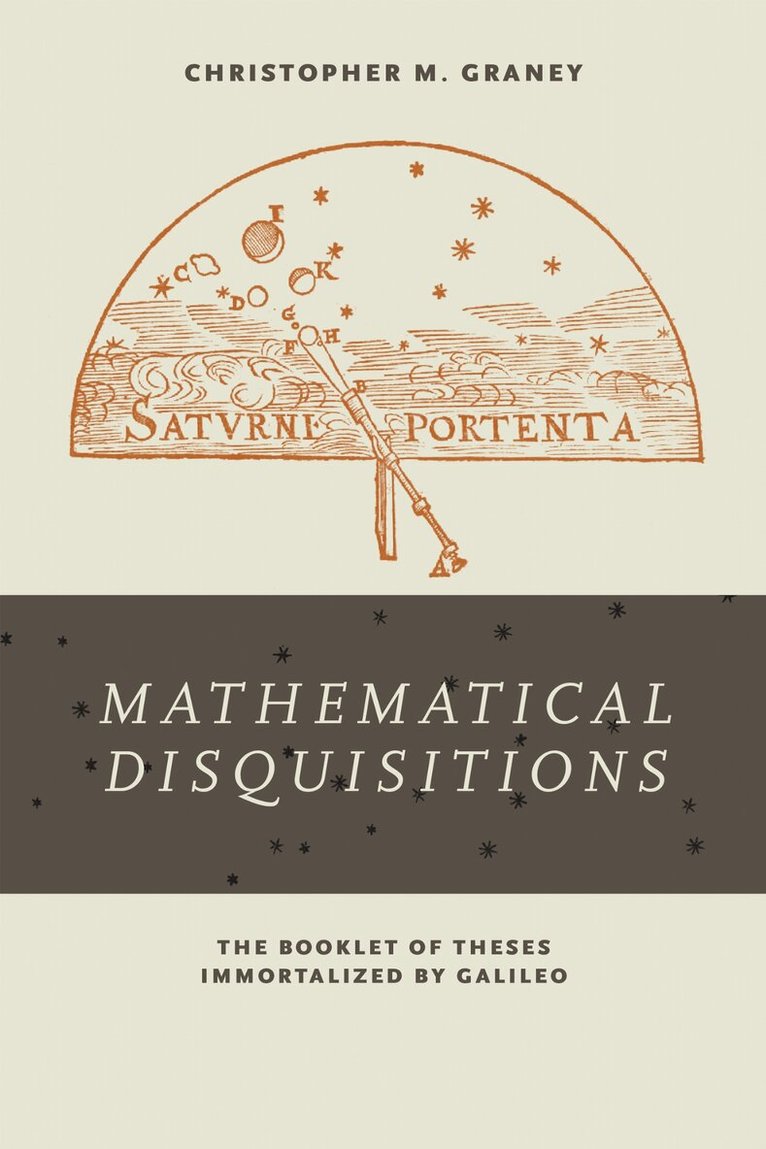
Mathematical Disquisitions:The Booklet of Theses Immortalized by Galileo offers a new English translation of the 1614 Disquisitiones Mathematicae, which Johann Georg Locher wrote under the guidance of the German Jesuit astronomer Christoph Scheiner. The booklet, an anti-Copernican astronomical work, is of interest in large part because Galileo Galilei, who came into conflict with Scheiner over the discovery of sunspots, devoted numerous pages within his famous 1632 Dialogue Concerning the Two Chief World Systems—Ptolemaic and Copernican to ridiculing Disquisitiones. The brief text (the original was approximately one hundred pages) is heavily illustrated with dozens of original figures, making it an accessible example of "geocentric astronomy in the wake of the telescope."
270 kr
Skickas inom 10-15 vardagar
Mathematical Disquisitions:The Booklet of Theses Immortalized by Galileo offers a new English translation of the 1614 Disquisitiones Mathematicae, which Johann Georg Locher wrote under the guidance of the German Jesuit astronomer Christoph Scheiner. The booklet, an anti-Copernican astronomical work, is of interest in large part because Galileo Galilei, who came into conflict with Scheiner over the discovery of sunspots, devoted numerous pages within his famous 1632 Dialogue Concerning the Two Chief World Systems—Ptolemaic and Copernican to ridiculing Disquisitiones. The brief text (the original was approximately one hundred pages) is heavily illustrated with dozens of original figures, making it an accessible example of "geocentric astronomy in the wake of the telescope."
Setting Aside All Authority
Giovanni Battista Riccioli and the Science Against Copernicus in the Age of Galileo
Inbunden, Engelska, 2022
1 114 kr
Skickas inom 10-15 vardagar
Setting Aside All Authority is an important account and analysis of seventeenth-century scientific arguments against the Copernican system. Christopher M. Graney challenges the long-standing ideas that opponents of the heliocentric ideas of Copernicus and Galileo were primarily motivated by religion or devotion to an outdated intellectual tradition, and that they were in continual retreat in the face of telescopic discoveries. Graney calls on newly translated works by anti-Copernican writers of the time to demonstrate that science, not religion, played an important, and arguably predominant, role in the opposition to the Copernican system. Anti-Copernicans, building on the work of the Danish astronomer Tycho Brahe, were in fact able to build an increasingly strong scientific case against the heliocentric system at least through the middle of the seventeenth century, several decades after the advent of the telescope. The scientific case reached its apogee, Graney argues, in the 1651 New Almagest of the Italian Jesuit astronomer Giovanni Battista Riccioli, who used detailed telescopic observations of stars to construct a powerful scientific argument against Copernicus. Setting Aside All Authority includes the first English translation of Monsignor Francesco Ingoli's essay to Galileo (disputing the Copernican system on the eve of the Inquisition's condemnation of it in 1616) and excerpts from Riccioli's reports regarding his experiments with falling bodies.
239 kr
Skickas
The science/faith discussion is often hindered by a fundamental misunderstanding of the role and function of science. This misunderstand was made most evident, with tragic consequences, during the recent pandemic. The ways that science has gone wrong, and the underlying causes of how it goes wrong, will be illustrated here with a series of historical essays describing ideas about the universe, planet Earth, and the evolution of life that were all based on ideas that were reasonable…but ultimately wrong. Some are amusing in retrospect; others are tragic.Theology, philosophy, or even mathematics may lay claim to eternal truths, but in science our very cosmologies change. Just as the major religions have adapted in the face of changing cultural cosmologies, so too has science adapted in the face of challenging new observations and new ideas. Religions and science are strengthened by experiencing a shift in our assumptions; that's where we find out what's essential, and what is cultural baggage.Ultimately, the point of our science is not to come up with the "right answer." Both as scientists and as human beings, we know that sometimes we learn the most by encountering ideas that challenge us. When we say, "I know that can't be right; so, where did it go wrong?" we gain a greater insight into what we do believe, and what it really means.Endorsements"As an antidote to our penchant to treat scientific findings as settled facts, the authors discuss the scientific method, rightly understood as a gift compatible with faith in our search for truth and meaning."—Archbishop Emeritus Joseph E. Kurtz, Archdiocese of Louisville"Departing refreshingly from the typically pontifical tone of popular science books, here are two experts who educate us on the ups and downs of the history of science with good humor and humility."—Jonathan I. Lunine, David C. Duncan Professor in the Physical Sciences, Cornell University"When Science Goes Wrong is an excellent resource for teachers, students, or anyone who wishes to examine how the very human process of scientific discovery unfolded through the ages."—Dr. Katherine Bulinski, associate professor of geosciences, Bellarmine UniversityBrother Guy Consolmagno, SJ, is a research astronomer, physicist, a Jesuit religious brother, director of the Vatican Observatory, and currently the president of the Vatican Observatory Foundation. In 2022, he was awarded the St. Albert Award by the Society of Catholic Scientists. He is the author of numerous books, including Would You Baptize an Extraterrestrial?: ...and Other Questions from the Astronomers' In-box at the Vatican Observatory (with Paul Muller).Christopher M. Graney is an astronomer and historian of science with the Vatican astronomical observatory in Rome and the Vatican Observatory Foundation in Tucson, Arizona.†