Christopher Wolfe - Böcker
Visar alla böcker från författaren Christopher Wolfe. Handla med fri frakt och snabb leverans.
14 produkter
14 produkter
428 kr
Skickas inom 7-10 vardagar
Liberal political philosophy and natural law theory are not contradictory, but - properly understood - mutually reinforcing. Contemporary liberalism (as represented by Rawls, Guttman and Thompson, Dworkin, Raz, and Macedo) rejects natural law and seeks to diminish its historical contribution to the liberal political tradition, but it is only one, defective variant of liberalism. A careful analysis of the history of liberalism, identifying its core principles, and a similar examination of classical natural law theory (as represented by Thomas Aquinas and his intellectual descendants), show that a natural law liberalism is possible and desirable. Natural law theory embraces the key principles of liberalism, and it also provides balance in resisting some of its problematic tendencies. Natural law liberalism is the soundest basis for American public philosophy, and it is a potentially more attractive and persuasive form of liberalism for nations that have tended to resist it.
1 192 kr
Skickas inom 7-10 vardagar
Liberal political philosophy and natural law theory are not contradictory, but - properly understood - mutually reinforcing. Contemporary liberalism (as represented by Rawls, Guttman and Thompson, Dworkin, Raz, and Macedo) rejects natural law and seeks to diminish its historical contribution to the liberal political tradition, but it is only one, defective variant of liberalism. A careful analysis of the history of liberalism, identifying its core principles, and a similar examination of classical natural law theory (as represented by Thomas Aquinas and his intellectual descendants), show that a natural law liberalism is possible and desirable. Natural law theory embraces the key principles of liberalism, and it also provides balance in resisting some of its problematic tendencies. Natural law liberalism is the soundest basis for American public philosophy, and it is a potentially more attractive and persuasive form of liberalism for nations that have tended to resist it.
347 kr
Skickas inom 7-10 vardagar
The role of the United States Supreme Court has been deeply controversial throughout American history. Should the Court undertake the task of guarding a wide variety of controversial and often unenumerated rights? Or should it confine itself to enforcing specific constitutional provisions, leaving other issues (even those of rights) to the democratic process? That Eminent Tribunal brings together a distinguished group of legal scholars and political scientists who argue that the Court's power has exceeded its appropriate bounds, and that sound republican principles require greater limits on that power. They reach this conclusion by an interesting variety of paths, and despite varied political convictions. Some of the essays debate the explicit claims to constitutional authority laid out by the Supreme Court itself in Planned Parenthood v. Casey and similar cases, and others focus on the defenses of judicial authority found commonly in legal scholarship (e.g., the allegedly superior moral reasoning of judges, or judges' supposed track record of superior political decision making).The authors find these arguments wanting and contend that the principles of republicanism and the contemporary form of judicial review exercised by the Supreme Court are fundamentally incompatible. The contributors include Hadley Arkes, Gerard V. Bradley, George Liebmann, Michael McConnell, Robert F. Nagel, Jack Wade Nowlin, Steven D. Smith, Jeremy Waldron, Keith E. Whittington, Christopher Wolfe, and Michael P. Zuckert.
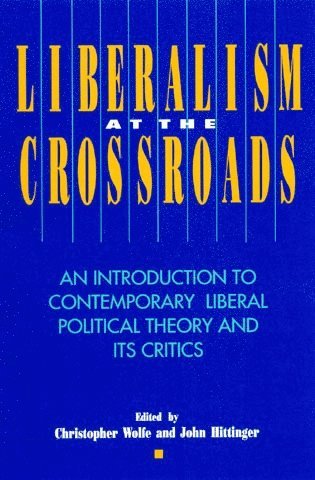
Liberalism at the Crossroads
An Introduction to Contemporary Liberal Political Theory and Its Critics
Häftad, Engelska, 2003
789 kr
Skickas inom 5-8 vardagar
Liberalism at the Crossroads offers succinct, accessible, and well-written surveys of the ideas of the leading participants in the contemporary philosophical debate about liberalism. Christopher Wolfe brings together analyses of leading liberal thinkers from across the spectrum as well as influential critics of liberalism, including John Rawls, Ronald Dworkin, Robert Nozick, Michael Sandel, Richard Rorty, Joseph Raz, and William Galston. For the second edition, each chapter has been thoroughly revised, and new chapters on Susan Moller Okin, Richard Posner, and John Finnis have been added to include representatives of liberal feminism, law and economics, and natural law. The result is an invaluable overview of contemporary political theory, ideal for both students and scholars.
675 kr
Skickas inom 10-15 vardagar
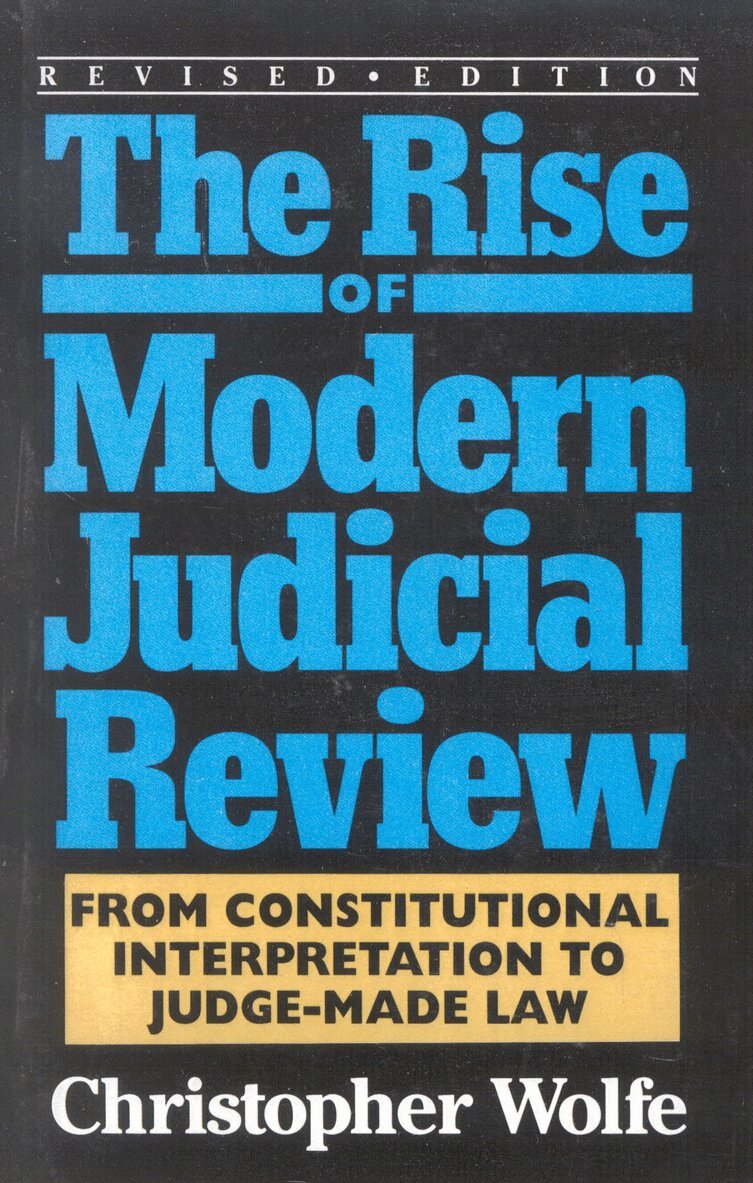
This major history of judicial review, revised to include the Rehnquist court, shows how modern courts have used their power to create new 'rights with fateful political consequences.' Originally published by Basic Books.
Liberalism at the Crossroads
An Introduction to Contemporary Liberal Political Theory and Its Critics
Häftad, Engelska, 1994
675 kr
Skickas inom 10-15 vardagar
Liberalism at the Crossroads provides a fair but lively introduction to key thinkers and schools of thought in the contemporary debate regarding liberal political theory.
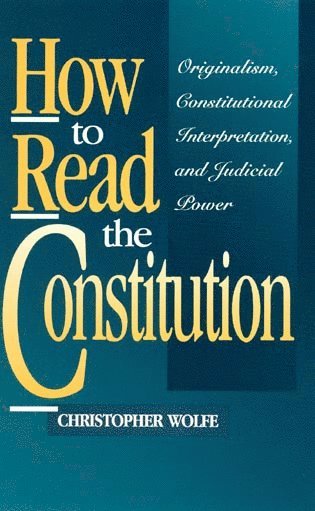
How to Read the Constitution
Originalism, Constitutional Interpretation, and Judicial Power
Häftad, Engelska, 1996
621 kr
Skickas inom 10-15 vardagar
Prominent constitutional scholar Christopher Wolfe challenges popular opinions by presenting an insightful and well-supported defense of originalist interpretations of the Constitution. He describes the traditional approach to constitutional interpretation and judicial review and then focuses his analysis on the due process clause, which has become the source of most modern constitutional law. Wolfe challenges the most influential defenders of judicial activism, including Laurence Tribe, Michael Dorf, Harry Wellington, and Mark Tushnet, and he persuasively explains the dire political consequences of taking the Constitution out of constitutional law.
568 kr
Skickas inom 10-15 vardagar
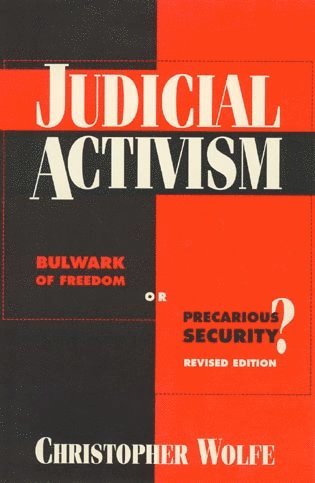
In this revised and updated edition of a classic text, one of America's leading constitutional theorists presents a brief but well-balanced history of judicial review and summarizes the arguments both for and against judicial activism within the context of American democracy. Christopher Wolfe demonstrates how modern courts have used their power to create new "rights" with fateful political consequences and he challenges popular opinions held by many contemporary legal scholars. This is important reading for anyone interested in the role of the judiciary within American politics.Praise for the first edition of Judicial Activism:"This is a splendid contribution to the literature, integrating for the first time between two covers an extensive debate, honestly and dispassionately presented, on the role of courts in American policy.—Stanley C. Brubaker, Colgate University
1 819 kr
Skickas inom 7-10 vardagar
"Public reason" is one of the central concepts in modern liberal political theory. As articulated by John Rawls, it presents a way to overcome the difficulties created by intractable differences among citizens' religious and moral beliefs by strictly confining the place of such convictions in the public sphere. Identifying this conception as a key point of conflict, this book presents a debate among contemporary natural law and liberal political theorists on the definition and validity of the idea of public reason. Its distinguished contributors examine the consequences of interpreting public reason more broadly as "right reason," according to natural law theory, versus understanding it in the narrower sense in which Rawls intended. They test public reason by examining its implications for current issues, confronting the questions of abortion and slavery and matters relating to citizenship. This energetic exchange advances our understanding of both Rawls's contribution to political philosophy and the lasting relevance of natural law. It provides new insights into crucial issues facing society today as it points to new ways of thinking about political theory and practice.
758 kr
Skickas inom 5-8 vardagar
"Public reason" is one of the central concepts in modern liberal political theory. As articulated by John Rawls, it presents a way to overcome the difficulties created by intractable differences among citizens' religious and moral beliefs by strictly confining the place of such convictions in the public sphere. Identifying this conception as a key point of conflict, this book presents a debate among contemporary natural law and liberal political theorists on the definition and validity of the idea of public reason. Its distinguished contributors examine the consequences of interpreting public reason more broadly as "right reason", according to natural law theory, versus understanding it in the narrower sense in which Rawls intended. They test public reason by examining its implications for current issues, confronting the questions of abortion and slavery and matters relating to citizenship. This energetic exchange advances our understanding of both Rawls' contribution to political philosophy and the lasting relevance of natural law. It provides new insights into crucial issues facing society today as it points to new ways of thinking about political theory and practice.
1 209 kr
Skickas inom 10-15 vardagar
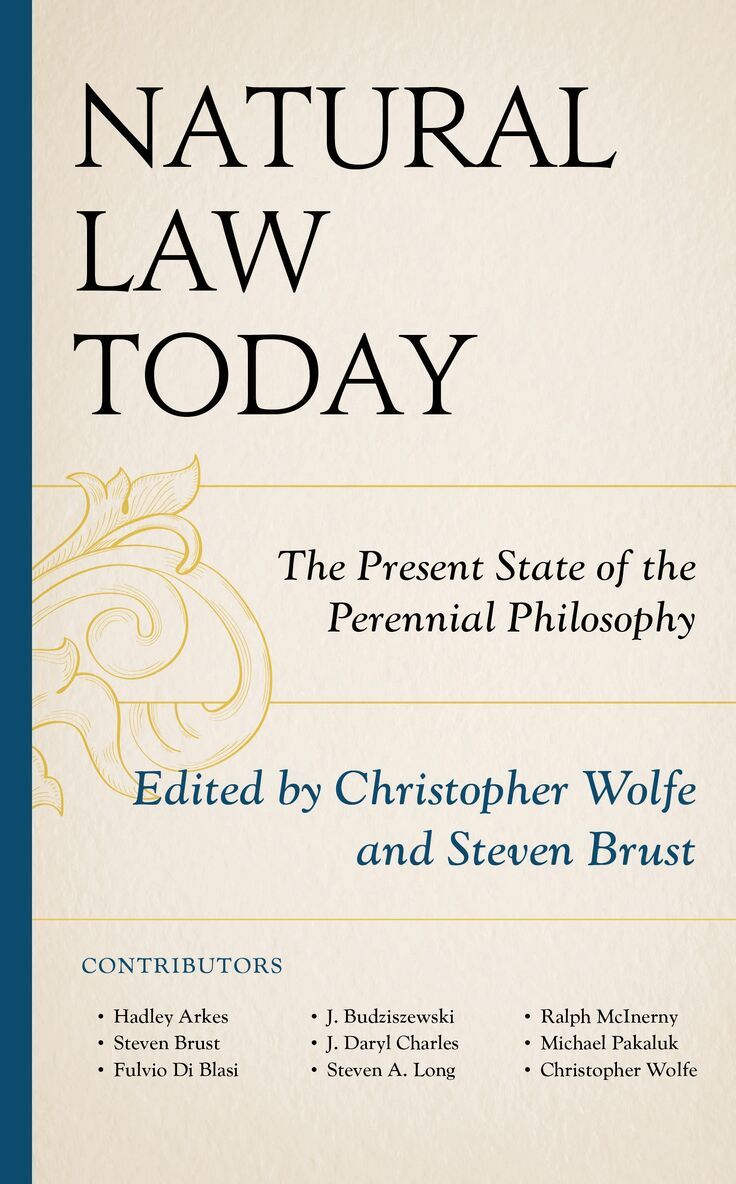
Natural Law Today: The Present State of the Perennial Philosophy explains and defends various aspects of traditional natural law ethical theory, which is rooted in a broad understanding of human nature. Some of the issues touched upon include the relation of natural law to speculative reason and human ends (teleology), the relationship between natural law and natural theology, the so-called naturalistic fallacy (deriving “ought” from “is”), and the scope of natural knowledge of the precepts of the natural law, as well as possible limits on it. It also takes up certain historical and contemporary questions, such as the various stances of Protestant thinkers toward natural law, the place of natural law in contemporary U.S. legal thought, and the relationship between natural law and liberal political thought more generally. It brings together a number of the leading exponents of a more traditional or classical form of natural law thought, who claim to root their arguments within the broader philosophy of Thomas Aquinas more deeply than other major representatives of the natural law tradition today.
488 kr
Skickas inom 10-15 vardagar
Natural Law Today: The Present State of the Perennial Philosophy explains and defends various aspects of traditional natural law ethical theory, which is rooted in a broad understanding of human nature. Some of the issues touched upon include the relation of natural law to speculative reason and human ends (teleology), the relationship between natural law and natural theology, the so-called naturalistic fallacy (deriving “ought” from “is”), and the scope of natural knowledge of the precepts of the natural law, as well as possible limits on it. It also takes up certain historical and contemporary questions, such as the various stances of Protestant thinkers toward natural law, the place of natural law in contemporary U.S. legal thought, and the relationship between natural law and liberal political thought more generally. It brings together a number of the leading exponents of a more traditional or classical form of natural law thought, who claim to root their arguments within the broader philosophy of Thomas Aquinas more deeply than other major representatives of the natural law tradition today.
149 kr
Skickas inom 7-10 vardagar
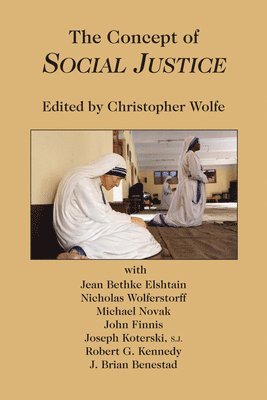
“Social justice” is a term heard a great deal today, but what does it mean? It does not appear in pre-nineteenth century classic texts on justice. Is it a social agenda inspired by compassion? Is it a particular set of institutional arrangements to achieve justice? What the term means, and – in some quarters – whether it is even a term worth using, is a matter of controversy.The inspiration for this book comes from the fact that current discussions of “social justice” often deal overwhelmingly with programs that aim to advance certain specific and controversial policies to deal with various social problems. In the process, important theoretical questions about social justice are not even confronted, much less resolved. For example, what does the word “social” add to “justice”? Isn't all justice “social”? What is the relation between “social justice” and more classical Aristotelian terms such as “distributive justice,” “commutative justice,” and “legal justice”? With respect to its current usage, is the term “social justice” applicable only to special policies or programs (e.g., government or nonprofit social welfare programs)? Does it apply only to the provision of material goods and services? Does it play a role in the ordinary everyday world of business and work?The papers in this book aim, not at identifying some particular set of public policies that allegedly constitute the right content of “social justice,” but at reflection on the meaning of social justice. It is not an exhortation to pursue policies that are “understood,” without discussion, to be the right way to pursue social justice. It is not aimed at stimulating activism, mobilizing people to go out and achieve social justice now. Rather, it aims at building the foundation upon which people can identify general principles of justice, and make reasonable prudential judgments about how to pursue social justice. This theoretical orientation means that it is neither “right-wing” nor “left-wing.” The Concept of Social Justice provides a range of insightful essays on the term and on its various uses and abuses. The authors of these papers are committed to something like “social justice” – they don't believe that it is spurious notion that should be rejected. They may very well disagree about exactly how to pursue social justice. But their primary concern here is to ask, simply, “what is social justice?”Jean Bethke Elshtain and Michael Novak show various ways in which the term has been misunderstood or narrowed or abused for ideological reasons. Nicholas Wolterstorff’s essay makes careful distinctions necessary to identify the implications of adding “social” to “justice” and fleshes out a valuable notion of the concept. John Finnis locates the origins of social justice in an historical misreading of Thomas Aquinas’ discussion of justice, which narrowed his “general justice” in a way that required a new notion of “social justice.” Joseph Koterksi, S.J., Robert Kennedy, and J. Brian Benestad each elaborate some of the ways in which “social justice” has been used in the Catholic social teaching since Rerum Novarum and in international theological and U.S. episcopal documents.Readers will come away from this book with a deeper understanding of the origins of social justice, a sensitivity to the frequent abuses of the term, and a recognition of the forms in which it can be a valuable part of today’s political discourse.
213 kr
Skickas inom 5-8 vardagar