Christy Campbell – författare
Visar alla böcker från författaren Christy Campbell. Handla med fri frakt och snabb leverans.
8 produkter
8 produkter
191 kr
Skickas inom 5-8 vardagar
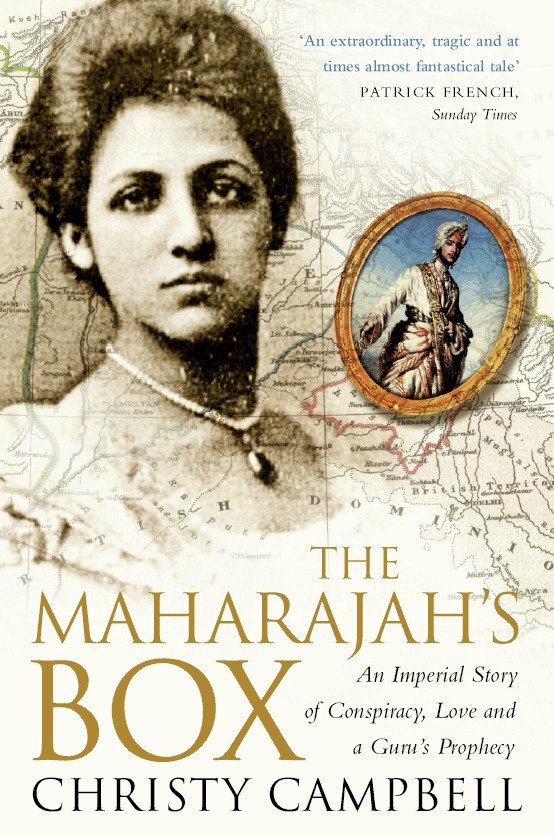
The colourful narrative history of Duleep Singh, the last Emperor of the Sikhs and protégé of Queen Victoria, and his bizarre attempts to regain his kingdom of the Punjab from the British Empire in the late 19th century.In July 1997 the Swiss Bankers’ Association, under international pressure to atone for wartime compliance with Hitler’s Germany, published a list of over 1,700 ‘dormant accounts’, untouched for over fifty years. The names were supposedly those of Jewish victims of the Holocaust, but among them was an Indian princess, ‘last heard of in 1942 living in Penn, Bucks’.Intrigued, Christy Campbell, a journalist on the Sunday Telegraph, started to search the records, and so uncovered the remarkable story of how Maharajah Duleep Singh, the last Emperor of the Sikhs, was made by the British – as a nine-year-old in 1849 – to sign away his kingdom of the Punjab and give Queen Victoria the Koh-i-Noor diamond (the most celebrated diamond in the world, and the jewel in Britain’s Crown).Duleep Singh, a virtual prisoner of Queen Victoria in England, began to dream of regaining his kingdom, and so embarked on a series of adventures (involving Russia and the ‘Great Game’ of Central Asia) before finally begging Victoria’s forgiveness. He had six children and died in 1893. Today the Sikhs still claim their inheritance, including the Koh-i-Noor and the now-divided Punjab.
186 kr
Skickas inom 5-8 vardagar
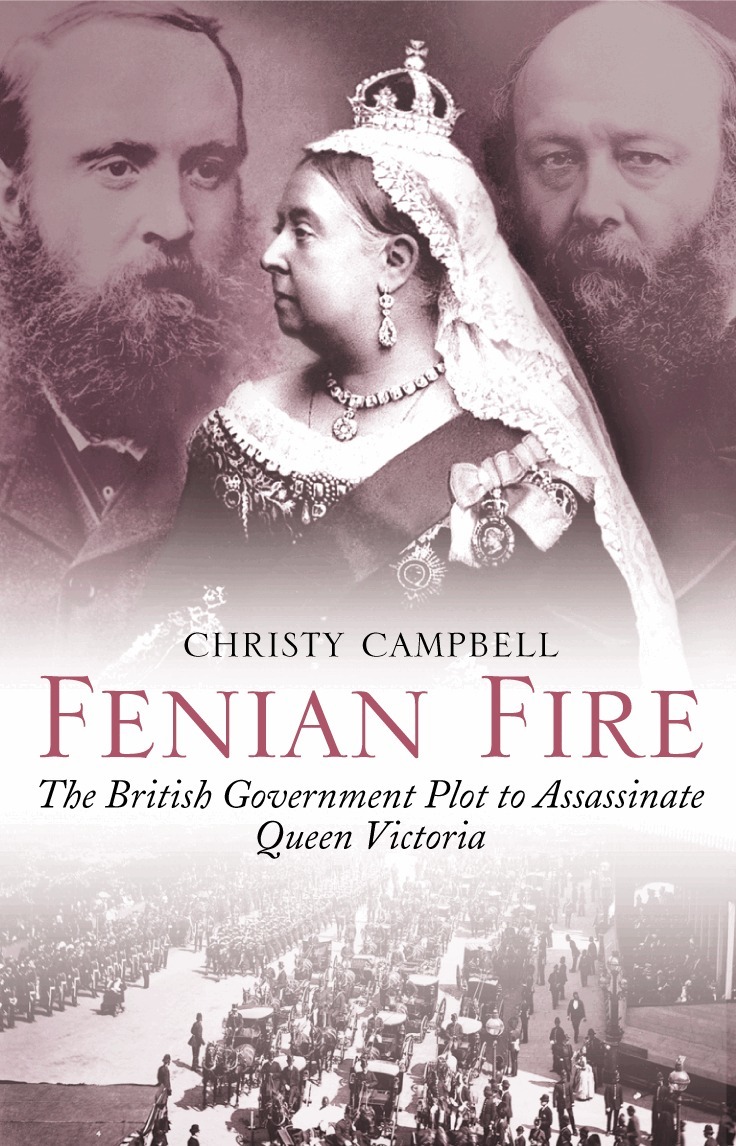
A historical investigation into one of the most serpentine attempts on Queen Victoria’s life that reveals for the first time the true instigator at the heart of government. There were eight attempts to assassinate Queen Victoria during her long reign; four of them were of Irish origin. The most serious of all was the ‘Jubilee Plot’, a conspiracy apparently hatched in New York by the Fenian Brotherhood to blow up the Queen, her family and most of the British Cabinet with dynamite at the great service of thanksgiving to commemorate the 50th anniversary of her accession, held at Westminster Abbey in June 1887.The plot was ‘uncovered’ by Scotland Yard with just a few days to go. Several of the bombers were caught, tried and sentenced to penal servitude for life. But – warned off in time – the master bomber escaped to America…Now, using recently declassified Foreign Office Secret files (marked ‘Fenian Brotherhood’), the author discloses for the first time the huge secret at the heart of the British counter-intelligence operation against militant Irish nationalists: the entire conspiracy was masterminded for its own reasons by a clandestine British agency reporting directly to the Prime Minister, Lord Salisbury.
146 kr
Skickas inom 5-8 vardagar
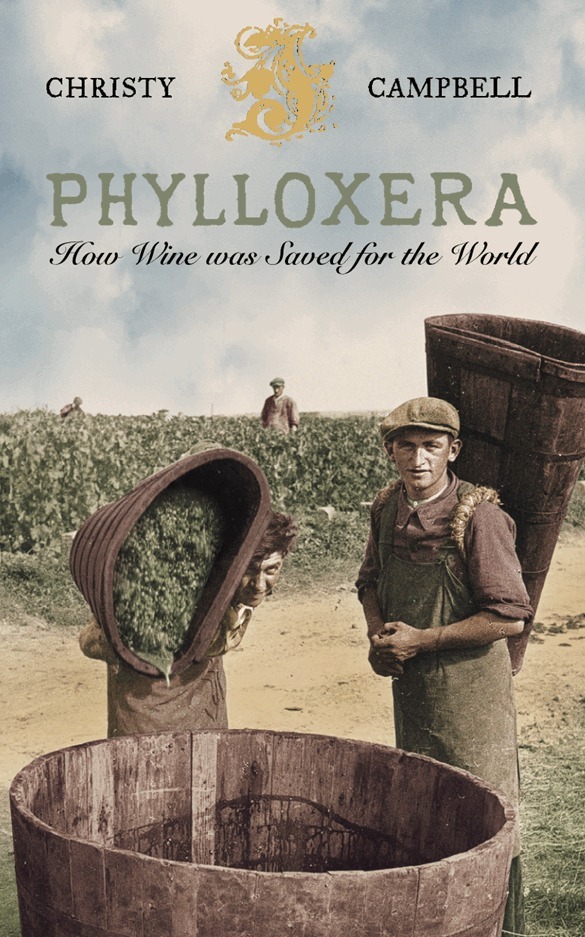
A historical investigation into the mysterious bug that wiped out the vineyards of France and Europe in the 1860s – and how one young botanist eventually ‘saved wine for the world’.In the early 1860s, vines in the lower Rhône valley, and then around Bordeaux, inexplicably began to wither and die. Panic seized France, and Jules-Émile Planchon, a botanist from Montpellier, was sent to investigate. Magnifying glass in hand, he discovered the roots of a dying vine covered in microscopic yellow insects. The tiny aphid would be named Phylloxera vastatrix – 'the dry leaf devastator'. Where it had come from was utterly mysterious, but it advanced with the speed of an invading army. As the noblest vineyards of France came under biological siege, the world's greatest wine industry tottered on the brink of ruin. The grand owners fought the aphid with expensive insecticide, while peasant vignerons simply abandoned their ruined plots in despair. Within a few years the plague had spread across Europe, from Portugal to the Crimea.Planchon, aided by the American entomologist Charles Riley, discovered that the parasite had accidentally been imported from America. He believed that only the introduction of American vines, which appeared to have developed a resistance to the aphid, could save France's vineyards. His opponents maintained that this would merely assist the spread of the disease. Meanwhile, encouraged by the French government's offer of a prize of 300,000 gold francs for a remedy, increasingly bizarre suggestions flooded in, and many wine-growing regions came close to revolution as whole local economies were obliterated. Eventually Planchon and his supporters won the day, and phylloxera-resistant American vines were grafted onto European root-stock. Despite some setbacks – the first fruits of transplanted American vines were universally pronounced undrinkable – by 1914 all vines cultivated in France were hybrid Americans.Phylloxera is an entertaining, revealing and frequently astonishing account of one of the earliest and most successful applications of science to an ecological disaster.
121 kr
Skickas
The dramatic story of the men who fought a new and terrifying kind of war amidst the carnage of the trenches in World War I: the British pioneer volunteers who were the first tank-men into battle.Inspired by a visit to northeast France to witness the excavation of a remarkably intact First World War tank from beneath a suburban vegetable plot near the town of Cambrai, Christy Campbell – then defence correspondent of the Sunday Telegraph – began to piece together the little-known story of the young men who formed the British Tank Corps.Very few of them had been professional soldiers; they were motoring enthusiasts and mechanics, plumbers, motorcyclists, circus performers and polar explorers. One officer declared: 'I have never seen such a band of brigands in my life.' They had trained in conditions of great secrecy in the grounds of a mock-oriental stately home in East Anglia and were originally known as the 'Heavy Branch, Machine Gun Corps'. The word 'tank' itself was deliberately chosen to mislead.Men in tanks saw the face of battle at its most brutal. Their task was to crush and burn the enemy out of his fortifications, and to carve a path for the infantry so they could finish the job with bayonet and grenade. Captured tank crews were beaten up or sometimes shot out of hand by the Germans. They fought in their stifling armoured boxes packed with petrol and explosives, aware that at any moment a shell-hit might incinerate them all.Christy Campbell has combed contemporary diaries and letters and later recollections to tell properly for the first time the robust yet harrowing story of how the first men in tanks went to war. The time frame is 1916-18, with a coda on how German blitzkrieg ideas developed from an English root.
163 kr
Skickas inom 7-10 vardagar
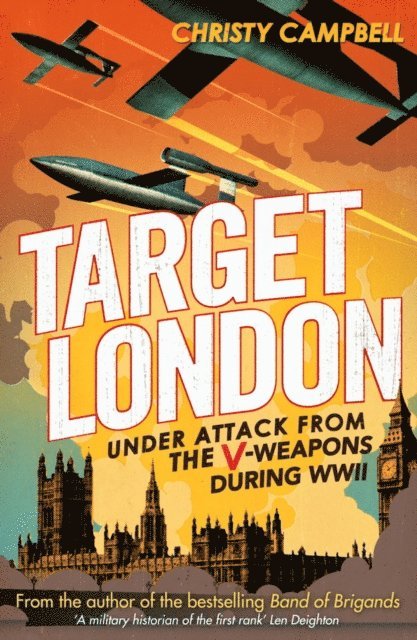
During the darkest days of the Second World War, the Allies listened intently to the messages of the enemy. Every whisper built a picture of the threat to come - weapons that were terrifying in their murderous capabilities. Target London is the dramatic tale of the inception of the German V-weapons, the Allies' epic race to discover the truth about them and the rockets' effects on the streets of London. Investigative historian Christy Campbell brilliantly interweaves the many strands of this gripping episode. At the heart of this tale is London - the target of Nazi Germany's plan to crush British morale.
241 kr
Skickas inom 5-8 vardagar
147 kr
Skickas inom 7-10 vardagar
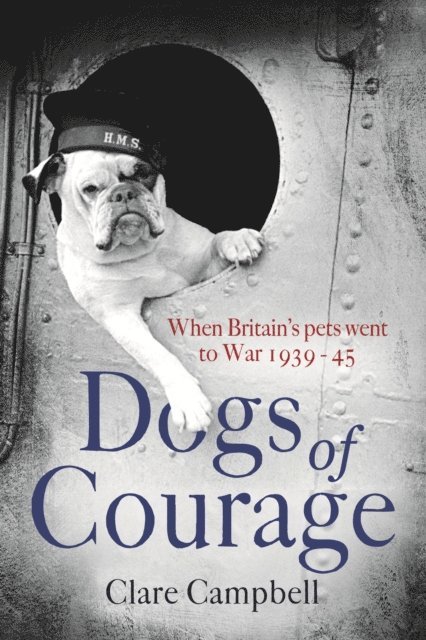
In Bonzo's War, Clare Campbell told the fascinating story of what it was like for Britain's pets when the world was at war. This time, she follows the incredible journey of the dogs who conscripted to fight for their country, with some even returning with medals for their bravery. During the most dangerous days of the Second World War, the British government set out to recruit an army of canines - a 'Guard Dog Unit'. This experimental team of brave hounds would later use their incredible sense of smell to sniff out the anti-personnel mines that barred the way to reclaiming Europe. Dog owners countrywide shed tears as they bid farewell to their beloved 'Brian', 'Rex', or 'Molly' and packed them off to the War Dogs Training School to learn the skills they'd need to 'do their bit for Britain' on the very frontiers of the Third Reich. The soldiers waiting out in the field to greet their canine counterparts were under strict instructions: do not get too attached to your new four-legged companion. That bit proved disastrously impossible.Based on original documents, first-hand accounts and interviews, Dogs of Courage tells a story of human determination, heartbreak and uncompromising canine courage that has never been told before.
98 kr
Skickas inom 7-10 vardagar
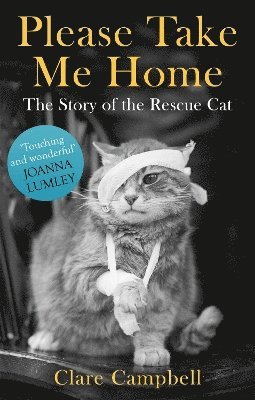
In Please Take Me Home, Clare Campbell takes us on a journey with the nation's rescue cats, from being treated as pests throughout history to being the pet of choice today.For a long time, stray cats in Britain were seen as a nuisance and hunted down as vermin. Having invited this wild, independent creature into our homes, humans did not extend their welcome for long. Over time, thousands of cats were subsequently abandoned and left to live on the margins of survival.There were, however, the kind few who sought to help. But these good spirited people were often scorned, even derided as 'mad'. A Princess of Wales was even told to stop helping lost cats in order to avoid a royal scandal; the story was kept a secret of state for years. It would take over a century for strays to become the beloved rescue cats of today, with some now gaining celebrity status, such as Downing Street's Larry or Street Cat Bob.Please Take Me Home is a fascinating and insightful history through the ages of the struggle for cats to exist in domesticity alongside mankind.