C.J. Schrijver - Böcker
Visar alla böcker från författaren C.J. Schrijver. Handla med fri frakt och snabb leverans.
3 produkter
3 produkter
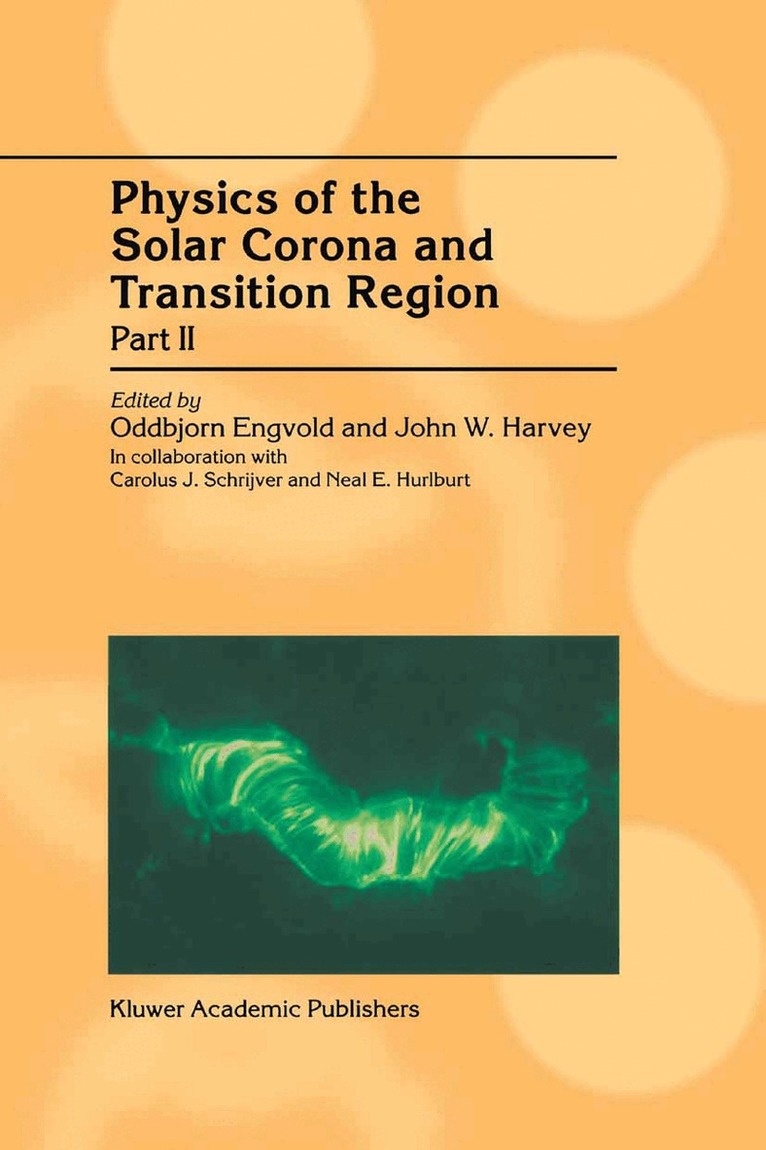
Physics of the Solar Corona and Transition Region
Part II Proceedings of the Monterey Workshop, held in Monterey, California, August 1999
Inbunden, Engelska, 2001
2 101 kr
Skickas inom 10-15 vardagar
Solar Physics publishes up to two TopicalIssues per year that focus on areas of especially vigorousand activeresearch. The present TopicalIssue containspapers of recent results on the solar corona, as well as on the transition region and low solar wind. The majority of these papers, which were all refereed in accordance withthe standards of Solar Physics, werepresentedin August 1999at a workshop heldin Monterey, California. TheSun's magneticfieldis responsibleforthe spectacularly dynamicand intri- cate phenomenonthat we call the corona. The past decade has seen an enormous increase in our understanding of this part of the solar outer atmosphere, both as a result of observations and because of rapid advances in numerical studies.The Yohkoh satellitehasobservedthe Sun nowfor overeightyears, producingspectac- ular sequences of images that conveythe complexity of the corona. The imaging andspectroscopic instrumentsonSOHOhaveaddedinformationonthecoolerpart of the corona. Andsince April of 1998TRACEhas givenus very high resolution imagesof the 1-2 MKcorona, atcadencesthat allowdetailedobservations of field oscillations, loopevolution, mass ejecta, etc.The papers of thisTopicalIssue revolvearoundone keytheme:the entire outer atmosphereof the Sun is intrinsicallydynamic, evolvingso rapidly that even the concept of a single local temperaturefor a single fluid often breaks down. More- over, the corona is an intrinsicallynonlinearand non-localmedium.These aspects are discussedin thisTopicalIssue, includingboth papers that reviewrecentdevel- opments(both basedon observations and on theoretical/numerical modeling), and original research papers based on observations from many different observatories. Weareverygratefulto the manyrefereeswhoweregivenlittletimeto respond, andto the staffofKluwerfor theproductionofthetopicalissuesandtheirreprints. Thepapers acceptedforthisTopicalIssueadduptosuchavolumethattheyhaveto be distributedovertwo TopicalIssues of SolarPhysics (December 1999and April 2000),which are reprintedin two bound volumes, of whichthis is the second.
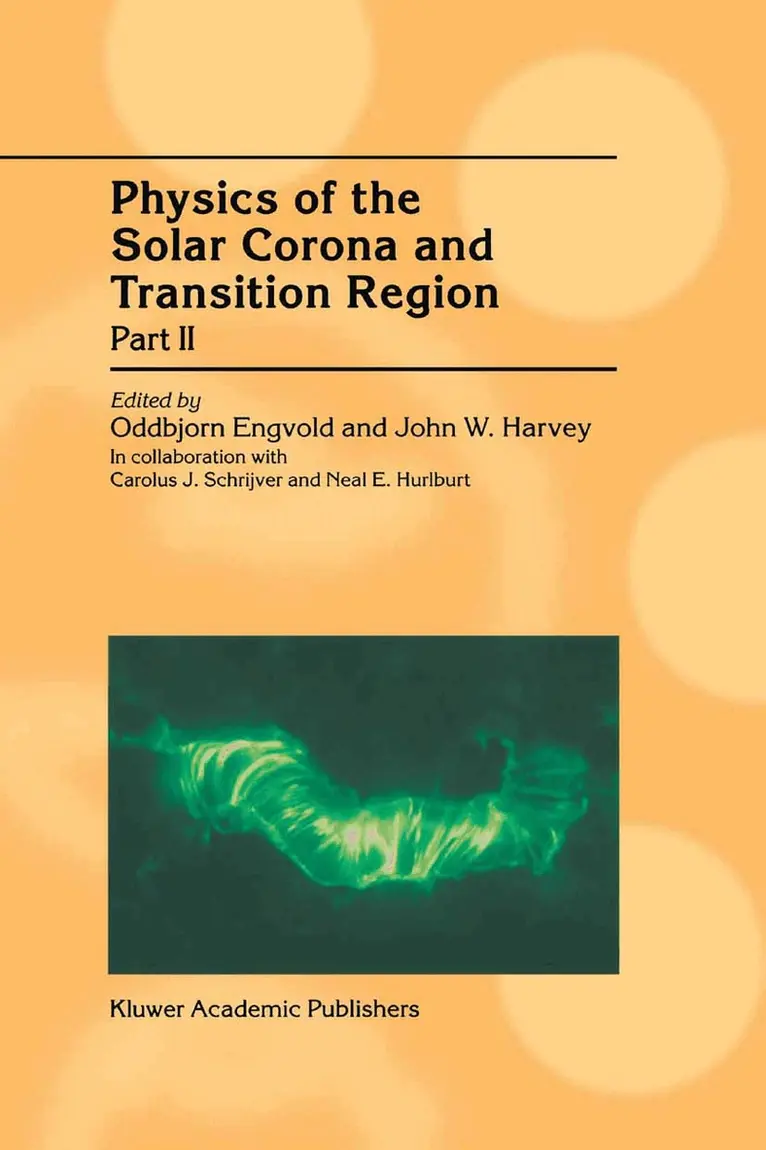
Physics of the Solar Corona and Transition Region
Part II Proceedings of the Monterey Workshop, held in Monterey, California, August 1999
Häftad, Engelska, 2012
2 101 kr
Skickas inom 10-15 vardagar
Solar Physics publishes up to two TopicalIssues per year that focus on areas of especially vigorousand activeresearch. The present TopicalIssue containspapers of recent results on the solar corona, as well as on the transition region and low solar wind. The majority of these papers, which were all refereed in accordance withthe standards of Solar Physics, werepresentedin August 1999at a workshop heldin Monterey, California. TheSun's magneticfieldis responsibleforthe spectacularly dynamicand intri- cate phenomenonthat we call the corona. The past decade has seen an enormous increase in our understanding of this part of the solar outer atmosphere, both as a result of observations and because of rapid advances in numerical studies.The Yohkoh satellitehasobservedthe Sun nowfor overeightyears, producingspectac- ular sequences of images that conveythe complexity of the corona. The imaging andspectroscopic instrumentsonSOHOhaveaddedinformationonthecoolerpart of the corona. Andsince April of 1998TRACEhas givenus very high resolution imagesof the 1-2 MKcorona, atcadencesthat allowdetailedobservations of field oscillations, loopevolution, mass ejecta, etc.The papers of thisTopicalIssue revolvearoundone keytheme:the entire outer atmosphereof the Sun is intrinsicallydynamic, evolvingso rapidly that even the concept of a single local temperaturefor a single fluid often breaks down. More- over, the corona is an intrinsicallynonlinearand non-localmedium.These aspects are discussedin thisTopicalIssue, includingboth papers that reviewrecentdevel- opments(both basedon observations and on theoretical/numerical modeling), and original research papers based on observations from many different observatories. Weareverygratefulto the manyrefereeswhoweregivenlittletimeto respond, andto the staffofKluwerfor theproductionofthetopicalissuesandtheirreprints. Thepapers acceptedforthisTopicalIssueadduptosuchavolumethattheyhaveto be distributedovertwo TopicalIssues of SolarPhysics (December 1999and April 2000),which are reprintedin two bound volumes, of whichthis is the second.
536 kr
Skickas inom 10-15 vardagar
Observations of the solar magnetic field are largely confined to the radiation emitted from the photosphere, the thin layer of the solar atmosphere which we call "the solar surface". It is from solar surface observations that we must infer the internal structure and the internal magnetohydrodynamic processes that lead to the multitude of fascinat ing phenomena of solar magnetic activity, and from solar surface observations we must also infer the interplay of convection and magnetism that regulates field dispersal, drives the heating of the outer-atmospheric plasma, and generates the solar wind. There is much to be learned from solar surface magnetism in physics and astrophysics; currently, there are rapid developments in this exciting field. The workshop of which this volume contains the proceedings aimed at a synthesis between observers and theorists, both with regard to the discrete elements that are the building blocks of solar magnetism and with regard to the larger-scale spatial and temporal patterns in which the magnetic elements emerge and disappear. The workshop was held during November 1-5, 1993 in Soesterberg, The Netherlands. The fifty participants took a very active part in making the workshop quite a lively one. The articles in these proceedings cover most of the oral and poster presentations, excepting a dozen soon to be published elsewhere.